Categories
Breaking News

800-year-old 'massive' Viking skeletons found in Sicily

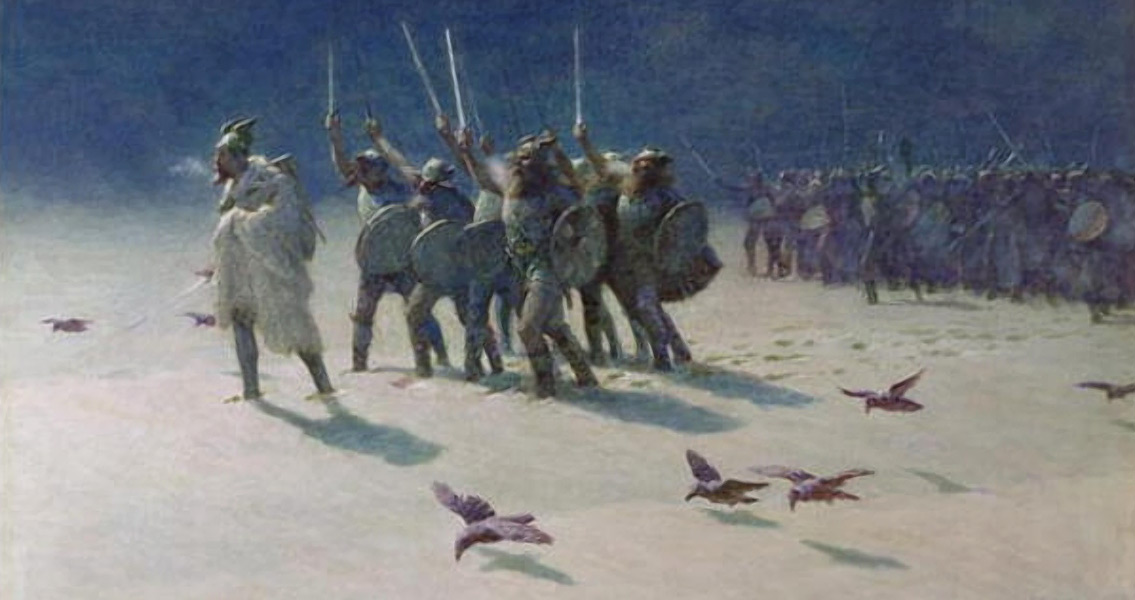
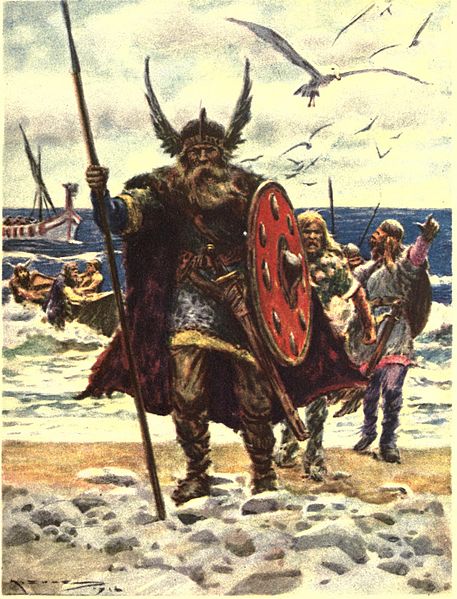
Credit: Henrietta Elizabeth Marshall, born 1876, interprets the Vikings[/caption]

‘Massive’ skeletons

An examination of the burials determined that three of the graves belonged to women, and another two to children. The remaining skeletons are still in the process of being identified. As no grave goods were found, the researchers were not initially sure of their heritage; but an anthropologist was able to inform the team that they were likely from Western Europe – meaning that they were probably Normans from northern France. Moździoch, who comes from the Institute of Archaeology and Ethnology of the Polish Academy of Sciences in Warsaw, says: “According to the local anthropologist, the tallness and massive build of skeletons of people buried here indicate this origin.”

Why were Vikings in Sicily?

So what were the Normans doing in Sicily? During the second half of the 11th Century, the island was recaptured by a Norman nobleman, Roger de Hauteville, after having been occupied by the Arabs. It was quite usual for the Normans to send out expeditions to southern Italy, Sicily, and of course, England, Wales, Scotland and Ireland. Vikings about to invade England (4)

Western European architecture

The cemetery where the bodies were found was associated with a church hospital mentioned in a 12th Century document; but no medical equipment was found on the site. They did, however, find coins that were minted in Champagne and Lucca, indicating that the builders and users of the church would have from the north of the Apennine peninsula. At the time of the church’s construction, nearby Palermo was held by Arabs. Moździoch says that the church was fortified and built on a hill so as to provide a strategic position for battle. The architecture of the church backs up the theory that these bodies were those of Viking descendants. “The Western European form of the church… [indicates] that its builders and users could have come from Normandy,” Moździoch says. “Our research has changed the previous theories concerning the church structure. It indicates that its form referred more to the western European churches of the 11th and 12th centuries than to the buildings of this type erected in Sicily during that period. To put it simply, the concept of construction was directly transferred from the north by the craftsmen brought from there,” he concluded.]]>

Categories
Editorial

Colour symbolism in Viking culture: what we know so far

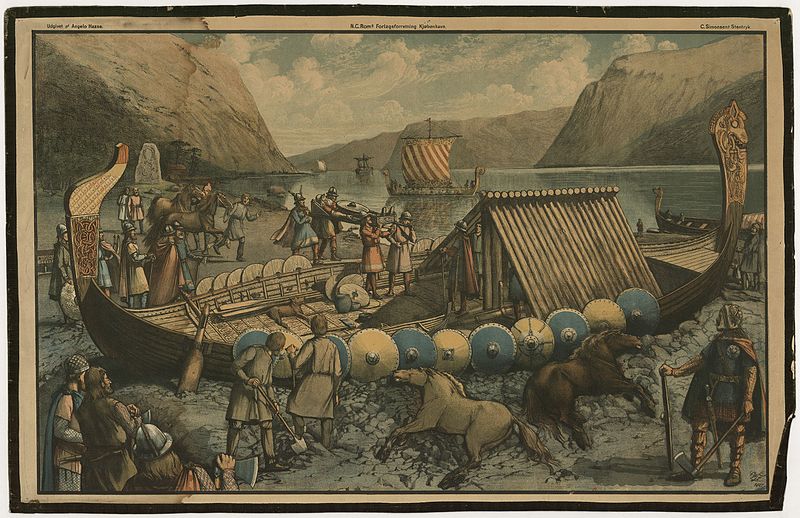
The pigments of pillage Regarding the Vikings, research has been relatively sparse. We know they used bold colours to be seen from a distance, and they would produce these colour pigments from numerous sources, including ochre and charcoal. These would have been blended together along with a binding agent (such as milk products, egg, or linseed oil), to allow the colour to adhere to the material. Now, after the publication of a new chemical analysis on Viking objects, we know more about the Viking use of colour than ever before. [caption id="attachment_8744" align="aligncenter" width="500"] En vikingehøvdings højsætning (“The burial of a Viking jarl”), Carl Schmidt, 1888. Credit: Wikimedia Commons[/caption]

No sailing under false colours

With the help of specialist teams of chemists, archaeologists have been able to study colour used in the Viking Age. Chemical analyses of pigments from objects have allowed them to stipulate what could have been the Vikings’ symbolic colour palette. Co-author of the paper and conservator from the National Museum of Denmark, Line Bregnhøi, says that the Viking Age was probably more visually vibrant that we may have first assumed. She says: “When we’ve previously excavated finds from the Viking Age among others, we weren’t so interested in colours. Partly because we didn’t have the techniques to study pigments, but also because we assumed that the colours appeared more or less as they were found.” [caption id="attachment_8743" align="aligncenter" width="440"] The study includes a selection of colours that are likely to have been used by the Vikings. Credit: National Museum of Denmark / Roberto Fortuna[/caption]

Authenticity first

However, she has now worked with colleague Lars Holten, director of the Centre for Historical and Archaeological Research and Communication, to create the colour palette used in the reconstructed version of The Royal Hall, Denmark’s largest Viking building. In the reconstruction, which sits at the Centre for Historical and Archaeological Research and Communication in Denmark, the team has worked with the same type of paint that would have been used by those in the upper echelons of Viking society. The Royal Hall has been decorated with linseed oil paint, as it would have been the most durable binding agent available to Viking painters. For authenticity’s sake, the hall has not been entirely covered in paint, as sheer expense means that this would have been unlikely.  

A study in scarlet

As has been true throughout the history of paint, some colours were rarer and thus more expensive than others. Imbued with symbolism, they indicated a separate social standing. Lars Holten comments: “We know that the symbolism of colour is enormously important in all cultures. Red, white, and black are some of the most common and have similar symbolism among numerous cultures.” Henriette Syrach Lyngstrøm, an archaeologist from the University of Copenhagen’s Saxo Institute, says: “it’s an important study because it presents the chemical analyses that form the basis for the very subjective ideas that archaeologist have on Viking Age colour.” Although not involved in the new study herself, she says it’s one of the most essential reports we have on the Viking’s use of colour. She continues: “On the rare occasion that we excavate a piece of painted wood, the colour looks nothing like the original. Here, chemists and conservators analyse the pigments and help us to further our interpretations.”]]>
Categories
Breaking News

History News of the Week – Roman Construction Lessons

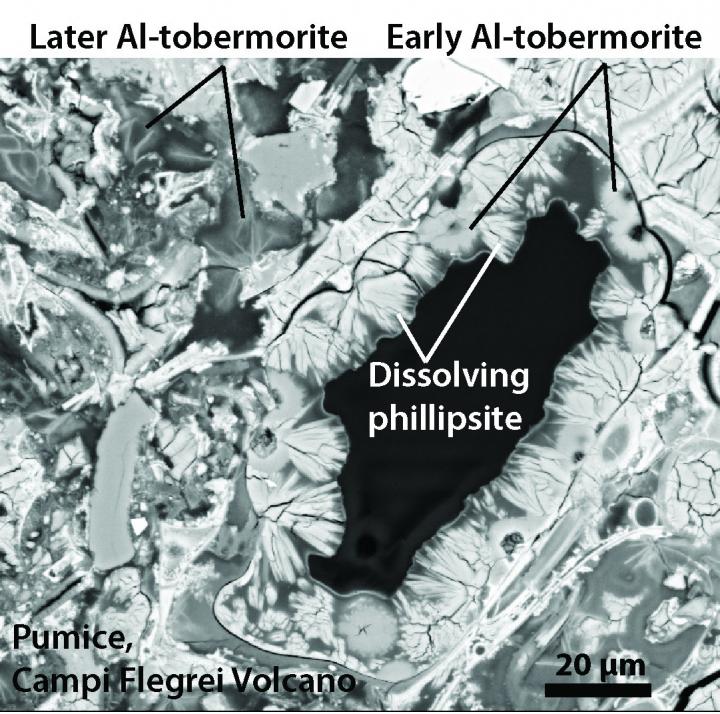
Building Lessons from the Romans New research is providing insights into how Roman harbours that are thousands of years old have withstood the ravages of time. Scientists from the US Department of Energy’s Lawrence Berkley National Lab used x-rays to study samples of Roman concrete – from an ancient pier and a breakwater, to learn more about the make-up of their mineral cements. Having previously found that crystals of aluminous tobermorite, a layered mineral, played a key role in strengthening the concrete as they grew in relict lime particles, the team’s latest research is piecing together how, when and where these crystals formed in the long history of the ancient structures. The research may ultimately influence modern construction techniques. It could lead to a wider adoption of concrete manufacturing processes with less environmental impact than those used for modern Portland cement, while the researchers also claim that an updated version of Roman concrete could be tested for applications such as seawalls and other ocean facing structures. The concrete could even be useful for safeguarding hazardous wastes. “At the ALS we map the mineral cement microstructures,” said Marie Jackson, a geology and geophysics research professor at the University of Utah who led the study. “We can identify the various minerals and the intriguingly complex sequences of crystallization at the micron scale.” “Contrary to the principles of modern cement-based concrete, the Romans created a rock-like concrete that thrives in open chemical exchange with seawater,” she continued. The research has been published in the journal American Mineralogist. Breakthrough in dating Viking fortress Archaeologists have made a breakthrough in dating the mysterious Viking fortress in Borgring, south of Copenhagen, which was first discovered in 2014. Ever since the fortress was first unearthed, a great deal of curiosity has surrounded the life, function and fate of the Viking structure. Researchers had speculated it dated to the tenth century, possibly to the reign of Harold Bluetooth (958 – 987), but it couldn’t be proven. In June of this year, archaeologists opened new trenches in a meadow next to the fortress, uncovering in situ some 2.5m beneath the surface a roughly 1m long piece of carved oak wood with drilled holes and several wooden pegs. A specialist in dendrochronological dating, Associate Professor Aoife Daly from the University of Copenhagen said the conserved part of the tree trunk was grown in the years 829-850 in the Danish area. “Since no splints have been preserved, it means that the tree has fallen at some point after year 966” Daly said in a press release. “The wood piece was found on top of a peat layer, and is fully preserved as it is completely water-logged. We now have a date of wood in the valley of Borgring, which corresponds to the dating from the other ring fortresses from Harold Bluetooth’s reign. With the dendrochronological dating, in conjunction with the traces of wear the piece has, it is likely that the piece ended as waste in the late 900s, possibly in the early 1000’s.” said research leader Jens Ulriksen. “In the coming week, the National Museum’s environmental archaeologists will take samples of wet depositions in the valley with the aim of uncovering how the layers have evolved from the earliest strata we have dated to the Bronze Age and over time,” said excavation leader Nanna Holm. The team hope that this will reveal exactly where the nearby river was when the fortress was built in the Viking Age. Funded by a grant from the A.P. Møller Foundation, the team included researchers from the Museum of South East Denmark and Aarhus University, as well as leading experts from the Environmental Archeology and Materials Research department at the Danish National Museum and the National Police Department’s Section for arson investigation. Poland seeks extradition of man accused of heading an SS unit Prosecutors in Poland are seeking the extradition of a 98-year-old man accused of being the former commander of an SS led unit that slaughtered civilians and burnt Polish villages to the ground during World War Two. Michael Karkoc has repeatedly denied the charges leveled against him, according to the Independent. Officials from the National Remembrance Institute in Warsaw accuse Karkoc of commanding a unit of Ukrainian nationalists responsible for mass killings in villages along Poland’s eastern border during World War II. The extradition request has been handed to the Polish embassy in Washington. According to the Independent, an inquiry by the Associated Press (AP) into Karkoc triggered the IPN investigation. The AP piece pointed out that Krakoc did not have a direct role in the atrocities, but was present and witness to them as a company leader. Whether Krakoc will be extradited will be governed by the EU – US extradition treaty. Krakoc is said to be suffering from Alzheimer’s disease, the Independent article states, raising questions over whether he’d be fit to stand trial. Earlier this year, his son Andriy Karkoc, fervently denied the charges leveled against his father. Image is from a scanning electron microscope, shows formations of aluminum tobermite crystals in a volcanic ash sample from the Campi Flegrei Volcano in Italy. X-ray experiments at Berkeley Lab’s Advanced Light Source have helped researchers to understand how these crystals develop over time to strengthen ancient Roman concrete structures. The scale bar at lower right represents 20 microns, or 20 millionths of a meter. Courtesy of University of Utah ]]>

Categories
Breaking News

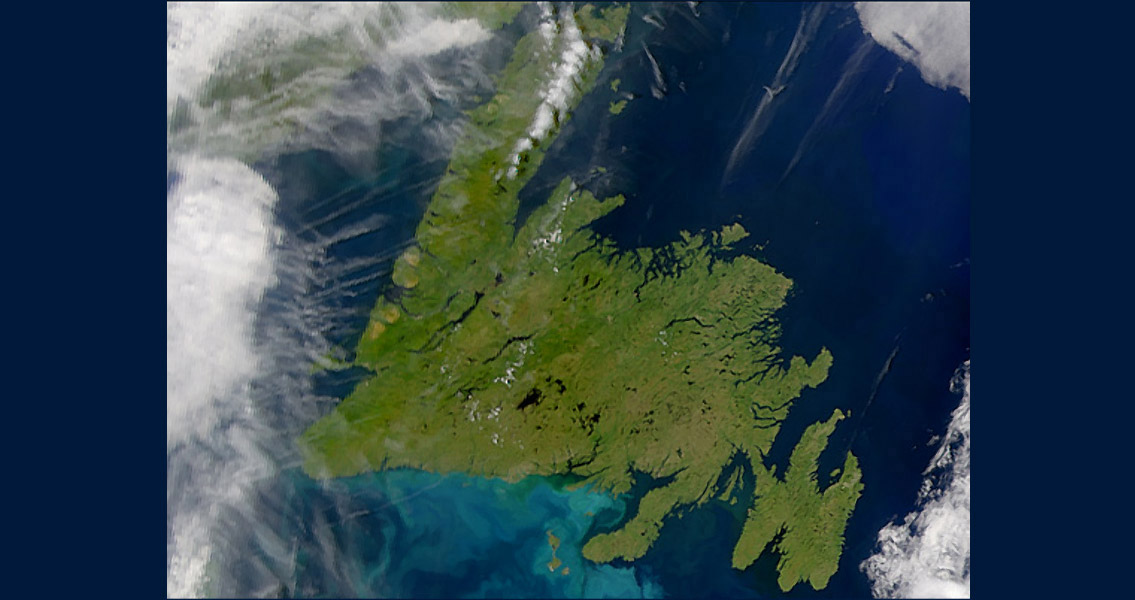
Satellite Imagery Reveals New North American Viking Site?

Categories
News

King Canute Seizes the Whole of England

Categories
Breaking News

Research into Viking Age Reveals Possible Causes

www.journals.cambridge.org ]]>

Categories
Breaking News

Early Vikings Were Traders, Not Looters

silver ring with an inscription in Arabic in a Viking grave, confirming accounts by Arab travelers from the Middle Ages about their peaceful encounters with the Scandinavians. Image courtesy of Wikimedia Commons user: http://upload.wikimedia.org/wikipedia/commons/thumb/9/96/Comb1.jpg/591px-Comb1.jpg ]]>

Categories
Breaking News

New Discovery of 'Whetstones' at Baffin Island May Prove There Was a Viking Presence In Canada

Categories
Breaking News

Mysterious Town In Denmark May Be Older Than Previously Thought

Categories
Breaking News

New Research Shows That Vikings Were Cultured