Categories
Breaking News

Scientific Research Divulges More Information About “Hobbit” People

H.habilis (its earliest species). The study’s coauthors, Antoine Balzeau with the Muséum National d’Histoire Naturelle, and Philippe Charlier from UVSQ/Paris-Descartes University, performed the medical study of LB1 which is considered the holotype discovery of H.floresiensis, by performing a micro-CT examination of the thickness of the cranial vault and the skull’s cranial structure. They discovered the skull did not, in fact, bear the traits which are common in modern humans, instead it carried traits much more characteristic of ancient hominins like Homo erectus, an extinct human species considered the first species of human to have moved out of Africa. Popularly referred to as “hobbit” because of its characteristic feet and diminutive build, H.floresiensis was thought by many experts to be an extinct species of human. Their skeletal remains were discovered on Flores Island in Indonesia by a joint Indonesian – Australian team of archaeologists who were searching for evidence related to the origins of human migration to Australia from Asia. The remains were indicative of an individual which would have stood around 3.5 feet (1.1 m) high and had a small brain, similar to ancient hominins. The find included one complete skull (the above mentioned LB1) and the incomplete skeletons of nine individuals. This hominin is considered remarkable for not only its small brain and body but also for its relatively recent survival – possibly just 12,000 years ago. Alongside the skeletons researchers found stone tools ranging from between 94,000 and 13,000 years old. Several scientists have suggested, after examining the “hobbit”, that the remains represented a modern human group suffering from disease and microcephaly which resulted in the physical characteristics that are featured in the fossils. However, other studies haven’t supported the hypothesis, and this latest study puts forth additional findings that support the suggestion the fossils do not exhibit pathological features comparable to extinct human species. Some scholars have suggested the ancient H.floresiensis could be connected to the Ebu Gogo myths which were prevalent on Flores Island. The Ebu Gogo, according to island folklore, were human-like creatures that resided in Flores, Indonesia. In the language of the central Flores Nage people, Ebu translates to “grandmother” while gogo means “he who eats anything.” An equivalent colloquial English could be similar to “Granny Glutton.” The Nage describe the Ebu Gogo as fast runners and able walkers who were about 1.5 m tall. Reportedly, they had flat and wide noses, large mouths, broad faces and hairy bodies. The females were described as having “long, pendulous breasts.” They were also said to have murmured in their own language, and were able to repeat what was said to them in a parrot-like manner. Image courtesy of Wikimedia Commons user: Ryan Somma]]>

Categories
Breaking News

Did Immigration Destroy Cahokia, North America's First City?

Categories
News

Spanish Conquest Echoed in Panamanian Genetics

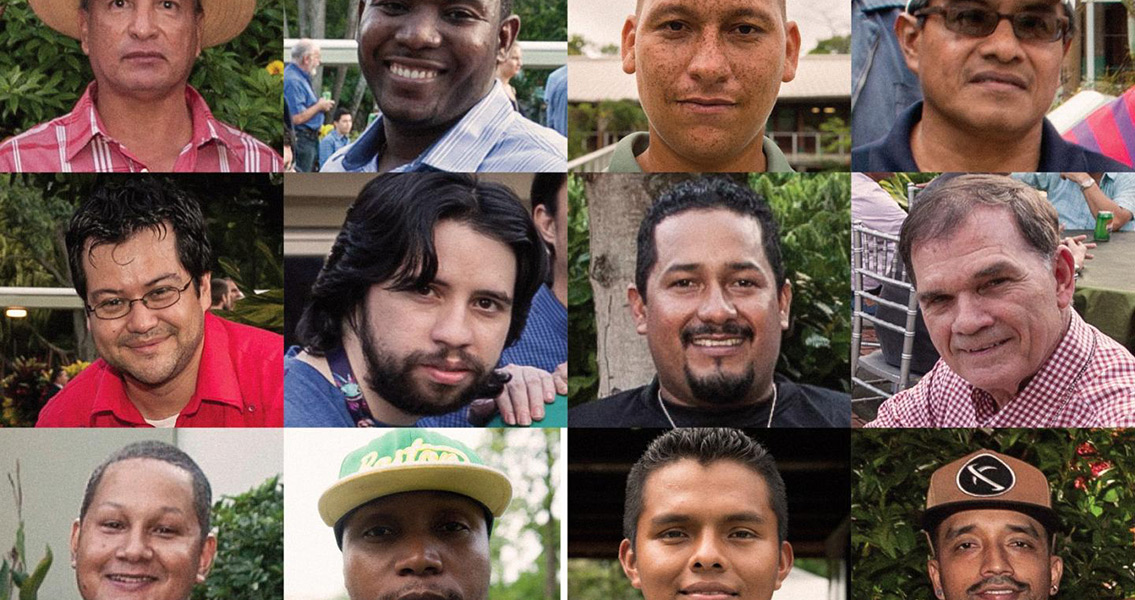
PLOS ONE, was performed by a team of scientists from the University of Pavia, led by Viola Grugni. The team studied the genetics of 408 Panamanian men to investigate Y-chromosome variation in the population through the centuries. In modern Panama, seven indigenous ethnic groups account for 12.3% of the country’s population. 83% of the country’s general population however, harbour mitochondrial DNA of native ancestry. By focusing on the Y-chromosome, the researchers revealed a remarkable contrast between paternal and maternal genetic inheritance. The Native American component (Haplogroup Q) exceeded 50% in only three regions on the Caribbean facing side of Panama. Two of those regions, Comarca of Kuna Yala and Bocas del Toro province, are areas dominated by speakers of the indigenous Chibchan language. The third, the province of Colón, hosts a population dominated by the Kuna, an indigenous people of Colombia and Panama, and people of mixed indigenous-African-European descent. Every human has a pair of sex chromosomes which determine their gender. Whereas women have two X-chromosomes, men have one X and one Y chromosome – the Y-chromosome inherited from their father. Mitochondrial DNA on the other hand, is only inherited from the mother in both males and females. Small mutations which have accumulated in the two types of DNA over time allow scientists to trace genetic histories. By highlighting differences in the make-up of Y-chromosomes and Mitochondrial DNA, the authors have revealed the long term genetic effects of colonisation. The Spanish conquest, beginning in 1499, instigated drastic genetic change in Central America. Much of the native population was killed in conflict with the Spanish population, while the spread of European diseases to people with no immunity to them was also catastrophic. Male Spanish colonists typically came to the region without their wives, often taking native women as their partners. The legacy of this is found in the dominance of European DNA in the Y-chromosome. The presence of Sub-Saharan DNA reveals the long term genetic impact of the Atlantic slave trade. The results also show the geographic distribution of Spanish colonisation, which after 1519 was most densely focused on Panama’s Pacific side where a drier climate was more suitable for agriculture and cattle raising. The prevalence of Eurasian Y-chromosomes ranged from 62 to 72 percent in test subjects from the Pacific regions of Panama, while the proportion of native chromosomes was between 66 to 88 percent in the Caribbean regions, a dramatic difference. Darien Province had the highest proportion of Sub-Saharan DNA, according to the results. The authors believe this notable exception is explained by the region having been a popular point of refuge for escaped slaves during the colonial period. The region of Central America that is now Panama has been inhabited continuously for the the last 10,000 years, the new study reveals the massive genetic changes that have occurred in the last 600 as a result of European colonisation. For more information, the full study is available here Image courtesy of Jorge Aleman, STRI]]>

Categories
Breaking News

Medieval-Era Ship Raised from Dutch Riverbed

Categories
Breaking News

Venus of Mal’ta Statuettes More Human Than Godly

Categories
News

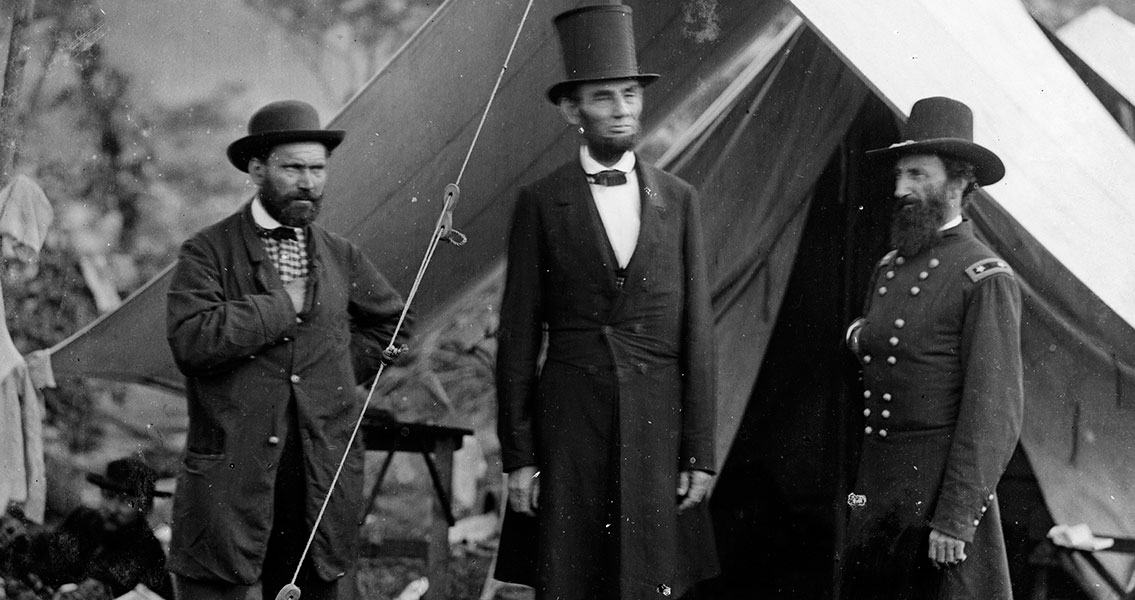
Lincoln Narrowly Escapes Baltimore Plot Assassination Attempt

Categories
Breaking News

Must Farm in Cambridgeshire Yields Bronze Age Wheel

revelations about Bronze Age life in the UK for several months now. The level of preservation of the artifacts and dwellings of the settlement, which was arranged on stilts and jutted over what was a large river at the time, has prompted researchers to nickname the site “Britain’s Pompeii.” The newest find continues in this trend of remarkable preservation. The wooden wheel found by archaeologists near one of the largest of the roundhouse dwellings at Must Farm dates to anywhere between 1,100 BCE to 800 BCE, is around three feet in diameter, and still contains its hub. Cambridge Archaeological Unit’s David Gibson, the leader of the dig, said to the BBC that the discovery of the wheel shows how the river settlement was linked closely to the dry land beyond. Historic England’s chief executive, Duncan Wilson, also commented on the unprecedented discovery, remarking that both its completeness and size is highly noteworthy, as it marks the earliest complete wheel of its kind – nearly miraculous considering how fragile the wheel is. Wilson added that the mere fact of the wheel’s existence provides additional information that helps historians to understand the technology used during the Late Bronze Age and what the lives of people living during that time would have been like. The new find is indicative of the unique quality of the quarry site, according to Gibson. At least two roundhouses were discovered earlier in 2016, with the possibility of a third such dwelling having been constructed for the settlement as well. All of the buildings have been dated to between 1,000 BCE and 800 BCE, with the wooden timbers having fallen into the river after a fire ravaged Must Farm; thanks to the silt of the riverbed, the remains of the buildings survived to be found some 3,000 years later. The fact that a large wooden wheel was found in the ruins of what had once been a settlement built on stilts over a large, rushing river does raise several questions among researchers. Chris Wakefield, an archaeologist working on the site, told the BBC that along with the partial skeletal remains of a horse found in early January, the wheel could indicate the presence of a horse-drawn cart, but it’s still much too early to be able to draw any conclusive connections between one and the other. Horses were highly uncommon in the Bronze Age, Wakefield added, which complicates matters even further; the archaeologist said it could be several years before sample data analysis of the Must Farm finds are complete. More information and images of the wheel are available from Historic England Image courtesy of Jorge Royan]]>

Categories
Breaking News

The Tarkhan Dress Brings New Meaning to Vintage

display at the Petrie Museum of Egyptian Archaeology at the University College London. Image courtesy of Wikimedia Commons user: LordHarris]]>

Categories
News

February Revolution – History Changed in Less than a Fortnight

Categories
Breaking News

Human Settlers Caused Destruction of Madagascar Forests

here ]]>