Categories
Breaking News Editorial

Why Homo sapiens survived (and other hominins didn't)

Map of the potential distribution of archaic hominins, including H. erectus, H. floresiensis, H. neanderthalenesis, Denisovans and archaic African hominins, in the Old World at the time of the evolution and dispersal of H. sapiens between approximately 300 and 60 thousand years ago.
Credit: Roberts and Stewart. 2018. Defining the ‘generalist specialist’ niche for Pleistocene Homo sapiens. Nature Human Behaviour. [/caption]

Homo sapiens surviving extreme conditions

Archaeological and palaeoenvironmental datasets from the Middle and Late Pleistocene eras have come under critical review in the recent collaboration between the Max Planck Institute and the University of Michigan. Hominin movement and biological development within and beyond Africa proves our species’ ability to occupy diverse and ‘extreme’ settings around the world. This could well explain how Homo sapiens became the last surviving hominin on the planet. Previously, it was thought that early homo sapiens had stayed close to the coast or savannahs, not infiltrating extreme environments until around 15,000 years ago. But this new evidence has shown humans were in tougher climates far earlier, affecting the debate over what it means to be human – as a Homo sapien, at least.

What does it mean to be human?

“So much focus has gone into finding the next artwork, the next fossil, that in the search for a sort of ‘modernity’ as it is often put – other fundamental elements were neglected,” says Dr Patrick Roberts from the Max Planck Institute for the Science of Human History. Under this new theory, investigations into what separates Homo sapiens from our ancestors would shift away from attempts to uncover the earliest traces of art, language and technological complexity. They’d move, instead, towards understanding what makes our species ecologically unique.

New ideas of Neanderthal creativity

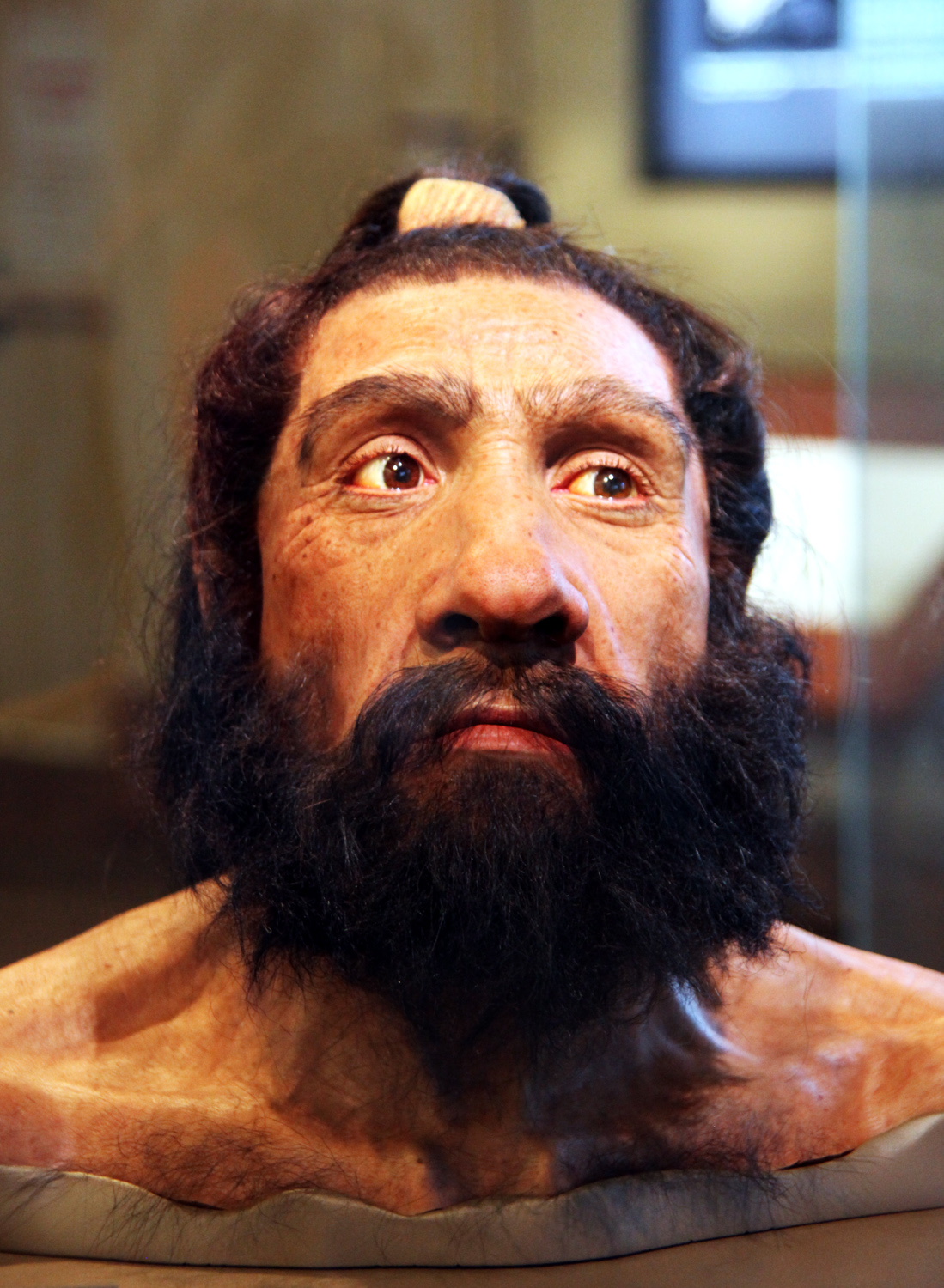
Recent research exposed the fact that our Neanderthal cousins created art before Homo sapiens, and were therefore capable of creating symbolism independently. Because of this, the lines between Homo sapiens and our ancestors are becoming increasingly blurred. You can read more about Neanderthal creativity and the recent discoveries that probe into it here. [caption id="attachment_8774" align="aligncenter" width="500"] A model an adult Neanderthal male head and shoulders on display in the Hall of Human Origins in the Smithsonian Museum of Natural History in Washington, D.C. Credit: Tim Evanson[/caption]

Ancestral ecologies

In contrast to other hominins, our species not only colonised environments as varied as deserts, tropical rainforests, high altitude settings and the palaeoarctic, but also flourished in these extreme conditions. Looking at our ancestral ecologies, we know that the genus Homo is highly diverse. Although often given the blanket name of ‘human,’ both academically and colloquially, using one term is certainly deceptive. There were a range of Homo species, all of which comfortably developed to reflect their surroundings. Homo erectus and Homo floresiensis (also known as ‘the Hobbit’) are thought to have occupied resource-scarce tropical rainforests from 1 million to 100,000 and 50,000 years ago respectively. The Neanderthals (Homo Neanderthalensis) occupied the high latitude areas of Eurasia between 250,000 and 40,000 years ago. To some extent, they backed themselves into an ecological corner, by only developing hunting skills in specialised environments.

What is the difference between ‘humans’ and Neanderthals?

While it might seem like there were gulfs between Homo sapiens and Homo Neanderthalensis, it would be remiss not to point out that the Neanderthals were our closest hominin relatives. In fact, Homo Neanderthalensis shares 99.7% of DNA with Homo sapiens. The history, appearance, intelligence and behavioural similarities and differences between the two are explored by Daryl Worthington on the New Historian – click here to read more.

Rapid Homo sapien colonisation

In contrast to the rest, Homo sapiens had spread to higher-elevation niches by around 80-50,000 years ago. By 45,000 years ago, the species was rapidly colonising both palaeoarctic and tropical rainforest conditions in Asia, Melanesia and the Americas. In order to decipher how our species demonstrated its colonising capacity elsewhere in places like northwest India and the high elevations of Tibet and the Andes, better-dated and higher resolution environmental datasets are required.

Homo sapiens: the ‘generalist specialist’

Ultimately, the new theory is that Homo sapiens were a ‘generalist specialist’. The ’generalist specialist’ is a new ecological niche: one that reflects Homo sapiens’ ability to occupy a huge diversity of environmental settings across the majority of the Earth’s continents by the Late Pleistocene. Dr Patrick Roberts has written: “A traditional ecological dichotomy exists between ‘generalists’, who can make use of a variety of different resources and inhabit a variety of environmental conditions, and ‘specialists’, who have a limited diet and narrow environmental tolerance.” He continues: “However, Homo sapiens furnish evidence for ‘specialist’ populations, such as mountain rainforest foragers or palaeoarctic mammoth hunters, existing within what is traditionally defined as a ‘generalist’ species.”

How did Homo sapiens become a ‘generalist specialist’?

Dr Brian Stewart, from the Department of Archaeology at the University of Michigan, thinks that this new niche was carved out through extensive cooperation between non-kin individuals. He writes: “Non-kin food sharing, long-distance exchange, and ritual relationships would have allowed populations to ‘reflexively’ adapt to local climatic and environmental fluctuations, and outcompete and replace other hominin species.” It comes down to empathy, as well as an ability to accumulate and pass on cultural knowledge.

How our species became the last surviving hominin on the planet

“As with other definitions of human origins, problems of preservation also make it difficult to pinpoint the origins of humans as an ecological pioneer. However, an ecological perspective on the origins and nature of our species potentially illuminates the unique path of Homo sapiens as it rapidly came to dominate the Earth’s diverse continents and environments”, says Roberts. He writes: “Understanding this ecological niche provides a framework for discussing what it means to be human and how our species became the last surviving hominin on the planet.”]]>
Categories
Breaking News

Hobbits of Indonesia Evolved from African Ancestor

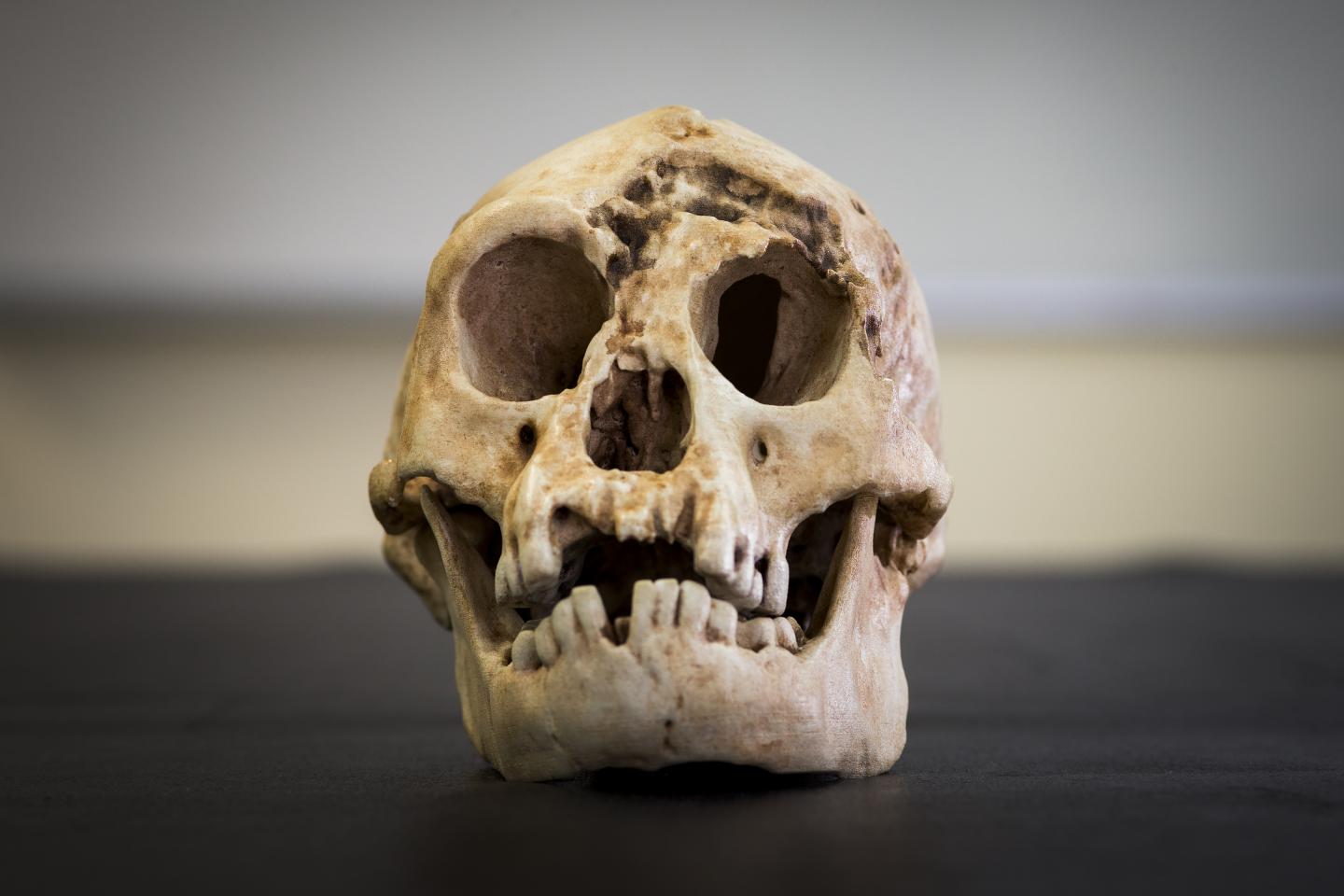
Homo floresiensis, likely evolved from an ancient African ancestor, and not Homo erectus. Remains of H. floresiensis, a mysterious, pygmy like human species, were first found in 2003 on the island of Flores, Indonesia. The unusual creatures have been nicknamed ‘hobbits’, in reference to the creatures from J.R.R Tolkien’s popular fantasy books. The first specimen of the species, found in Liang Bua caves on Flores, would have stood at only 3.5 feet tall, despite being thirty years old at the time of death. The creatures remain shrouded in mystery, with scientists unsure about exactly when they were alive. This in turn has led to uncertainty about their genetic origins and evolution. A 2005 paper published in the journal Nature suggested H. floresiensis could have been around as far back as 95,000 years ago, until as recently as 12,000 years ago. Published in the Journal of Human Evolution, the new study from The Australian National University challenges the widely held belief that H. floresiensis evolved from Homo erectus. Instead, the authors argue that the hobbits’ small stature means they likely evolved from Homo habilis – one of the earliest human species, which lived in Africa around 1.75 million years ago. Much of the argument for H. floresiensis having evolved from H.erectus is based on the fact that H.erectus is the only other early hominid known to have lived in the region – its fossils found on the island of Java. The Australian National University used physical analysis of remains to discredit this conclusion. “The analyses show that on the family tree, Homo floresiensis was likely a sister species of Homo habilis. It means these two shared a common ancestor,” said study leader Dr Debbie Argue of the ANU School of Archaeology & Anthropology. “It’s possible that Homo floresiensis evolved in Africa and migrated, or the common ancestor moved from Africa then evolved into Homo floresiensis somewhere.”Argue continued. The researchers reached their results by taking a new approach to looking at H. floresiensis remains. Previous studies have focused on the skull and lower jaw of the ancient hominids. Argue and colleagues however, looked at 133 data points including the skull, jaw, teeth, arms, legs and shoulders. “We looked at whether Homo floresiensis could be descended from Homo erectus,” she said. “We found that if you try and link them on the family tree, you get a very unsupported result. All the tests say it doesn’t fit — it’s just not a viable theory.” In particular, the team found that H.floresiensis had a much more primitive jaw than H.erectus. “Logically, it would be hard to understand how you could have that regression — why would the jaw of Homo erectus evolve back to the primitive condition we see in Homo floresiensis?” said Argue. Professor Mike Lee of Flinders University and the South Australian Museum analysed the data using statistical modelling. He claims the results were clear. “When we did the analysis there was really clear support for the relationship with Homo habilis. Homo floresiensis occupied a very primitive position on the human evolutionary tree,” Professor Lee said. “We can be 99 per cent sure it’s not related to Homo erectus and nearly 100 per cent chance it isn’t a malformed Homo sapiens,” Professor Lee said.]]>

Categories
Breaking News

41,000 Year Old Fires Shed Light on Hobbits' Fate

Homo floresiensis, the extinct ‘hobbit’ species of human. Published in the Journal of Archaeological Science, the new study presents evidence that modern humans (Homo sapiens) were likely using fire at Liang Bua 41,000 years ago. It’s a conclusion that narrows the gap between the disappearance of Homo floresiensis and the arrival of the first modern humans on the Island of Flores, and could provide new insight into the fate of H.floresiensis. Called the discovery of the century, the first H.floresiensis remains were unearthed in the Liang Bua cave on Flores in 2003. Surrounded by stone tools and animal remains, the female H.floresiensis would have been 3.5 foot (1.06 metres) tall and thirty years old at the time of her death. Subsequent discoveries of eight similarly diminuitive individuals led scientists to conclude in a study published in 2009 that the initial discovery had not been an anomally. The latest discovery on the Island of Flores provides some of the earliest evidence yet found of the presence of modern humans in South East Asia. Lead author of the study Dr Mike Morley, a research fellow and geoarchaeologist at UOW’s Centre for Archaeological Science (CAS), said the discovery could be “extremely important” in the mission to determine how and why the hobbit species disappeared, roughly 50,000 years ago. In March, a study published in the journal Nature revised the initial dating estimates for the original hobbit skeleton, concluding the bones were between 190,000 and 60,000 years old, much older than previous studies that claimed the creature survived on Flores until as recently as 12,000 years ago. With the most recent stone tools on the island dated to 50,000 years old, scientists were suddenly presented with a glaring gap in the chronology of the site’s sediment sequence: What happened there, and who lived there between 46,000 and 20,000 years ago? Dr Morley and colleagues, including CAS geoarchaeologist Professor Paul Goldberg and archaeologist Thomas Sutikna, have now been able to fill in some of that gap. On top of detailing environmental changes at the site between 190,000 and 20,000 years ago, they found evidence of fire places that were in use between 41,000 and 24,000 years ago. With no evidence that H.floresiensis used fire in their 130,000 year occupation of the site ever discovered, Morley’s team believe these fire places were most likely the work of modern humans. “We now know that the hobbits only survived until around 50,000 years ago at Liang Bua. We also know that modern humans arrived in Southeast Asia and Australia at least 50,000 years ago, and most likely quite a bit earlier” Dr Morley said in a press release from UOW. “This new evidence, which is some of the earliest evidence of modern human activity in Southeast Asia, narrows the gap between the two hominin species at the site.” A technique known as micromorphology was part of the team’s study, allowing sediments from the site to be examined in microscopic detail. Sediment blocks from the rear of the cave, an area separate from where the fossils were discovered, were extracted and shipped to UOW. Wafer thin slices (just 30 microns thick) were studied under microscopes, subjected to spectroscopic analyses and radiocarbon dated to determine the age of each layer. The team’s findings add further support to the idea that modern humans dispersed through South East Asia and Australia around 50,000 years ago. The researchers at Liang Bua are now looking for more evidence to narrow the time gap between modern humans and H.floresiensis; allowing them to decipher exactly when humans first inhabited the island, and perhaps even revealing a cross over between the two species. Image courtesy of University of Wollongong]]>

Categories
Breaking News

'Hobbit' Ancestor Found in Indonesia

Homo floresiensis, a mysterious, pygmy like human species, were first found on the island of Flores, Indonesia, in 2003. The unusual creatures have been nicknamed hobbits, in reference to their similarities to the characters from J.R.R Tolkien’s popular fantasy books. The first specimen, discovered in the Liang Bua cave on Flores, was surrounded by stone tools and animal remains. Thirty years old at the time of death, the female H.floresiensis would have been about 3.5 foot (1.06 metres) tall. Subsequent discoveries of jaw and skeletal remains from eight similarly diminuitive individuals led scientists to conclude in a 2009 study that the initial discovery had not been an anomaly. Exactly when H.floresiensis actually lived is far from clear, but a 2005 paper in Nature suggested they could have been around as far back as 95,000 years ago until as recently as 12,000 years ago. Now, remains of hominins that were roughly the same size as H.floresiensis but ten times older, have been excavated from Mata Menge, a site in open grasslands 70 km east of Liang Bua, Indonesia. Several isolated hominin teeth, as well as a fragment of lower jaw, were found in a layer of sandstone which had been deposited around 700,000 years ago next to a lakeside stream. The findings are reported in the journal Nature. “We have unearthed fossils from at least three individuals, including two children, along with stone tools that are almost identical to those made by the much younger Homo floresiensis,” said Dr. Adam Brumm from Griffiths University, who was involved in the excavations. Along with colleagues from the Geology Museum and Geological Survey Institute in Bandung, Indonesia, Dr. Brumm has been carrying out excavation work at Mata Menge since 2004. “There is a striking similarity in size and form between the Mata Menge hominins and the Liang Bua hobbit, which is surprising given the former are at least several hundred millennia older.” Dr. Brumm explained in a press release from Griffiths University. “This suggests the Mata Menge individuals belonged to a population of ancient hobbit-like hominins that gave rise to Homo floresiensis. They may even have been a very early form of hobbits, which would mean this species existed for far longer than anyone had anticipated.” Since the initial discovery in 2003, scientists have struggled to explain where H.floresiensis fit into the human family tree. Although broadly agreed that the ‘hobbits’ evolved from an archaic branch of hominins that existed prior to the emergence of our own species in Africa some 200,000 years ago, exactly which hominin group spawned them has divided opinion. One hypothesis is that H.floresiensis descended from Asian Homo erectus, also known as Java man, an early hominin that reached the island of Java 1.5 million years ago. The hypothesis suggests that a group of these ‘Java men’, which were similar in size to a modern human, somehow became stranded on Flores and gradually reduced in body size. The other hypothesis is that H.floresiensis came from an even more ancient ancestor, such as Homo habilis, or perhaps even an ape like hominin forerunner. The Mata Menge discoveries seem to add considerable support to the first theory. “While only a handful of fossils has been found at Mata Menge so far, characteristic features of the teeth strongly imply an ancestral relationship with Homo erectus,” Dr. Brumm said. “This lends weight to the theory that the hobbit was a dwarfed version of the famous Java Man, which somehow got marooned on the island. The fact that they were found with fossils of extinct pygmy elephants (Stegodon) and giant rats also supports the idea of an isolated group of Homo erectus undergoing a dramatic evolutionary change owing to the Island Rule.” These conclusions are far from conclusive of course. Brumm and colleagues are hopeful however, that more skeletal remains will be excavated from Mata Menge, which could provide further insights into H.floresiensis‘ history. “Mata Menge is a goldmine,” said Dr Brumm. “I expect that further excavations at this site will eventually yield a hominin skull, which will finally allow us to put a face and a name to the hobbit’s ancestor. Then we will know how this experiment in human evolution got started”.]]>

Categories
Breaking News

Scientific Research Divulges More Information About “Hobbit” People

H.habilis (its earliest species). The study’s coauthors, Antoine Balzeau with the Muséum National d’Histoire Naturelle, and Philippe Charlier from UVSQ/Paris-Descartes University, performed the medical study of LB1 which is considered the holotype discovery of H.floresiensis, by performing a micro-CT examination of the thickness of the cranial vault and the skull’s cranial structure. They discovered the skull did not, in fact, bear the traits which are common in modern humans, instead it carried traits much more characteristic of ancient hominins like Homo erectus, an extinct human species considered the first species of human to have moved out of Africa. Popularly referred to as “hobbit” because of its characteristic feet and diminutive build, H.floresiensis was thought by many experts to be an extinct species of human. Their skeletal remains were discovered on Flores Island in Indonesia by a joint Indonesian – Australian team of archaeologists who were searching for evidence related to the origins of human migration to Australia from Asia. The remains were indicative of an individual which would have stood around 3.5 feet (1.1 m) high and had a small brain, similar to ancient hominins. The find included one complete skull (the above mentioned LB1) and the incomplete skeletons of nine individuals. This hominin is considered remarkable for not only its small brain and body but also for its relatively recent survival – possibly just 12,000 years ago. Alongside the skeletons researchers found stone tools ranging from between 94,000 and 13,000 years old. Several scientists have suggested, after examining the “hobbit”, that the remains represented a modern human group suffering from disease and microcephaly which resulted in the physical characteristics that are featured in the fossils. However, other studies haven’t supported the hypothesis, and this latest study puts forth additional findings that support the suggestion the fossils do not exhibit pathological features comparable to extinct human species. Some scholars have suggested the ancient H.floresiensis could be connected to the Ebu Gogo myths which were prevalent on Flores Island. The Ebu Gogo, according to island folklore, were human-like creatures that resided in Flores, Indonesia. In the language of the central Flores Nage people, Ebu translates to “grandmother” while gogo means “he who eats anything.” An equivalent colloquial English could be similar to “Granny Glutton.” The Nage describe the Ebu Gogo as fast runners and able walkers who were about 1.5 m tall. Reportedly, they had flat and wide noses, large mouths, broad faces and hairy bodies. The females were described as having “long, pendulous breasts.” They were also said to have murmured in their own language, and were able to repeat what was said to them in a parrot-like manner. Image courtesy of Wikimedia Commons user: Ryan Somma]]>

Categories
Breaking News

Homo Habilis Were First Out of Africa

Homo erectus as long believed, but a smaller species, Homo habilis, also called Handy Man, Discovery News writes. The senior author of the study told the website that the Homo habilis species was characterised by more ape-like features than previously thought, such as climbing besides walking on two legs, but also had some features characteristic of modern humans; such as a large brain, and tool-making skills. It was, however, shorter than Homo erectus: a more muscular species more closely resembling modern man. Using the huge dataset, Mark Collard, who is professor at the Human Evolutionary Studies Program of Simon Fraser University, and his team compared a number of alternative evolutionary trees and looked into how well each tree fit in with the dataset. There were three possible outcomes: either the tree was inconsistent with the dataset and was hence rejected, it was partially consistent, or it was fully consistent with the dataset. Based on what they found from the comparisons, the researchers suggest that Handy Man went into Asia and Europe from Africa and somewhere in Asia it gave rise to Homo erectus. Collard explains that the ‘Upright Man’ then went into Africa, a bold suggestion in the face of current consensus but backed by evolutionary data, apparently. The little Handy Man was also the ancestor of another species, this time even smaller: the Homo floresiensis, the ‘Hobbit Humans’ who were thought to have been nothing more than physically deformed humans. In fact, according to the theory of Collard and his team, H.floresienis were a separate species that inhabited the island of Flores in Indonesia. As to where the first modern human originated, Collard says this most likely happened in South Africa. He told Discovery News that “The fact that Australopithecus sediba [a two-million-year-old fossil] groups with Homo is consistent with the idea that the earliest known representative of the genus Homo originated in South Africa.” Another interesting conclusion of the team was that the Neanderthals were almost certainly a species exclusive to Eurasia; there was no evidence that its representatives had ever been in Africa. At the same time the researchers were unable to establish the immediate ancestor of this species, as scientist before them had been unable to trace back the origins of other hominin species from the Middle Pleistocene. Collard said he hoped his team’s findings would encourage further research by other scientists in South Africa, China, and Southeast Asia, where some of the oldest known human fossils have been unearthed. Asked by Discovery News to comment on the study, the director of New York University’s Center for the Study of Human Origins, Terry Harrison, said it would definitely fuel a debate among palaeoanthropologists, hardly a surprise given the way it challenges long-held beliefs in the area. Another commenter, human origins professor Bernard Wood from George Washington University, said the team who did the study had made an important step in furthering our understanding about evolution, which he called “superficial” at present. Image courtesy of Wikimedia Commons user: Royroydeb ]]>