here Image courtesy of Wikimedia Commons user Peter Wadsworth]]>

here Image courtesy of Wikimedia Commons user Peter Wadsworth]]>
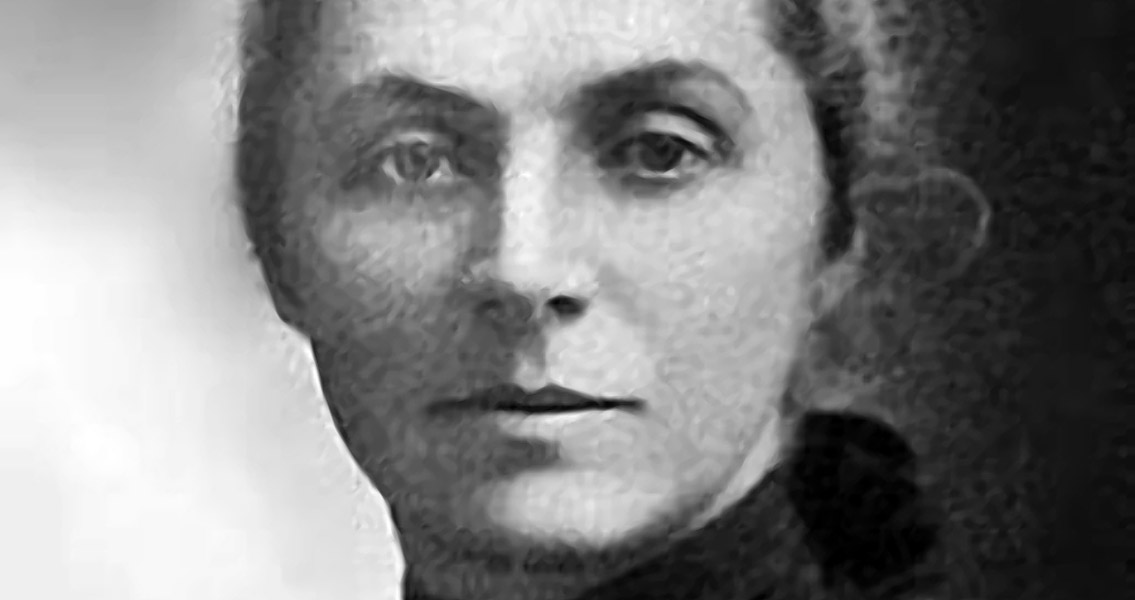
Second Boer War. A fierce campaigner, she launched a sensational attack on the British parliament in 1901, in the middle of one of the most controversial wars in the country’s history. “The picture of apathy and impatience displayed here, which refused to lend an ear to undeserved misery, contrasted sadly with the scenes of misery in South Africa, still fresh in my mind. No barbarity in South Africa was as severe as the bleak cruelty of an apathetic parliament.” During the Second Boer War, British forces rounded up Boer men, women and children from the South African countryside and placed them in concentration camps. The measure, which particularly targeted farmers, was a means to combat the guerrilla warfare being waged by Boer forces against the British in the republics of Transvaal and the Orange Free State. These camps, which had sprung up around the two republics and housed thousands of people, 115,000 in the period between June 1901 and May 1902, represent one of the biggest atrocities in British history. Between the aforementioned dates, 28,000 Boers died in the camps, 22,000 of them children. At other camps, some 20,000 indigenous Africans died. In total, the death toll through the course of the war accounted for 10% of the Boer population. The main killers were the conditions in the camps; dangerously overpopulated, disease and starvation ran riot. The Boer War was a divisive one in the UK; the Guardian newspaper published exposes revealing the shocking actions carried out by British forces in the name of Lord Kitchener’s ‘scorched earth’ tactics, revelations which were unpopular and led to threats being made against Guardian journalists. More than perhaps anyone else however, Emily Hobhouse, a British social worker who went to South Africa herself to see the conditions in the camps, was crucial in exposing the actions of the British military. Born in Cornwall in 1860, Hobhouse lived a sheltered life under her parent’s roof until she was 35. Following her father’s death, she engaged in temperance work in the USA, before returning to the UK at the dawn of the Boer War. In 1900 she received details of the treatment of Boer women by the British army, and set up the Relief Fund for South African Women and Children, an organisation, in her words, “To feed, clothe, harbour and save women and children – Boer, English and other – who were left destitute and ragged as a result of the destruction of property, the eviction of families or other incidents resulting from the military operations.” On 27th December 1900, Hobhouse arrived in South Africa. Eventually, Lord Kitchener, the British military commander in the region, granted her permission to visit the concentration camp at Bloemfontein, but no others. Her account was published in the Guardian in June 1901. “The exile camp here is a good two miles from the town, dumped down on the southern slope of a kopje (a small, rocky hill), right out in the bare brown veld, not a vestige of a tree in any direction, nor shade of any description.” she wrote in her account. “It was about 4 ‘o’clock on a scorching afternoon when I set foot in the camp, and I can’t tell you what I felt like, so I won’t try.” Hobhouse drew the military authorities’ attention to the unsanitary conditions in the camp, winning improvements and extra provisions. She was eventually allowed to visit some of the other camps, making recommendations to the authorities at each one. Returning to Bloemfontein in March however, the size of the problem became clear. The camp’s population had more than doubled in the two months Hobhouse was away. All the improvements had been rendered useless. Kitchener’s scorched earth policy had seen British troops burn farms, slaughter livestock and poison wells, a tactic which made it impossible for Boer soldiers to resupply from villages and towns. Realising the nature of the British campaign, Hobhouse returned to the UK in the hope of making the government bring what David Lloyd George referred to as a ‘policy of extermination’ to an end. Lloyd George, and several other politicians, attempted to bring the issue to the House of Commons, but they gained little support from other MPs, especially after the Secretary of War declared the prisoners were ‘contented and comfortable’. Hobhouse reacted angrily, launching her poignant attack on the House of Commons. Eventually, in August 1901, the British government set up the Fawcett Commission to investigate the concentration camps. It confirmed the vast majority of what Hobhouse had described, concluding that some 28,000 Boers at least had died in the camps. In October 1901, Hobhouse attempted a second visit to South Africa, but was quickly deported. Following the end of the war, she returned to the Orange River colony, and became involved in work connected to women’s education. A life long opponent of war, she also did relief work in central Europe during World War One. She passed away in London, on 8th June 1926.]]>
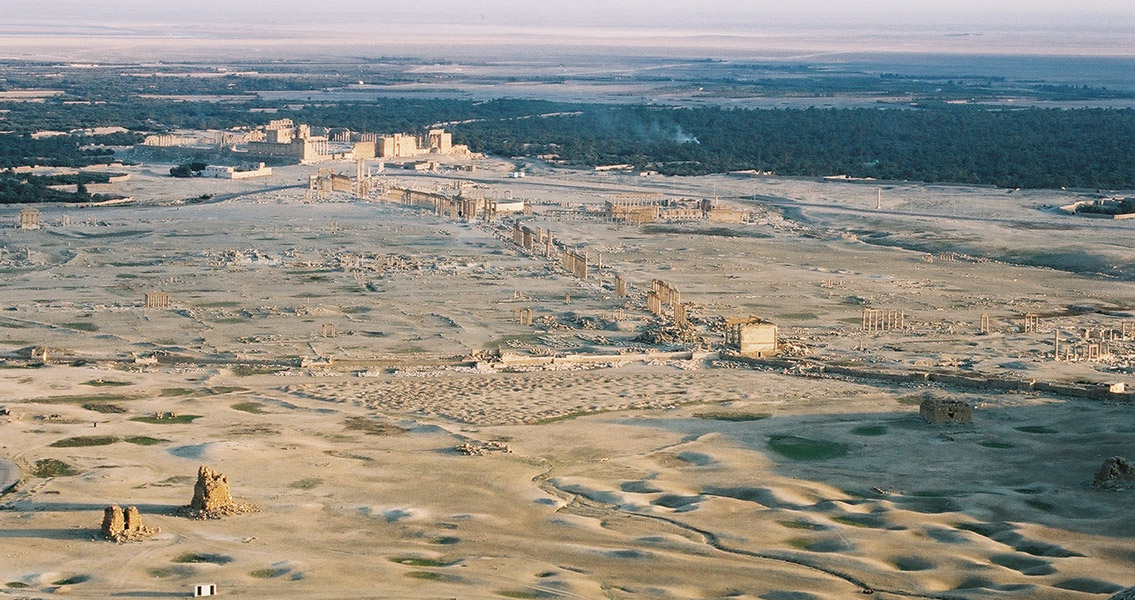
Tagesspiegel newspaper that approximately two-thirds of Aleppo’s old town had been burned and bombed and other sites had been plundered on an industrial scale. She’s branded these types of activities as ‘cultural cleansing’, and has started a campaign called Unite4Heritage to protect important sites. Palmyra was an ancient Semitic city in present-day Syria, with archaeological finds dating back to the Neolithic period. Renowned merchants, the Palmyrenes established settlements along the silk road and did business throughout the Roman Empire. Wealth from the trade caravans allowed the city to build monumental construction projects like the Temple of Bel, the Great Colonnade and the tower tombs. Heavily influenced by Greco-Roman culture, Palmyra produced distinctive architecture and art that reflected both western and eastern traditions. After the recapture of Palmyra early this year government experts discovered statues with the faces chipped off (some interpretations of Sharia law disallow the depiction of the human form) and others that had been left shattered on the floor. Although authorities had taken what they could from the museum as ISIL advanced, larger items and items that were fixed to the walls were left to the mercies of the militants. ISIL left a wide path of destruction on the inhabitants, defenders and ancient treasures of Palmyra. Captured Syrian army soldiers were reportedly executed in the Roman amphitheater, and hundreds of medical personnel, government officials, and the women and children from hated tribal groups were killed in and around the city. It was the death by beheading of the elderly Khaled al-Assaad, the head of the city’s antiquities who refused to reveal where artifacts had been hidden, which garnered the most attention around the world. ]]>
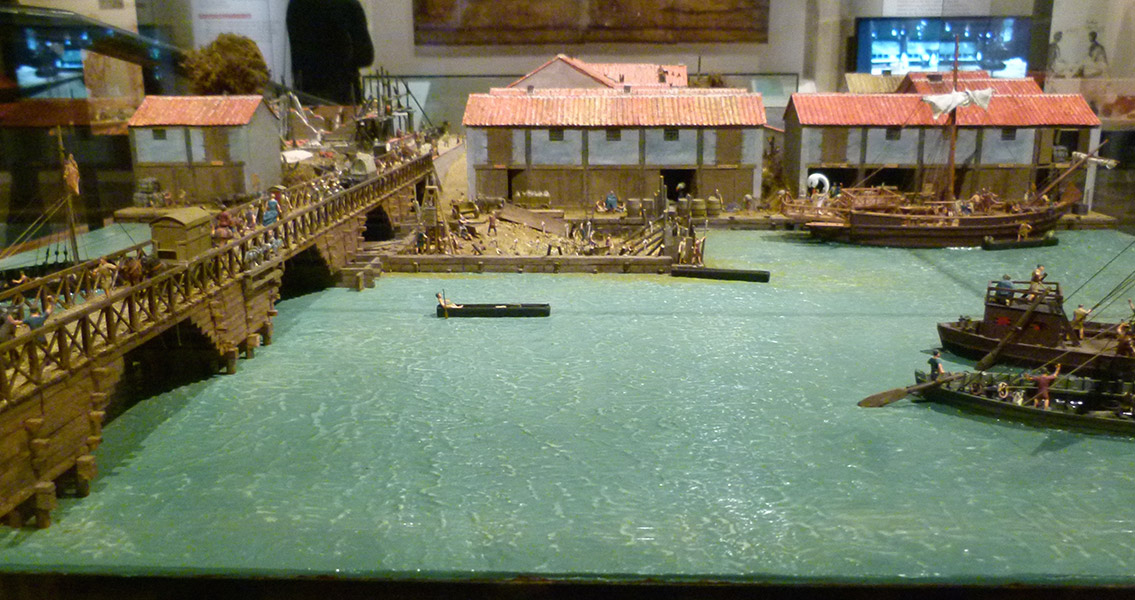
MOLA website]]>

Ancient Origins in 2014. Tellingly, no other signs of life, such as surface pottery, have since been found at the site, and the mystery of the supposed architectural remains continued. Published in the Journal of Marine and Petroleum Geology, the joint research study by the University of East Anglia (UK) and the University of Athens (Greece), claims that the site was in fact created by a natural geological phenomenon in the Pliocene era, five million years ago. “We investigated the site, which is between two and five meters under water, and found that it is actually a natural geologically occurring phenomenon.” said Professor Julian Andrews, lead author of the study from UEA, in a press release. “The disk and doughnut morphology, which looked a bit like circular column bases, is typical of mineralization at hydrocarbon seeps – seen both in modern seafloor and palaeo settings.” The Ephorate of Underwater Antiquities of Greece launched the latest investigation of the site. Archaeologist Magda Athanasoula and diver Petros Tsampourakis studied the submerged remains, along with Prof Michael Stamatakis from the Department of Geology and Geoenvironment at the University of Athens. A combined research team was then composed of UEA and UoA staff, which analysed the mineral content and texture of the formation using microscopy, X-ray and stable isotope techniques. “We found that the linear distribution of these doughnut shaped concretions is likely the result of a sub-surface fault which has not fully ruptured the surface of the sea bed. The fault allowed gases, particularly methane, to escape from depth.” explained Prof. Andrews. “Microbes in the sediment use the carbon in methane as fuel. Microbe-driven oxidation of the methane then changes the chemistry of the sediment forming a kind of natural cement, known to geologists as concretion. “In this case the cement was an unusual mineral called dolomite which rarely forms in seawater, but can be quite common in microbe-rich sediments.” Andrews continued. “These concretions were then exhumed by erosion to be exposed on the seabed today.” It is rare for the phenomenon to occur in such shallow waters – the site is between just two and six meters below the surface – meaning although not the location of some mysterious lost city, the site is still remarkable. Andrews explained that the process which led to the formation is in fact similar to the effects of fracking, but significantly slower. ]]>

Exeter Express and Echo the revelation of the cargo barge was an exciting climax to the archaeological excavations which have occurred over the past three seasons. Additionally, the excavation sites are adjacent to the new Stover Trail bicycle path, which has resulted in a tremendous amount of interest from those using the path. The project is funded in part by the Mick Aston Archaeology Fund, awarded by the Council for British Archaeology. Image courtesy of Wikimedia Commons user Derek Harper ]]>
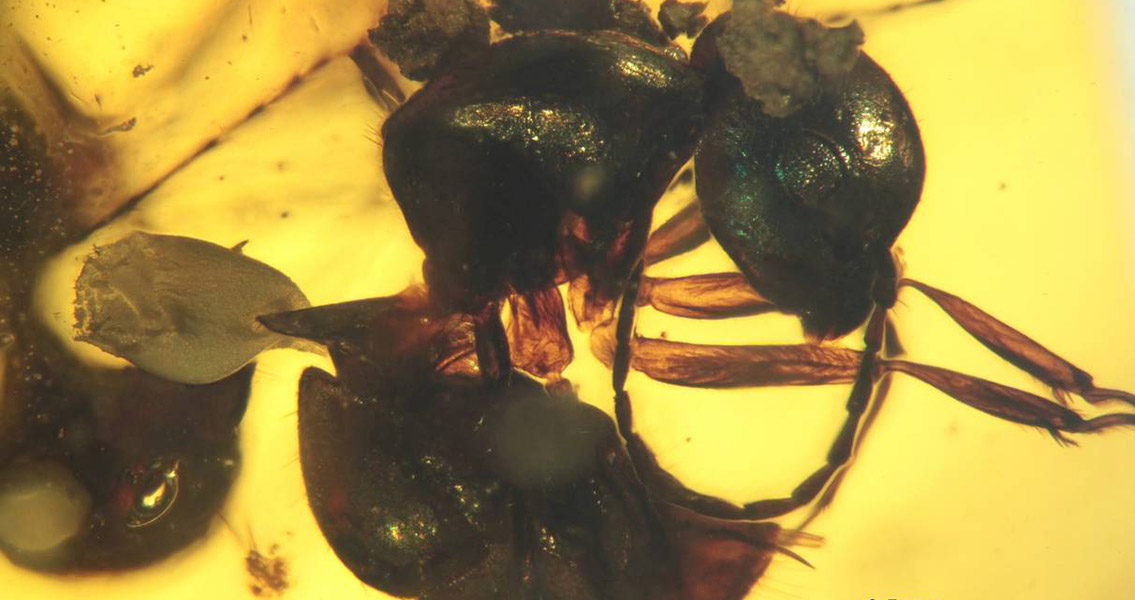
Ceratomyrmex ellenbergeri, is thought to have used its horn and mandibles to trap prey relatively large for its size. C. ellenbergeri, which belongs to the Formicidae stem-group, seems to be an exception to the idea of social evolution in Cretaceous ant species. The bladelike horizontal movement of the species’ mandibles are unique, resembling the Haidomyrmecine ants of the same time period which have long puzzled evolutionary biologists when it comes to classifying their ecology; both these species bear little in common with other large-mandible solitary hunter ant species such as modern trap-jaw ants. According to a press release from the Chinese Academy of Sciences, a new research paper spearheaded by Dr. Wang Bo from the academy’s Nanjing Institute of Geology and Paleontology found that C. ellenbergeri’s remarkable cephalic horn represents a hitherto unseen genetic modification among both ants discovered in the fossil record and the known ant species of today. This shows that the morphology of exaggerated trap-jaws such as in the Haidomymrmecines occurred early in the Formicidae stem group. The implications of the discovery include suggestions that at the very least some of the earliest Cretaceous stem-group ants differentiated themselves by being solitary socialist predators instead of eusocial insects. Additionally, the research study states that soon after ants started forming social bonds during the Early Cretaceous, there was at least one lineage in the form of Haidomyrmecini that grew to become effective at capturing prey – something that would not be seen in ant morphology again until well after the end of the Mesozoic, as evidence of these morphological specializations in the fossil record disappear for millions of years. The highly exaggerated features of the fossilized C. ellenbergeri specimen also show how early Cretaceous ants developed the ability to carry large-bodied prey, despite the fact that smaller prey would have presumably been easier to capture. In the end, the research data indicates that the earliest ants of the Cretaceous had ecological traits that were much more diversified and complex than previously thought. The research study, recently published in the journal Current Biology, can be found online here]]>

The News Minute, the new find was made during an excavation spearheaded by the Archaeological Survey of India. A team of ASI experts say that the village is situated on the ruins of an ancient settlement that would have been on a major highway, one that played an important role in international trade. This roadway featured highly advanced engineering for the time, including a complex sewage and drainage system to collect and re-direct rain and water runoff. Composed of pipe lines created from baked clay, these sewage drains were said to be analogous with those used by the Indus Valley civilization in northwest India and modern-day Pakistan. The Indus Valley civilization is also known as the Harappan civilization – so named for Harappa, the former Punjab province dig site where evidence of the civilization was first discovered in the 1920s. The civilization itself was active during the Bronze Age, roughly between 3000 BCE and 1300 BCE; at its peak, it may have had a population of close to five million. The civilization is well-known for its sophisticated urban planning techniques. In this case, ASI experts say that the settlement in Keezhadi Pallai Sandhaipudur was a minimum of 2,500 years old, meaning it’s both in the wrong time and the wrong place to be part of the Harappan civilization. Instead, this would place it squarely in the Pandiya Dynasty, one of three Tamil dynasties that reigned in southern India from around 600 BCE. The Pandiyan Empire survived, in several different forms, until around the end of the sixteenth century CE; such a drainage system bearing a striking resemblance to ones used by a much older civilization typically found much farther north makes the case for the civil engineers of the Tamil dynasty learning much from their Indus Valley forebears. According to an ASI interview with K Amaranth Ramakrishna, the superintendent of the ASI-sanctioned dig, the fact that the drainage system was found intact is quite rare – shedding more light on this period of Tamil history. Keezhadi village bore strong signs of urban civilization, Ramakrishna added, stronger signs than were discovered in the ancient capital of Kaveri Poompattinam, located where the modern-day Tamil Nadu port city of Poompuhar exists today. There were several different styles of signets discovered during the dig. Other items uncovered by the team of ASI researchers included arrows, weapons made from both copper and iron, an assortment of rare ornaments and a so-called “scribbling nail” as well, which may have been used as a stylus or other type of instrument for making marks on a writing surface. Ramakrishna said that the signets could have been sent along by traders with their products as a way to identify the origin of the goods. The ASI began their excavations at the village on the 18th of January of this year. The dig is ongoing and plans are in place to continue investigating the site until around September of 2016. Image courtesy of Wikimedia Commons user: PlaneMad ]]>
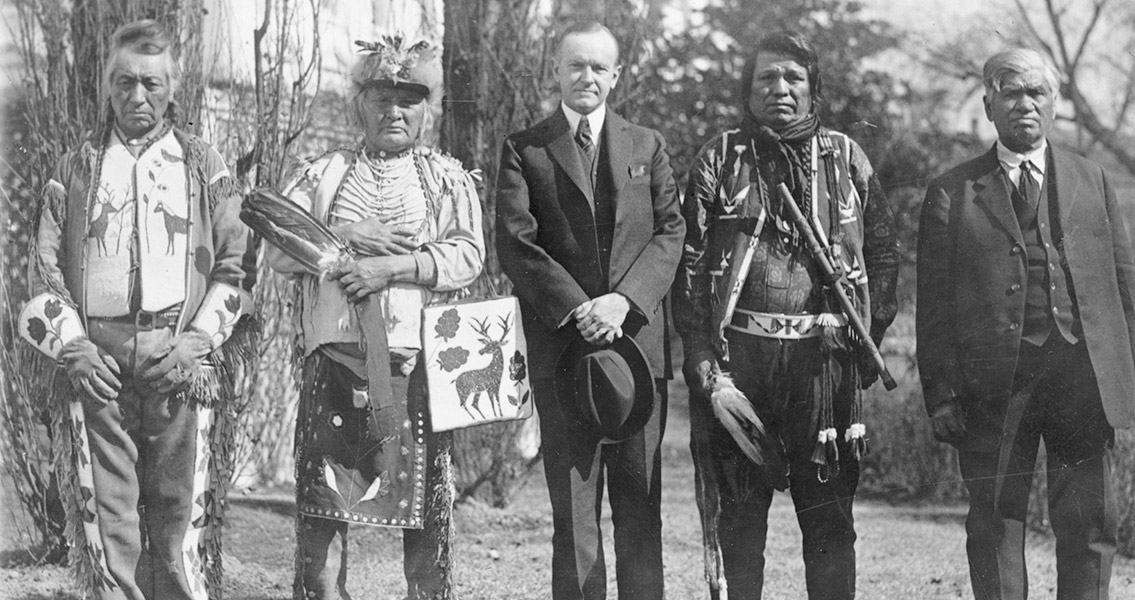
“Be it enacted by the Senate and House of Representatives of the United States of America in Congress assembled, That all noncitizen Indians born within the territorial limits of the United States be, and they are hereby, declared to be citizens of the United States: Provided, That the granting of such citizenship shall not in any manner impair or otherwise affect the right of any Indian to tribal or other property.” President Calvin Coolidge, who had signed the Act, spent much of his presidency trying to appear as a supporter of Native American rights. As the Act was publicly announced, Coolidge posed for a photo with three Osage Indians, two of which were wearing traditional ceremonial dress, outside the White House. Prior to the passing of the Act into law, the USA did not recognise Native Americans as US citizens; excluding them from the rights and guarantees given in the Fourteenth and Fifteenth Amendments. Until 1924, citizenship had only been available to those of 50% or less Native American heritage, or Native American women who had married US citizens. The 1887 Dawes Act had been the previous benchmark of US policy towards Native Americans. It dissolved all Native American tribes as legal entities and redistributed land among individual heads of family, who would become federal and state tax payers. Any remaining land was then deemed surplus and sold off, with the proceeds going towards building Native American schools. Masquerading as a reform to benefit the indigenous people, the Dawes Act’s impact was often the opposite. By 1932, the sale of unclaimed land under the Dawes Act had seen total Native American territories in the USA fall by two thirds. Meanwhile, it left the Native American families with an impossible decision: assimilate into white American culture, or preserve their heritage in poverty. It was a dilemma the Indian Citizenship Act failed to alleviate. Voting rights were not even guaranteed to all Native Americans by the Indian Citizenship Act, denying them the opportunity to meaningfully participate in the US democracy. The US Constitution allowed the states to determine their own voting laws, which meant they could place education or property ownership obligations on their electors to exclude the majority of Native Americans. It wasn’t until 1957 that all states allowed Native Americans to vote, highlighting just how arduous the battle for Native American Civil Rights has been. As has often been the case in US history, the Indian Citizenship Act laid the grounds for Native American assimilation into US life through citizenship, at least showing a difference in perception towards Native Americans. It provided little opportunity however, for Native Americans to defend their dying heritage or achieve true equality and freedom in US society.]]>