Current Biology, is available here Image courtesy of Botting, J. P]]>

Current Biology, is available here Image courtesy of Botting, J. P]]>

here]]>
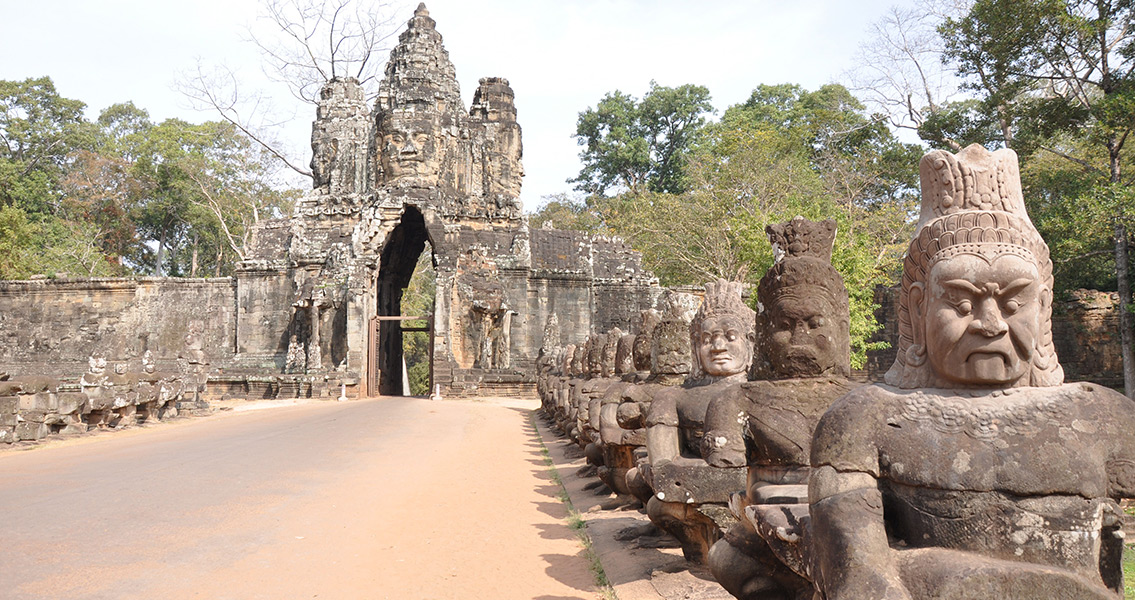
The Cambodia Daily, University of Illinois at Chicago archaeologist Mitch Hendrickson described the find: first the footprint of the furnace was discovered, along with some of the collapsed sidewalls. The base was also found, the Canadian researcher added. There isn’t a question as to whether the people of the Angkor Empire were aware of the process of smelting. In fact, there have been plenty of finds from the time period that point to Angkorian metalsmiths having the knowledge of processing ore in order to extract base metals. What is noteworthy, however, is that this discovery marks the first find of a furnace. The site that yielded the smelter was first surveyed in 2009 by Hendrickson and his colleague Phon Kaseka, the Royal Academy of Cambodia’s director of archaeology. The initial survey was noteworthy because of what appeared to be furnace pipes jutting from the ground; a return in 2013 saw researchers extracting charcoal for radiocarbon dating, revealing that it would have been produced sometime during the Angkor Empire era – between the eleventh and twelfth centuries CE. The new discovery also has implications for what is known about iron production during the Angkor Empire. The metal would have been a key component in all of Angkorian life, from making farming implements to forging weapons for war. Even the construction of Angkor-era temples would have made use of iron bars for reinforcement, according to Kaseka. Kendrickson also commented on the construction of the site, remarking that, based on the evidence, the team believes these furnaces were constructed from clay. The process would have been to smelt the iron within the clay furnace and then break down the walls in order to extract the “bloom”, a porous mass of iron and slag that would then be processed further. The site was likely used for quite some time for smelting, based on several indications. This makes it likely that the nearly intact furnace found by the excavation was the final one used at the facility before winding down smelting operations for some unknown reason. In fact, there were at least six or seven different smelting phases on site, based on one of the excavation trenches that cut through the entire mound, Hendrickson remarked. This, he believes, indicates that there are several more furnaces below where the team is excavating currently. Surprisingly, the size of the furnace was much smaller than anticipated. Kaseka states that even a modest clay furnace of just 1 meter by 2 meters would be sufficient, as long as it was set at a proper angle to allow molten iron ore to flow from it. Images of the excavation can be found here: here]]>

Proceedings of the National Academy of Sciences, can be found here Image courtesy of Yonaton Goldsmith ]]>

Science Advances, can be found here Image courtesy of Yuriy Chernyavskiy]]>
Nature Communications, can be found here Image courtesy of Wits University]]>

Saccorhytus, the miniscule sea creature that resembles nothing so much as a tiny, microscopic sack with a large mouth – a characteristic that some of its descendants today certainly share. The diminutive creature, according to a press release from the University of Cambridge, is the most primitive example to date of a broad biological category of creatures known as deuterostomes. There are several sub-groups under the deuterostome category, including vertebrates. In a recently published research study, scientists from Cambridge, Xi’an China’s Northwest University and other international locations say that Saccorhytus has the honor of being a common ancestor of a massive range of species. Additionally, the deuterostome represents the earliest stage ever discovered regarding the evolution of humans over the course of hundreds of millions of years. There is, of course, nothing even vaguely human when it comes to Saccorhytus. Measuring around a millimeter in size, its habitat was likely the seabed, being small enough to live between individual grains of sand. The microfossil that contained the creature proved to be well-preserved enough for the scientists to make several determinations – including the lack of any orifice for removing waste, such as an anus. In other words, our far-advanced evolutionary predecessor would have expelled waste the same way it came in – unappealing to say the least. One of the main authors of the study, Professor Simon Conway Morris from Cambridge’s St. John’s College, remarked that Saccorhytus looked like nothing so much as tiny black grains to the naked eye. However, under microscope magnification the level of detail preserved by the fossil was nothing less than “jaw-dropping,” the researcher added. Northwest University’s Degan Shu also commented, stating that the research team has a wide array of discoveries to its credit, including a variety of other early deuterostomes like Saccorhytus and also the earliest known instance of what could be classified as a fish. The discovery of the new sea creature, however, provides scientists a glimpse into the very first known evolutionary step of not just humans but also a wide range of related animals, the researcher said. Discovered in China’s central Shanxi Province, the Saccorhytus microfossils have been dated to 540 million years old, a good 20 to 30 million years earlier than the majority of other early deuterostome finds. Researchers were able to construct a picture of how the creature might have looked by isolating the fossils from the surrounding rock and then subjecting them to CT scans and electron microscopy. The amount of limestone the team needed to process in order to access these fossils was massive – approximately three tons, according to co-author Dr. Jian Han, Degan Shu’s colleague at Northwest university. The new research study, which was recently published in the journal Nature, can be found online here Image courtesy of S Conway Morris / Jian Han]]>
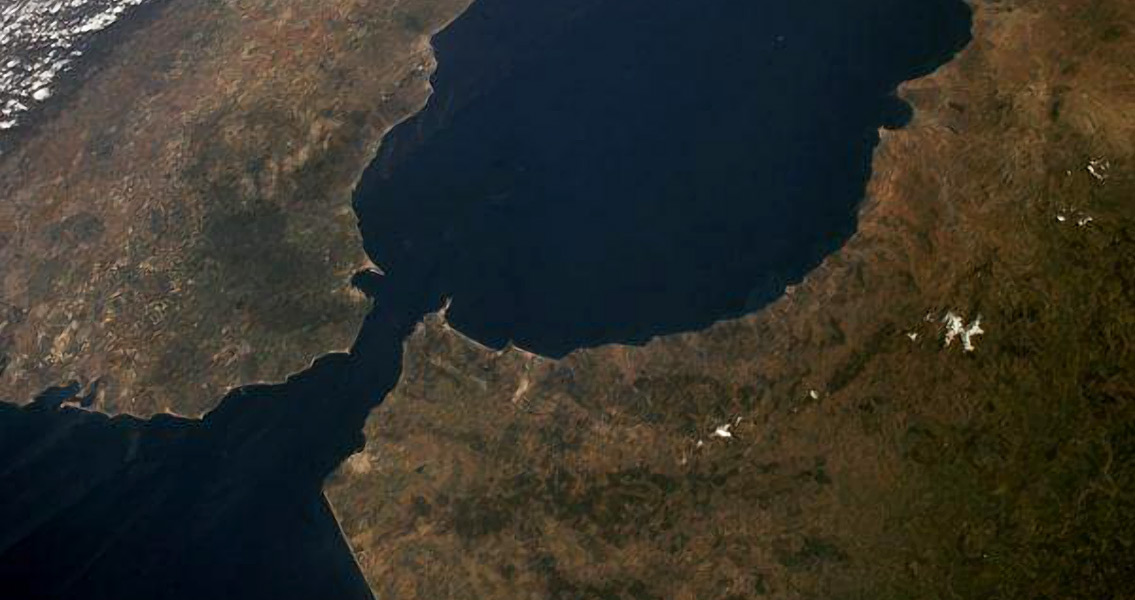
Tectonophysics, can be found online at Science Direct Image courtesy of NASA ]]>