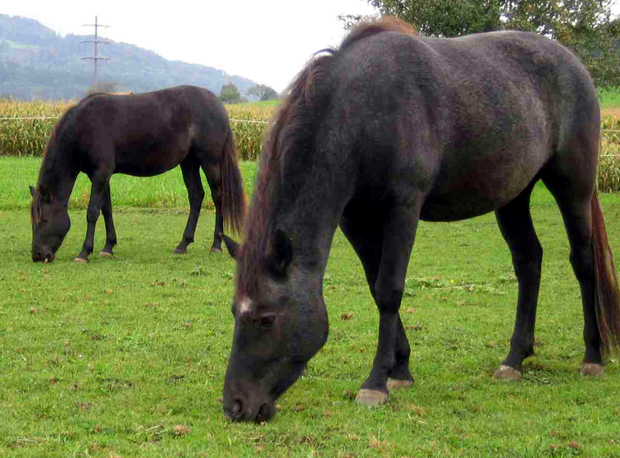
Image credit: Amy Smith[/caption]
A unique genetic history
Iceland’s first settlers arrived from Norway, Britain and Ireland between 870 and 930 AD. In just over 1,000 years, its population has grown modestly to 330,000. Opportunities to directly study the founding of a human population and its subsequent evolutionary history are rare. With such a small, isolated population with some inbreeding, it is often considered a particularly interesting subject for genetic studies. CSIC researcher Carles Lalueza-Fox from the Institute of Evolutionary Biology explains: “This work takes an in-depth look at the process which makes small, isolated populations go through random changes in their genetic variability over time. Present-day Icelanders have been affected by 1,100 years of profound genetic drift. This means they are more similar to each other, yet different to modern populations of continental Europe.”Gender bias in Iceland
deCODE Genetics, a Reykjavik biotechnology firm, contributed seven centuries’ worth of genelogical records to the study. The information confirms a gender bias in the population of Iceland. “The settlers of Celtic origin had fewer offspring compared with those of Norwegian origin. This is probably because there were more men of Scandinavian origin compared to more women – who would probably have come to the country as slaves and servants – from Scotland and the rest of Britain,” explains Lalueza-Fox. Sunna Ebeneserdóttir, a researcher from deCODE Genetics, continues: “We have always known that Icelanders descended from Norwegians and Celts, and the analysis of the ancient genomes from the first colonists allows us to see what they were like, both before mixing started, as well as throughout the whole process.” [caption id="attachment_8691" align="aligncenter" width="500"] Image credit: Amy Smith[/caption]
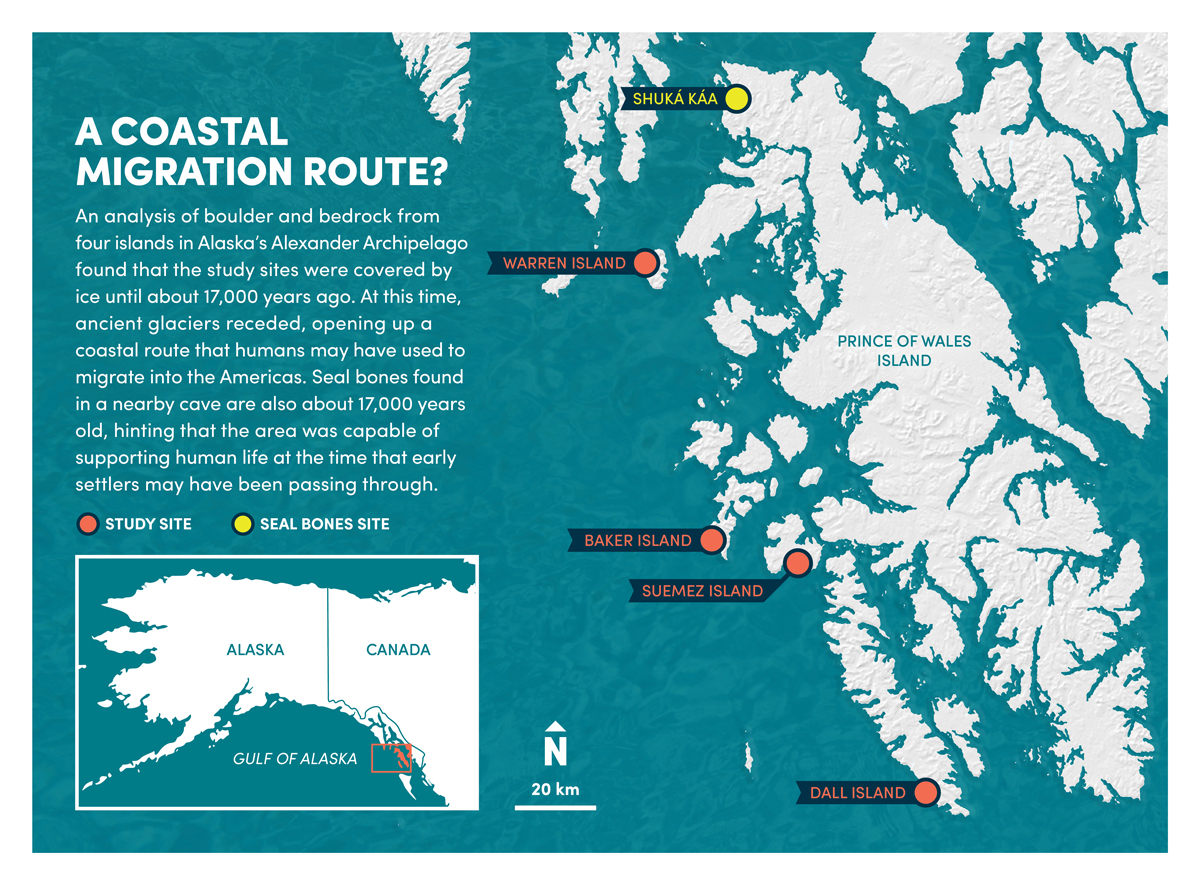

 The investigation was in challenging terrain. Photo: Jason Briner[/caption]

 Action off Cartagena, 28 May 1708. Oil by Samuel Scott.[/caption]
With the help of an underwater autonomous vehicle, the Woods Hole Oceanographic Institution was able to locate and observe the shipwreck for the first time in 2015. The project has been kept secret, says Rob Munier, WHOI’s vice president for marine facilities and operations: “We’ve been holding this under wraps out of respect for the Colombian government.”
New details about the discovery have recently been released with permission from the agencies involved in the search, including the Colombian government.
[caption id="attachment_8677" align="aligncenter" width="500"]



 The DNA test uses some of the most advanced autosomal testing technology. Science combines with the store of information now available on line to map ethnicity going back through multiple generations. This is all achieved through a simple saliva test. The test looks at a person’s entire genome and covers both the maternal and paternal sides of the family tree.
However, some pundits maintain that ethnic testing is not reliable. The methods used for ancestral DNA testing are not the same as DNA testing for other purposes. The autosomal testing base is considered to be one the less reliable forms of DNA testing.
Further, the results are partly based on responses from a pool of other people who have had similar testing, what are described as a reference population. So the results could come across as a little skewed. Arguably until many more people have put themselves forward for ethnicity testing, there will remain naturally limiting factors.
Some ethnicities are easier to identify than others, for example, Jewish results seem to be highly accurate. But if you look at the evolution of the European landmass, war followed by shifting borders followed by more war and so on, most Europeans are actually an ethnic mix. In the same way, the inhabitants of the British Isles are a mix of invaders and the resident population who were themselves probably also invaders at an earlier point in time.
Living ancestry is becoming a real thing and there are people who create heritage tours. These are based on documented evidence of past family members and genetic testing. The idea is to make it possible for you to stand on the same soil as your ancestors. But ethnicity testing has a long way to go if it is going to catch up and compete with hard historical evidence when it comes to clear and factual accuracy.
]]>


 The Middle East department at the museum has a huge collection of clay tablets with cuneiform inscriptions. Dr Finkel’s department researches and decodes the inscriptions, linking the tablets together where possible to provide a linear story. This is where the true revelation about Noah’s Ark came from.
Cuneiform is an ancient system of writing used in the Middle East. The word, Cuneiform, means wedge-shaped and indeed the script comprises wedge-shaped marks on clay tablets.
A clay tablet of some 4,000 years old in the British Museum has revealed that the famed vessel was, in fact, round and not as has been thought and portrayed, rectangular. Not only has the tablet revealed this piece of information but it has also detailed the materials used to build the ark and the precise measurements. The discovery was a chance find made by deciphering the Cuneiform and linking it to other tablets to compile the ancient Babylonian story, the Story of the Flood.
The ark was constructed out of wooden ribs and palm fibre rope with hot bitumen used after construction to render the vessel waterproof. The instructions were given by a Mesopotamian god and the dimensions are translated to be 3,600 square metres, with walls to a height of six metres. This equates to an area around two thirds the size of a modern football field. The sixty lines on the tablet also include the order that the animals must enter, ‘two by two’.
The odds surrounding this discovery were revealed to be even greater when the story of how the tablet came into the possession of the Museum was recounted by Dr. Finkel. A man called Douglas Simmonds came into the museum with a clay tablet which he wanted identified, a normal day at the office for Dr. Finkel. The tablet was a family piece given to the owner by his father as a reward for passing his exams. The tablet had been acquired by Mr Simmonds’ father, Leonard, along with a few other less interesting bits and pieces in the late 1940s after serving with the RAF in the Middle East.
This unique tablet recounts the story of the ark and is far older than the known biblical accounts. Finkel has described the discovery of the tablet as one of the most important human records ever found but in a shocking paradox, is absolute in his belief that the ark never actually existed.
The tablet remains on display at the British Museum where it has been since 2014 on loan from Mr Simmonds.]]>

 Russian pickpocketry takes on a different form now in this modern age, and with arguably a far greater reach than merely arms’ length. Russia has a fearsome reputation as home to some of the most deadly and serious cyberhacking groups such as Anonymous International and the Koobface Gang. They are to modern cyber crime what their villainous ancestors were to the pockets and valuables of eighteenth century Russia.
Sometimes hackers are motivated by political ideology and a cause to believe in but Russian hackers simply seem intent on emptying other peoples’ bank accounts, and not a thieves’ coin in sight.
]]>

 Still so relevant today in modern conflicts in the Arab state, the RAF is held in great affection by the British people. The UK is awash with a year of events and celebrations to mark the first one hundred years of the RAF.
With an eye watering budget of £8 million, concerts, flypast and tattoos are all planned. A commemorative £2 coin has been struck by the Royal Mint featuring five different designs.
The Ministry of Defence has released an iconic set of pictures to tell the story of the RAF through the decades. Some of the pictures have been colourised by an expert which is a relatively modern technique designed to breathe life into old pictures. The colourised versions convey a depth of feeling and atmosphere that is not present in the black and white originals.]]>