Categories
Breaking News

Secrets of the Neanderthals: collaborative, intelligent hunters

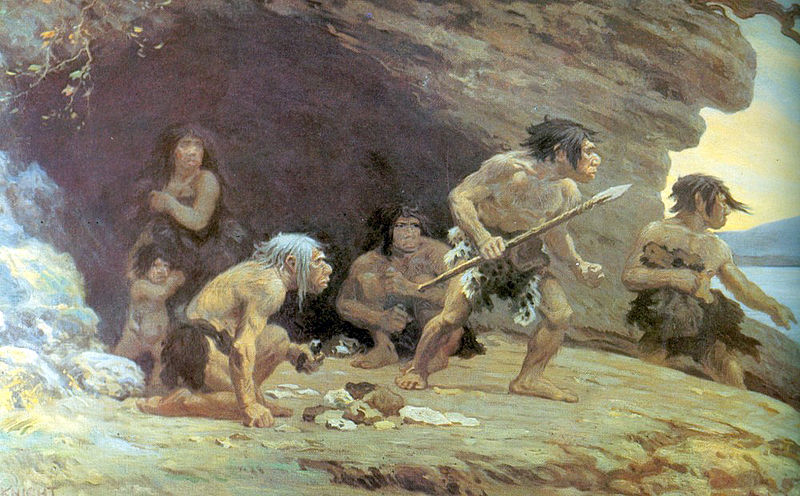
they, and not humans, created the first cave paintings. Now, with an analysis of prehistoric animal remains from Germany, we can deduce that Neanderthals were capable of sophisticated and collaborative hunting strategies. [caption id="attachment_8773" align="aligncenter" width="500"] Credit: Le Moustier Neanderthals by Charles R Knight, 1920[/caption]

120,000-year-old secrets

Cut marks on the bones of two deer from 120,000 years ago provide the earliest evidence that weapons were used to stalk and kill prey. The findings, published in Nature Ecology and Evolution, used microscopic imaging and ballistics experiments to confirm that at least one of the blows was delivered at low velocity with a wooden spear. Sabine Gaudzinski-Windheuser, a researcher at Johannes Gutenberg-University Mainz, Germany has commented: “This suggests that Neanderthals approached animals very closely and thrust, not threw, their spears at the animals, most likely from an underhand angle.” “Such a confrontational way of hunting required careful planning and concealment, and close cooperation between individual hunters,” she continues.

A brief history of the Neanderthals

Neanderthals occupied areas in Europe from around 300,000 years ago. They died out 30,000 years ago, when they were overtaken by humans. For a long time, it was considered that Neanderthals simply lacked the intelligence to compete with humans, but evidence such as this new study has turned that argument on its head. For instance, it was thought that Neanderthals lacked symbolic culture; but as we now know, they were creating cave paintings 20,000 years before humans arrived in Europe. Similarly, they buried their dead in a ritual fashion, proving a symbolic culture in itself. New Historian has previously published a study on the differences between the Neanderthals and humans, which you can read here. [caption id="attachment_8774" align="aligncenter" width="500"] A model an adult Neanderthal male head and shoulders on display in the Hall of Human Origins in the Smithsonian Museum of Natural History in Washington, D.C. Credit: Tim Evanson[/caption]

Neanderthals: cleverer than we might have thought

Hominins, which include both early human species as well as our own, are likely to have hunted with weapons more than 500,000 years ago. 300-400,000 year old wooden staves have been found in England and Germany, and are the oldest known spear-type implements that could have been used to kill prey. However, with no physical evidence that they were indeed used for hunting, scientists have speculated. This new finding removes any doubt: these were hunting tools. “As far as spear use is concerned, We now finally have the ‘crime scene’ fitting to the proverbial ‘smoking gun’,” Gaudzinski-Windheuser says. Excavations from nearby sites have provided us with tens of thousands of bones from huntable animals such as deer, horses and bovids. Thousands of stone artefacts also found nearby help to paint the picture of a flourishing Neanderthal forest lifestyle between 135,000 and 115,000 years ago. Despite having been discovered around 20 years ago, these deer bones have now been examined with new technologies. They have allowed us to tell which injuries were fatal, the kind of weapon used and what kind of distance there was between the hunter and his prey. Annemieke Milks, a researcher at the Institute of Archaeology at University College London writes in Nature Ecology and Evolution: “the ballistics work is experimental archaeology at its best”.]]>

Categories
Breaking News

Sweden has been brewing beer since the Iron Age

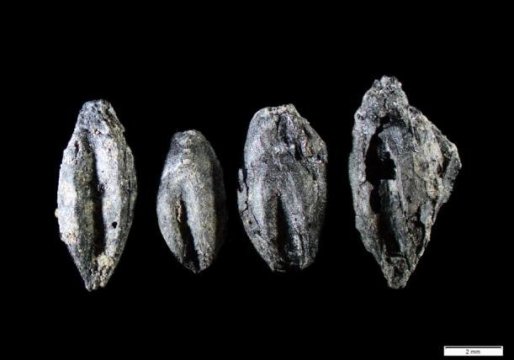
Carbonized germinated grains found at Uppåkra, Sweden.
Credit: Mikael Larsson[/caption] “We found carbonised malt in an area with low-temperature ovens located in a separate part of the settlement. The findings are from the 400-600s, making them one of the earliest evidence of beer brewing in Sweden,” says Mikael Larsson, a specialist in archaeobotany, the archaeology of human-plant interactions.

Beer: a hazy history

The brewing, consumption and distribution of beer was an important aspect of many ancient societies across the world. By way of example, beer was produced in Mesopotamia as far back as 4000 BCE. There have been suggestions that Mesopotamians could have been drinking beer in 10,000 BCE, but there is little evidence to back this up. We do know, though, that beer was drunk in Northern China 9,000 years ago. [caption id="attachment_8765" align="aligncenter" width="640"] Beer has played an important role in society for at least 10,000 years. Credit: Pixabay[/caption] But for the Nordic countries, evidence of early beer consumption is scarce, as there are no written sources from before the Middle Ages in this region. Knowledge of beer production has been, so far, dependent on botanical evidence. Existing findings are limited, though early traces of malt for beer brewing have been discovered in two other places in the Nordics. One is in Denmark from 100 CE and one is in Eketorp on Öland from around 500 CE. “We often find cereal grains on archaeological sites, but very rarely from contexts that testify as to how they were processed. These germinated grains found around a low-temperature oven indicate that they were used to become malt for brewing beer,” says Larsson.

A centre of political & religious power

Uppåkra, where the grains were discovered, is the largest known Iron Age settlement in southern Scandinavia. It served as a densely populated political and religious centre of power for more than 1000 years, from the 100s BCE to the 1 000s CE. Many imported and luxury items have been discovered at Uppåkra. Jewellery and glass bowls found on the sites indicate that the location was a rich, bustling trading centre – one that would likely play host to Scandinavia’s oldest brewery.

Scandinavia’s oldest brewery

Making beer is a two-stage process. Before the actual brewing, the malting process must be executed. Grains are soaked in water, which will allow the grain to germinate. While that’s happening, enzymatic activities convert both proteins and starches of the train into fermentable sugars. When enough sugar has been formed, the germinated grain is dried in an oven with hot air. It was this oven that was discovered and studied in Uppåkra, Sweden. Larsson explains: “Because the investigated oven and carbonised grain was situated in an area on the site with several similar ovens, but absent of remains to indicate a living quarter, it is likely that large-scale production of malt was allocated to a specific area on the settlement, intended for feasting and/or trading.”]]>

Categories
Breaking News

‘King Arthur’ inscriptions prove multiculturalism of 7th Century Cornwall

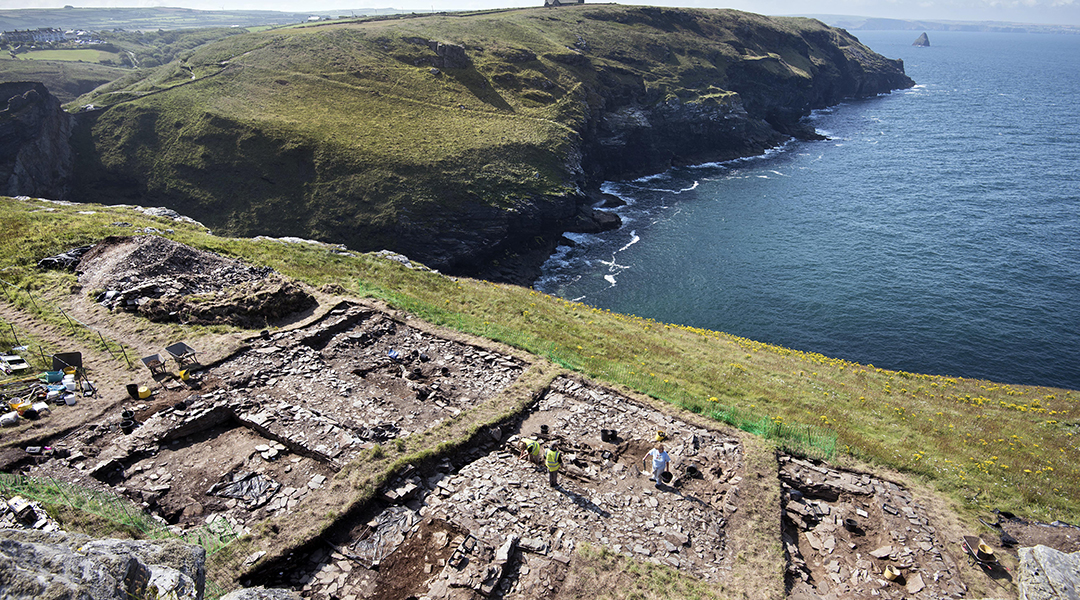
A court on the coast? The craggy Cornish coastline might not seem like an obvious choice for the location of a royal court. Nonetheless, English Heritage, which manages Tintagel Castle, says the find “lends further weight to the theory that Tintagel was a royal site with a literate Christian culture, and a network of connections stretching from Atlantic Europe to the eastern Mediterranean.” [caption id="attachment_8761" align="aligncenter" width="500"] Ancient writing inscribed in slate was discovered during an ambitious excavation at Tintagel Castle last summer. English Heritage has revealed the find ahead of it going on display at the Cornish castle. Credit: English Heritage / Emily Whitfield-Wicks[/caption]

Multiculturalism inspires early literacy

Measuring two feet long, the slate windowsill displays Latin and Greek inscriptions alongside Christian symbols. Roman and Celtic names ‘Tito’ and ‘Budic’ are legible, hinting at a thriving multicultural community in this part of Cornwall. The Latin words ‘fili’ (son) and ‘viri duo’ (two men) are also written. [caption id="attachment_8760" align="aligncenter" width="500"] Specialist digital imaging was created by Dr Tom Goskar to show the detail of the inscription. English Heritage has worked with a panel of experts to decipher the cryptic message from the past. Credit: English Heritage /Tom Goskar[/caption] It is believed that the scribe was practicing their handwriting while gazing out to sea. The decorative script can be likened to the illuminated Gospel manuscripts of the age, meaning that whoever wrote this would have been familiar with those texts. English Heritage Curator Win Scutt comments: “It’s incredible to think that 1300 years ago, on this dramatic Cornish cliff-top, someone was practising their writing, using Latin phrases and Christian symbols. We can’t know for sure who made these marks or why, but what we can say is that 7th Century Tintagel had professional scribes who were familiar with the techniques of writing manuscripts –– and that in itself is very exciting.” Writing from the early Middle Ages is rarely legible, but these words and symbols are clear enough to indicate that the person was familiar with both informal and formal scripts. Scutt continues: “Our ongoing research has already revealed the extent of Tintagel’s buildings and the richness of the lifestyle enjoyed here. This latest find goes one step further to show that we have a literate, Christian community, with strong connections from Atlantic Europe to the Mediterranean. Writing was a privileged pursuit, undertaken by specialist scribes attached to the Church or wealthy households. The discovery of this stone supports the idea that Tintagel was an important, thriving trade port, and a high-status settlement which could have been the seat of Cornish kings.” University of London’s Michelle Brown will decipher the inscription with the assistance of textual expert Oliver Padel. She considers the style of the writing to be as significant as the chosen words: “The survival of writing from this period is rare and this is a very important find, especially in terms of the continuity of a literate Christian tradition in post-Roman Cornwall. The lettering style and language used, as well as Christian symbols exhibiting Mediterranean influence and contacts, all reveal precious clues to the culture of those who lived at Tintagel in the 7th century.”

Deep research planned

The windowsill is not the first example of medieval writing to be unearthed at Tintagel Castle. In 1998, research revealed a stone inscribed with several words, including the Celtic name ‘Artognou’. Like the Artognou stone before it, this new windowsill is scheduled to undergo deep analysis. High resolution scanning is planned, which is likely to reveal just how the marks were engraved.

“We can’t ignore legends”

The legend of King Arthur was first brought to attention in the 12th Century by Geoffrey of Monmouth’s The History of the Kings of Britain. The debate over King Arthur’s existence continues; though Scutt considers the legend itself to have profound importance. “We can’t ignore legends,” he says. “This castle was built by Richard, Earl of Cornwall purely because of the Arthurian legend. There was no other reason for the castle to be here. These excavations will enable us to learn more about the older site, and we hope in turn they will encourage people to visit it.” For now, the stone will go on display at Tintagel Castle in Cornwall, UK.]]>

Categories
Breaking News

3,000 year old funeral rituals show earliest evidence of human hair dye

Early funeral rituals: mysteries revealed A collaborative excavation from the University of Granada in Spain, the University of Tübingen in Germany and the University of Cambridge in the United Kingdom has uncovered around one hundred bodies; many of which have been affected by hitherto undiscovered funeral rituals, including hair that has been dyed red. The bodies were uncovered in a Biniadris Cave, which would have been frequented by different societies over a period of between 3,300 and 2,600 years ago.   [caption id="attachment_8737" align="aligncenter" width="500"] View of the entrance to Biniadris Cave in Menorca. Credit: University of Granada[/caption]

Hair dye and its symbolic value

Two archaeological researchers from the University of Granada, Dr. Eva Alarcón García and Dr. Auxilio Moreno Onorato, have written: “Evidently, the red tufts of hair must have had symbolic value for these social groups. They were perfectly cut and deposited in containers of varying sizes that were made of different materials (metal, leather and even wood), which were then hidden in specific parts of the cave.” [caption id="attachment_8738" align="aligncenter" width="500"] Remains discovered in Biniadris Cave, Menorca. Credit: University of Granada[/caption]

A unique combination of funeral rituals

As well as colouring the deceased’s hair red, members of this society practiced a collection of funeral rituals that reflect their local religion and its symbolism. For example, the researchers found that the bodies were usually placed in the centre of the cave, where they were surrounded by ceramic fragments. Trepanation, a symbolic act in which a hole is drilled into the skull of the deceased, was also practiced on many of the bodies. Dr. Eva Alarcón García notes: “There are no precedents for these kinds of social practices in the Iberian Peninsula and they are unique to the Balearic Islands. The buried were placed in the middle of the cave and a variety of elements were used during the rituals, such as plant materials (branches and trunks), ceramic vessels that must have played an important role given the degree of fragmentation they exhibit, iron oxide ores (‘ochre’), etc.”  

Ritualistic attire for Menorca’s deceased

The team of archaeologists also found that many of the bodies were dressed up in ritualistic attire. Needles, fabric and ancient V-perforated buttons made from bones and wild boar tusks were discovered in the cave, close to the bodies. The remains of the hairs and fabric are currently being studied through carbon-14 dating at the University of Cambridge. “Undoubtedly, the findings at the Biniadris Cave will raise many questions and pave the way for new lines of research, not only from archaeological perspectives but also from anthropological ones. For now, the main objective of the research is to solve the enigmas presented by these mysterious funeral rituals performed long ago in the Biniadris Cave,” they conclude.]]>

Categories
Breaking News

Revealed: the secrets of pre-Viking whaling

Credit: Wikimedia Commons[/caption]

Toys and games as evidence for early whaling

A visit to a typical Swedish museum will expose visitors to extensive collections of Iron Age board game pieces. Thousands of pieces have been found, helping to paint a picture of early Scandinavian culture and communication. But new studies from the University of York and Uppsala University have analysed the raw materials, showing that these toys were commonly made out of whale bone from the mid 6th Century. Suggesting an advanced method of production, they were created in large volumes and had standardised forms. As a result, researchers believe that a steady access to whale bone would have been necessary; and since it is unlikely that the carcasses of beached whales would have been in rich supply, we’re able to interpret this as evidence for early whaling. Adding to the theory, gaming pieces and toys made from whale bone appear at around the same time as larger boathouses, as well as production features for blubber, were becoming more common in Norway. It’s likely that the toys were made in this region, before being transported southwards and ultimately being used as playthings and burial gifts in Sweden.  

Whaling in folklore

Despite northern Europe’s large-scale whaling being discussed frequently, its origins have long been shrouded in mystery. Alleged sources have been controversial: 9th Century sagas about the Norwegian merchant Ohthere or Ottar, who was a guest and informant at the court of King Alfred the Great, mention his penchant for hunting large whales. Similarly, there are written sources that detect large-scale whaling during the Viking Age in Scandinavia. Neither source is unanimously regarded as true.  

Determining the species

The team was able to determine the materials for a number of game pieces using Zooarchaeology by Mass Spectrometer, or ZooMS. The method revealed that all of the analysed pieces came from the North Atlantic right whale, the Eubalaena glacialis: a huge whale that typically weighs around 50 to 80 tonnes. The animal got its name because it was the ‘right whale’ to hunt. It was known for swimming slowly and close to the shore, and it contained so much blubber that it would float after being killed. With only 300 in known existence, the North Atlantic right whale is one of the world’s most endangered large whales. By shedding a light on the history of its hunt, this research could certainly affect calculations on the development of its population. [caption id="attachment_8733" align="aligncenter" width="500"] Atlantic Northern Right Whale mother and calf. Credit: Wikimedia Commons[/caption]

Pre-urban, pre-Viking trading networks

As well as shedding light on early whaling, the archaeologists believe these findings are an important component for researching extensive early trading networks. Alongside other goods such as bear furs, birds of prey, and an increased iron and tar production, whale bone products indicate that Scandinavia had developed strong, pre-urban trading routes – 200 years before the Viking Period. To complement the research, an in-depth supplementary study will analyse human influence on the marine ecosystems in relation to the population of whales in European waters, since the story of whaling goes back much further than we previously thought.]]>

Categories
Breaking News

Elongated skulls reveal female-biased immigration to Early Medieval Germany

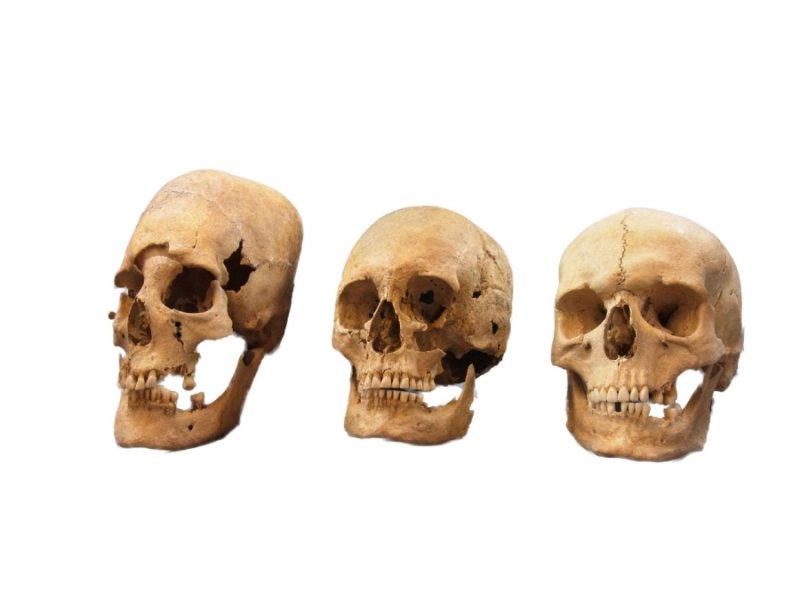
These are strong, intermediate, and non-deformed skulls (from left to right) from the Early Medieval sites Altenerding and Straubing in Bavaria, Germany.
Credit: State Collection for Anthropology and Palaeoanatomy Munich[/caption] In recent years, an international and interdisciplinary team of anthropologists and population geneticists has congregated to explore this transition. The team has now published a palaeogenomic study, which investigates early medieval migration in southern Germany and the peculiar phenomenon of artificial skull deformation. They performed the first genomic analysis of populations that occupied German Bavaria around 500 AD; shedding light on the complex population dynamics of the Völkerwanderung, or Migration Period. Dr Michaela Harbeck from the Bavarian State Collection for Anthropology and Palaeoanatomy (SAPM) teamed up with population geneticist Professor Joachim Burger of Johannes Gutenberg University Mainz (JGU). Working with them were Dr. Krishna Veeramah from US Stony Brook University and colleagues from the UK and Switzerland.  

A curious genetic profile

The study, which analysed 40 different inhabitants, revealed that most ancient Bavarians had a genetic similarity to Central and Northern Europeans. But one group had a particularly diverse genetic profile: the female skulls had been artificially deformed into a tower shape. [caption id="attachment_8728" align="aligncenter" width="500"] Credit: State Collection for Anthropology and Palaeoanatomy Munich. Artificially deformed female skull from Altenerding, an Early Medieval site in Bavaria[/caption] “Parents wrapped their children’s heads with bandages for a few months after birth in order to achieve the desired head shape,” says Dr. Michaela Harbeck. “It is difficult to answer why they carried out this elaborate process, but it was probably used to emulate a certain ideal of beauty or perhaps to indicate a group affiliation.”  

Elongated skulls: A long history

Elongated skulls are found in civilisations across history. The earliest written record refers to the Macrocephali, or Long-heads, and dates to 400 BC; though studies have determined its prevalence in cultures for many thousands of years earlier. Dr. Krishna Veeramah, first author of the study, says: “The presence of these elongated skulls in parts of eastern Europe is most commonly attributed to the nomadic Huns, led by Atilla, during their invasion of the Roman Empire from Asia, but the appearance of these skulls in western Europe is more mysterious, as this was very much the fringes of their territory.”  

Migrating from east to west

DNA analyses of these skulls revealed that the women migrated to early Bavarian settlements from areas across eastern Europe. As well as their deformed skulls, the women tended to have darker colouring in comparison to the other Bavarians they were living with, who generally had fair hair and blue eyes. “Although there is evidence that there was some genetic contribution from Central Asia, the genomic analysis points to the fact that women with deformed skulls in this region are genetically most similar to today’s south eastern Europeans, and that the Huns likely played only a minor role in directly transmitting this tradition to Bavaria,” Burger says. Those with deformed skulls were not the only women migrating to Bavaria. Two women closely resembling modern Greeks and Turks can also be identified. “Most of these foreign women are found with grave goods that look unremarkable compared to the rest of the buried population,” adds Veeramah. “These cases of female migration would have been invisible from the material culture alone.”  

Strategic alliances during political upheaval

“This is an example of long-range female mobility that bridges larger cultural spaces and may have been a way for distant groups to form new strategic alliances during this time of great political upheaval in the absence of a previous Roman hegemony,” notes Burger. “We must expect that many more unprecedented population-dynamic phenomena have contributed to the genesis of our early cities and villages.” “Interestingly, though our results are preliminary, there are no major traces of genetic ancestry in these early inhabitants of Bavaria that might have come from soldiers of the Roman army,” says Harbeck. “We need to keep investigating on an even broader basis how much Celtic and Roman ancestry is in these early Bavarians.”]]>

Categories
Breaking News

Why does science say there was only 1 man for every 17 women in 3000 BC?

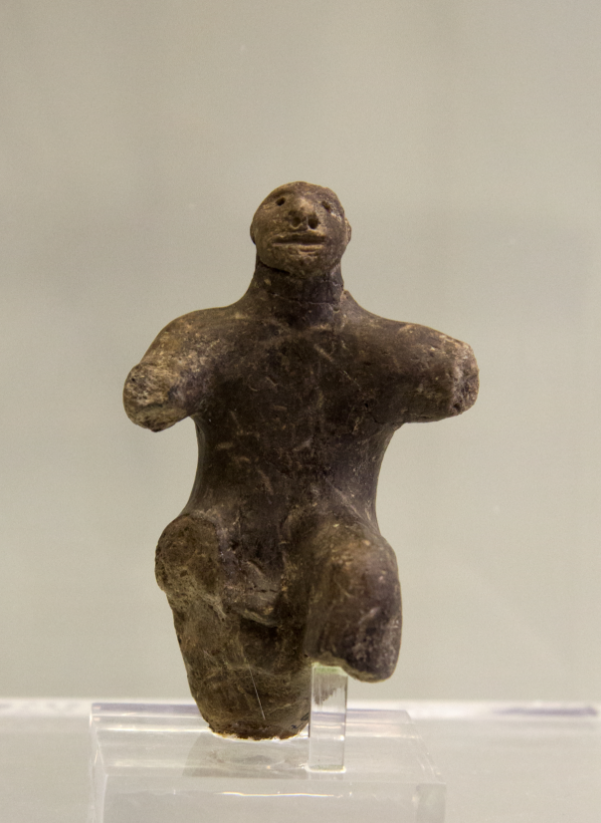
Male figurine, pottery. Neolithic, 5000 – 3000 BC. Credit: Archaeological Museum of Heraklion.[/caption]

The Y Chromosome Bottleneck

Known as the Y chromosome bottleneck, this research was first proposed in 2015 by Monika Karmin, a population geneticist at the University of Tartu in Estonia. Since then, academics have been trying to understand how this could have happened. Some research has told us that the drop-off in the male population was the result of ecological factors mainly affecting male babies. Stanford University students Alan Aw and Tian Cheng Zeng thought there must be another explanation. They took their theories to Marcus Feldman, a population geneticist at the University, who said that the imbalance “struck us as being very extreme.”  

A new explanation?

On 25th May 2018, the team published a new paper in the journal Nature Communications. It posits that humans who were living in patrilineal clans, which consisted of males from the same lineage, could have entered a particularly violent age; with inter-clan wars happening particularly frequently. If true, this had the potential to wipe out entire lines of male descent at a time. In his research, Feldman suggests that rather than the male population taking an apparent nosedive, the diversity of the Y chromosome decreased due to the ways people were living and fighting with one another. Or, to put it another way, there weren’t actually fewer males. There was just far, far less diversity.  

A quick recap of our chromosomes

As humans, most of our genes are carried in 23 pairs of chromosomes. The 23rd pair determines our sex: females have two X chromosomes, whereas males have one X and one Y chromosome. A baby’s sex is determined by the chromosomes it inherits from its parents. This allows genes to get shuffled around, which increases the overall diversity in the species. But the Y chromosome, which has no female counterpart, stays almost the same from grandfather to father to son, and so on. Of course, mutations occur, which explains why the Y chromosome does in fact differ among males.  

How were people living at the time?

After the advent of farming around 12,000 years ago, societies were increasingly organising themselves around extended kinship groups, ultimately manifesting as patrilineal clans. As we know from this study, this was a cultural fact with poignant biological consequences. Women may have married into a clan, but the men in the clan were all related through male ancestors. “From the point of view of those chromosomes at least, it’s almost as if everyone in a clan has the same father,” says Nathan Collins from Stanford University. This study, which looks at genetic occurrences between 5,000 and 7,000 years ago, considers people living in a transitional period. Soon after, people moved into larger societies and built towns. At that point, humans because less intent on maintaining the Y chromosome lineage and perhaps unsurprisingly, the diversity of the Y chromosome bounced back. [caption id="attachment_8716" align="aligncenter" width="500"] Marcus Feldman with fellow researchers Tian Cheng Zeng and Alan Aw. Credit: Marcus Feldman, Stanford University[/caption]

Simulating the possibilities

Feldman, Zeng and Aw conducted 18 different simulations, each representing different scenarios that could explain the bottleneck. This included situations reflecting Y chromosome mutations; competition between different tribes, and natural death. Crucially, the bottleneck did not occur in the simulation in which patrilineal clans did not exist. We can then assume that the most likely reason for the bottleneck was patrilineal clans going to war. If one clan was wiped out, so was its shared Y chromosome. Monika Karmin, lead author of the original study, weighs in: “fighting clans are indeed likely to cause a drastic drop in male genetic diversity… However, we do have to keep in mind that there is very little information on the actual societal organisation from that time.”  

No XX bottleneck

Incidentally, there was no such bottleneck in females. Feldman was able to deduce this by analysing mitochondrial DNA, which is only passed down from the mother. “In that same group, the women could have come from anywhere,” Feldman says. “They would’ve been brought into the group from either the victories that they had over other groups, or they could’ve been females who were residing in that area before.” He added that colonisation tends to see the men killed, and the women kept alive.  

A cultural influence on genetic variation

Academic research often focuses on behaviours that have a genetic basis; but not necessarily on behaviours that influence genes. The new research is, in Feldman’s words: “an example of what a cultural preference can do in changing the level of genetic variation.”]]>
Categories
Breaking News

Could this 2,800 year old sculpture show us the face of a biblical king?

Credit: Gabi Laron[/caption]

A tiny representation of a momentous past

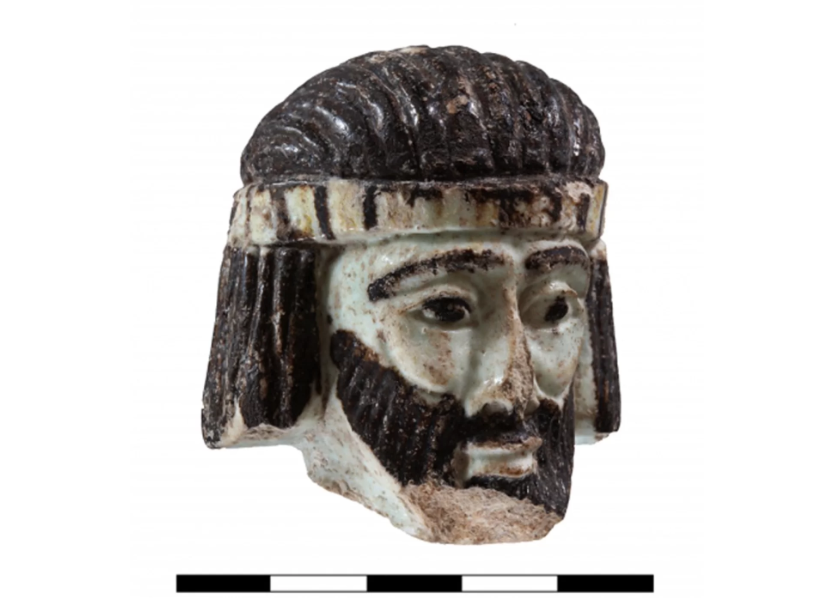
The glazed ceramic sculpture is of a man with long, black hair and a beard. He is wearing a yellow and black headband, which pulls the hair away from his dark, almond-shaped eyes. At only 5.1 cm x 5.6 cm, this tiny head is thought to have been part of a small statuette, according to archaeologists. At full size, the statuette would have been around 20 cm x 25 cm. Professor Robert Mullins from Azusa Pacific University’s Department of Biblical and Religious Studies is also co-director of excavations in the ancient city. He said: “Despite the head’s small and innocuous appearance, it provides us with a unique opportunity to gaze into the eyes of a famous person from the past — a past enshrined in the Book of Ages [the Hebrew Bible].”  

Whom does the sculpture depict?

Given that it was found inside what is thought to be an administrative building at the city’s peak, it is likely that the sculpture is of an elite person. The first assumptions have been that it was a biblical king; though Mullins and his team have yet to undertake the necessary research to prove or disprove this theory. So if it is indeed a king, whom would it have been? [caption id="attachment_8706" align="aligncenter" width="500"] Credit: Gabi Laron[/caption]  

Power struggles in Abel Beth Maacah

In the early stages of research, the team performed radiocarbon dating on the organic materials that were found in the same room as the sculpture. According to the findings, the object would have been constructed some time between 902 BC and 806 BC. The control of Abel Beth Maacah fluctuated greatly during this period. This is down to the fact that it sat at the border of 3 separate kingdoms: Israel, Tyre and Aram-Damascus. Borders were changing continually, leaving Abel Beth Maacah to be under the jurisdiction of different nations. Taking likelihood into account, Mullins thinks the sculpture could depict one of 3 possibilities: King Ahab of Israel, King Hazael of Aram-Damascus, and King Ethbaal of Tyre. However, there are many other candidates, he has said.  

Future research to confirm identity

The sculpture will be displayed at the Israel Museum in Jerusalem, while the scientists are publishing a paper on the discovery for the journal Near Eastern Archaeology. Excavations at Abel Beth Maacah are undertaken by Azusa Pacific University and the Hebrew University of Jerusalem. Joining Professor Mullins are Naama Yahalom-Mack and Nava Panitz-Cohen, both from the Hebrew University of Jerusalem. They will continue to arrange excavations of the large building into summer 2018. Archaeologists are hopeful that new information will arise to determine the identity of this miniature sculpture.]]>

Categories
Breaking News

Historian lifts the veil on cross-dressing in the English Civil War

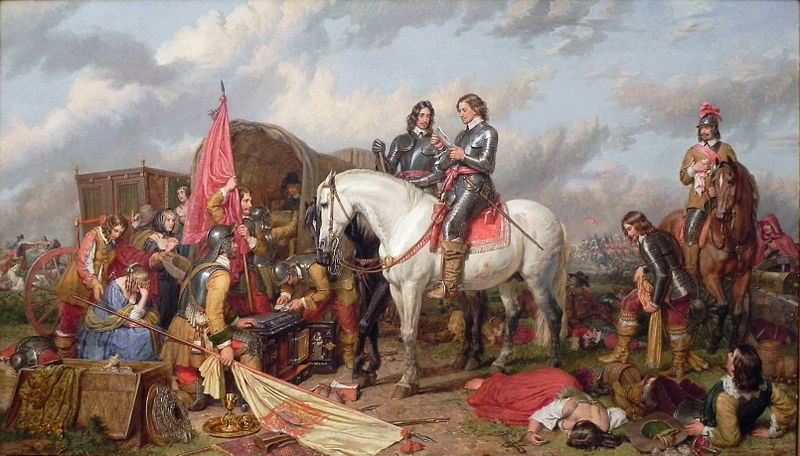
Battle of Naseby, by an unknown artist. The victory of the Parliamentarian New Model Army, under Sir Thomas Fairfax and Oliver Cromwell, over the Royalist army, commanded by Prince Rupert, at the Battle of Naseby (June 14, 1645) marked the decisive turning point in the English Civil War. Credit: Encyclopaedia Britannica Online[/caption]

Clothes maketh the man

After exploring hundreds of original manuscripts and printed works, a handful of fascinating cases were revealed. Wives, unmarried partners, would-be female soldiers and even prostitutes were present. Some women were motivated by a desire to fight; others wanted to remain close to their husbands. For example, the mistress of captured royalist Lord Henry Percy is documented to have been dressed in men’s clothing to hide her identity. To ridicule her, Oliver Cromwell got the woman to sing, so as to confirm his suspicions of the would-be man as a ‘damsel’.

A prince intervenes

One anonymous letter from 1642 describes a woman named Nan Ball, who was “taken in mans cloathes, waiting upon her beloved Lieutenant” while he served in the king’s army near York. It was later published in a pro-royalist news pamphlet, sparking an investigation. The Lieutenant was sacked, and there were suggestions that Nan Ball ought to be shamed by either public whipping or pillory. However, after an intriguing letter from the king’s son, which saw him beg for her reprieve, she was simply expelled from the camp. Exactly why her punishment was lifted is unclear; but it is possible that the initial threats were simply a warning.

“The severest punishment”

The following year, a draft proclamation set out the required standards of behaviour for the army of King Charles I. In the margin, the king hand-wrote: “lett no woman presume to counterfeit her sex by wearing mans apparall under payne of the severest punishment”. Professor Stoyle was fascinated by this statement: “These words suggest the king believed female cross-dressing was quite widespread in his army and show a willingness on his part to take a much firmer line on the practice – particularly in relation to prostitutes. Curiously though, when the proclamation was finally published it contained no reference to cross-dressing.” [caption id="attachment_8701" align="aligncenter" width="500"] Cromwell in the Battle of Naseby in 1645 by Charles Landseer. Credit: Wikimedia Commons[/caption]

Dressed to kill: female bravery during the English Civil War

A pamphlet published in 1645 details the account of a young soldier who spent a year in the parliamentary garrison of Gloucester. Eventually, she was discovered to be a woman after visiting a tailor to order a petticoat and waistcoat ‘for my sister’. The suspicious tailor raised the alert with the military authorities. In their investigation, they found that the solider had bravely disguised herself in order to first escape the royalists, and then fight against them. These pioneering women represent just one example of how female bravery was forced into disguise as they navigated a society rocked by war. Stoyle finishes: “Above all, though, the subject of female cross‐dressing during the Civil War is surely worthy of detailed study in its own right because it helps to illuminate one small corner of a much larger story: that of how ‘the crisis in English affairs’ during the 1640s made space for some bold women fleetingly to test the boundaries of patriarchy.” Read the full paper here.]]>

Categories
Breaking News

Only 15 people required to lift 12-ton hats onto Easter Island statues, research shows

Credit: Wikimedia Commons[/caption]
Early transportation technologies on Easter Island

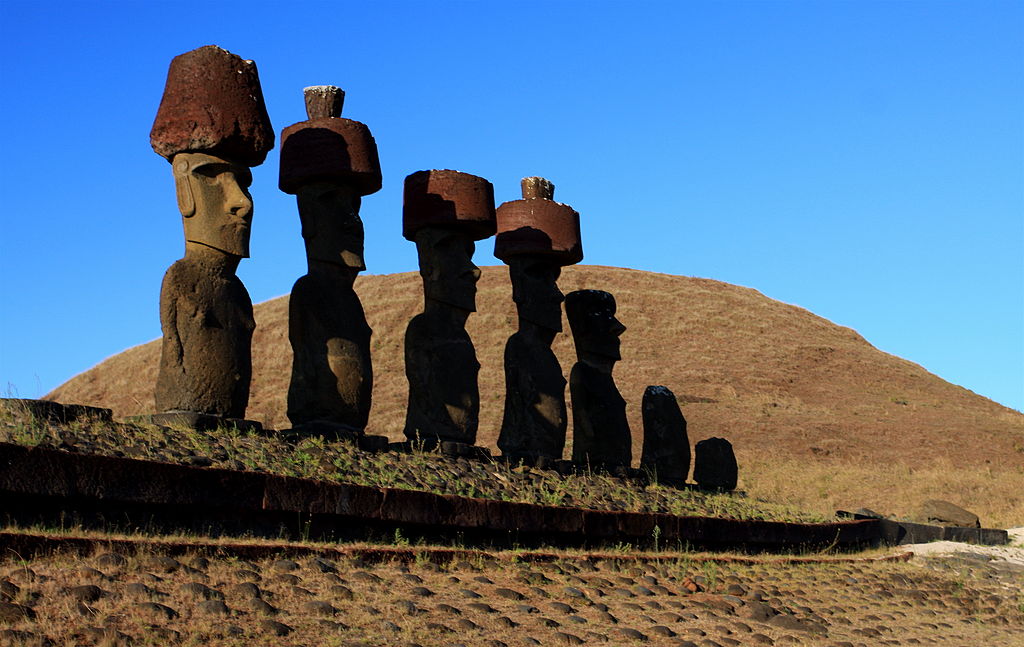
Easter Island sits in the Southern Pacific Ocean and is more than 2,000 miles from Chile in South America. It is about 15 miles long and 7.6 miles wide, with an area of roughly 63 square miles. The famous statues, the moai, were carved from volcanic tuff; while the hats were made of red scoria. Each part came from a different quarry on the island, sparking numerous studies about the technologies used by ancient peoples to transport such heavy goods across many miles. The moai statues, which can be up to 33 feet tall and weigh around 81 tons, are considered to have been moved into place along well-prepared roads using a walking or rocking motion, quite like the way we might move a refrigerator. “We’ve learned they moved the statues in a walking fashion using simple, physics-based processes, in a way that was elegant and remarkably effective,” said Carl Lipo, Professor of Anthropology at Binghamton University. As might be expected, not all of the statues made it to their final locations. Fallen and broken parts of statues show that the statues were originally carved so they leaned forward, for ease of transportation. They were then levelled off once they had reached their destination and were ready for the pukao to be lifted onto them. [caption id="attachment_8696" align="aligncenter" width="500"] Credit: Bjørn Christian Tørrissen via Wikimedia Commons[/caption]

Lifting the pukao of Easter Island: A perplexing concept

Often weighing up to 12 metric tons, pukao are huge cylinders made of red scoria. Despite having relatively few people and a limitation of resources, these heavy carvings were moved across the island. Once they had arrived at the site of the moai, however, they still had to be lifted onto the statues’ heads. It is likely that the islanders then carved the hats, as chips of red scoria are found in the platform of some of the statues. Sean Hixon, lead author of the project and graduate student at Penn State University, says: “Examples of past ideas for pukao transport include sliding the pukao up a wooden ramp or gradually building a pile of stones beneath the pukao. The challenge is to move beyond merely possible transport methods and to identify a transport scenario that is consistent with variation in the archaeological record.”  

Photogrammetry research

Lipo continues: “Our latest study now tackles the issue of the hats, or pukao. These multi-ton stone objects were carved at a separate quarry, transported across the island and somehow raised to the top of the heads of the statues.” Previous researchers have suggested that the statues and hats would have been united before being lifted into place. However, the remnants of broken or abandoned statues indicates that the hats were more likely to have been raised to the top of the already-standing statues. By photographing various pukao and generating 3D models, the research team were able to identify the most likely method of transport for these great statues. “We assumed they were all transported and placed in the same way,” said Hixon. “So we looked for features that were the same on all the hats and all the statues.”  

Parbuckling: highly effective work methods for small groups

The project showed that it is likely for the pukao to have been rolled from the quarry to the site of the moai. The Rapa Nui would have rolled them up large ramps, employing a parbuckling technique. Often used to right ships that have capsized, parbuckling is a simple and efficient technique for rolling objects. The centre of a long rope is fixed to the top of a ramp, and the two ends are wrapped around the cylinder that needs to be moved: in this case, the pukao. “In parbuckling, a line would have been wrapped around the pukao cylinder, and then people would have pulled the rope from the top of the platform,” said Lipo. “This approach minimises the effort needed to roll the statue up the ramp. Like the way in which the statues were transported, parbuckling was a simple and elegant solution that required minimum resources and effort.” As well as reducing the force required to move the hats, this technique also makes it easier to stabilise the hat on its journey up, because typically, it will not roll back down the slope. In fact, the researchers report that 15 or fewer workers could move even the largest of the Easter Island pukao.  

The ingenuity of the ancient people of Easter Island

The research shows the innovative thought processes displayed by the Rapa Nui, helping to challenge some pre-formed ideas about the people. “Easter Island is often treated as a place where prehistoric people acted irrationally, and that this behaviour led to a catastrophic ecological collapse,” said Lipo. “The archaeological evidence, however, shows us that this picture is deeply flawed and badly misrepresents what people did on the island, and how they were able to succeed on a tiny and remote place for over 500 years.” “The answer, like that of our findings with the moai, show that Rapa Nui people were remarkably ingenious and found solutions that required the fewest resources and smallest effort to achieve their goals.” “While the social systems of Rapa Nui do not look much like the way our contemporary society functions, these were quite sophisticated people who were well-tuned to the requirements of living on this island and used their resources wisely to maximize their achievements and provide long-term stability.” Lipo’s team will continue researching the Rapa Nui people and their relationship with their environment and community.]]>