Categories
Editorial

Robert Hooke and the Wrath of Isaac Newton

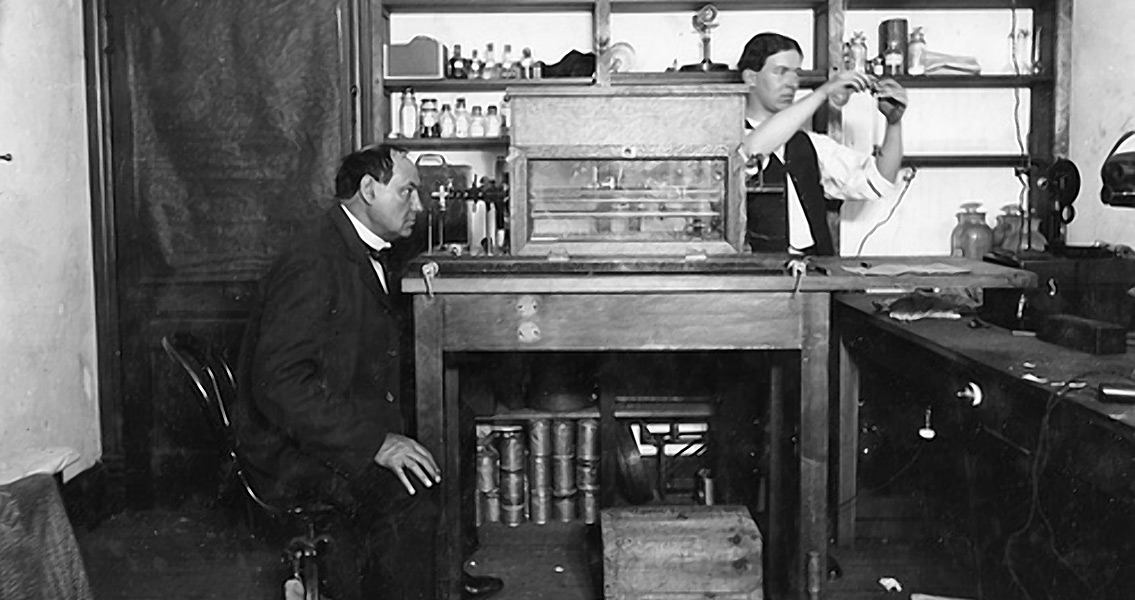
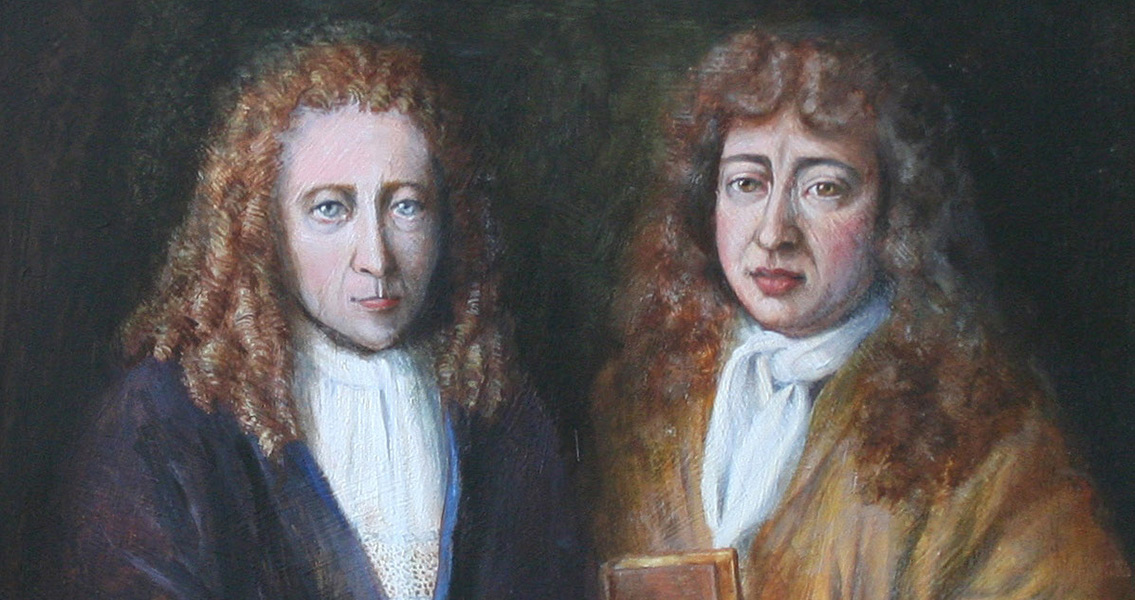
His pioneering work with microscopes led to his famous engraving of a fly’s eye. Just as remarkably, his early studies of petrified wood and other fossils made him one of the first to realise they were remains of once living things – a fact so well known now it seems obvious, but revolutionary at the time. How did a man involved in so much innovation, slip into obscurity? It is not as if Hooke was unappreciated in his own time. His book, Micrographia, was a bestseller, inspiring interest in the use of microscopes. He was a longtime president of the Royal Society, showing the regard in which his scientific work was held. However, he also had a powerful rival: Sir Isaac Newton. The two clashed bitterly in attempts to forge reputations as the greatest scientific minds of their age. In life this battle may have been a close run thing, but through history Newton became the undisputed winner. The first signs of conflict between these two massive egos came in 1672, when Newton submitted his first paper to the Royal Society. In the work, Newton claimed light was a particle, contradicting Hooke’s own ideas on the matter. A number of scientists launched attacks on Newton’s paper and methodology, but Hooke’s were the most scathing and his position at the Royal Society meant they also carried the most humiliating weight for Newton. Correspondence between the two became increasingly acrimonious; a major rivalry had started. This simmering tension exploded when Newton published his Principia in 1687, containing his Law of Universal Gravitation. Newton wasn’t the first to postulate about a force holding celestial bodies in place, it was an idea the scientific community had been moving towards for years. Hooke was one of the key figures behind it in the 1670s, suggesting the planets were attracted to the Sun, and that this force of attraction got stronger the closer the objects were together. Crucially, Newton was the first to create rigorous mathematical proof for the idea, but Hooke was convinced Principia would have been impossible if he hadn’t first postulated about the attraction between celestial bodies. A bitter dispute unfolded, Hooke trying to gain credit for his influence, Newton denying it (with the exception of a cursory mention in the third volume of Principia). In part, Hooke was a victim of his own approach: a polymath forming brilliant ideas in a variety of different fields but seldom creating the in depth, rigid proofs needed to back them up. An innovator who often failed to solidify his theories into something tangible and timeless, allowing his contributions to be overshadowed. In 1703 Hooke died, with some medical historians suggesting he suffered from diabetes in his later years. Newton became his successor as the president of the Royal Society, and some say he went to great efforts to tarnish his predecessor’s reputation. The only portrait of Hooke was removed from the Royal Society during Newton’s presidency. It has been suggested this was because he’d ordered it destroyed, or intentionally left it behind when the society moved buildings. As Newton’s reputation grew, Hooke’s deteriorated: a narrative forming that he was a bitter scientist unjustifiably trying to take credit from the work of others. As Newton’s influence continued to extend through the centuries, Hooke’s legacy seemed ever more vindictive, pathetic and jealous. Newton wasn’t the only scientist of the era to come into conflict with Robert Hooke, there are various accounts of his frequent arguments with others regarding credit for ideas. Sometimes Hooke was justified in his anger, sometimes not. Most of the time it is impossible to say due to a lack of evidence. Undoubtedly this was a dark side to his personality, but surely it should not be allowed to overshadow the brilliant contributions he made to the world of science.]]>
Categories
Editorial

The Teenage Anarchist from Scotland and the Plot to Kill Franco

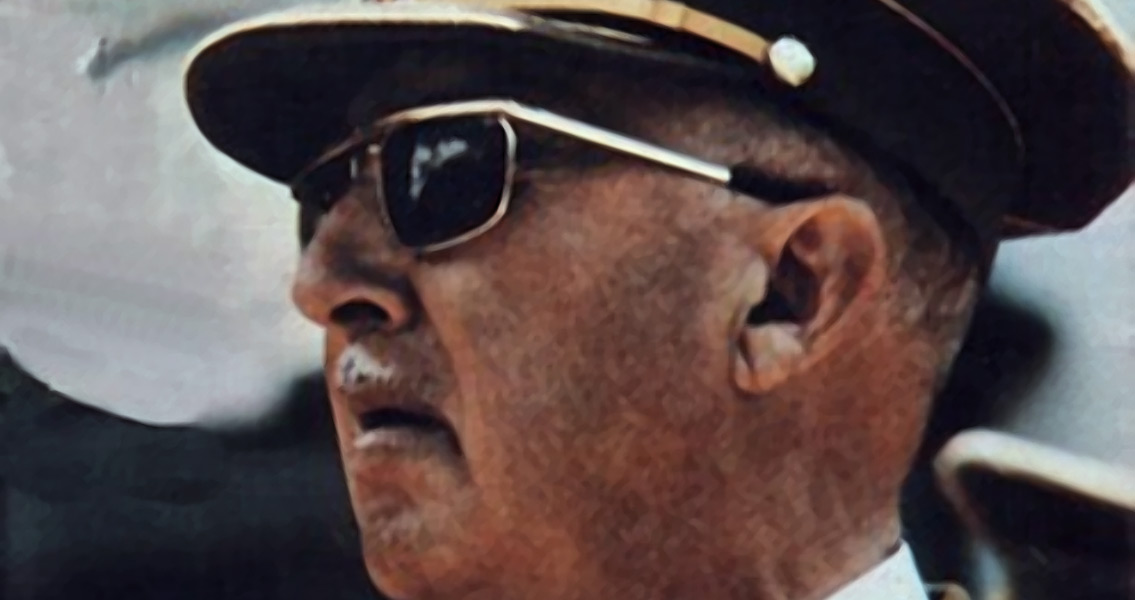
Guardian in 2004, as soon as he arrived at the office he was suspicious his cover had been blown. “It was siesta time and the streets were quiet. Turning the corner to enter the American Express office, I was immediately aware of three smartly dressed and tight-lipped men in heavy-rimmed sunglasses standing by the entrance muttering among themselves.” His fears were confirmed when the clerk went to get the letter. He noticed a pink slip had been attached to the envelope. Before the clerk could hand it over, a supervisor stopped her, telling her to hand the pink slip to two smartly dressed men sitting at an alcove in the office. Only then did the supervisor hand the letter to Christie. “What was in the letter? How much did they know? Would I be arrested there or would they wait until I had met my contact? But if they knew about the Amex pick-up, they probably knew the details of my rendezvous as well.” Christie told the Guardian. He made his way out of the American Express office, clutching the letter. “I turned to see the two men from the alcove quickly walking out. I made a mental note to shaft American Express at every conceivable opportunity, if I were ever again offered an opportunity.” On the street, the men he had earlier noticed outside also began to follow him. Before he could escape into the crowd, Christie was apprehended at gunpoint. The Spanish authorities had infiltrated Defensa Interior long before, allowing them to set the trap. Christie and his Spanish contact: Carballo Blanco, were taken into custody. The teenager was made to watch his accomplice get tortured, although avoided the same fate himself. He signed a confession after four days in detention, and was promptly jailed. Previously, those found guilty of ‘political crimes’ in Spain faced execution by garroting. Blanco and Christie both avoided this fate but were hit with jail terms: thirty years for the former and twenty for the later. Protests erupted around the world at the treatment of the two would-be assassins, providing a poignant reminder of the authoritarian nature of the Franco regime and its treatment of political prisoners. Growing international pressure meant Christie was released after three years. Blanco was not so fortunate, serving his entire sentence and becoming the last political prisoner of the Franco regime. ]]>

Categories
Editorial

Annie Besant – From Atheist to Socialist to Theosophist

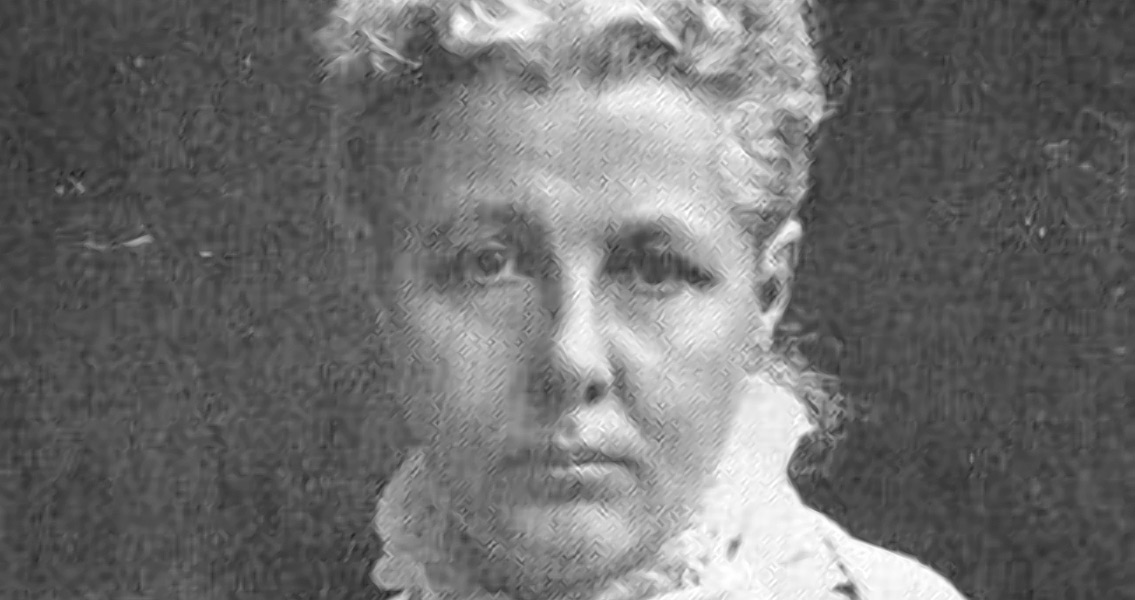
Seven Principles of Man and Thought Power – Its Control and Culture, give an insight into the ways she strove to reconcile abstract philosophical ideas with contemporary social and political issues. Besant was born Annie Wood in London in October 1847. Her father died when she was just five years old, while her mother persuaded a family friend to take responsibility for Annie, raising her and ensuring she received a good education. In 1867 she married a clergyman named Frank Besant, but the relationship seemed doomed from the start. Although raised in a pious family, Besant started to have serious doubts about her beliefs during her twenties. Becoming an atheist and increasingly anti-Church, she legally separated from her husband and the father of her two children in 1873. Her anti-religious views soon evolved into a broader questioning of all of society’s accepted norms. From producing pamphlets criticising the church, and in particular the state’s hold over it, she became an activist for a whole host of causes of the time. She gained notoriety in 1877 for working with Charles Bradlaugh to publish Charles Knowlton’s ‘Fruits of Philosophy’, a pamphlet which advocated birth control. Bradlaugh and Besant were both charged with publishing an obscene libel “likely to deprave or corrupt those whose minds are open to immoral influences.” Increasingly radical in her thinking, Besant became a supporter of Fabian socialism. She gained a reputation as a formidable public speaker and essayist, helping organise the strike of the workers at the Bryant and May match factory in East London among other activities geared towards campaigning for greater workers’ rights and equality for women. In 1889, Besant converted to Theosophy, a religious philosophy which both ‘The Seven Principles of Man’ and ‘Thought Power: Its Control and Nature’ focus on. With roots in ancient Gnosticism and Neoplatonism, Theosophy also had ties to Hindu ideas of karma and reincarnation. Although broken down into several different forms, a common feature of Theosophy is the idea of a deeper spiritual reality that can be reached through intuition and meditation. For Besant, Theosophy’s mixture of Eastern and Western philosophy seems to have been a way to achieve spirituality without recourse to a specific religion. In particular, she considered Theosophy a means to liberate thought from the boundaries placed upon it in traditional society. An excerpt from ‘Thought Power: Its Control and Culture’, gives an insight into the ways in which she felt it could prove intellectually liberating. “This little book is intended to help the student to study his own nature, so far as its intellectual part is concerned. If he masters the principles herein laid down, he will be in a fair way to co-operate with Nature in his own evolution, and to increase his mental stature far more rapidly than is possible while he remains ignorant of the conditions of his growth.” From 1907 until her death, Besant was president of the International Theosophical Society. Standing against discrimination of any kind and attempting to reconcile different religious beliefs under a common spirituality, Theosophy was a philosophy which connected all the causes Besant had fought for, providing her with a universal truth that didn’t rely on typical religious constraints. Besant eventually settled in India, involving herself in the Indian nationalist movement. In 1916 she helped found the Home Rule League, which campaigned for Indian self government. In 1917 she was jailed for sedition for her role in publishing ‘New India’, a newspaper which criticised British rule in India. She died in September 1933. ]]>

Categories
Editorial

The 1981 Summer of Riots – From London to Manchester

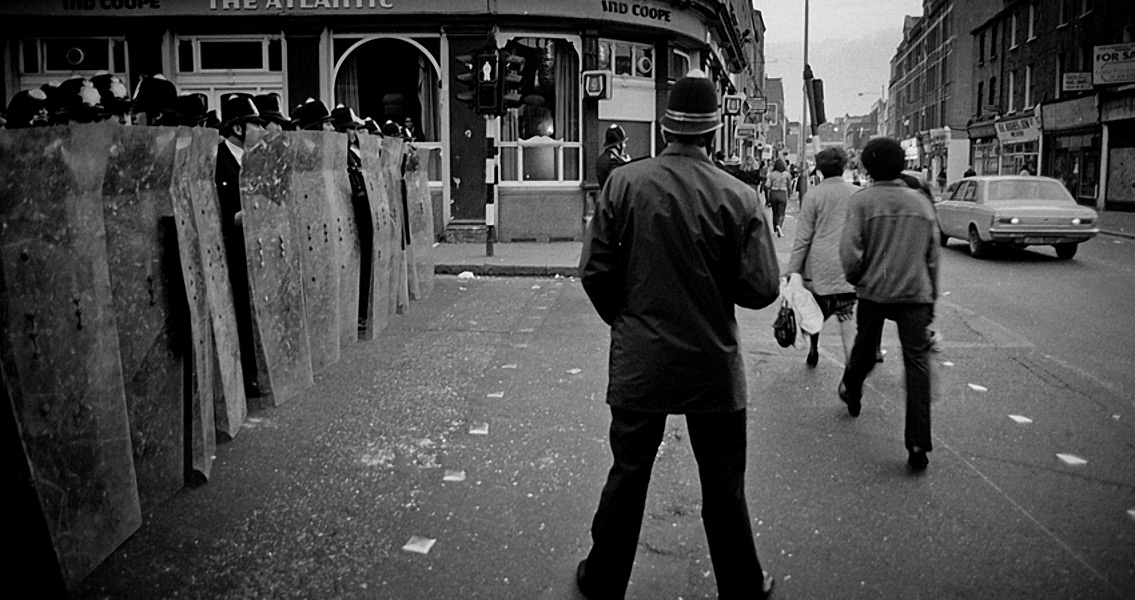
The Huffington Post in 2013. “When we pleaded and screamed and cried that police were abusing us in police cells no one listened. As far as we were concerned [Thatcher] was head of a racist government.” The summer of 1981 was a shockingly violent one, but its crucial to understand that from Brixton to Moss Side the riots and protests were far more complicated than just explosions of criminality and violence. Economic recession, the consequences of Thatcher’s extremely conservative policies and a growing feeling among non-white communities that the police were just another outlet of a fundamentally racist system, were enough to see the country’s streets littered with petrol bombs and riot gear. ]]>

Categories
Editorial

The Mystery Behind Emily Davison's Death

Categories
Editorial

Tragedy, Poison and The Jungle – The Pure Food And Drug Act

Appeal to Reason to write an undercover report on the meat packing industry in Chicago. His investigations eventually culminated in his most famous novel, The Jungle, one translated into seven languages and praised by figures as well known as Winston Churchill. Designed to highlight the poor conditions for workers in Chicago’s meat packing industry, The Jungle, published in February 1906, in fact caused more indignation for its depiction of bad meat. Laying bare the procedures and practices behind the meat industry, the novel grew wider and wider circulation, and placed increasing pressure on the government to act. Other journalists and writers had written investigative pieces on the meat industry, but The Jungle, due to both its popularity and the fact it was published shortly before the passing of the Pure Food and Drug Act, is often regarded as the most influential. The obligations and legal mechanisms incorporated in the Pure Food and Drug Act are now common place around the globe, to the point they can often be taken for granted. On the 110th anniversary of the passing of the Act in the USA, its history provides a pertinent reminder of the multitude of factors behind the implementation of such crucial legislation. ]]>

Categories
Editorial

A History of British Football Hooliganism

Football hooliganism has been around, in one form or another, as long as football itself. Recent events at the European Football Championship, particularly the running street battles and stadium fights between British, French and Russian supporters, have brought football hooliganism back into the media limelight however, providing a reminder of the most provocative element of one of the world’s most popular sports. A hooligan is defined as “a violent young troublemaker, typically one of a gang”. The etymology of the word is far from clear, but it is generally believed to have originated at some point late in the nineteenth century. When used in connection to football, the term is deeply evocative, bringing to mind the violent, sometimes tragic clashes between rival supporters in the later decades of the twentieth century. Significantly, these clashes were not simply random acts of violence, but organised confrontations between massive gangs of fans, referred to as ‘firms’ in the UK.

Origins of Football and Hooliganism

Football originated, in a rudimentary form, in England in the thirteenth century. A game played between villages, often on religious holidays and using a pigs bladder as a ball, it was so violent it was almost incomparable to the modern form of the game. Teams from rival villages would essentially battle with each other, the aim seemingly to kick the ball into the other village’s church. It was banned in 1349 by King Edward III of England, partially because he felt it was distracting his subjects from their military training, but also because of the social unrest which inevitably surrounded the brutal game. Even when football took on a form closer to today’s, social unrest was rarely far away. In the 1800s violent outbreaks were reported at matches, with the riot act having to be read out at a game in Derby in 1846. As the nineteenth century wore on and the rules of the game became increasingly rigid the violence continued, with mobs either attacking the opposition’s fans or on occasion the players themselves. One of the most shocking outbreaks of violence came in Glasgow in 1909 at a game between Glasgow Rangers and Celtic, a fixture which remains infamously inflammatory to this day. After officials refused to allow extra time to settle a draw between the two clubs, a riot broke out. Reports claimed that up to 6,000 spectators were involved in the shocking event, which resulted in serious injury to over fifty policemen, and massive damage to the football grounds. The surrounding area wasn’t even spared, with the police report stating that every street lamp in Hampden had been smashed by the rampaging fans. Hampden Football Ground 1909

Post-WWII and Organised Violence

Although media coverage after the Second World War gave the social unrest which surrounded football matches extensive coverage, eventually leading to the term hooligan being used to describe unruly fans for the first time, violence around football had been present in the UK long before. Crucially though, the 1960s onward witnessed a new kind of organisation, where social unrest was planned rather than just occurring in sporadic outbursts. The hooliganism of the 1960s was very much symptomatic of broader unrest among the youth of the post war generation. Equally, it also played into the media narrative of civil unrest, meaning it garnered widespread coverage. Groups of football hooligans gathered together into firms, travelling the country and battling with fans of rival teams. In an interview with ESPN, a former member of a Manchester United supporting firm, known as ‘Hotshot’, described the rituals involved with being a football hooligan in the 1980s “The buzz about the kick off — you were Man United, you weren’t running anywhere or you weren’t getting into the Red Army. We wasn’t boozing, we’d be out before, ambushing other firms before the match started.” Media notoriety became a form of point scoring for the different bands of hooligan. Before kick-off, different gangs would ambush each other, starting fights on the street. In the grounds themselves, the aim was to attack the opposition fans, victory achieved by forcing them from their viewing area behind the goal. In the 1988 – 89 Premier League season, 6,185 arrests were made on hooliganism charges. A 1985 domestic cup tie between Luton and Millwall saw the visiting Millwall fans battle with police and local supporters. 81 people were injured and 31 arrested in a single evening. That same year the situation reached a tragic conclusion in the European Cup final between Italian team Juventus and Liverpool Football Club. The Liverpool fans charged their Italian counterparts, inadvertently causing a wall in the stadium to collapse, killing 39 people. The late eighties proved something of a turning point, the authorities clamping down on hooliganism. The introduction of stadium seating, and a greater police presence at stadia, gradually calmed down even the most vitriolic local fixtures. Violence still occurred, but it was generally isolated to clashes between small groups of fans on the streets before or after a fixture. Nevertheless, events in France show that even with these tighter controls, the violence that has long surrounded football remains.]]>

Categories
Editorial

The Woman Who Exposed British Concentration Camps

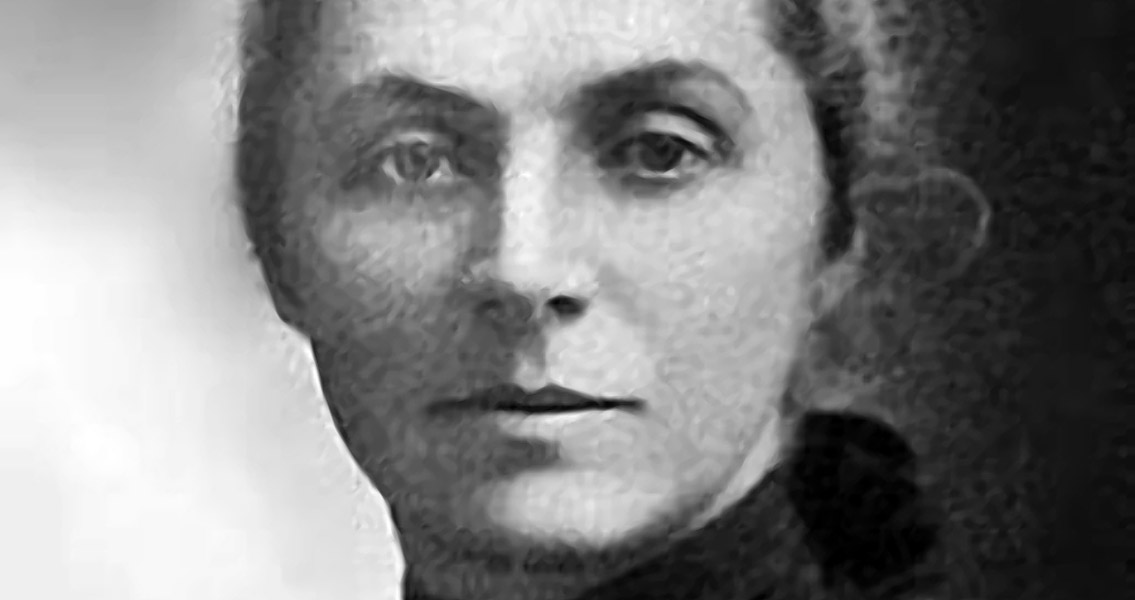
Second Boer War. A fierce campaigner, she launched a sensational attack on the British parliament in 1901, in the middle of one of the most controversial wars in the country’s history. “The picture of apathy and impatience displayed here, which refused to lend an ear to undeserved misery, contrasted sadly with the scenes of misery in South Africa, still fresh in my mind. No barbarity in South Africa was as severe as the bleak cruelty of an apathetic parliament.” During the Second Boer War, British forces rounded up Boer men, women and children from the South African countryside and placed them in concentration camps. The measure, which particularly targeted farmers, was a means to combat the guerrilla warfare being waged by Boer forces against the British in the republics of Transvaal and the Orange Free State. These camps, which had sprung up around the two republics and housed thousands of people, 115,000 in the period between June 1901 and May 1902, represent one of the biggest atrocities in British history. Between the aforementioned dates, 28,000 Boers died in the camps, 22,000 of them children. At other camps, some 20,000 indigenous Africans died. In total, the death toll through the course of the war accounted for 10% of the Boer population. The main killers were the conditions in the camps; dangerously overpopulated, disease and starvation ran riot. The Boer War was a divisive one in the UK; the Guardian newspaper published exposes revealing the shocking actions carried out by British forces in the name of Lord Kitchener’s ‘scorched earth’ tactics, revelations which were unpopular and led to threats being made against Guardian journalists. More than perhaps anyone else however, Emily Hobhouse, a British social worker who went to South Africa herself to see the conditions in the camps, was crucial in exposing the actions of the British military. Born in Cornwall in 1860, Hobhouse lived a sheltered life under her parent’s roof until she was 35. Following her father’s death, she engaged in temperance work in the USA, before returning to the UK at the dawn of the Boer War. In 1900 she received details of the treatment of Boer women by the British army, and set up the Relief Fund for South African Women and Children, an organisation, in her words, “To feed, clothe, harbour and save women and children – Boer, English and other – who were left destitute and ragged as a result of the destruction of property, the eviction of families or other incidents resulting from the military operations.” On 27th December 1900, Hobhouse arrived in South Africa. Eventually, Lord Kitchener, the British military commander in the region, granted her permission to visit the concentration camp at Bloemfontein, but no others. Her account was published in the Guardian in June 1901. “The exile camp here is a good two miles from the town, dumped down on the southern slope of a kopje (a small, rocky hill), right out in the bare brown veld, not a vestige of a tree in any direction, nor shade of any description.” she wrote in her account. “It was about 4 ‘o’clock on a scorching afternoon when I set foot in the camp, and I can’t tell you what I felt like, so I won’t try.” Hobhouse drew the military authorities’ attention to the unsanitary conditions in the camp, winning improvements and extra provisions. She was eventually allowed to visit some of the other camps, making recommendations to the authorities at each one. Returning to Bloemfontein in March however, the size of the problem became clear. The camp’s population had more than doubled in the two months Hobhouse was away. All the improvements had been rendered useless. Kitchener’s scorched earth policy had seen British troops burn farms, slaughter livestock and poison wells, a tactic which made it impossible for Boer soldiers to resupply from villages and towns. Realising the nature of the British campaign, Hobhouse returned to the UK in the hope of making the government bring what David Lloyd George referred to as a ‘policy of extermination’ to an end. Lloyd George, and several other politicians, attempted to bring the issue to the House of Commons, but they gained little support from other MPs, especially after the Secretary of War declared the prisoners were ‘contented and comfortable’. Hobhouse reacted angrily, launching her poignant attack on the House of Commons. Eventually, in August 1901, the British government set up the Fawcett Commission to investigate the concentration camps. It confirmed the vast majority of what Hobhouse had described, concluding that some 28,000 Boers at least had died in the camps. In October 1901, Hobhouse attempted a second visit to South Africa, but was quickly deported. Following the end of the war, she returned to the Orange River colony, and became involved in work connected to women’s education. A life long opponent of war, she also did relief work in central Europe during World War One. She passed away in London, on 8th June 1926.]]>

Categories
Editorial

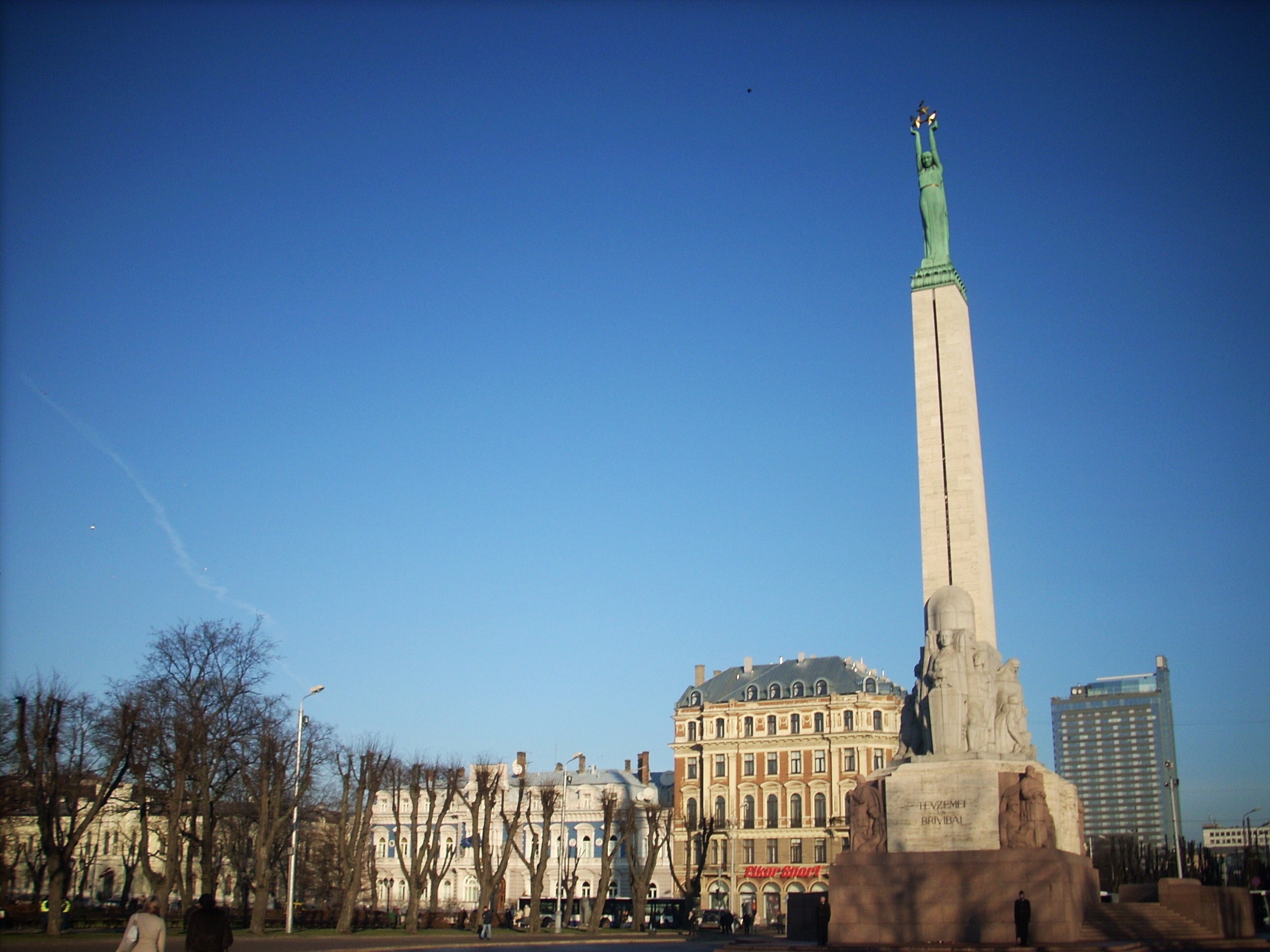
€185 billion – the Cost of the USSR's Occupation Of Latvia

Categories
Editorial

Where Did the Easter Bunny Come From?