
Live Science recently: “There was a belief that it was a day when spirits of the dead would cross over into the other world.” The Romans also held two festivals in October. The first, Feralia, was a date late in the month where the Romans commemorated their dead; reflecting again how ancient cultures associated the cold, dark winter with death. The other was a day to celebrate the Roman goddess of fruit and trees, Pomona. With this festival, we can see hints of one of the most popular Halloween traditions. Pomona’s symbol was an apple, perhaps explaining the origins of apple bobbing. As the Roman Empire spread into the Celtic lands, conquering most of the territory by 43 CE, Samhain started to be combined with Feralia and Pomona. Separate pagan traditions to mark the onset of winter crossed over; different rituals and traditions fusing and evolving. It was a pattern which would be repeated again and again as the Halloween we know today started to form. In the eighth century, Pope Gregory III designated 1st November ‘All Saints’ Day”, an occasion to commemorate all saints and martyrs. As happened with both Christmas and Easter, certain elements of pagan festivals were placed into the Christian calendar, continuing the traditions of acknowledging the changing seasons. The evening before became known as All Hallows’ Eve, and later Halloween. To mark the occasion, massive bonfires were lit to light the cold evening. Parades were held on the streets and revelers started to dress up as dead saints and martyrs. As the ninth century wore on, and All Saints Day and All Hallows Eve became established as regular events on the calendar, the foundations were laid for modern Halloween. One of the most archetypal Halloween rituals is trick or treating, which has a somewhat vague origin. One theory is that it originates from the medieval practice of “souling”, where the poor would go door to door on All Saints’ Day, asking for food in exchange for prayers for the dead. Another theory is that it has its origins in “mumming”, a medieval European folk tradition where bands of revelers took to the streets in simple, home made costumes, acting out stories and singing songs. Associated with Christmas until the nineteenth century, “mumming” undoubtedly bears some resemblance to modern Halloween traditions. Through the centuries celebrations to mark the end of winter have developed, sometimes influencing each other, other times in parallel. The evolution of Halloween can not be clearly traced. Historians debate just how influential Samhain really was, while other traditions seem to have originated in a number of different places separately from each other. What is clear is that our modern interpretation of Halloween is a potion concocted from a plethora of folk, pagan and Christian influences. A modern occasion with a long and colourful history. ]]>

first part of this article looked at the history of the flags of the Netherlands, the UK and France; but the prevalence of red, white and blue flags goes way beyond western Europe. On 14th June, 1777, the US flag was born in a resolution by the Marine Committee of the Second Continental Congress. “Resolved, that the flag of the United States be thirteen stripes, alternate red and white; that the union be thirteen stars, white in a blue field representing a new constellation.” The basis of the stars and stripes was born, although additional stars would be added as the USA expanded. An explanation for the decision to make the flag red, white and blue can be found in events a year earlier. The country’s great seal, also coloured red, white and blue, had been designed to reflect the beliefs of the Founding Fathers. It is therefore unsurprising that those same colours found themselves in the flag of the USA. Charles Thomson, Secretary of the Continental Congress, explained the meaning of the colours when he presented the seal to Congress. “White signifies purity and innocence. Red, hardiness & valour, and Blue… signifies vigilance, perseverance & justice.” Significantly, some historians have suggested that the colours were chosen because of their presence in the British flag. Despite having just won the war of independence, the US flag still reflected the heritage of many of the Founding Fathers. On the other side of the world these same colours had also started to be used in Russia, and then elsewhere in Eastern Europe. Again, the process was a combination of specific regional histories, external influences and coincidences. The origins of the Russian flag of horizontal white, blue and red stripes dates back to the seventeenth century. Tsar Peter the Great chose the design for Russia’s merchant ships, inspired by the Dutch design after a visit to the Netherlands. The flag became a poignant symbol for the Russian people, the colours taking on symbolic meanings, and by the late nineteenth century it was the flag of the country despite attempts by the Tsars to impose a black, orange and white tricolor as Russia’s symbol. The 1848 Pan Slavic Congress saw these colours spread throughout Eastern Europe. The meeting, held in Prague between representatives from all Slavic populations, was carried out as an act of defiance against growing German and Hungarian nationalism. Among the meeting’s outcomes was the declaration of red, white and blue as the colours of the Slavic peoples. Some historians say that this decision was inspired by the French flag, the members of the Congress drawing a link between their cause and the French Revolution. Others argue the colours were chosen in reference to the Russian flag, reflecting the belief that Russia could protect and foster Slavic nationalist movements. Whatever the case, following the Congress different nationalist groups such as Slovenians, Slovakians and Croatians started to use the colours on their flags, and they have stayed prominent into the twenty first century. Countless other examples of red, white and blue flags exist, in Chile for instance, or Thailand. Sometimes this can be explained by specific local circumstances – in Chile the blue stands for the sky, the white for the snow capped Andes and the red for the blood of the citizens who fell in the struggle for Independence. In other instances global events were at play – the blue in the Thai flag was added deliberately in 1917 to reflect the flags of its allies in World War One: Britain, France, Russia and the USA. Each of the examples mentioned, from the Netherlands to Chile, have their own story behind the use of red, white and blue in their national flags. Although there are of course some connections between the decisions, there are also examples which can only be explained by chance and circumstance. What is perhaps most striking however, is the multitude of meanings the three colours have come to hold, as history has seen red, white and blue weaved into countless different narratives of cultural identity and association. ]]>

Prior to the French Revolution, France’s state flag was based on the royal coat of arms – a blue shield with three golden fleur-de-lis, while different families and regions also boasted their own elaborate designs. After the Bourbon dynasty came to power, the blue shield started to be displayed against a background of the Bourbon dynastic colour: white. In the aftermath of the French Revolution the focus shifted towards much simpler flag designs. Blue and red, the traditional colours of Paris and popular among the revolutionaries, started to be added to flags alongside the traditional Bourbon white. Taking influence from the equally spaced horizontal stripes of the Dutch flag, the vertical tricolor of stripes ordered blue, white and red became the official French national flag in 1794. Although the flag has been temporarily changed at various points, for example during the Napoleonic period, the tricolor has been the official symbol of France since 1848. Seen to embody the French Revolution, the blue, red and white of the French flag have come to represent the ideals of liberty, equality, fraternity, democracy, secularism and modernization. Similarly, the colours used in the Dutch flag can be traced back to the history of the country’s sixteenth century struggle for independence. However, although the design of the French tricolor was influenced by the Dutch flag, and both have been taken to embody a crucial part of their respective nation’s identity; the presence of red, white and blue in the two flags in large part seems to be a coincidence – the consequence of unconnected regional events. Taking another notable red, white and blue flag from Western Europe, the Union Jack of the United Kingdom is a combination of the flags of England, Wales and Ireland. Each of the flags at the heart of the design is comprised of two colours (blue saltire on a white background for Scotland, red saltire on a white background for Ireland, and a red cross on a white background for England). The flags that make up the Union Jack each have their own stories explaining their colours. In Western Europe then, the repetition of red, white and blue designs in national flags would seem to owe a lot to specific local circumstances. Part two of this article will look at flags from further afield: to Eastern Europe, North and South America, and Asia. Click here for part two.]]>

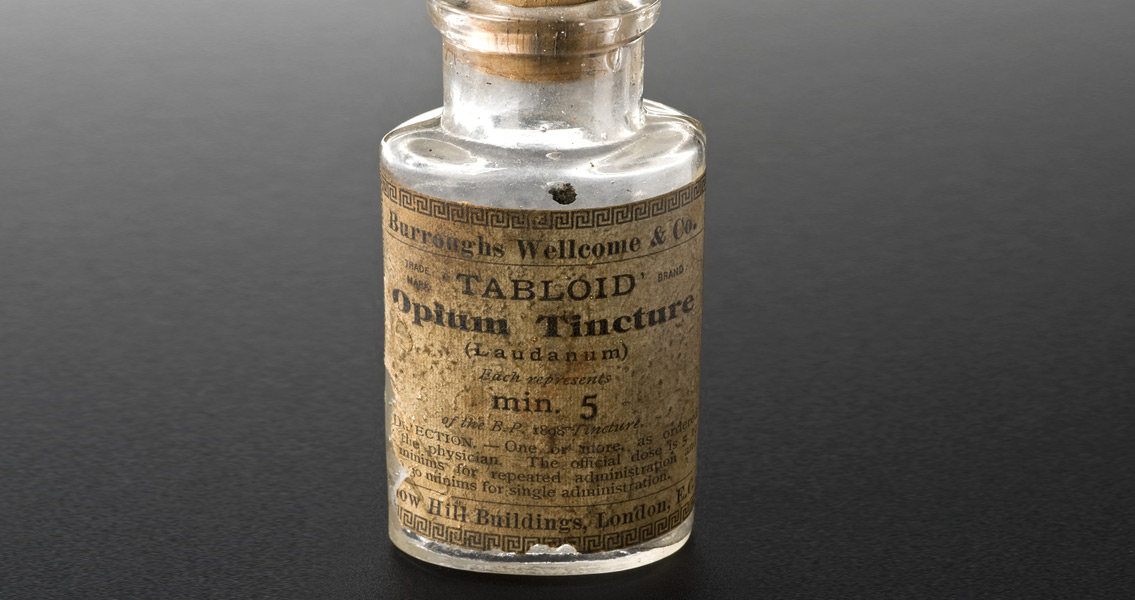
Pure Food and Drug Act in the USA, placing an obligation on manufacturers to accurately label products containing alcohol, cocaine, heroin and morphine. However, accurate information alone wasn’t enough to break society’s dependency. On a global scale, the rehabilitation from the Great Binge only truly started with the Hague International Opium Convention of`1912. Signed by 13 nations from across the globe, the treaty which went into effect in 1915, saw the signatories agree to work together on controlling the manufacture and distribution of drugs including opium, cocaine and heroin. In 1919, the terms of the convention were incorporated into the Treaty of Versailles, seeing them applied globally. Although not ending the sale of cocaine, heroin and opium, the Hague Convention of 1912 marked a turning point, the moment governments started to take action against the detrimental effects of large scale drug abuse. In the following decades, it proved the basis for national drug control legislation in many of the signatory nations, laying the foundations for the familiar drug laws we have now. ]]>
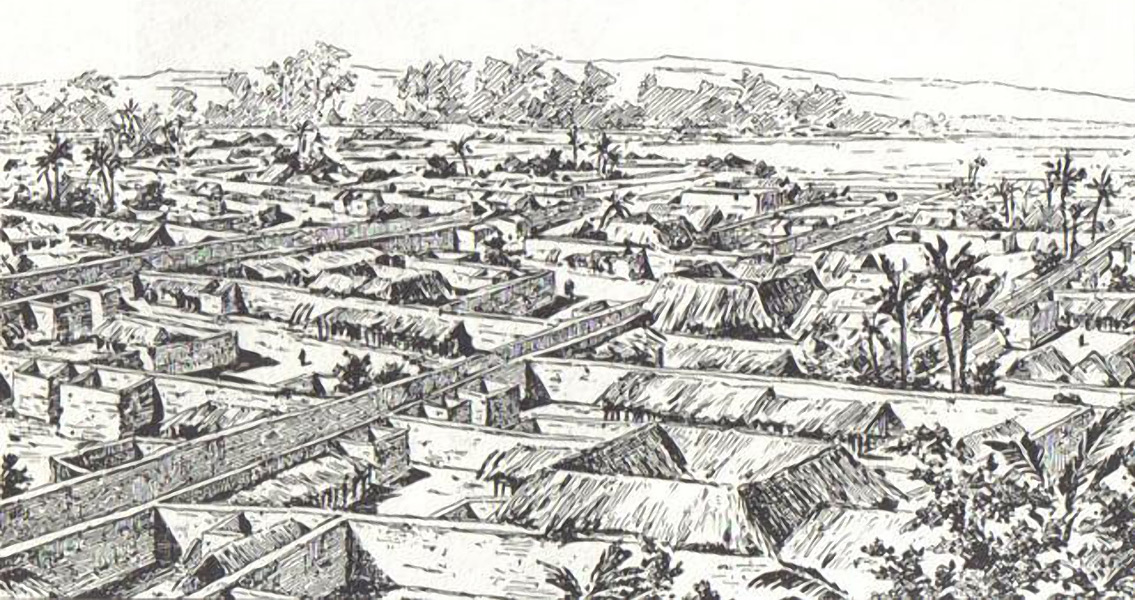
Modern estimates suggest that at one point the walls were four times longer than the Great Wall of China, using up to a hundred times more material than the Great Pyramid of Cheops. Beyond the city limits, further walls were constructed to divide the surroundings of the capital into around 500 distinct villages. This complicated network of walls was all dug by hand, the mosaic of settlement boundaries covering 6,500 sq. km in total. Huge metal lamps fueled by palm oil lined the city’s streets, a precursor to modern street lighting. When the Portuguese first laid eyes on the city in the middle of the jungle, they classified it as one of the most beautiful, well designed cities in the world. Lourenco Pinto, the captain of a Portuguese ship, observed in 1691: “Great Benin, where the King resides, is larger than Lisbon, all the streets run straight and as far as the eyes can see. The houses are large, especially that of the king which is richly decorated and has Fine columns. The city is wealthy and industrious. It is so well governed that theft is unknown and the people live in such Security that they have no door to their houses.” Now, nothing of that city, believed to have been founded in 900 CE, remains. A new city has been built on the site, but no traces of the original’s unique splendor can be seen. The first centuries of European contact had seen Benin City enjoy a mutually beneficial trade relationship with Portugal. That all started to change in the nineteenth century, however, as Britain and other imperial powers upped their exploitation of Africa, moving from trading to the more profitable system of direct colonial take over. By 1884, chiefs of a plethora of tribes in the Niger Delta had signed treaties placing their people under the protection of the British crown. A protectorate government was set up with a headquarters in Calabar, and the area of British interest in the region continued to expand. By 1886 the activities of the Royal Niger Company had engulfed the area surrounding Benin, but the Oba (king) of Benin refused to sign up to the same treaties. For years Benin held out against many of the trading and other demands made by the British, yet the situation became increasingly perilous for the increasingly isolated kingdom. As Dr. Victor Osaro Edo wrote in 2009: “The fall of Benin from 1885 onwards became inevitable.” A trigger came in January 1897, when the Acting Consul-General in the region: James Phillips, led a large delegation to Benin City. The delegation hadn’t made their intentions clear and were making their visit during the Igue festival, when the Oba was not supposed to receive any visitors. What the expedition’s real intentions were is still debated, but Phillips’ unannounced arrival was seen as an invasion and intercepted by the Oba’s forces. In the ensuing battle, only two officers survived of the roughly 200 people in Phillips’ party. The retaliation by the British forces, known as the Benin Expedition, was swift and brutal. A large British force of 1,200 soldiers, at the time labelled the Punitive Expedition, was deployed. In February 1897, the machine gun bearing troops arrived at Benin, their orders were to conquer the city. Fierce fighting ensued, the Benin forces resisting for 17 days before the British expedition (including a large force of African recruits) took the Kingdom. What followed was a wave of destruction, the people of the city forced to flee as the invaders burnt it to the ground. The Oba’s palace was destroyed, while he was forced to live the rest of his life in exile in Calabar. The cultural relics of the city: ivory and bronze sculptures, were looted and then sold off to pay for the Benin Expedition. Today, around a thousand Benin bronzes can still be found in public and private collections around the globe, most notably in Britain but also elsewhere. These artefacts of the kingdom are relics of the achievements of the great city of Benin, and a powerful reminder of its fate at the hands of British imperialism. ]]>

Cennarium bring it back to our lives in the digital format. Theatre is here to stay, so let us take a short look at the historical timeline of its development.
Primitive Tribal Dance (8500 BCE)
Dancing was an integral part of most shamanistic rituals. Body movements naturally accompanied rites of passage and were present in spirit- appeasing performances. Dancing was then primitive, to say the least. It had been synchronised with rhythmic chanting and drumming with simple instruments such as sticks and stones.
Shamanism and Ritual (pre-2500 BCE)
The shaman is the holy person of a tribe. He communicates with the divine through elaborate rituals. The fact that shamanism foreshadows theatre is evident in the existence of theatrical elements that are present in a shamanistic ritual. These include song, dance, music, characterization, hypnotism, illusion, clowning, and ventriloquism.
Rituals were spectacular performances through which humans tried to ensure success in battle, hunting, and life in general. They used various significant artefacts, which now serve as proof for the fact that the first theatrical performances arose from such rituals. One of the first records of a ritual depiction of a myth was as early as 2500 BCE and was performed annually in Egypt.
First Recorded Dramatic Production (1887 BCE)
The first ever recorded dramatic production is the Egyptian Passion Play that celebrated the mythical and divine king Osiris. The play was held annually for several centuries and it depicts the struggles and triumphs of the Egyptian king and god. As stated by Greek historians, those plays were so realistic that some of the actors consequently died from the severity of their wounds.
Dance as Entertainment (1400 BCE)
It is not an easy task to determine the exact date of the origin of dance as we know it today. Unfortunately, there are not many artefacts or cave paintings that clearly depict or represent dancing. However, some Egyptian paintings have been found to represent scantily clad girls who danced to music played by seated musicians. The dancing occurred in tombs, as the women tried to bring delight to the deceased and bring them happiness during their next world residence. This is probably one of the earliest representations of dance as entertainment.
Dramatic Dance, Myth and Storytelling (800 BCE- 600 BCE)
Dancing was definitely a precursor of the theatre as we know it and today it is its integral part. Variations of a dramatic dance included animal imitation, gymnastics and synchronised rhythmic movements. As time went by, people added sound, costumes and masks so as to make the event more spectacular.
Since the creation of language, myths and stories were used as devices for learning and entertainment. Oral storytelling was extremely important when it comes to the development of theatre. The epic tales allowed people to elaborate on a certain myth, modify its elements and develop characters in various different ways to create new stories. It is in a similar way that the Greek theatre came to be, through the rites of Dionysus, and it incorporated elements of the aforementioned ecstatic dances.
 Greek Theatre (600 BCE- 400 BCE)
The cult ceremonies of the fertility and wine god Dionysus are directly connected to the origins of the Greek theatre. These performances included female devotees who danced themselves into a state of trance. Besides dancing, they also ripped apart and devoured the raw flesh of sacrificial animals.
The Dionysians then went on to develop a more structured version of theatre. More precisely, it was the Dionysian priest Thespis who first introduced a new element to the Greek theatre. He engaged in a first ever dialogue with the chorus and in that way became the world’s first actor. This event also marks the birth of theatre as we would recognise it today.
Tragedians (500 BCE)
Theatrical performances and contests became integral parts of the festival which was held in the honour of Dionysus. Unfortunately, there are not many tragedies that survived as full texts, but those that did are truly works of geniuses. Namely, there are three extremely important Greek tragedians: Aeschylus, Sophocles and Euripides.
Aeschylus – He added a second actor and in that way increased the potential for drama. He wrote around 80 plays, out of which 7 are preserved. He won the prize for the best tragedy in 484 BCE.
Sophocles – He added a third actor, thus expanding the possibilities for achieving an even greater dramatical effect. He defeated Aeschylus in 468 BCE when he won the prize for best tragedy. While Aeschylus dealt with topics of great public interest, Sophocles was concentrated on personal interaction between characters.
Euripides – He introduced an unconventional view of the Greek myth. He represented mythological characters as having human frailties and by doing so, he influenced the later schools of tragic drama.
The Beginning of Greek Comedy (500 BCE)
An annual comedy competition started taking place in Athens in 486 BCE. Unfortunately, only one comedy author’s work was saved, namely, Aristophanes: a comedy genius who won the prize many times. Most of his plays heavily rely on the devices that are central to the ongoing tradition of comedy. He satirised basic character flaws while putting the characters in a ridiculous setting. A good example of such a play is The Frogs, which was written mainly to satirise Euripides.
Architecture
At first, the Greeks sat on hillsides to watch the performance on a temporary wooden stage. In 400 BCE the “venue” got an upgrade in the form of a stone auditorium. This is known today as the theatre of Dionysus and represents a reconstruction from the Roman period. The best example of a classical Greek theatre is Epidaurus, which was built in around 340 BCE.
Roman Comedy (300 BCE- 200 BCE)
It is well known that Greece heavily influenced Rome in most cultural matters, but this is especially true when it comes to theatre. In the decades before and after 200 BCE, there were two Roman comedy writers who achieved lasting fame.
One of them was named Plautus and is famous for his body of work that resembled entertainment similar to a farce. The other one is Terence and he was mostly known for his comedy of manners. However, neither of them ever invented a single plot. They were all based on Greek drama, while the setting of all Terence’s plays was actually Athens.
Roman plays were held as a part of a broader event: the Roman games (which were essentially a harvest festival). Consequently, the audience was scarce and inattentive. The main events were chariot races and boxing matches, while the clowns and plays were more of a sideshow act.
What is also interesting is the fact that the Roman circus and gladiators were much more popular than the theatre. Romans found greater excitement in the gladiator’s’ arena while watching a fight to the death, than in the theatre.
Senecan Tragedies
The date of these writings cannot be exactly pinpointed due to the lack of any ancient references. According to a nineteenth-century German scholar, Friedrich Leo, Seneca’s tragedies were written essentially for recitation. Others believe that the tragedies were in fact performed during Seneca’s lifetime. Unfortunately, we cannot be certain solely on the basis of the existing evidence.
Nevertheless, Senecan tragedies are of great value. They were written in blank verse and were not all reworks of Greek dramatists. Senecan tragedies include Hercules Hercules, Furens, Troades, Phoenissae, Phaedra, Thyestes, Hercules Oetaeus, Agamemnon, Oedipus, Medea and Octavia. Seneca’s works heavily influenced medieval tragic drama and still remain of great value.
And Then There was Silence
With the rise of Christianity and the fall of the Roman Empire many festivals were abated. The last records of Roman theatre could be associated within the Byzantine Empire. When the seat of Roman power shifted to the Northern Roman Empire, so did the festivities.
Various dances, including a form of ballet, together with pantomime and recitations from comedies and dances became increasingly popular. Unfortunately, by 400 CE the theatre was completely banished because of its association with the pagan gods, the lack of moral constraints and the ridicule of the church by the mimes.
After the collapse of the Roman Empire and during the upheaval in Europe, the theatre did not play any significant roles because it was suppressed by the church and reduced to folk tales. It reemerged in the late tenth century when the Christians introduced dramatic elements into the Easter liturgy to make it more interesting and captivating. These dramatic integrations led to the development of the Medieval Christian drama.
It is worth noting that this article only covers the development of the Western theatre. The Eastern theatre was unimpacted by the Christian censorship and continued its steady course of development.]]>
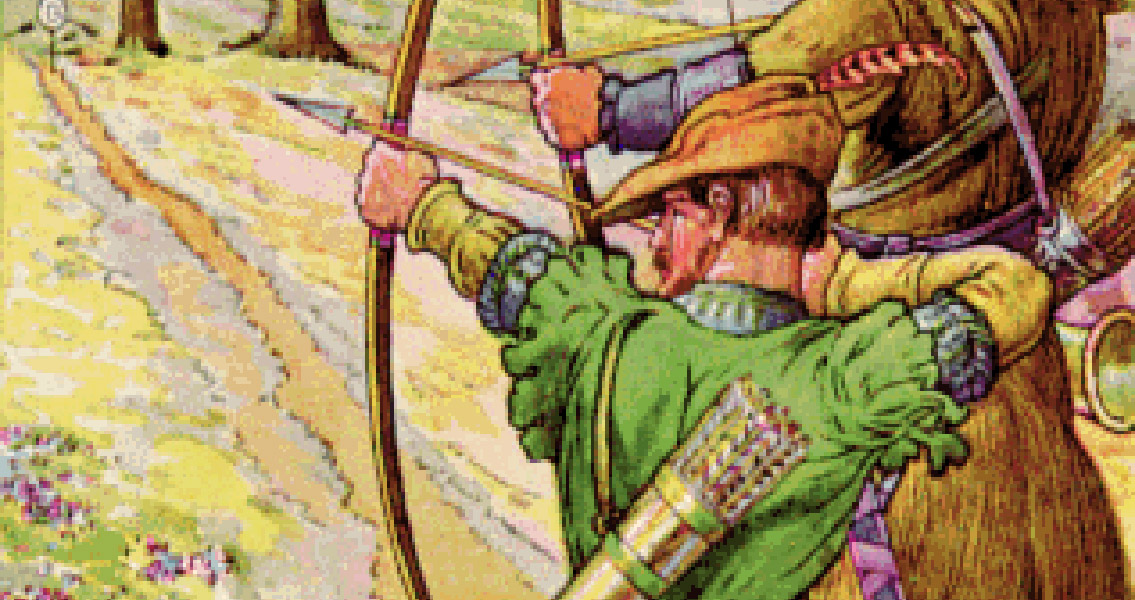
The Vision of Piers Plowman, contains the earliest known mention of Robin Hood, “I kan nought parfitly my Paternoster as the preest it syngeth, But I kan rymes of Robyn Hood and Randolf, Erl of Chestre.” Although the reference in Langland’s poem is vague: it is far from clear whether ‘Robyn Hood’ and ‘Randolf Erl of Chester’ are connected in someway or if the ‘rymes’ are from unconnected traditions, it does at least show that a character by the name of Robin Hood had entered the popular imagination by this point. Going back even earlier, historians have found evidence in thirteenth century English legal records of criminals being labelled with the epithets “Robehod” or “Rabunhod”. Crucially, this highlights that contrary to the heroic, romanticised Robin Hood depicted in recent movies which fall into simple narratives of good versus evil, the name was initially synonymous with violence and crime. The high minded rebel who stole from the rich to give to the poor is a more recent construction. Fourteenth century ballads describe a violent yeoman who lived in Sherwood forest and clashed with the Sheriff of Nottingham. Later, perhaps in the wake of events such as baronial rebellions and the 1381 Peasants’ Revolt, the ballads of Robin Hood started to take on their philanthropic edge. One of the earliest recorded about Robin Hood: The Lyttle Geste of Robyn Hode, concludes with the line that he “did poor men much good”. In a time of growing discontent at the feudal system, it’s likely that stories of a man who challenged the forces of law and order became increasingly appealing. Through the centuries the stories of Robin Hood twisted, changed and evolved to the point it has become almost impossible to determine when the rebellious outlaw was supposed to have carried out his daring acts, let alone if he ever really existed. Sixteenth century historian John Major’s ‘History of Great Britain’ depicts Robin Hood as a follower of King Richard I (1157 – 1199). It describes him as a fallen nobleman who defied Richard’s cousin King John while the rightful king was imprisoned. This is a narrative of Robin Hood’s life that is hugely popular now, however, Major was the first to describe it. Earlier accounts placed Robin Hood in different times and regions, while court rolls from the fourteenth century describe a number of ‘Robin Hoods’ active during the reign of Edward II (1284 – 1327). Whereas some historians suggest that the whole story of Robin Hood could be traced back to one real individual (with a number of candidates as to who this person was and when he lived), others suggest that he was an amalgamation of a number of people. As historian David Baldwin told History Extra last year, although Robin Hood was an invented hero, “There were men like Robin Hood, however, such as fugitives who flouted the harsh forest laws [unpopular laws that retained vast areas of semi-wild landscape over which the king and his court could hunt], and these fugitives were largely admired by the oppressed peasantry.” Beyond its origins, Robin Hood is a folklore tradition that has evolved and expanded with the times, developing in sync with changes in society and reflecting the cultures who tell the story as much as the one from which it originated. ]]>