Categories
Editorial

Astrology, Antisemitism and Other Answers for The Plague

Compendium de Epidemia per Collegium Facilitatus Medicorum Parisius. Better knowledge about disease and bacteria has improved our understanding of the Black Death, and how it was able to spread so rapidly and devastatingly across Europe. Scientists have shown that the disease was spread by a bacillus called Yersina pestis. Possibly transferable between people pneumonically through the air, as well as through the bites of infected fleas, the Plague was spread through trade routes from Asia into Europe, and across the whole continent via major trade hubs such as Rome. Yet even now, some controversy and debate surrounds the disease, in particular regarding how it seemed to keep returning after decades of dormancy. ]]>

Categories
Editorial

History of 2015: Migration, Conflict and Society

study by Nick and Isabelle Winder suggested that compassion and a willingness to accommodate ‘defective’ members of a community played a key role in our evolution and development. The study stands in stark contrast to readings of evolution which focus on competition and ‘survival of the fittest’. The Winders’ “Vulnerable Ape hypothesis” argues that small, isolated hominin communities provided few opportunities to enrich the gene pool. Rather than choosing not to mate, early hominins would often pick a close genetic relative, heightening the risk of offspring with ‘faulty’ genes which would put them at a disadvantage. The hypothesis argues that parents had to learn to work together as a community to cope with these disadvantages and ensure the survival of their genes. As Isabelle Winder summarised: “Genetic vulnerability was the trigger that set our ancestors on the path to symbolic language, innovation and pro-social co-operation.” Another study, carried out by the University of Utah’s Professor David Carrier, has added weight to a very different reading of human development. The “Primal Pugilism” theory suggests that aggressive behaviour, and particularly the ability to throw punches, had an important role to play in the development of the human hand. Carrier and his team took the arms of eight different cadavers, and carried out a variety of tests on them to prove that hands clenched in a fist were capable of hitting with more than double the force of an open hand. This was taken as support of the theory that aggression was an evolutionary advantage to early primates. Carrier and colleagues have done previous research along similar lines, including a study arguing that early hominins evolved to have skulls and faces more resistant to violence. The Primal Pugilism or Aggressive Ape theory is a controversial one, placing aggression and violence as drivers of early hominin evolution. In 2014 an article was published in National Geographic accusing the theory of being too simplistic, referring to it as “bro-science”. Whatever one’s opinions on Carrier’s ideas, the strong reactions the theory can trigger surely provide an insight into modern sensitivity and concerns. In November, Dr. Penny Spilkins conducted a new study on human dispersal in the Late Pleistocene around 100,000 years ago. Dr. Spilkins argues that a dramatic shift in the rate and pattern of human dispersal during the period can not be explained by population growth or environmental factors. Instead, Dr. Spilkins argues in the study that humans’ movement out of Africa and to the furthest corners of the globe can be explained in terms of social developments. As human relationships became more complex, laying the foundations for the bonds needed for early societies, so did the potential causes of conflict. The dark side of stronger social bonds was that the level of repulsion one felt at a betrayal, and the desire for revenge became stronger. This, Dr. Spilkins argues, could push humans into living further apart: outcasts forming groups and moving away from the community at large, eventually crossing oceans in search of isolation. The above studies show how a myriad of new techniques and information can be applied to our study of history. All of them are theories, models which attempt to explain the complexities of our development, and are not necessarily mutually exclusive to each other or other theories. The fact that the conclusions they’ve reached can at times seem so controversial, shows just how much value is placed on the past, and just how much there is still to learn. ]]>

Categories
Editorial

Mayflower Pilgrims Reach Plymouth Harbour

Categories
Editorial

Medieval Pocket Bible Mystery Investigated

www.pnas.org ]]>

Categories
Editorial

What We Are: Nasty, Brutish… and Compassionate

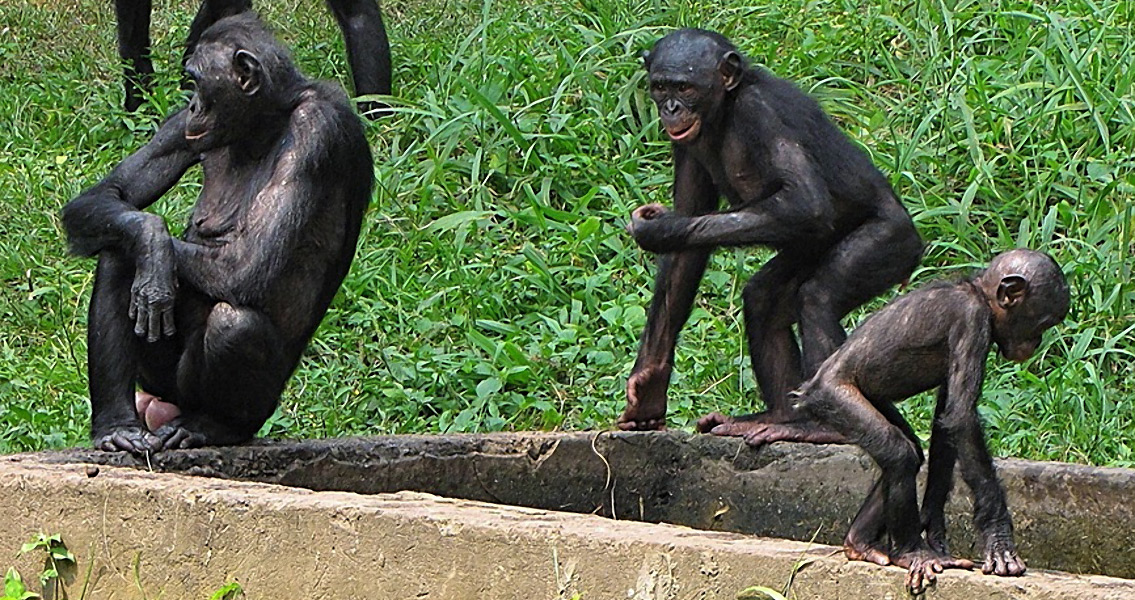
Vulnerable Apes hypothesis, a hypothesis that challenges some of the foundations of the traditional understanding of human evolution. The central idea is just as fascinating as it is simple to grasp: compassion, the ability to accommodate less than “optimal” individuals in the community and help them survive, gave evolution a major push and demonstrated our ability to learn new behaviours when circumstances call for them. This compassion, the willingness of parents to take care of their infants that, unlike the babies of other primates, go through a longer period of complete dependency and have straighter feet, shorter arms and hairless bodies, is what spurred human evolution onward, ultimately turning those flaws into evolutionary advantages. I had the pleasure of talking to Nick Winder a while ago. He shed further light on why the heroic model of evolution, the model that describes natural selection as a constant battle against survival odds of varying importance, is oversimplified and therefore wrong, and on why it is important to rethink basically everything we have long taken for as an indisputable truth in the evolution field. Thomas Hobbes, Nick recalls, described the lives of our ancestors as “solitary, poor, nasty, brutish, and short.” Well, it seems Hobbes and a lot of other authorities may have got it wrong. The pinnacle of evolution The fundamental concept around which this new evolutionary hypothesis is organized is the ability of an entity, or organism in this case, to perform an activity purposefully, intentionally. This ability science refers to as agency. Agency, Nick says, was not recognized by social or political sciences for a very long time; in fact, until the emergence of the modern computer in the 1960s. Until then, he says, scientists by and large plainly refused to accept that anyone different to white western Europeans, let alone their hominin ancestors or non-human animals, was capable of agency. Nick points out that the main reasons behind this were the socio-political environment in which Darwin’s theory was born and the fact that much of early evolutionary theory was produced by Britons, shaping future attitudes and perceptions. In that highly stratified environment, where institutional constraints (which we’ll come to later) discouraged individual agency, Queen Victoria was all but considered the pinnacle of human evolution. Even today, says Nick, natural scientists find it difficult to come to terms with the idea of individual agency, not just among humans – who have time and again been proven to be capable of purposeful action – but also among animals. Still, the paradigm is shifting, thanks in no small part to the emergence of interdisciplinary studies in recent decades, which are beginning to reveal evolution as a process much more complex than early evolutionists and even not so early ones could have imagined. The reason – those socio-political factors that dominated science for so long prevented physical and social scientists from grasping its complexity. “There are certain math problems you can solve,” says Nick, “if you ignore certain parts of their complexity.” Agents and plesionic systems Agency is the central idea in Winder and Winder’s hypothesis, the idea that both human and non-human animals are capable of intentional actions. But agents do not function in a vacuum, they function within what Nick calls plesionic systems, from the Greek word plesion, meaning “neighbour”. A plesionic system is an interval of space and time, called an arena, containing one or more agents (as well as other things) and these agent/s work within the arena to understand or perhaps even influence another plesionic system which they come into contact with at a certain point in time. Nick explains plesionic systems using time geography, an interdisciplinary framework created by Swedish geographer Torsten Hägerstrand in the 1960s. One example of a plesionic system is a person walking on the street and texting. Or someone driving a car. Any agent doing something purposeful, in short. In this purposeful activity, the agent is naturally constrained by spatial factors: we can’t see through walls, for example, and we can’t hear someone talking if we are a mile away from them. Yet, in spite of these constraints agents find ways to come into contact with other agents in other plesionic systems and the points of these contacts are called pockets of local order. A Skype connection is possible because of a pocket of local order called a computer. A geographical feature that has been consistently occupied through the ages, like a city or an ancient monument, is also a pocket of local order, Nick explains. Context is king From these pockets of local order we can reconstruct past plesionic systems that came into contact there and this is possible because of one very important aspect of plesionic systems: they have a context, which is created by the agent. Agents don’t move through time and space in jumps, says Nick, they carry a sort of “lifeline” with them that unwinds as they move and interact with other agents and plesionic systems. The movements of agents create a fabric of plesionic systems, in which each plesionic system has its own memory. This memory is contained in the arena and is created by the constraints inherent in every arena but also by the ways in which the agent themselves change the arena, by rethinking it. Each instance of rethinking an arena creates a context for it. Context, says Nick, literally means an interweaving of information. This interweaving happens over time and results from “the friction between the agent and their arena.” What’s more, this context changes all the time, we constantly recontextualise our arenas. We do this every time we make a decision, then change it, take actions and remember these actions. This recontextualisation lays the foundations of learning new behaviours. The ability to learn new behaviours, in its turn, is an essential aspect of evolution. This itself is not a new discovery: the ability to learn new behaviours, to recontextualise our arenas, has long been recognized by science, just not in its full complexity. Back when Homo sapiens was fresh off the trees (even before that), when hominins lived in small communities in places with relatively sufficient resources to survive but a limited gene pool because of the size of the community, some individuals were hard pressed to pass on their genes. They had two choices: not pass their genes at all or mate with close kin, taking the risk of producing offspring that was at a disadvantage to the rest of the community. To help this offspring survive, the parents had to learn new behaviours, they had to be compassionate. Compassion, in this context, meant the ability to cope with genetic disadvantages, a biologically determined ability, rather than an acquired characteristic that developed as part of later evolution, with the emergence of highly organized societies. The irony of institutions You might well be wondering where these vulnerable apes that we used to be went as evolution progressed and humans started settling down and forming communities and societies. It seems that with the emergence of societies and social constructs like institutions the vulnerable apes gradually turned into genocidal apes, as Winder and Winder call them. Should institutions be blamed for this? To an extent, and it is a considerable extent, yes, they should. Institutions aim to create and maintain order, to rein in the forces of chaos while at the same time placing significant constraints on individuals, on agents. Some of these, the agents put in themselves, and others are imposed externally, so to speak, by the institutions themselves, says Nick. Take the church, for instance, any church. It has a dogma that believers follow, for the most part voluntarily. But even if an individual believer has a problem with some aspect or element of the dogma, they will, if they are sincere in their belief, accept that aspect or element because it is part of the dogma. What’s perhaps more fascinating than this kind of cognitive dissonance is the fact that institutions are in a sense no more than “artefacts of human opinions.” Every individual has a certain opinion of an institution, a different idea of it. Take the above believer – they will probably have an opinion of their church of preference that is very different from the opinion of an atheist. Since both the believer and the atheist are agents and as such equal, both their opinions, albeit different, are valid. More importantly, however, despite these differences in opinion, institutions are, as we have all felt at some point or other, very real constructs, a sort of virtual agent whose main purpose, just like individual agents, is to take care of its vested interest. Obviously, sometimes the interests of one individual agent and an institution are at odds, and it is not the individual agent that usually comes out of such a situation as the winner. Institutions are powerful and there is a good reason for it – remember, they create and maintain order. They are not evil constructs whose aim it is to constrain individuals. Yet the irony in all this is that the inherent compassion of the vulnerable apes started declining when institutions started being created. Suggesting a causal relationship between the two would be too speculative but it is a fact that historically, modern humans at least have for the most part been non-compassionate to their fellow human beings. Only recently – within the last hundred years, which is a second on the scale of human evolution – have we begun to appreciate agency for what it is, to recognize it in humans and even non-human animals. Incidentally, it’s only been recently as well that we have started questioning the merits of this or that institution on a large scale. So, we were once compassionate apes who had compassion and co-operation among their survival tactics. These evolved along with competition, and may well be seen as the second major driver of evolution. Yet over the millennia, the vulnerable ape gave way to a smarter, more dangerous species, the genocidal ape. “Genocidal” may sound like too harsh a word but if we think about it, it is an accurate description. Human activity has been established as a major contributing factor for the sixth mass extinction, which is already taking place. We are literally wiping out hundreds of species at rates that are anything but natural. We are also trying to wipe out ourselves, so we are not just homicidal but suicidal as well. So, what do we do now? Sadly, there is no ready answer. Becoming more aware of our environment, the same environment that sustains us, is one step in the right direction. Another step, in the scientific field, is the increase of interdisciplinary studies; it seems that interdisciplinary research can and does help overcome a lot of obstacles such as obsolete ideas and concepts that have long plagued the science world, effectively preventing research from moving beyond a certain boundary.]]>

Categories
Editorial

Labour Leadership Election: A Historic Conundrum

Categories
Editorial

Tube Strikes and Britain's History of Industrial Action

Categories
Editorial

'Viral' Photo Points to Changing Attitudes on Homosexuality

Obergefell vs. Hodges that state level bans on same-sex marriage were unconstitutional. In Europe, the 2015 Europride – a pan-European international event dedicated to LGBT pride on the continent – was held in Riga, Latvia, marking the first time in the annual event’s twenty-three year history that it was held in a former communist country on the EU’s eastern border. Just last week a photo of a tearful teenage boy by renowned “Humans of New York” photographer Brandon Stanton, captioned “I’m homosexual and I’m afraid about what my future will be and that people won’t like me”, went viral, resulting in an international outpouring of support for the teenage boy. The post even grabbed the attention of Hilary Clinton. Undoubtedly there are still places in the world where Lesbian, Gay, Bi-sexual and Transgender people face persecution, from both their fellow citizens and their own governments. The image, and the response to it, highlight the continued concerns and anxieties for LGBT people, but also how much attitudes have changed in a comparatively short space of time. A look at the history of perceptions of homosexuality in Britain and the USA can provide clear examples of just how drastically ideas have changed, at least politically and legally, over the last seventy years. Just 130 years ago, in 1885, the Labouchere Amendment was passed in Britain which created the offence of gross indecency. This made all sex acts between men illegal, the law clearly targeted at criminalising homosexuality. A decade later Oscar Wilde, author of ‘The Picture of Dorian Grey’, was prosecuted under indecency laws and sentenced to two years imprisonment. The judge at the trial stated that he thought the punishment he’d administered, the harshest he legally could, was inadequate for Wilde’s ‘crime’. In 1952, Alan Turing, the key figure in the cryptoanalytic work at Bletchley Park which cracked the Enigma codes, and a pioneering engineer in the development of the computer, was brought to trial on charges of having a sexual relationship with a man. Turing made no attempt to deny or defend his actions, instead making clear that he felt that there had been nothing wrong in his actions. Inevitably found guilty, Turing opted to receive sterilising injections for a year instead of facing a lengthy prison sentence. After the Second World War had ended, Turing worked at the secretive intelligence agency, GCHQ, (Government Communications Headquarters). Following the revelations about his sexuality however, Turing lost his security clearance to work at GCHQ, highlighting Cold War fears that homosexuals presented a security risk. A similar pattern occurred in the USA. Throughout the 1940s and 1950s countless reports were published arguing that homosexuality was a serious threat to society. The 1950 Senate Commissioned report “Employment of Homosexuals and Other Sex Perverts in Government”, argued that homosexuality was a mental illness which constituted a national security risk. Most shockingly, this report openly admitted that the federal government had covertly monitored its employees sexual persuasion in the early years of the Cold War. Highlighting just how seriously these views on sexuality could affect people’s lives, some 4,380 gay men and women had been discharged from the military, and 500 fired from their jobs in the US government in the years leading up to the publication of the report. In April 1953, President Dwight D. Eisenhower signed a bill prohibiting homosexuals from working in the federal government or for any of its contractors. Britain only decriminalised homosexuality in 1967, through the Sexual Offences Act. Even then, homosexual relationships were still burdened with strict restrictions when compared to heterosexual relationships. It would be decades for example, until the same age of consent was applied to homosexual relationships as heterosexual. In the USA reform started in 1962, when the state of Illinois decrimininalised same sex relationships. From there a gradual process started, as other states slowly implemented similar reforms. It wasn’t until 2003 that the Supreme Court struck down the sodomy laws in the fourteen states that still had them. Of course, throughout this period and before, in both the UK and the USA, there were a plethora of campaigners working tirelessly to win acceptance for LGBT rights and to push for legal reforms, laying the groundwork for the increased acceptance we can see today, most explicitly in the response to Stanton’s photograph. It is of course vital to celebrate and acknowledge these campaigners endeavors. Attitudes to homosexuality have had varied histories around the world. In the case of the USA and UK however, the legal, political and social acceptance of homosexuality just seventy years ago was almost unrecognisable to what it is today. Image courtesy of Wikimedia Commons user: Nikodem Nijaki ]]>

Categories
Editorial

Magna Carta

Categories
Editorial

May History News Round-up

The Americas Researchers from New York Queens College have found that the Ancient Maya city Nixtun-Ch’ich, in Northern Guatamala, was built with a grid pattern design, something not seen in other cities from that time and region. Thought to have thrived between 600 and 300 BCE, the city featured a ceremonial route lined with up to 15 flat top pyramids which were each up to 100 feet tall. Running from west to east, the route only had a 3-degree variation from true east. Other Maya cities tended to be much more ‘relaxed’ in design and the researchers, led by Timothy Pugh from Queens College, have suggested that Nixtun-Ch’ich’s strict design may have given a sense of being constantly controlled for the people living there. A study by Jack Williams and Samuel Munoz has looked at the largest pre-colonial settlement north of Mexico, the city of Cahokia, located on the flood plain of the Mississippi River. By studying 2000 years old sediment cores from the flood plain, Munoz and Williams have shown that major flood events could have been linked to the rise and fall of the city. Correlating the history of the city with the record of floods, it was found that the rise of Cahokia took place between 600 and 1200 CE, a relatively flood free period. A major flood hit the area after 1200 CE, around the same time that the city entered a period of decline culminating in its complete abandonment in 1400 CE. The study could be hugely important for other studies of early agricultural societies as it has highlighted the importance of flood as a possible cause of decline, as well as shedding new light on a rarely studied period of North American history. Human Origins and Development Several studies published in May about our prehistoric origins have the potential to cause a major rethink about our distant past. Grasping the connectivity of such developments can be difficult. Below, several of the most important news stories from this month are presented in chronological order of the periods of which they relate to. An international team of scientists has just announced the discovery of a new human ancestor species which they have called Australopithecus deyiremeda. The scientists believe that this species inhabited the Afar region of Ethiopia around 3.3 million to 3.5 million years ago. This is hugely significant as it means Australopithecus deyiremeda lived in the region at the same time as Australopithecus afarensis (whose most famous representative is Lucy). The study has the potential to question the hitherto dominant theory that only one human ancestor species inhabited the earth at any time during the Pliocene period. Jumping forward three million years, a study from the Wellcome Trust Sanger Institute and the University of Cambridge used genetic sequencing to understand the path of human migration through Africa. Based on a study of the DNA of 100 Egyptians and 125 Ethiopians, the team observed that the DNA of the Egyptians was closer to that of Eurasians. From this, they concluded that the divergence from Egyptians to Eurasians occurred around 10,000 years later than that from Ethiopians to Eurasians. Based on these conclusions, the team believes that the bulk of the human migration from Africa went through Egypt rather than Ethiopia. Other studies have looked at the development of early culture and societies. Genevieve von Petzinger, an anthropologist from the University of Victoria, has looked at the origins of written communication. It is generally believed that the use of written symbols as a source of communication first emerged in Sumer around 3,000 BCE. After examining 52 caves around Europe where ancient humans had lived, von Petzinger believes that written symbols were intentionally used as a way to convey information over 40,000 years ago. These written symbols are clearly not as sophisticated as a modern written language, but if von Petzinger is correct, they would suggest that human cultural development actually started much earlier than previously thought – possibly before the migration out of Africa. Finally, a study by Pontus Skoglund from Harvard Medical School and the Broad Institute, and Love Dalén from the Swedish Museum of Natural History, has suggested that the relationship between humans and dogs may have formed much earlier than previously thought. Scientists generally argue that the domestication of dogs occurred around 16,000 years ago, but this new study argues it actually took place as far back as 35,000 years ago. The conclusions are based on research into the dates that modern dogs diverged from wolves in Siberia (Scientists consider the divergence between dogs and wolves to have been a consequence of human domestication of the animals). ]]>