Categories
Editorial

Melanesian cargo cults and the unquenchable thirst of consumerism

Credit: https://godshotspot.wordpress.com/2016/05/02/the-cargo-cult-belief/[/caption]

Outsiders come to the islands

During the Second World War, the US Army’s ‘island hopping’ strategy saw its troops occupy small, relatively unguarded but well-located islands in the South Pacific. From there, they could embark upon their path to invade Japan. In avoiding major islands and focusing on island hopping, American soldiers came into contact with people who had, until then, had little or no contact with the outside world. The G.I.s came with aeroplanes, manufactured goods, modern medicine, canned food and guns: all of which were new concepts to the islanders.

Perceiving new technologies

Having been colonised by the British Empire, the people of Tanna, a small island in what is now Vanuatu, had already encountered Westerners. Mass-produced goods, however, were new to them. Sci Fi writer Arthur C. Clarke’s assertion that ‘any sufficiently advanced technology is indistinguishable from magic’ was proven true: it wasn’t long before cults worshipping the American goods appeared in islands around the Pacific. Most notably, they cropped up in the islands of Vanuatu, Fiji and New Guinea.

The John Frum cargo cult

These foreigners and their apparently miraculous supplies caused the people of Tanna to mix their existing beliefs (which included an anti-colonialist cult as well as Keraperamun, a volcano god) with their new experiences. The result came to be known as the John Frum cargo cult. To this day, the members of the cult worship a god named John Frum, who is usually depicted as an American solider in full uniform. A neighbouring cult from the same island also worships a god called Tom Navy. These were not considered to be ‘new’ gods, but instead extensions of their existing deities.

Absence leads to fetishism

As the war came to an end, the Americans went back home. The islanders, however, continued to worship their newly evolved deities in an effort to convince the gods to return and bring with them an abundance of cargo. To the people of Tanna, John Frum, Tom Navy and the other deities became messianic figures who would one day return in ships and aeroplanes laden with fascinating goods. A kind of fetishism emerged, as members of the John Frum cargo cult started to build symbolic runways out of bamboo. Adding to this, they erected wooden air control towers and designed life-size replicas of aeroplanes out of the wood and straw from the island. [caption id="attachment_8823" align="aligncenter" width="500"] Members of the John Frum cult with a replica of an aeroplane. Credit: http://purgingtalon.com/diabologue/wp-content/uploads/2009/01/cargocult1.jpg[/caption] In 1957, this fetishism progressed further as the newly formed ‘Tanna Army’ emerged. It is a non-violent organisation that emulates the public parades and military mannerisms of the American army. Its ‘soldiers’ dress in red, white and blue; and to this day, a parade occurs on the 15th of February every year.

So what are the Melanesian cargo cults?

The definition of ‘cargo cults’ has thrown up a multitude of problems. In 1948, anthropologist Lucy Mair wrote ‘the motive force of cargo cult is a feeling of hopeless envy of the European with his immensely higher material standards’. This is by no means an accepted analysis of the movements; but it presents an interesting juxtaposition of the cults with modern consumerism. Loosely, we can now say that they are organised social movements of people in pursuit of ‘cargo’ by means of ritual action. Whether the cults were nativistic, and thus concerned with reviving waning traditions, or iconoclastic, and thus focused on replacing local culture with Western substitutes, continues to be subject to debate. We can say with absolute certainty, though, that over the past 7 decades, these movements have played a pivotal role in developing the communities and cultures currently in play on the islands of Vanuatu. Where there are leaders and prophets of these cults, they are concerned with social harmony and order. They insist that in order for new cargo to arrive on the islands, certain social rules have to be followed. Moral renewal and collectivism over individualism are common themes: to love one another, to perform different kinds of sexual relationships, and the rejection of stealing, lying and cheating. No order, no cargo. A prominent writer and researcher on the cargo cults, Peter Worsley, has argued that cargo cults ‘weld previously hostile and separate groups together into a new unity’ and that ‘by projecting his message on to the supernatural plane’, a cargo cult luminary establishes that his leadership ‘transcends the narrow province of local gods and spirits associated with particular clans, tribes or villages’.

Cargo cults: a comforting reflection of the human condition

Despite having largely faded away, stories of cargo cults are constantly doing the rounds. A quick internet search of the term will throw up seemingly endless analyses and hypotheses; and if you are so inclined, you can purchase a bottle of John Frum alcohol to sip at your leisure. Many documentaries have been made about the faction that specifically worships Prince Philip, Duke of Edinburgh. So why the obsession? Simply put, they epitomise modern, consumerist desire. It is a desire that cannot be satiated. We have endless opportunities to shop for our own cargo, and yet the acquisition of goods never seems to satisfy us. When we get our cargo, it doesn’t quash the desire. It intensifies it. Unending desire and the constant strive to be better, have more, and achieve dominance is human nature – whether it’s on the shores of Tanna or in the heart of Manhattan. To Westerners, cargo cults seem to be as futile as they are relatable. It’s the modern condition, reflected in a place that feels like another world.]]>

Categories
Breaking News

How European colonisation completely wiped out dogs in America

Canines and colonisers: an unhappy tale Colonial devastation bestowed upon native humans of the Americas is well-documented; but evidence about dogs’ lives is less known. However, an international team has started to ask – and answer – those questions. Fifty researchers collaborated on the investigation and together, they conducted the most detailed and thorough study of ancient and modern dog DNA to date. Through biological and archaeological evidence, they examined the remains of 71 ancient dogs from the Americas and Siberia; and put their findings alongside the genomes of modern dogs. [caption id="attachment_8797" align="aligncenter" width="720"] A ritual burial of two dogs at a site in Illinois near St. Louis suggests a special relationship between humans and dogs at this location and time (660 to 1350 years ago).
Credit: Photo courtesy Illinois State Archaeological Survey[/caption]

Lineage losses for man’s best friend

Published in the journal Science, the new evidence gives us reason to conclude that ‘pre-contact’ dogs disappeared to a similar extent to the Neanderthals. One of the authors was Greger Larson from the University of Oxford, who is leading an international effort to investigate how dogs have been domesticated. He says the study solidifies our understanding of the fates of humans and their animals: “The Europeans come through. They knock out the humans. They knock out the dogs… It’s a complete disappearance.” Leading the research was Laurent Frantz, an expert on ancient DNA at the Queen Mary University of London. Until now, there hadn’t been sufficient evidence to tell the story of what happened to dogs after the arrival of European colonists. However, his research proves that pre-contact dogs were identifiable as a group separate to any other, and that their disappearance came about from a combination of disease and European persecution.

Dogs in America: a history

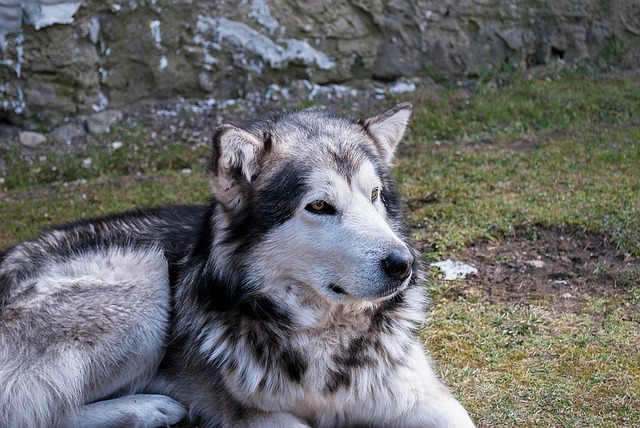
America’s earliest dogs were not domesticated North American wolves, as has been speculated. It’s much more likely that they followed humans over a land bridge that once connected North Asia and the Americas, the study found. You can read more about recent research on human migration into the Americas here. The earliest archaeological evidence for dogs living in North America comes from 10,000 years ago. As humans entered the region 14,000 years ago, it looks like the first wave didn’t bring dogs with them. The first canines to arrive in America were of East Asian descent, but soon evolved into their own group, distinct from both their ancestors and modern dogs. The animals in question are loosely related to Arctic breeds, such as huskies and malamutes, which arrived with later human migrations into North America. [caption id="attachment_8798" align="aligncenter" width="640"] A modern Malamute.[/caption]

“Forced cultural changes”

Humans and dogs coexisted relatively peacefully in both continents for over 9,000 years. But when European colonists arrived, they were gone. “This suggests something catastrophic must have happened, and it’s likely associated with European colonisation,” says Frantz. Clearly, early humans and dogs in the Americas faced many of the same challenges after European contact. University of Illinois Professor of Anthropology, Ripan Malhi, explains: “It is known how Indigenous peoples of the Americas suffered from the genocidal practices of European colonists after contact… What we found is that the dogs of Indigenous peoples experienced an even more devastating history and a near-total loss, possibly as a result of forced cultural changes and disease.”]]>

Categories
Editorial

The Irish Fright of 1688: racism, rumours and the reign of fake news

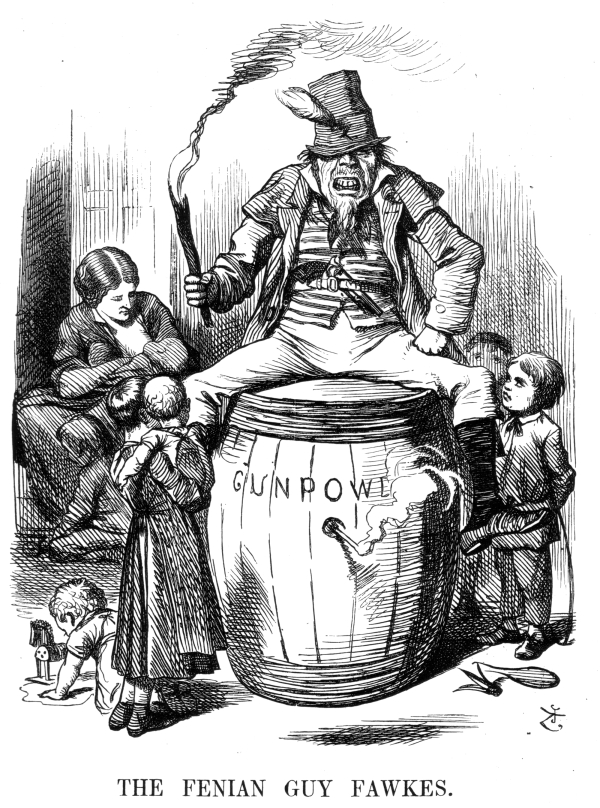
here). Often, outbreaks occur in small, tight-knit groups, due to the intensity of collective thinking. But if common thought is scaled up, hysteria can still occur. The Irish Fright of 1688 is a solemn reminder that when a prejudiced ideal is held by an entire country, fear can hypnotise the human mind into insanity. All it needs is a catalyst: political instability. [caption id="attachment_8768" align="aligncenter" width="600"] Anti-Irish propaganda continued for centuries: this cartoon is from ”Punch” magazine, published in December 1867. Credit: Wikimedia Commons[/caption]

The 17th Century Englishman’s understanding of the Irish

The trope of the ‘wild Irishman’ had been a firm narrative of the British Empire for centuries. Negative stereotypes appear as far back as 1190, with the Norman chronicler Giraldus Cambrensis justifying the Norman invasion of Ireland. He penned Topographia Hibernica, or Topography of Ireland, which played a lasting role in shaping English colonial attitudes towards the Irish. More than just poor and uncultured, the Irish were painted as unholy. In The Anglo-Irish Experience, 1680-1730: Religion, Identity and Patriotism, historian DW Hayton says: “the native Irish were called ‘a brutal race that Israel’s God ne’er knew’”. Conditioned by a racist misconception of the Irishman, the English people had a well-established fear. With political instability nibbling at their heels, they were primed for acts of mob mentality.

Political instability rocks England

When King James II took the throne after the death of the ‘Merry Monarch’ Charles II, his policies of religious tolerance were met with opposition from the political powers. Troubled by the new King’s Catholicism and his close ties with France, they were increasingly outspoken about the king’s unsuitability for the throne. Prior to the birth of James II’s son on 10th June 1688, the heir presumptive had been his 26-year-old daughter Mary, a Protestant married to William of Orange.  This change in the line of succession meant that the establishment of a Roman Catholic dynasty seemed ever more likely. In private, Tories and Whigs worked together to bring William of Orange to England to perhaps quell any danger of rising Catholic influence.

Irish soldiers come to Portsmouth

On his ascension to the throne, James had inherited an army in Ireland. It was made up of 8,238 men; majority Protestant. Over the next three years, the army would welcome some Catholic soldiers and grow to have almost 9,000 men. Due to the looming threat of an expected invasion by William of Orange, the English Army needed support from Irish troops. When 2,820 men were sent to Portsmouth in September 1688, the townspeople were suspicious. Fear began to spread. A few weeks after the Irish soldiers arrived, a newspaper reported that people were making “great complaints of the rude Irish who have caused many families to leave that place, having committed many robberies.” Rather than robberies, the true fear of the local people was that Irish or Catholic forces were in a fine position to launch an anti-Protestant uprising. In fact, just a few years earlier, the House of Lords had announced that there was a “horrid and treasonable Plot and Conspiracy, contrived and carried on by those of the Popish Religion in [Ireland], for massacring the English, and subverting the Protestant Religion, and the ancient established Government of that Kingdom.” As the Glorious Revolution to overthrow James II took hold, the Irish troops were ordered to go north to fight in the Battle of Reading on 9th December 1688. After a sorry defeat, some Irish troops were sent back to Portsmouth; some to Uxbridge, just west of London.

The Irish Fright grips England

One account from 1746 quotes Bishop Gilbert Burnet: “Country Fellows, arriving about Midnight at Westminster caused a sudden Uproar by Reporting that the Irish, in desperate Rage, were advancing to London, and putting all before them to Fire and Sword.” Other news writers passed similar comment, immediately igniting enough panic for 100,000 men to mobilise. Contemporary accounts tell us that men were discharging firearms and beating drums rapidly. Women were able to contribute more significantly to the din by beating pots and pans. False reports flew about the country. Allegedly, Uxbridge had been ransacked by the Irish. The House of Lords even had an emergency meeting at 3am in Whitehall to dissect the situation. Rather than subsiding due to lack of evidence, the Irish Fright snowballed. The following day, hysterical reports that the Irish were attacking Kent and Norfolk caused people to mobilise. People living in Kingston-upon-Thames started to cut down trees to barricade themselves against the ‘wild Irishman’. Madness swept northwards. By 15th December, Yorkshire succumbed to the Fright; believing that both the Lancastrians and the Irish were coming to burn their towns to the ground. Three days later, the Fright reached remote parts of England and Wales. On 18th December, a local mob shot and killed a supposed Irishman. As it turned out, he was an exciseman; someone they might have been happy to see the back of anyway. Significantly, the reports feeding from one town to the next talked about “8 or 9,000 Bloody Irish,” despite only 2,820 men having been stationed in Portsmouth originally. Hayton comments: “This panic was the climax to a decade of Whig propaganda, seeking to terrify the English public with the traditional nightmare of bloodthirsty Irish papists. That the programme worked so well proved the persistence in England of the popular reputation of the Irishman as a cruel savage, though it did require a political crisis to realise its full potential.”

The fallout of the Fright

Contemporary accounts tell us that at least 19 counties were swept up into the Irish Fright. All displayed a similar narrative: an onslaught of bloodthirsty Irishmen were said to have massacred the inhabitants of towns only around a day’s journey away. The panic burned brightly for a day or two before subsiding. Although the exciseman was the only casualty, innocent Catholics were targeted. A diarist noted: “[Protestant mobs] made most miserable of all the papists’ [Catholics’] houses they came near; for, under pretence of seeking for arms, they did many thousands of pounds worth of hurt, cutting down rich hangings, breaking through walls, pulling in pieces of excellent ceilings … then they secured all the papists they could get, intending to carry them all away to prison.” [caption id="attachment_8769" align="aligncenter" width="600"] Anti-Irish propaganda from ”Punch” magazine, published in May 1882. Credit: Wikimedia Commons[/caption] For all of its insanity, the Irish Fright was not a standalone, freak occurrence. Historians agree that it bore a striking resemblance to the French Great Fear of 1789, which followed the fall of the Bastille. In both uprisings, false rumours of massacres caused men and women to take up arms. Concerns about a collapsing regime, coupled with the cold realisation that no central authority could protect the people, resulted in a volatile civilian situation. With its echoes throughout history pointing towards a continuing relevance, the Irish Fright is a startling reminder of the power of a racist narrative in times of political instability.]]>

Categories
Breaking News

Salmonella Outbreak May Have Ravaged Aztec Civilization

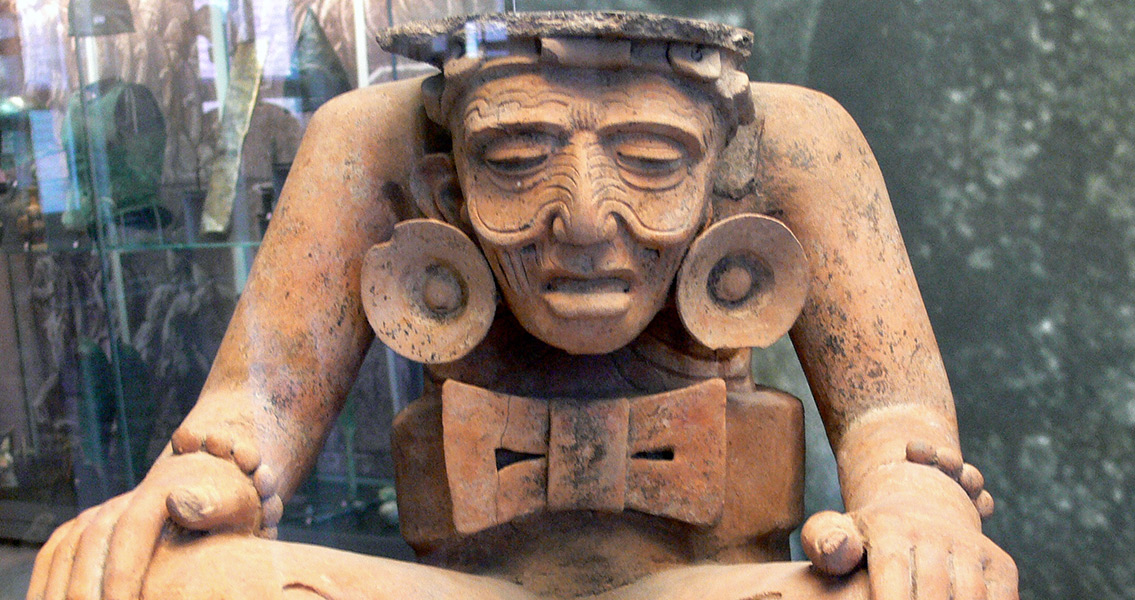
Nature, scientists say that DNA recovered from Mexican burials – specifically stomach bacterium – can be linked to the pestilence that wiped out four fifths of the native population in the 1540s. Before the first Spanish conquistadors arrived in Mexico in 1519, estimations put the native population at approximately 25 million; just 100 years later, that figure had plummeted to around 1 million, driven by Spanish conquest and multiple disease epidemics. These epidemics, called “cocoliztli” in the Aztec language of Nahuatl, raged between approximately 1546 and 1576. Two of the largest cocoliztli are thought to be responsible for the deaths of anywhere between 7 million and 18 million indigenous people in the highlands of Mexico alone. The causes of these cocoliztli have long been debated, as other diseases such as typhus, smallpox, and measles have all been ruled out by previous scholarship. A recent theory, from a 2002 research study from the National Autonomous University of Mexico, proposed a combination of catastrophic drought and viral hemorrhagic fever as the culprit. Two new studies have tried a different tack. Researchers from the Max Planck Institute in Germany, led by evolutionary geneticist Johannes Krause, examined the teeth of nearly 30 individuals who are thought to have died during the 1545 cocoliztli. Scientists extracted teeth from the remains and sequenced their DNA, recovering traces of ancient bacteria from several samples. This ancient DNA was found to be a match with the genome of salmonella. Additional work led the team to pinpoint the specific strain of the bacterium, revealing that Paratyphi C, a type of salmonella that causes an illness similar to typhus, was the likely culprit. The strain is an active one, mostly seen in developing countries today, with a 10% to 15% mortality rate if left untreated. Meanwhile, a second study from the University of Warwick in the UK and spearheaded by microbiologist Mark Achtman, dovetails with this first piece of research. The remains of a woman from Trondheim, Norway, interred around 1200 CE, were found to also hold traces of Paratyphi C. The discovery not only shows the salmonella strain was active in Europe, it’s also the earliest evidence of the bacterium to date. This doesn’t in and of itself link the Norwegian instance of Paratyphi C to its appearance in Mexico of course, nor could it be proof positive that the infection was spread to native Aztecs by European imperialists. However, it’s not out of the question, especially since there are some who can become carriers of Paratyphi C without becoming sick. In other words, a Spanish conquistador who looked otherwise healthy could have infected native populations. Without natural resistances to the bacterium, indigenous peoples would have been ravaged by the infection. The two research studies, both which have been published on the BioRxiv servers, are available here and here]]>

Categories
Editorial

Benin City: A Stunning Metropolis Annihilated By the British Empire

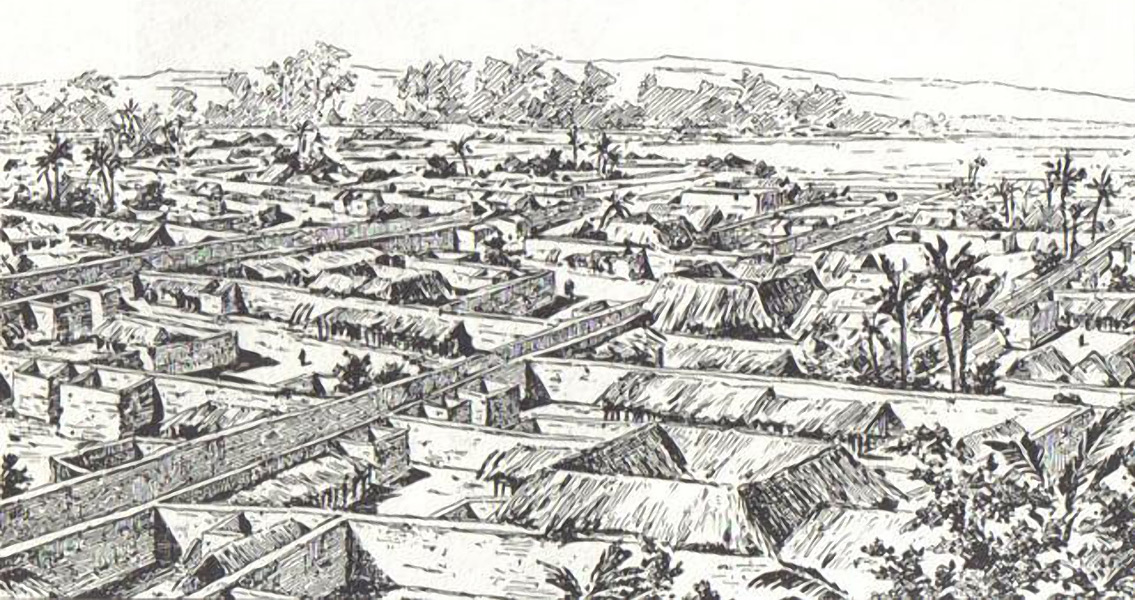
Modern estimates suggest that at one point the walls were four times longer than the Great Wall of China, using up to a hundred times more material than the Great Pyramid of Cheops. Beyond the city limits, further walls were constructed to divide the surroundings of the capital into around 500 distinct villages. This complicated network of walls was all dug by hand, the mosaic of settlement boundaries covering 6,500 sq. km in total. Huge metal lamps fueled by palm oil lined the city’s streets, a precursor to modern street lighting. When the Portuguese first laid eyes on the city in the middle of the jungle, they classified it as one of the most beautiful, well designed cities in the world. Lourenco Pinto, the captain of a Portuguese ship, observed in 1691: “Great Benin, where the King resides, is larger than Lisbon, all the streets run straight and as far as the eyes can see. The houses are large, especially that of the king which is richly decorated and has Fine columns. The city is wealthy and industrious. It is so well governed that theft is unknown and the people live in such Security that they have no door to their houses.” Now, nothing of that city, believed to have been founded in 900 CE, remains. A new city has been built on the site, but no traces of the original’s unique splendor can be seen. The first centuries of European contact had seen Benin City enjoy a mutually beneficial trade relationship with Portugal. That all started to change in the nineteenth century, however, as Britain and other imperial powers upped their exploitation of Africa, moving from trading to the more profitable system of direct colonial take over. By 1884, chiefs of a plethora of tribes in the Niger Delta had signed treaties placing their people under the protection of the British crown. A protectorate government was set up with a headquarters in Calabar, and the area of British interest in the region continued to expand. By 1886 the activities of the Royal Niger Company had engulfed the area surrounding Benin, but the Oba (king) of Benin refused to sign up to the same treaties. For years Benin held out against many of the trading and other demands made by the British, yet the situation became increasingly perilous for the increasingly isolated kingdom. As Dr. Victor Osaro Edo wrote in 2009: “The fall of Benin from 1885 onwards became inevitable.” A trigger came in January 1897, when the Acting Consul-General in the region: James Phillips, led a large delegation to Benin City. The delegation hadn’t made their intentions clear and were making their visit during the Igue festival, when the Oba was not supposed to receive any visitors. What the expedition’s real intentions were is still debated, but Phillips’ unannounced arrival was seen as an invasion and intercepted by the Oba’s forces. In the ensuing battle, only two officers survived of the roughly 200 people in Phillips’ party. The retaliation by the British forces, known as the Benin Expedition, was swift and brutal. A large British force of 1,200 soldiers, at the time labelled the Punitive Expedition, was deployed. In February 1897, the machine gun bearing troops arrived at Benin, their orders were to conquer the city. Fierce fighting ensued, the Benin forces resisting for 17 days before the British expedition (including a large force of African recruits) took the Kingdom. What followed was a wave of destruction, the people of the city forced to flee as the invaders burnt it to the ground. The Oba’s palace was destroyed, while he was forced to live the rest of his life in exile in Calabar. The cultural relics of the city: ivory and bronze sculptures, were looted and then sold off to pay for the Benin Expedition. Today, around a thousand Benin bronzes can still be found in public and private collections around the globe, most notably in Britain but also elsewhere. These artefacts of the kingdom are relics of the achievements of the great city of Benin, and a powerful reminder of its fate at the hands of British imperialism. ]]>