Categories
Myth of Cleopatra’s Death Debunked
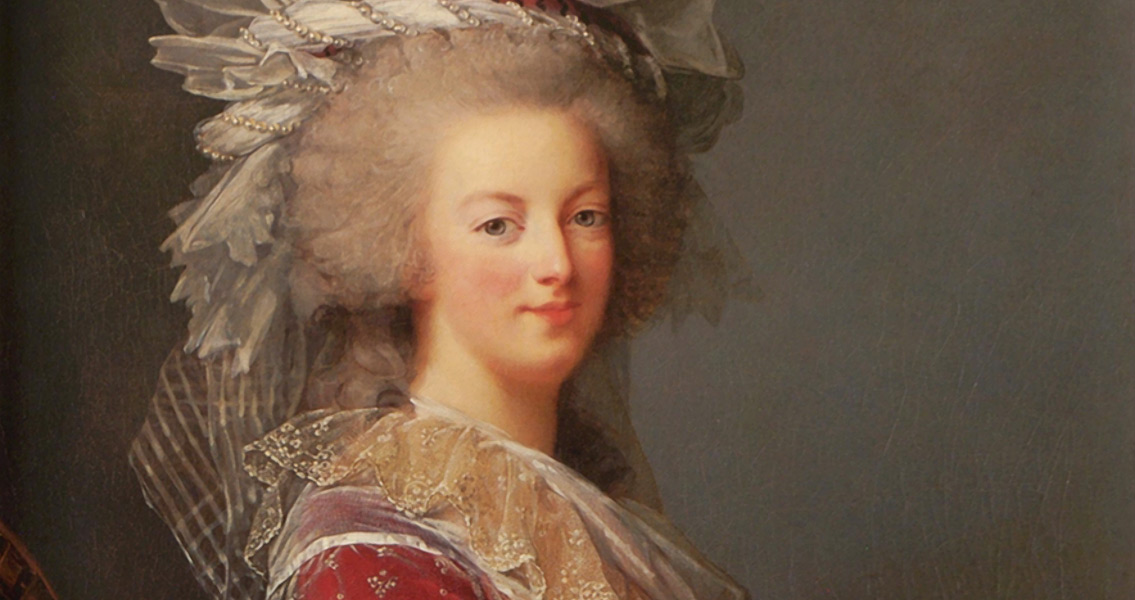
Born in Vienna in 1755, Antoinette was the fifteenth child of Holy Roman Emperor Francis I and the Habsburg Empress Maria Theresa. Part of one of the most powerful families in Europe at the time, she soon drew the interest of other monarchies around the continent. At the age of fourteen she married the future Louis XVI, sealing a new alliance between former enemies Austria and France. Before Louis’ ascent to the throne Marie Antoinette was celebrated as a teen idol in France. Following his coronation however, she became increasingly unpopular. Although stories have inevitably been exaggerated or made up – most famously the belief that she responded to a peasants food shortage by declaring “Let them eat cake” – it is clear that she lived a life almost completely antithetical to her quiet, withdrawn husband. As France entered a period of political and economic turmoil, with support of the monarchical system increasingly sparse, Antoinette’s reportedly debauched life style drew greater and greater condemnation. Spending much of her time away from the king in her private castle, the Petit Trianon, rumours began to circulate of adultery, while pamphlets accused her of ignorance of the French people, greed, and debauchery. Of course, such depictions of the last French queen have stuck. We often consider her the archetype of the excesses of extreme wealth, failing to consider that such portrayals were likely often made with ulterior motives. Indeed, many historians since, such as Charles Duke Yong, have painted her as a generous, modest monarch who tried to reform the morals of the court. Undoubtedly, the French Revolution was a vital moment in the history of democracy, coming in a society which was deeply divided between class. But is accepting the cartoonish images of Marie Antoinette failing to grasp the true complexity of the factors at play in the conflict between monarchy and people?]]>

This article was edited on 9th June, 2015. The original wrongly suggested that the Qur’an was a depiction of Muhammad’s life.]]>
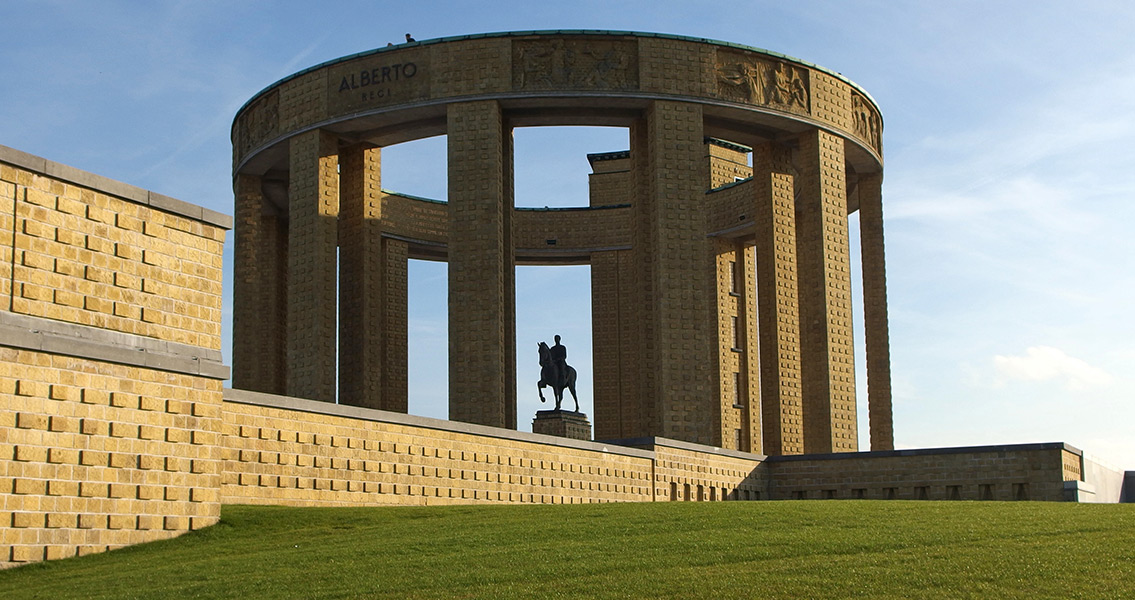
Contemporary European History, has examined how these events can provide an understanding of how ceremonies of mourning reveal the relationship between European monarchies, political culture and the mass media. The deaths of major royal figures attract a lot of attention at the time in the media and subsequently in scholarly work. This academic attention has revealed some very interesting points. “Various authors have already stressed how royal funerals and state funerals can be of relevance in public politics in the modern period through the use of ritual,” de Spiegeleer wrote. One area which hasn’t been studied very much is the response of the public to royal funerals. As a result, public attitudes to royal death have not fully been explored and it is only partially understood how normal people are affected by the demise of members of their royal family. In the context of increasingly nationalised European monarchies – a process which peaked during the First World War – de Spiegeleer notes that “royal funerals became prestigious ceremonial events par excellence and gained structural meaning in this world theatre of performing monarchies and national rivalry.” In the early twentieth century, the Belgian monarchy made concerted efforts to conduct public relation campaigns. In order to survive into the new century, the Belgian royal family attempted to portray itself as the ideal Belgian family, by emphasising its members qualities and accomplishments. Of particular importance was a patriotic dedication to the nation, military successes, efforts to guarantee peace, and various charitable works. On top of this, an image of a harmonious family life was also fostered. “Misery and sudden deaths increase the public appeal of royal families because this suffering brings the royal family closer to the people,” de Spiegeleer explains, as grief is a universal emotion felt by all. “The sudden and accidental nature of their [Albert and Astrid’s] deaths fulfilled the characteristic of royal suffering.” The surge of public sympathy and loyalty towards the royal family after these sudden deaths was unprecedented in Belgian history, de Spiegeleer notes. “The ritual of the funerals became a means to publicly express emotions and collective identities and offered a cathartic pole.” Most importantly, the funerals were covered in the Belgian media, allowing mass participation in essentially private events. “Radio, cinema and the press ensured a wide coverage of the royal deaths and funeral ceremonies to a degree that justifies calling them media events,” de Spiegeleer argues. The public expressions of grief show that the Belgian public felt very close to their monarchy. Whilst expressions of grief were nuanced and varied, the mass outpouring of emotion – facilitated by the media – means that the meaning of these deaths was important in shaping inter-war Belgium. It is interesting to explore this area of history as it allows us to understand mass grief at royal death in our own time. For more information: www.journals.cambridge.org Image courtesy of Wikimedia Commons user: Mark Ahsmann]]>
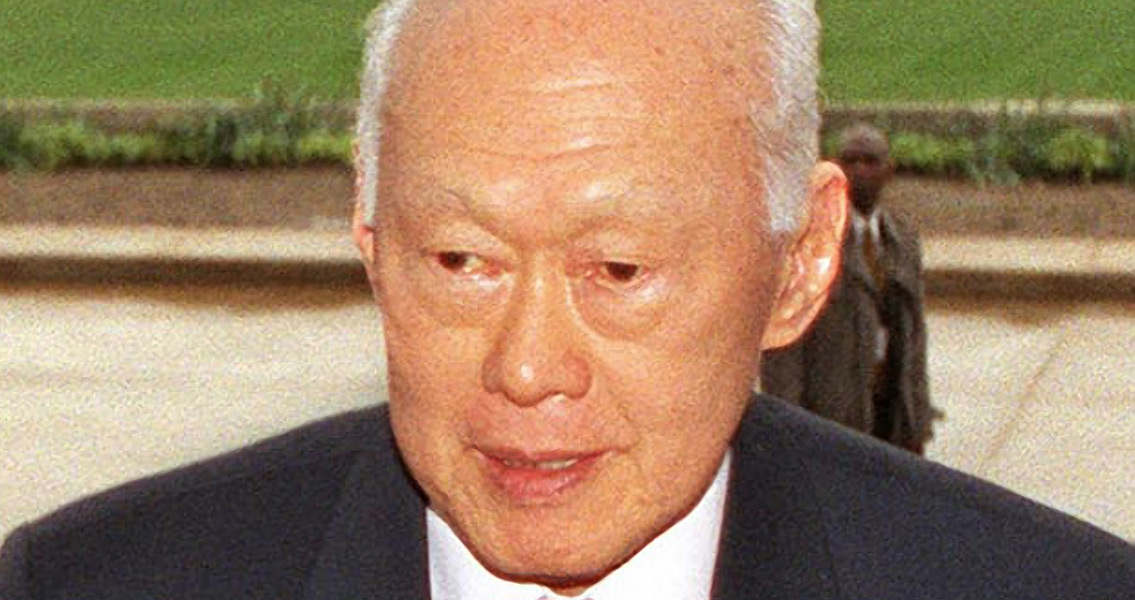
New York Times in 2007, where he described his government as, “We are ideology free”. He went on to explain that the only criterion for developing new policy was, “Does it work? If it works, let’s try it. If it’s fine, let’s continue it. If it doesn’t work, toss it out, try another one.” In 1959, Lee won election with the left-wing party he had co-founded, ‘People’s Action’, and Singapore gained self-government. For the next thirty years, Lee’s tenure as Prime Minister would define a huge chunk of the country’s history and identity. In 1963 he organised a referendum on whether Singapore should move for complete independence from the United Kingdom, so it could form a new federation with Malaysia. Mr. Lee’s campaign was successful, and in August 1963, he declared Singapore’s independence from Britain. The merger with Malaysia proved to be short lived. Violent clashes as a result of tensions between different ethnic groups meant that by 1965 the situation was no longer viable, and Singapore declared independence again, this time from Malaysia. In the following decades Mr. Lee oversaw a period of dramatic economic development in Singapore. In the twenty years between 1960 and 1980 the Gross National Product per Capita increased by fifteen times. At present, the International Monetary Fund ranks Singapore’s citizens as the third richest in the world. Mr. Lee’s model for Singapore was one of centralised government, economic liberalisation and transparency. These features combined to make Singapore one of the most prosperous countries in Asia. On the other hand, Mr. Lee’s rule was often accused of being authoritarian, and he himself admitted that prisoners had been detained without trial. Political rivals were jailed on dubious grounds, sometimes for decades, while opposition parties were sued into bankruptcy. He repeatedly justified these actions on the basis that they were the only way to maintain peace in Singapore’s multicultural society. Such was the length of his reign, that it is difficult to evaluate the benefits of any alternative. Mr. Lee oversaw economic modernisation, dramatic urban development and the creation of an internationally respected education system in Singapore, while at the same time installing mechanisms of government and authority which were at times excessive. Gun and drug crime perhaps best encapsulate the Singapore created by Mr. Lee. Due to incredibly strict punishments for both offences Singapore has some of the fewest instances of gun and drug crime in the world, however, it also has one of the world’s highest rates of execution per capita. Tributes to Mr. Lee from the likes of Angela Merkel, Barack Obama and Vladimir Putin, as well as a host of other statesmen, gives an insight into just how widely respected he was. Many of his policies were deeply controversial but it cannot be denied that perhaps more than other recent politician, he played a pivotal role in shaping the identity of the country he governed. ]]>