
Allkauren koi by the researchers behind the discovery. Preserved in remarkably good condition, the skull remains have revealed new information about the evolution of the braincase of pterodactyloids, a major suborder of Pterosaurs. The name Pterosaur comes from the Greek for ‘wing lizards’. These spectacular creatures dominated the skies during the Jurassic and Cretaceous periods, and included the largest vertebrate ever known to fly: Quetzalcoatlus from the late Cretaceous period. Members of the long extinct group were incredibly diverse, ranging from the size of a sparrow to the size of an airplane. Intriguingly however, Pterosaurs evolved flight separately from bats and birds; they are not closely related to either creature. The group had extraordinary adaptations enabling them to take to the skies: pneumatic bones drastically reducing their weight and an elongated digit supporting a wing membrane. The neuroanatomy of Pterosaurs has remained shrouded in mystery however, the consequence of a paucity of three dimensionally preserved remains. It is this that has afforded the latest discovery such importance, giving new insight into the intermediate forms of Pterosaurs. The study describing Allkauren koi, published in the journal PeerJ, provides new information about the origin, tempo and mode of evolution in the Pterosaur group. Allkauren koi has been named from the language of the Tehuelche, the group of indigenous peoples of Patagonia. ‘All’ comes from the Tehuelche word for ‘brain’, while ‘kauren’ is their word for ‘ancient’. It joins the over 150 other species of Pterosaur discovered so far. The remains, including the amazingly preserved, uncrushed braincase, were discovered in northern central Chubut Province, Patagonia Argentina. Through computer tomography, the researchers have been able to study the creature’s cranial anatomy, observing in three dimensions the cranial endocast and the inner ear. From this starting point a comprehensive phylogenetic analysis of the Pterosaur group was performed, one which “fills an important gap”, according to the study. “Allkaruen, from the middle lower Jurassic limit, shows an intermediate state in the brain evolution of pterosaurs and their adaptations to the aerial environment”, said Dr. Diego Poll, a member of the research team, in a PeerJ press release. “As a result, this research makes an important contribution to the understanding of the evolution of all of pterosaurs.” ]]>

T. rex and G. shinyae had such disproportionate forearms remains a mystery. The function of such seemingly useless forelimbs has perplexed experts and amateurs alike. An initial theory was that T. rex used its arms to hold a mate, others have suggested the arms were used to hold prey in place, (an earlier study hypothesized the arms were capable of maneuvering more than 400 pounds) or to help itself stand up – assuming the dinosaur ever sat. The current theory is that these short forelimbs were, in actuality, totally useless. Researchers are hopeful that learning how these shortened forelimbs evolved may help solve the puzzle. The study has been published in the journal PLOS ONE. ]]>
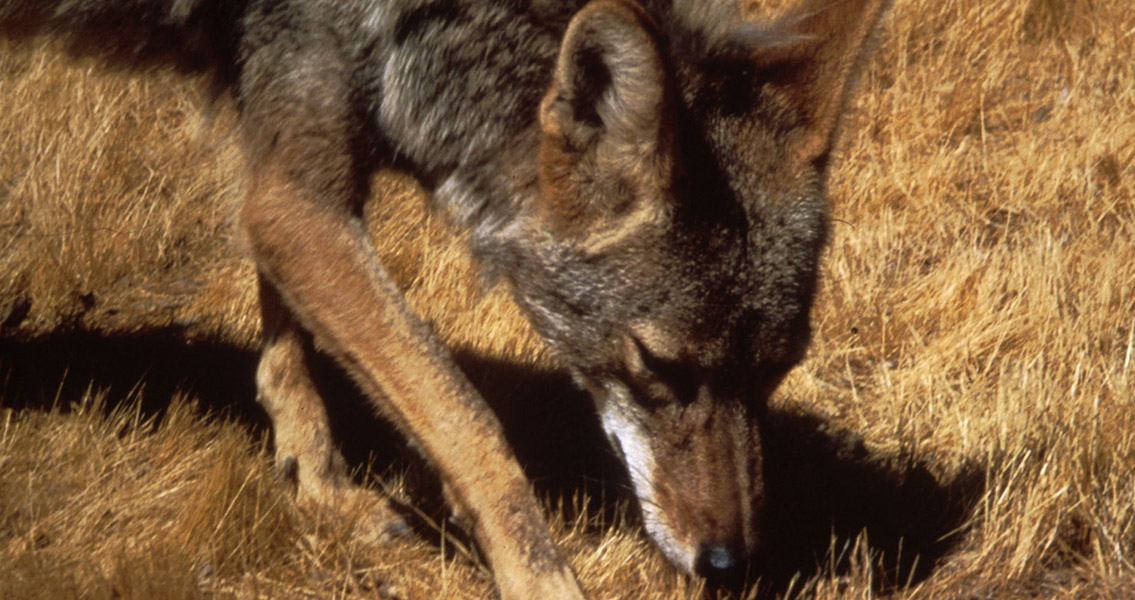
Cynarctus wangi – lived 12-million years ago and is described in a recent study in the Journal of Paleontology. The animal is described as being around the size of a modern coyote, and the specimen is a fossilized tooth, specifically an upper right second molar recovered at the Choptank Formation, part of Maryland’s Calvert Cliffs. Cynarctus wangi was part of the Borophagine canids that roamed eastern North America during the middle Miocene era. Borophagine canids are part of a line of carnivorans that includes wolves, domestic dogs, foxes, dingoes and jackals as well as a variety of other existing and extinct dog-like animals. Referred to as bone crushers, (they are known for their strong jaws and oversized teeth) the Borophagine canids lived across North America from 10 to 30 million years ago. Researchers believe the species probably went extinct because it was unable to compete with other canids. Regardless of the fierce nickname, scientists don’t believe C. wangi was wholly carnivorous. The fossil led them to the conclusion that around two-thirds of its meals were non-meat — the animal was surviving on insects and plants, more like a bear than a dog. Steven E. Jasinski, a University of Pennsylvania doctoral student and the study’s lead author, wrote in the study that what’s especially significant about the find is its location –the discovery of land animal fossils in the Choptank Formation is extremely rare and therefore can provide important information about North America as it was between 12 and 13 million years ago. The Miocene period (extending from 23 million to 5 million years ago) was the first geological epoch in the Neogene Period. The word Miocene means ‘less recent’ and the ‘Epoch’ gained its name due to having 18% fewer modern sea creatures than the epoch which followed it, the Pliocene. The planet moved through the Oligocene, then the Miocene which was followed in turn by the Pliocene, cooling as it did with a succession of ice ages. The Miocene Epoch’s time boundaries aren’t distinguished by any single global event as many time periods are, but by the regional boundaries that occurred between the warmer Oligocene Epoch and the colder Pliocene Epoch. When tasked with identifying the Choptank Formation fossil, researchers considered two different, yet distinctly possible scenarios. First, the geographic and stratigraphic provenance of the specimen could have indicated that it belonged to Cynarctus marylandica, another type of canine whose fossils have been found at the site. The second, and most plausible possibility according to experts, is that the Cynarctus wangi fossils at the site are from a younger strata than the C.marylandica specimen. Either way, this new fossil increases the scant record of the groups that lived in this region of North America and our knowledge of the terrestrial taxa that resided there. ]]>

Sayimys negevensis – was discovered in Israel’s Negev desert (the species was named for the Negev area where it was discovered) and researchers hope it will shed new light on the dispersal routes of several species, including mammals, between Africa and Eurasia during the Early Miocene which occurred between 23 million and 16 million years ago. The discovery has already highlighted Israel’s unique paleogeographic status as an important piece of the Levantine corridor which connected North Africa with Eurasia. Israel is the one place in the Eastern Mediterranean – from Sinai to Anatolia – where Early Miocene fossil sites have been discovered. The research, published in the open access journal PLOS ONE, describes a distant ancestor of today’s gundi: a small rodent who sports bristles (which resemble a comb) on its hind feet’s two middle toes – not surprisingly the gundi is also referred to as a comb-rat. “It is a pivotal species that bridges the gap between an array of primitive Ctenodactylines and the most derived, Early Miocene and later, gundis,” the authors wrote in the PLOS ONE article. Gundis are the only remaining descendants of the Ctenodactylidae family whose ancestors appeared in Asia around 40 million years ago. The species’ widest distribution and greatest diversification occurred from the Far East to Africa, during the Miocene. Today, they live in groups in the deserts and semi-deserts of North and East Africa. “The fossil sites of Israel are in a unique position to offer data on the early times of the large waves of faunal exchanges that took place around 19 million years ago between Eurasia and Africa,” Dr. Raquel Lopez-Antoñanzas, with the University of Bristol, said in a press release. At the time of the Early Miocene, what’s known as Israel today was still attached to Africa. Almost all of the mammals found in modern Israel originated in Africa. Sayimys negevensis is one of only a few species found in Israel with connections to Eurasia. “The new Israeli species is closer in morphology to nearly coeval species found in Pakistan, therefore demonstrating that mammals were already using the Levantine corridor to travel between Eurasia and Africa in the Early Miocene,” Dr. Rivka Rabinovich, a research co-author with the Institute of Earth Sciences and the National Natural History Collections at the Hebrew University of Jerusalem, said in the press release. The new rodent discovery is part of international research being undertaken by scientists from the Israel Geological Survey, Midwestern University in Glendale, Arizona, the University of Manchester and the University of Connecticut; focusing on the paleogeographic implications involving the fauna of Israel during the Early Miocene. For more information www.journals.plos.org Image courtesy of Rivka Rabinovich]]>