Categories
Breaking News

New Hunt for Alaric’s Treasure Starts in Italy

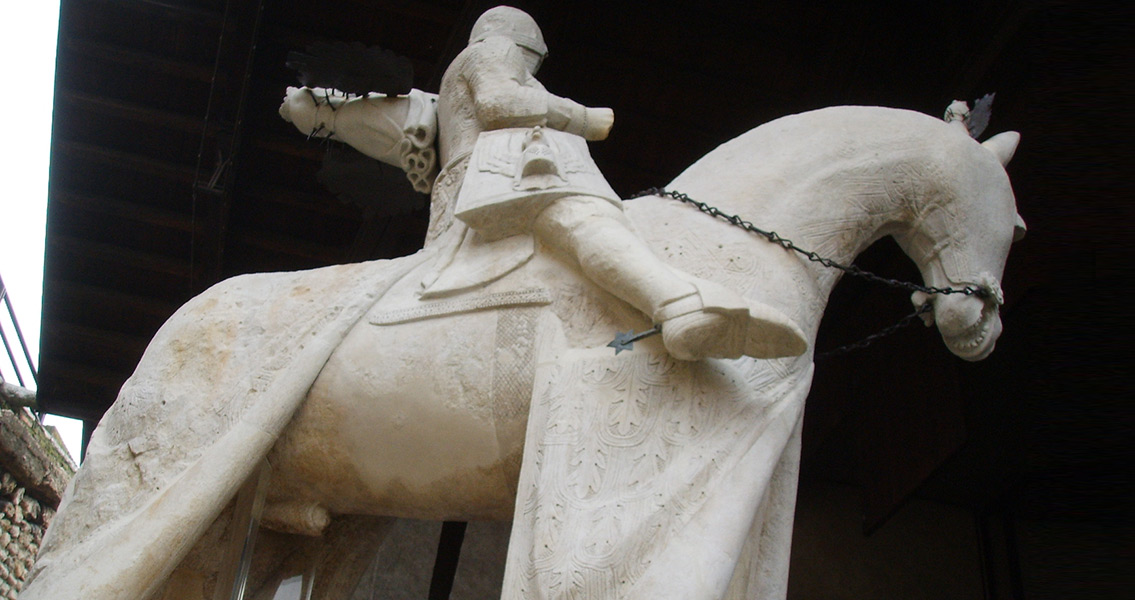
The Origin and Deeds of the Goths. Then the slaves returned the river to its original course and were killed in order to keep the location of the grave a secret. The famed treasure that went into the tomb with the Visigoth king is believed to be a few tonnes of gold and silver as well as the Menorah from the Second Temple, looted by the Romans from Jerusalem in 70 CE, the Telegraph reports. Given the size of the treasure it’s hardly surprising that many have tried to find it, including Hitler, who tasked Heinrich Himmler with the discovery. Given the supposed location, it’s also hardly surprising that nobody has found the treasure yet. No search until now, however, has had the support of the local authorities or the technical means to examine the riverbed. Commenting on the project in a statement quoted by the Telegraph, Cosenza’ mayor Mario Occhiuto said that there are clues and historical records that confirm the location of the treasure in the tomb of Alaric. The team of archaeologists assigned to the project will have “the latest technical and scientific innovations” at their disposal to find the gold and silver. If the search is successful, it will greatly increase the tourist attractiveness of Cosenza, which, like many other cities in southern Italy, is experiencing serious economic troubles, the Telegraph notes. Yet, the enthusiasm is not unanimous and there are some more cautious voices. One such voice is that of a Mediaeval historian from Calabria University, Pietro De Leo, who told Corierre della Sera that although there can be little doubt as to the location of Alaric’s grave, it is unlikely that the tomb contains any precious metals or artefacts from Roman times. In addition to the excavation works, the project, which aims to commemorate the Goth chieftain, also involves the construction of a museum, something that has sparked opposition from some local historians who claim this would be a humiliation because of Alaric’s record in Italy. The Visigoths overran Rome within three days and then moved south with the ultimate aim of reaching Africa. Their king, however, died in Calabria later the same year and the conquest plans fell through. Cosenza’s mayor dismissed the negative remarks with the argument that Alaric was an important historical figure that played a part in the demise of the Roman empire and as such deserved the attention he is getting with this project. Image courtesy of Wikimedia Commons user: Maitre Francois ]]>

Categories
Breaking News

Jewish Italian Attitudes to the First World War

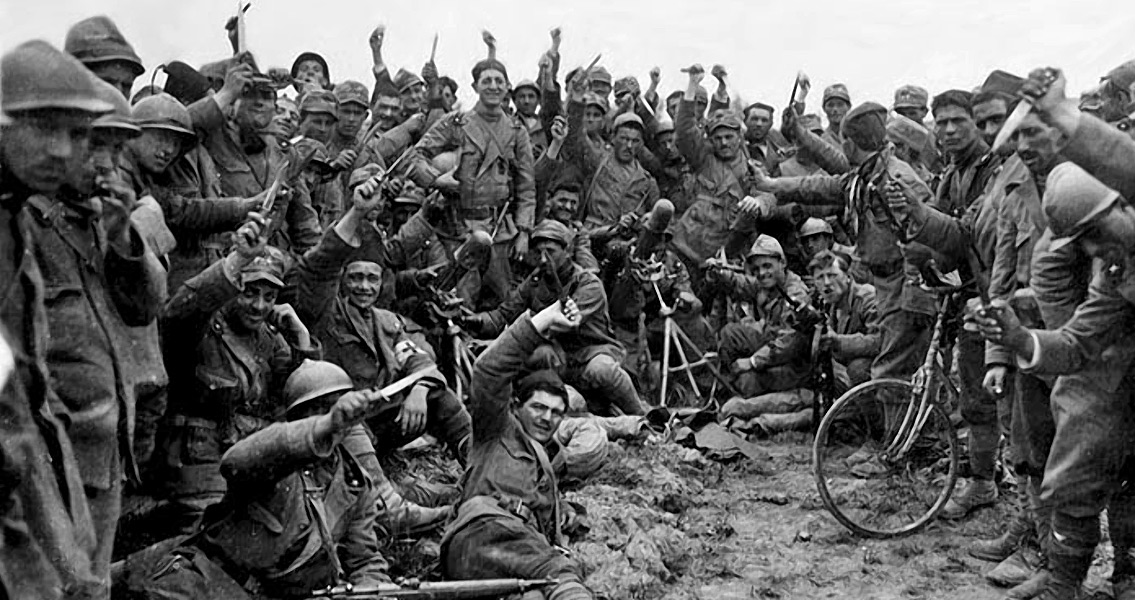
Jewish History. Pavin argues that the religious leaders of the Italian Jewish community ultimately came to identify with the Italian nationalistic cause unconditionally. Messages communicated through wartime propaganda were incorporated into the rabbis’ sermons without much critical questioning. With the outbreak of war, Italian rabbis pledged their full-fledged support for the cause. Patriotic enthusiasm is clearly visible in rabbis’ sermons, Pavin argues. The sacrifice made by Italian Jews who laid down their lives for their country was portrayed as something to aspire to. Based on these sermons, it appears that Jewish communities in Italy had fully assimilated with the Italian patriotic identity. Interestingly, a clear Jewish identity, separate and distinct from Italian Christians, remained intact. “The perception and self-representation of Jews as a distinct minority at both a religious and an ethnic level did not conflict with their sense of identification with and loyalty to their country,” Pavin argued, “and thus did not prevent the rabbis— as can be seen in their sermons—from fully supporting the Italian war effort.” Pavin makes some interesting arguments and draws some fascinating conclusions. Precisely how the rabbis’ messages were received, however, still needs further investigation. Pavin notes that the rabbis’ war was very different from the average Jewish soldier as it was free of blood and death, he suggests this disconnect as a possible explanation for why many Jewish soldiers did not seek serious support from their religious leaders. For more information: www.link.springer.com Image courtesy of Wikimedia Commons user: File Upload Bot (Magnus Manske)]]>

Categories
Breaking News

Ancient Cities Provide A Warning for the Modern World

GSA Today, the authors argue that pre-Republican Rome was a smart city. During this period, Rome’s expansion did not substantially alter the geological features of the area. Natural resources around Rome were managed in order to minimise the environmental damage from over-exploitation. During the pre-Republican era, Rome was an agricultural economy. The small hilltops around the river Tiber’s alluvial plain created remarkably fertile soils, suitable for farming. Access to the river meant that trading of agricultural products was remarkably easy for Romans. Farms were numerous and the city of Rome was self-sufficient. In the same period, Naples had fewer natural resources and was also exposed to more geological vulnerabilities than Rome. As it was based within a naturally-defensible bay, Naples had an economy dependent on sea trade. Naples is also surrounded by very rugged geomorphologic terrain, meaning that the potential for agricultural expansion and economic diversification was limited. Naples, unable to expand outwardly, grew in a vertical manner. The natural marine terraces which bordered the coast became the foundations for Naples’ expansion. Geomorphology, de Rita and Häuber argue, played a key role in constraining Naples’ importance for the Roman Empire. “Geology was a major contributor to the fortune of Rome, which had more resources and reduced risks relative to Naples”, the pair wrote. “Rome could also safely expand toward the Alban Hills area because of the plateau geomorphology, which further provided an easy path for the construction of the aqueducts. The city could also develop agricultural practices that, until Republican times, ensured its self-sustenance.” As time passed, however, rapid urban expansion and population growth led to the over-exploitation of resources. Both cities became unstable and disasters occurred as a result of natural processes, such as flooding and earthquakes. “…many past examples have shown how the indiscriminate use of technology in response to a natural hazard–induced risk, instead of generating security, can lead to higher risk and danger,” the article explains. Häuber and de Rita’s work offers a stark warning for modern cities. Expansion must be managed carefully, allowing for urban growth without out-stripping resources. If we do not heed these warnings, we risk our cities being increasingly vulnerable to natural disasters. For more information: www.geosociety.org Image courtesy of Wikimedia Commons user: Markus Bernet]]>

Categories
News

Red Brigades Start Attacks on The Italian Government

Categories
Breaking News

Researcher Explains First Modern Diving Bell Mechanism

Categories
Breaking News

Unusual Stone Age Burial Custom Found In Italy

www.hournals.cambridge.org Image courtesy of Wikimedia Commons user: Adam Cuerden]]>

Categories
Breaking News

Italian Graveyard Offers Clues about Cholera

Categories
Breaking News

Mummified Faeces Solves 700 Year Old Murder

Categories
Breaking News

Leonardo Da Vinci's Self Portrait in Rare Public Display

Categories
News

Mussolini's Return to Italy