Categories
Editorial

How did 'dazzle painting' affect World War One military tactics?

German U-boats: A looming challenge As a Royal Navy volunteer, Norman Wilkinson was all too aware of the threat from Germany’s U-boats. The Kaiser had declared a no-holds-barred approach to submarine warfare on January 31st 1917 and, desperate to bring an end to such a costly and gruesome war, he ordered torpedoes on any ship entering the warzone. Unbridled horror ensued: on April 17th 1917, the HMHS Lanfranc, a hospital ship with wounded German soldiers, was torpedoed by Imperial U-boats. 40 died, including 18 Germans. Maritime camouflage became one of the big questions being passed around the British Royal Navy offices. On a ship’s journey, it moves through changing light and visibility. If a camouflage was to work, it would need to evolve every second. What worked on land simply wouldn’t work at sea. As imaginative ideas from artists and inventors arose, they were discussed, trialled and ultimately vetoed. Thomas Edison’s idea, to adorn a vessel with trees to make it look like an island, was actually put into practice on the S.S. Ockenfels. It made it to New York harbour before the winds got the better of the disguise.

Hidden in plain sight

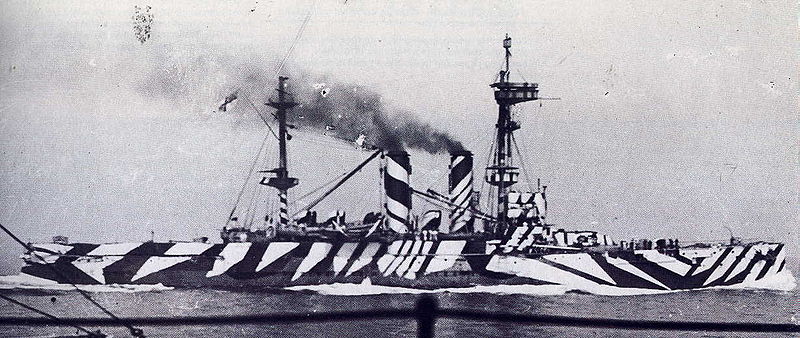
Artist-turned-Royal-Navy-volunteer Wilkinson took a different approach. Rather than hide the boat, he’d distort it. Reflecting on his idea, he said: “Since it was impossible to paint a ship so that she could not be seen by a submarine, the extreme opposite was the answer – in other words, to paint her, not for low visibility, but in such a way as to break up her form and thus confuse a submarine officer as to the course on which she was heading.” A U-boat gunner would need to hit the target from between 300 and 1900 metres away. He had under 30 seconds to pick out the ship through his periscope before he would be spotted, thus revealing the submarine’s location. Terribly expensive and often slow, torpedoes were in limited supply: a typical U-boat would only carry 12. For the gunner, getting it right first time was imperative. The visibility of a British ship may have been its vulnerability; but the gunner’s weakness was his reliance on his own guesswork during that 30-second window. Spotting this, Wilkinson realised that ‘dazzling’ the gunner was the only way to compromise his estimation. In that split moment, he’d have to decide: should he risk shooting a precious torpedo when he couldn’t be certain where the ship was heading? With this theory in place, Wilkinson started to design. He used broad strokes of intense colours in geometric shapes to blur the vessel’s shape, size and direction. For example, a curve on the side of the ship could conjure up a phantom wave; making the ship seem smaller. Bold patterns on the stern or bow could create an optical illusion, turning the ship around in the eye of the gunner and his low-down viewpoint. [caption id="attachment_8786" align="aligncenter" width="500"] HMS London in May 1918. Credit: British Royal Navy[/caption] Consciously or not, Wilkinson’s newly militarised creativity reflected the overwhelming strides being made in contemporary art.

What was happening in the art world?

As an artist, Wilkinson would have been aware of the truly ground-breaking movements occurring in art during the First World War. Consumed by nihilism, many international artists had begun to express their anguish at a humanity hell-bent on tearing itself apart. In 1915, one artist, the Russian Kazimir Malevich, painted a simple black square on a canvas. Representing the end of everything, the omnipresence of death, and a bleak hopelessness, Black Square remains one of the most influential artworks of the 20th Century. Malevich’s Black Square was part of the artist’s Suprematist movement: a bold visual language of abstract geometric shapes and stark colours. The first ever Suprematist exhibition was held in 1915, showing 35 of Malevich’s seemingly random arrangements of shapes and colours. Despite the sparse conversation around the relationship between Suprematism and dazzle painting, the influence is clear. [caption id="attachment_8785" align="aligncenter" width="500"] Supremus 58 by Kazimir Malevich. Credit: Russian Museum[/caption] More frequently discussed is the impact Cubism may have had on dazzle painting. Picasso, a leading artist of the Cubist movement that first gained traction in 1907, claimed inspiration for the new military technique. Whether Cubism, Suprematism or something else, Wilkinson was functioning in an art world obsessed with randomised geometric shapes and a gripping use of colour. His subconscious would have been overflowing with an aesthetic intended to confuse.

Dazzle painting gets the royal approval

By late October, Wilkinson’s idea had come to fruition. King George V was sent to inspect the ‘Dazzle Section,’ a new division of the British merchant naval service. At first, the King was presented with a small model of a ship. Rather than the classic battleship grey, it had been painted with a joyous palette of contrasting colours. Looking through a periscope about 10 feet from the tiny model, he was asked to guess the ship’s course. As an ex-Naval officer, he knew what he was doing. “South by west,” he answered. Had he been a gunner, he’d have wasted one of 12 precious torpedoes on that guess. The dazzle-painted ship had actually been heading east by southeast. The king was first confounded, and then convinced.

Dazzle artists at work

The Royal Academy of Arts offered four unused studios as dazzle-painting headquarters. Wilkinson’s team of 19 was made up of 5 artists, 3 model makers and 11 female art students who hand-painted the technical plans. To become predictable was to become defunct; so each design was unique and tailored to individual ships. Within a year, 2,300 British ships were painted with dazzle. By the end of the war, that number would grow to 4,000. [caption id="attachment_8787" align="aligncenter" width="500"] A Dazzled Merchantman by Charles Pears. A Merchant vessel at sea during choppy weather conditions. The ship is painted in a dazzle camouflage scheme, which incoporates shades of blue, pale green, mauve and also black and white. Credit: Imperial War Museum[/caption]

Did dazzle painting work?

Whether or not dazzle painting worked is up for debate. In the first three months of 1918, 72% of dazzled British ships that were attacked were sunk or damaged. In the second quarter, though, this dropped to 60%; compared to the 68% of non-dazzled ships. Dazzled ships in America fared better: of 1,256, only 18 were sunk. The conversation continues to this day. In 2011, the University of Bristol released research concluding that dazzle painting can certainly disrupt a person’s perception of the speed of a moving target. In truth, though, it didn’t matter whether dazzle painting worked. Insurance companies thought it did, so they lowered the premiums on painted boats. Morale on dazzled ships was higher, making deployment of the strategy a no-brainer. Despite being met with general derision in the press, dazzle ended up having a distinct effect on the identity of wartime Britons. Its distinctive visuals appeared on fashion items, cars and even high street windows. People attended ‘dazzle balls,’ where they would dress up in dazzle-inspired costumes and raise money for the war effort. Its military effect may be debatable but one thing is certain: a creative injection into a flailing war can have a morale boost at sea and at home.]]>

Categories
Breaking News

History News of the Week – Where the Minoans and Mycenaeans came from

Minoan and Mycenaean Origins Revealed The ancient Minoans and Mycenaeans were genetically similar, with both peoples descended from early Neolithic farmers, according to new DNA research. Dating back to the Bronze Age, the archaeological remains of both the Minoans and Mycenaeans show they were culturally, artistically and technically advanced. The Minoans flourished on Crete, beginning around the third millennium BCE, while the Mycenaeans developed on mainland Greece from the second millennium BCE. The origins of these two remarkable Greek cultures has remained a mystery, but the new analysis is providing fresh insights. Published in the journal Nature, the new findings point to the Mycenaeans’ and Minoans’ origins being in Neolithic Farmers who migrated from Anatolia to Greece and Crete thousands of years prior to the Bronze Age. “Minoans, Mycenaeans, and modern Greeks also had some ancestry related to the ancient people of the Caucasus, Armenia, and Iran. This finding suggests that some migration occurred in the Aegean and southwestern Anatolia from further east after the time of the earliest farmers,” said Iosif Lazaridis, a scientist from Harvard Medical School who worked on the study. The research results also show that modern Greeks are largely descendants of the Mycenaeans. For the study, an international group of researchers from Harvard Medical School, the Max Planck Institute and the University of Washington, as well as a range of universities in Greece and Turkey extracted tooth DNA from the remains of 19 ancient individuals who archaeological evidence revealed as Minoans of Crete, Mycenaeans of mainland Greece, and people who lived in southwestern Anatolia. These samples were then analysed, with scientists from the Max Planck Institute and Harvard Medical School comparing Minoan and Mycenaean genomes with each other, 330 other ancient genomes and over 2,600 genomes of modern day humans from around the world. The study itself can be found here Tropical Forests have felt Human Touch for over 45,000 years A pioneering study of the global impact of humans on tropical forests shows that mankind has been altering these environments for over 45,000 years. The findings challenge the widely held view that tropical forests were pristine, untouched environments prior to the advent of agriculture and industrialisation. Looking at distinct phases of human impact on tropical forests, the scientists from the Max Planck Institute for the Science of Human History, Liverpool John Moores University, University College London, and École française d’Extrême-Orient found evidence of techniques such as controlled burning of sections of forest, plant and animal management, and clear-cutting dating back thousands of years. The three phases focused on by the study correspond to hunting and gathering activities, small scale agriculture and large scale urban settlement. The hugely significant findings have the potential to change attitudes to conservation. By showing that an untouched forest ecosystem doesn’t exist, and hasn’t existed for thousands of years, it suggests there is no ideal forest environment that conservationists can use as a basis when setting conservation standards. The authors argue that instead modern efforts should be informed by a past understanding of how forests have been manipulated by humans. “Indigenous and traditional peoples – whose ancestors’ systems of production and knowledge are slowly being decoded by archaeologists – should be seen as part of the solution and not one of the problems of sustainable tropical forest development,” said Patrick Roberts of the Max Planck Institute for the Science of Human History, lead author of the paper. Published in the journal Nature Plants, the study is available here: Forgotten Trenches Unearthed in England A new archaeological survey has revealed for the first time the true extent of the network of trenches and fortifications built to defend England during the First World War, according to the Guardian. The new study aimed to detail the concentration of resources along England’s eastern and southern coasts, the region anticipated to receive the brunt of the German forces in the event of an invasion. Cutting edge LiDAR (Light Detection and Ranging) data gathered by the Environment Agency were used in conjunction with more traditional methods – analyses of periodicals and local history, to plot the defensive network, the Guardian reports. Revealing trenches, gun batteries, and fortified naval bases among other defences, the scientists behind the new research say the biggest surprise was the extent of the defence network uncovered. Titled First World War Fieldworks in England, the findings have been published by Historic England as part of its contribution to the national Centenary Partnership programme about the First World War. Image courtesy of Patrick Roberts ]]>

Categories
Breaking News

History News of the Week: The Biblical Canaanites' Modern Descendants

Present day Lebanese are descendants of Biblical Canaanites A new genome study of ancient remains from the Near East suggests that present day Lebanese people are direct descendants of the Biblical Canaanites. The research, which has been published in the American Journal of Human Genetics, sequenced the entire genomes of 4,000 year-old Canaanites who inhabited the region during the Bronze Age, and compared them to other ancient and present day populations. Despite the Canaanites creating the first alphabet and establishing colonies throughout the Mediterranean, historians and archaeologists only have a limited knowledge of them. They are mentioned several times in the Bible, as well as in ancient Greek and Phoenician texts, but experts know little about their genetic identity, who their ancestors were, and if they have any descendants today. The study by the researchers from the Wellcome Trust Sanger Institute determined that more than 90% of present Lebanese ancestry is likely to be from the Canaanites, with a small proportion coming from a different Eurasian population. The researchers estimate that new Eurasian people mixed with the Canaanite population about 2,200 to 3,800 years ago at a time when there were many conquests of the region from outside. Details about the Canaanites own ancestry have also been revealed. The study claims that they were a mixture of local people who settled in farming villages during the Neolithic period and eastern migrants who arrived in the area around 5,000 years ago. “For the first time we have genetic evidence for substantial continuity in the region, from the Bronze Age Canaanite population through to the present day.” Dr Claude Doumet-Serhal, co-author of the study and Director of the Sidon excavation site in Lebanon, said. “These results agree with the continuity seen by archaeologists. Collaborations between archaeologists and geneticists greatly enrich both fields of study and can answer questions about ancestry in ways that experts in neither field can answer alone.” Meanwhile, Dr. Chris Tyler-Smith, lead author from the Wellcome Trust Sanger Institute, said: “Genetic studies using ancient DNA can expand our understanding of history, and answer questions about the likely origins and descendants of enigmatic populations like the Canaanites, who left few written records themselves. “Now we would like to investigate the earlier and later genetic history of the Near East, and how it relates to the surrounding regions.” Bronze Age Iberia spared the brunt of Steppe invaders New DNA analysis of people who lived in the Iberian Peninsula during the Bronze Age has revealed that they received only minor genetic input from Steppe invaders, suggesting the Steppe migrations played less of a role in the cultural and genetic makeup of Iberian people than they did in populations elsewhere in Europe. Between the Middle Neolithic (4200-3500 BCE) and the Middle Bronze Age (1740-1430 BCE), Central, Northwestern and Northern Europe received a massive influx of people from the Steppe regions of Eastern Europe and Asia. Archaeological digs have gained insights into some of the impacts of these influxes on Iberia, in the form of changing cultural practices and funeral rituals, but the genetic effect has remained hitherto unexamined. The genomes of fourteen people who lived in Portugal in the Neolithic and Bronze Age were sequenced for the study, which has been published in the journal PLOS Genetics. These genomes were then compared with other ancient and modern genetic data, revealing only subtle changes between the Portuguese Neolithic and Bronze Age DNA, suggesting a minor genetic influence from the Steppe. Surprisingly, the changes were significantly more pronounced in paternal lineage. “It was surprising to observe such a striking Y chromosome discontinuity between the Neolithic and the Bronze Age, such as would be consistent with a predominantly male-mediated genetic influx” says first author Rui Martiniano. Height was also estimated from the samples, based on relevant DNA sequences, revealing that genetic input from Neolithic migrants decreased the height of Europeans, which subsequently increased steadily through later generations. By showing that migration into the Iberian Peninsula occurred on a much smaller scale than elsewhere in Europe, the study raises questions about the impact this had on language, culture and technology. For example, the fact that the Basque region of Spain speaks a pre-Indo-European language could be explained by these findings. The discovery also supports a theory which says Indo-European languages spread through Europe from the Steppe heartland. The study was carried out by Daniel Bradley and Rui Martiniano of Trinity College Dublin, in Ireland, and Ana Maria Silva of University of Coimbra, Portugal. New project aims to highlight importance of The Indian Army in the First World War In the UK, The Soldiers of Oxfordshire (SOFO) Museum and Oxford University’s History Faculty have received a £12,000 grant from the Arts & Humanities Research Council ‘Voices of War & Peace’ WWI Engagement Centre, for their project titled: The Indian Army in the First World War: An Oxfordshire & Buckinghamshire Perspective. The project aims to shed new light on the British Indian Army’s role in the war on the Eastern Front in Iraq through an outreach programme and touring exhibition. Sikhs, Muslims and Hindus of all ages in the local community are being called upon to engage with researchers by sharing stories, experiences and memorabilia. The touring exhibition will then showcase the findings in November. Photographs that have never been displayed before will explore the experiences of British and Indian soldiers in the conflict, as well as the Iraqi prisoners. Featured image: Archaeological remains of individual MC337 excavated from the site of Hipogeu de Monte Canelas I, Portugal, and analysed by the archaeologist Rui Parreira and the anthropologist Ana Maria Silva. Courtesy of Rui Parreira ]]>

Categories
Breaking News

Wreck of WWI Hospital Ship Given War Grave Status

HMHS Anglia, a hospital ship sunk during the First World War, was recently given war grave status, recognizing the remains of the more than 160 soldiers and sailors who lost their lives aboard her. The ship sunk in November of 1915 off the coast of Chepway after hitting a German mine. Other sunken warships, including the MHS Hogue, HMS Cressy, and HMS Aboukir, all of which sunk in September of 1914 in a German U-boat attack, have been declared war graves as well with the stroke of the same pen. The new “war grave” designation provides legal protection to the wreck of the HMHS Anglia and the other Royal Navy ships, barring them from casual visits from divers or scavengers. Maritime historians spearheaded the campaign to get the ships listed and protected. According to an article on Kent Online, campaigner Christopher Conn said he was glad to see the Anglia given the protection she deserved. Conn hails from Folkestone, just a few miles from the final resting place for HMHS Anglia in Folkestone Harbour on the English Channel. The campaigner said he had been fearful that “spot divers” were visiting the ship to take souvenirs back up to the surface, and was keen to see legal protections put in place for the sunken hospital ship. There were nearly 400 injured aboard HMHS Anglia when it struck the mine that sealed its fate on November 17th. A team of medical staff were also onboard, tending to the wounds of the injured soldiers. While nearby ships did their best to rescue victims of the attack, it’s thought that around 167 people went down with the ship that day. Meanwhile, the sinking of the Aboukir, Cressy, and Hogue has long been recognized as one of the British Royal Navy’s darkest hours, even if their wrecks were not protected by law until recently. The incident that led to their destruction – and the deaths of 1,459 sailors serving aboard them – earned them the moniker of the “Livebait Squadron”, an epithet that expressed how severely demoralized the British people had become as a result of the massive loss of life. The three cruisers, left behind after their destroyer escort had turned around due to bad weather, fell prey to German submarine U9 on September 22nd, 1914. The older cruisers, sporting highly visible smokestacks from their steam engines, stood out starkly once the weather cleared, making them an easy target for the U-boat. The three ships were subjected to a salvo of eight torpedoes that crippled them, sending them to the deep. In total, there are 13 wartime vessels that have been added to the lists of protected military vessels this month, including HMHS Anglia, HMS Aboukir, HMS Cressy and HMS Hogue. This brings the grand total of ships and submarines protected as war graves to 79. The majority of these are ships dating from the First World War, though there are five German submarines and Second World War-era Allied cargo vessels on the list as well. ]]>

Categories
News

'Everything in the air belongs to me' – Red Baron Claims his First Kill

Categories
News

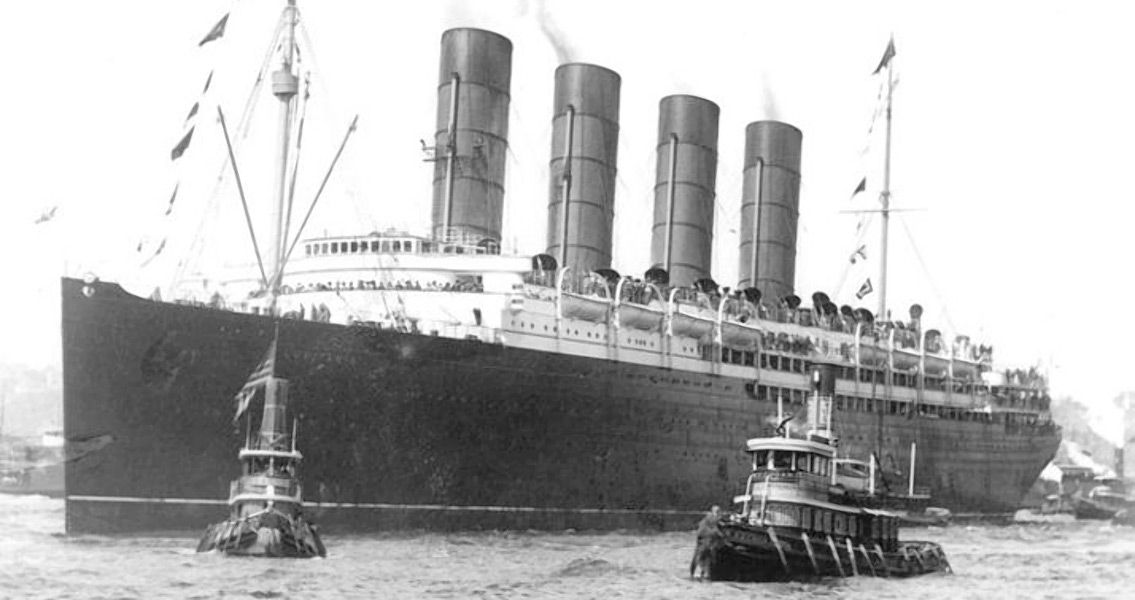
Wilson Protests Sinking of the RMS Lusitania

Categories
News

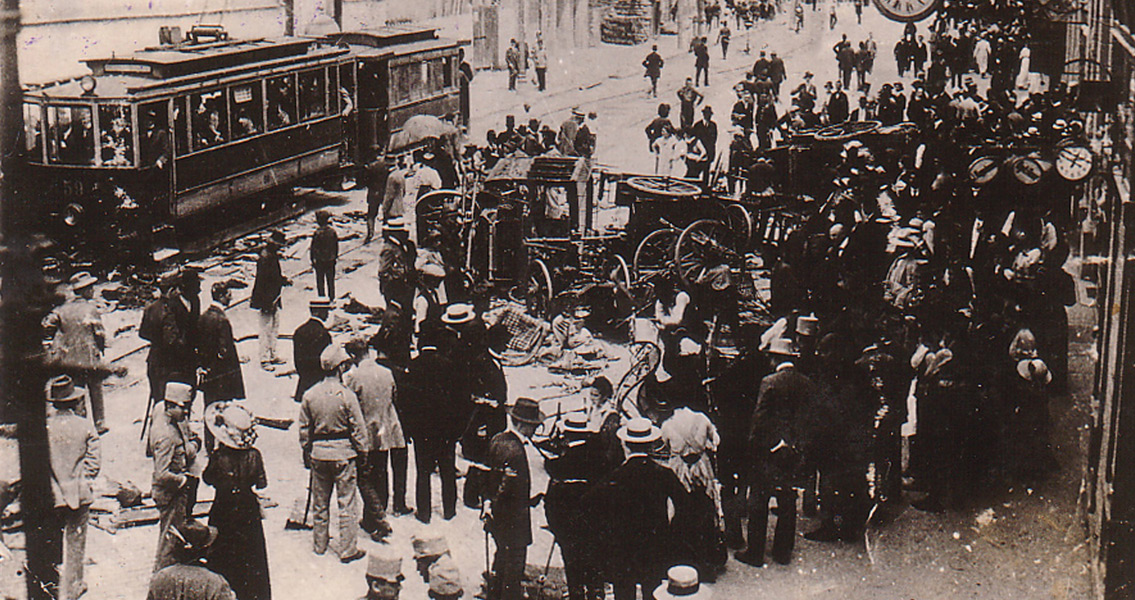
Archduke Franz Ferdinand Assassinated

Categories
News

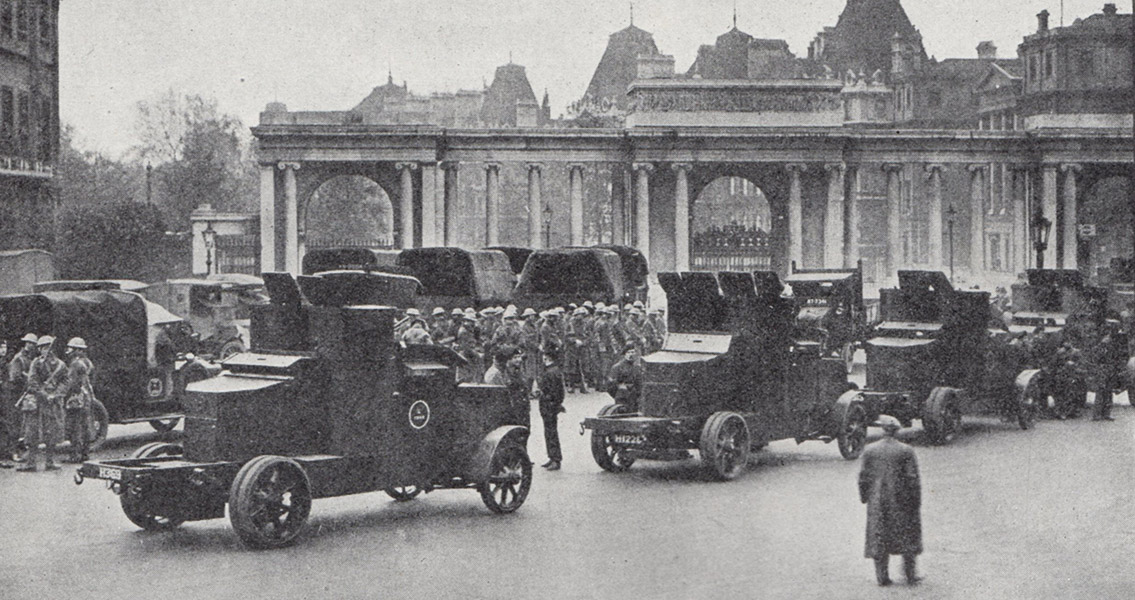
Ninetieth Anniversary of the General Strike in the UK

Categories
News

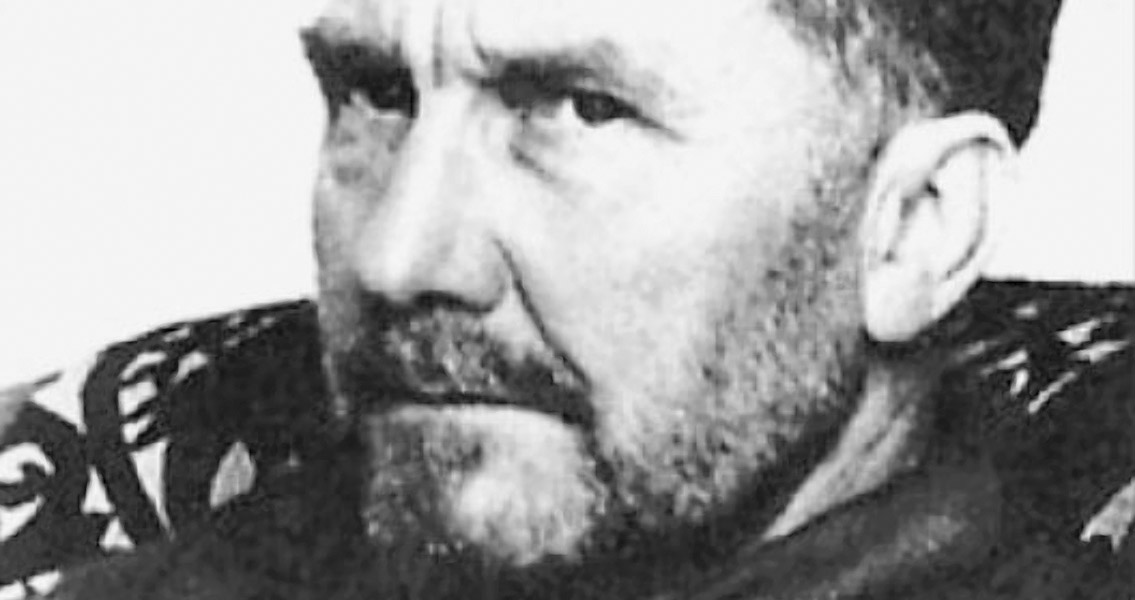
Ezra Pound, The Poet Who Supported Mussolini, is Released

The Cantos. Combining memories, feelings and impressions from the poet’s life alongside fragments of other literature, the poem was also remarkable for revealing his growing interest in history and politics. Perhaps responding to the massive upheavals that had befallen Europe in the First World War and the decades leading to the Second, Pound became increasingly obsessed with economic history. In particular, he came to believe that misunderstanding of the financial system by governments and the general population was allowing international bankers to take advantage. This, he believed, was the main cause of war in the world. Pound’s world view ultimately led him to support Italian dictator Benito Mussolini. In 1939 he returned home to the USA, hoping he could prevent his home country going to war against the Axis powers. He soon realised he wouldn’t be able to achieve his goal, and set off for Rome. He recorded hundreds of radio broadcasts for Rome Radio, praising Mussolini, criticising the USA, and claiming that the war was the result of a Jewish conspiracy. A belief that a fascist state was the most fertile for the creation of art was another key idea behind Pound’s support for Il Duce. In 1943 Italy was invaded by the Allies, and Pound was handed over to the US forces in 1945, who soon flew him back home to stand trial for treason. He was declared insane however, and sent to St. Elizabeth’s Hospital. His incarceration lasted for close to thirteen years, but it failed to stem his creativity. He continued work on The Cantos, publishing two more volumes of what had become his life’s work, and translated works of Chinese poetry. Pound stayed visible to the public throughout his time at St. Elizabeth’s, controversially winning the Bollingen Prize while also receiving visitors and maintaining correspondence with the outside world. On 18th April 1958, Pound was declared unfit to stand trial, and all charges against him were dropped. Then, as now however, Pound’s mental state was a cause of significant controversy, with many questioning whether he was really insane. In the 1980s, a decade after Pound’s death, a series of articles were published by psychiatrists with access to newly released records, claiming that Pound had in fact been sane all along. “The Pound case is one of the earliest and most flagrant examples of the ongoing abuse of psychiatry in the American criminal-justice system. For it seems clear that one man, Dr. Overholser, decided that Pound should not stand trial for treason and then singlehandedly engineered the testimony that led to his hospital confinement.” wrote Dr. Fuller Torrey in a Psychiatry Today article in 1981, suggesting that almost every doctor who examined Pound considered him sane. After his release, Pound returned to Italy where he lived until his death in 1972. While back in Europe, he publicly declared the whole of the USA to be an ‘insane asylum’, and performed a fascist salute in public several times. Pound was a pioneer of modern literature who vocally supported the most abhorrent political idea of the twentieth century, a renowned critic who inspired debates on the very nature of sanity. Before he died he never finished The Cantos, leaving behind a sprawling, unpredictable and uncategorisable work which seems an accurate testimony to his remarkable life. This article was updated on 18th April 2016. The original wrongly suggested that Italy was invaded by the Allies in 1945, rather than 1943.]]>

Categories
News

Armenian Reform Plan Lays Path to War and Genocide