Categories
Breaking News

Saladin Mystery Solved – The History News of the Week

Mystery of Saladin’s Death solved? The mystery surrounding Saladin’s death may have finally been solved. Famed for leading armies against the Crusaders, and being Sultan of an area that stretched from what is now Iraq to North Africa, Saladin died at the age of 56, some 800 years ago. There are few details about his death, other than that he became ill in 1193, and died two weeks later. Now, Stephen J. Gluckman, MD, professor of medicine at the University of Pennsylvania School of Medicine, has come up with a diagnosis. He theorises that Saladin succumbed to typhoid fever, a disease common in the region at the time. Easily cured with antibiotics nowadays, the disease would have been far more dangerous in the Middle Ages. Gluckman has based his diagnosis on what is known about Saladin’s medical history. “Practicing medicine over the centuries required a great deal of thought and imagination,” he says. “The question of what happened to Saladin is a fascinating puzzle.” Dr. Gluckman delivered his diagnosis at the 25th annual Historical Clinicopathological Conference, held May 4 at the University of Maryland School of Medicine. The conference is devoted to the diagnosis of disorders that afflicted historical figures. No Hidden Rooms in Tutankhamun’s Tomb Radar scans have provided conclusive evidence that there are no hidden rooms in Tutankhamun’s Tomb, according to Egypt’s Ministry of Antiquities. It has long been speculated that the young Pharaoh’s spectacular tomb may contain hidden chambers yet to be seen by archaeologists. However, Mostafa Waziri, Secretary General of the Supreme Council of Antiquities, announced that an Italian team has conducted extensive studies with ground-penetrating radar, showing the tomb did not contain any hidden, man-made blocking walls. The findings have been presented to an international conference in Cairo. “Our work shows in a conclusive manner that there are no hidden chambers, no corridors adjacent to Tutankhamun’s tomb,” Dr. Porcelli said, according to news.com.au. According to the ministry, the findings should bring to a close speculation over hidden rooms in the famous tomb. “…the hypothesis concerning the existence of hidden chambers or corridors adjacent to Tutankhamun’s tomb is not supported by the GPR data,” the ministry said in a statement. New Evidence for the Kingdom of David and Solomon? [caption id="attachment_8602" align="alignnone" width="400"]This is a composite aerial photograph of the four-room residency. Image credit:
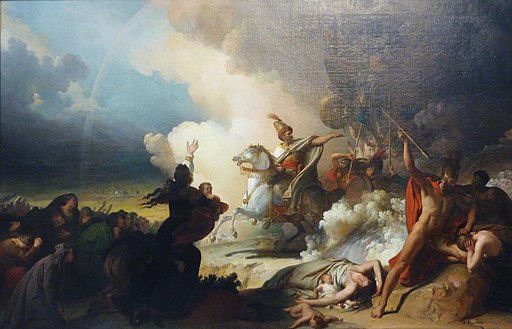
Sky View and Griffin Aerial Imaging, edited by Yair Sapir[/caption] Archaeologists in Israel claim to have discovered new evidence proving the existence of the Kingdom of David and Solomon. Significantly, the new findings also give an idea of the scope of the kingdom, suggesting it extended beyond the vicinity of Jerusalem. The existence of the biblical kingdom has long been a matter of contention. Until now, little evidence of royal construction has been found in the area where the kingdom supposedly was. The Kingdom of David and Solomon supposedly reigned in the 10th century BCE. Professor Avi Faust and Dr. Yair Sapir from Bar-Ilan University have excavated a large, four room residence which was destroyed in the 8th century BCE. The large building had at least two stories, with its ground floor extending over 225 square metres. “Surprisingly, radiocarbon dates from within the floor make-up and from within a foundation deposit that was placed below the floor indicate that the building had already been erected in the 10th century BCE, between the late 11th century and the third quarter of the 10th century BCE,” said Professor Faust in a Bar-Ilan University press release. “This date is in line with other finds related to the construction, like the foundation deposit itself.” The residence is located at Tel ‘Eton in the Shephelah (20 km. southeast of the city of Qiryat Gat). According to Faust and Sapir, the building would have been constructed in a style similar to other Israelite sites, and points to a rising ‘Israelite polity’ in the region. Their excavations reveal that the site around the building would have been expanding in the 10th century. Faust and Sapir note in their research, published in the journal Radiocarbon, that any association with King David would be based on ‘circumstantial grounds’. Nevertheless, both the timing and location of the site would sync up with when David and Solomon supposedly lived. They write in their study: “…if someone thinks that there was no king by the name of David, we should find another name to call the highland king in whose time the region was incorporated into the highland kingdom”. Featured image: Saladin à Jérusalem, courtesy of Moreau.henri, via Wikimedia Commons ]]>
Categories
Editorial

Jack the Ripper, Giant Bears and Lost Continents – The First Quarter 2017

Jack the Ripper’s Final Victim – A Mystery That May Never Be Solved Britain’s most infamous serial killer, Jack the Ripper, has a whole industry surrounding his gruesome deeds in Victorian East London. Typically, most of the speculation about Jack the Ripper concerns his identity, but earlier this year the Ripper story entered the news due to uncertainty over the identity of his final victim. Jack the Ripper lore states that on 9th November 1888 Mary Jane Kelly was murdered and brutally mutilated in her home in Spitalfield’s, East London. The death is widely considered to have brought the Ripper’s reign of terror to an end, yet in 2015 a book claimed that the victim that night was actually a woman named Elizabeth Weston Davies. A team was assembled to determine the plausibility of locating the supposed remains of Mary Jane Kelly and then subjecting them to DNA testing to verify the identity. In March they concluded that uncertainties over the exact location of Kelly’s remains made it impractical to attempt an exhumation, while the level of disruption that would be required to search the graveyard in question would almost certainly mean legal permission wouldn’t be granted. The identity of Jack the Ripper’s final victim will remain shrouded in mystery. A Lost Continent is Discovered In February an international team of researchers confirmed the discovery of a lost continent located beneath the island of Mauritius in the Indian Ocean. The continent was apparently created around 200 million years ago, as the super continent Gondwana began to break apart. Zircon, a mineral formed in volcanic eruptions, was key to the remarkable discovery. The rock that makes up Mauritius dates to 9 million years old, yet 3 billion year old zircons have been found there. Finding zircons of such an advanced age proves that there are much older crustal materials beneath Mauritius, according to the study authors. The geologists claim that these materials could only come from a continent located under the island. A Giant Polar Bear? In late March archaeologists announced the discovery of a giant polar bear skull in northern Alaska. Radiocarbon dating revealed the skull, which is the fourth largest from a polar bear ever discovered, to be 1,300 years old. Measuring 41cm (16 inches) from the back of its neck to the tip of its nose, the skull has an unusually elongated shape much unlike modern polar bears. Scientists speculate that it could be an example of a now extinct species of ‘giant’ or ‘king’ bear. Ethnographers have documented countless stories of ‘oversized’ bears in a variety of Inuit groups. These include accounts of bears that were up to 12 foot long. The researchers speculate that descendants of giant bears, such as the one whose remains were found in northern Alaska, could be the oversized bears recorded by the indigenous populations of Alaska and the Arctic circle. ]]>

Categories
News

History News of 2015

Homo naledi In September 2015, it was reported that fossils of a new species of hominin, designated Homo naledi, had been discovered in South Africa. In many ways it was one of the biggest stories of the year, sparking new research and remaining a major theme in the mainstream media. The remains unearthed at the Rising Star Cave constituted close to a complete skeleton, a rarity when it comes to ancient hominins. Exactly where H.naledi fits into the timeline of evolution is still being studied, but it could be one of the oldest members of the Homo genus. Met with controversy in some areas, particularly in South Africa, researchers have already started to reach some conclusions about H.naledi. studies of the anatomy of the creature’s hands and feet revealed areas of similarities with humans, but also marked differences. It seems that the creature was just as adept at climbing trees as it was at walking, or even running, on the ground. Meanwhile, a comparative analysis of H.naledi‘s skull alongside that of other members of the Homo genus, suggested that H.naledi lived around 2 million years ago. Although exactly where H.naledi fits into the homo evolutionary tree remains unclear, the discovery of the new species has the potential to greatly improve our understanding of human evolution. Shipwrecks Old and New 2015 saw a host of significant shipwrecks discovered, and new exploration of some which have been known about for a lot longer. In July, a shipwreck found off the coast of Japan in 2014 was confirmed to be part of a massive fleet which had attempted to invade the Japanese mainland in the thirteenth century. The remains, measuring twelve metres long and three metres across, were part of one of the Kublai Khan led attempted Mongolian invasions of Japan. The campaigns have since entered Japanese folklore, having been stopped by massive typhoons referred to as the ‘Kamikaze’. The dating is based on twenty examples of Chinese ceramic wares unearthed from the shipwreck. In August, marine archaeologists recovered a figurehead that stood on the ship of a Danish king, from the Baltic sea. Exactly what the unusual figurehead is meant to depict remains unclear, but the bizarre, dragon-like creature has a person in its mouth. Coming from the Gribshunden, the flagship of the fifteenth century Danish king Hans, the object has the potential to add to the understanding of medieval ship construction. An underwater survey of the seafloor near the Greek archipelago of Fourni unearthed 22 previously undocumented shipwrecks in the space of just 13 days. The ships discovered range in origin from 700 BCE to the sixteenth century CE. The survey has so far only covered 5% of the Fourni coastline, meaning countless other ships could be hidden there. Further studies are expected this year, to unearth what could prove to be a treasure trove of information. Finally, in June, Greece’s Central Archaeological Council approved plans for five years of new excavations at the site of the Antikythera shipwreck. The site of the discovery of the mysterious Antikythera Mechanism, the wreck and surrounding areas will now be analysed with new ‘exosuit’ technology, hopefully answering questions about one of the most significant archaeological sites in the world. Stonehenge One of the most famous sites in England, Stonehenge, was shrouded in controversy and intrigue for much of 2015. A study of pottery and animal bones found close to the site of the Neolithic monument allowed one group of researchers to conclude that the builders of Stonehenge subsisted on a diet of meat, milk and other dairy produce. The work gives a greater insight into the lives of the people of pre-historic England. In March, art critic Julian Spalding had a book published arguing that most interpretations of the monument have failed to understand its use, as they view it from the wrong perspective. He argues that the stones were once the foundations of a large wooden platform, or raised altar, made to accommodate hundreds of people as they prayed to their gods. Spalding’s theory has received heavy criticism in some circles of the archaeological community, while others have argued that all theories about the monument’s use have to be considered. In December, a team of Welsh scientists argued that the smaller bluestones used in the construction of Stonehenge were transported to the site in Wiltshire by glacial action rather than pagan ancestors. As is so often the case when discussing Stonehenge, the study has caused a great deal of controversy.]]>

Categories
News

The Start of the Tiananmen Square Protest

Categories
Breaking News

New Historian Releases Mobile News App

App Store – iPad & iPhone – Download Google Play – Android Phone and Tablet – Download]]>