Categories
Breaking News

Saladin Mystery Solved – The History News of the Week

Mystery of Saladin’s Death solved? The mystery surrounding Saladin’s death may have finally been solved. Famed for leading armies against the Crusaders, and being Sultan of an area that stretched from what is now Iraq to North Africa, Saladin died at the age of 56, some 800 years ago. There are few details about his death, other than that he became ill in 1193, and died two weeks later. Now, Stephen J. Gluckman, MD, professor of medicine at the University of Pennsylvania School of Medicine, has come up with a diagnosis. He theorises that Saladin succumbed to typhoid fever, a disease common in the region at the time. Easily cured with antibiotics nowadays, the disease would have been far more dangerous in the Middle Ages. Gluckman has based his diagnosis on what is known about Saladin’s medical history. “Practicing medicine over the centuries required a great deal of thought and imagination,” he says. “The question of what happened to Saladin is a fascinating puzzle.” Dr. Gluckman delivered his diagnosis at the 25th annual Historical Clinicopathological Conference, held May 4 at the University of Maryland School of Medicine. The conference is devoted to the diagnosis of disorders that afflicted historical figures. No Hidden Rooms in Tutankhamun’s Tomb Radar scans have provided conclusive evidence that there are no hidden rooms in Tutankhamun’s Tomb, according to Egypt’s Ministry of Antiquities. It has long been speculated that the young Pharaoh’s spectacular tomb may contain hidden chambers yet to be seen by archaeologists. However, Mostafa Waziri, Secretary General of the Supreme Council of Antiquities, announced that an Italian team has conducted extensive studies with ground-penetrating radar, showing the tomb did not contain any hidden, man-made blocking walls. The findings have been presented to an international conference in Cairo. “Our work shows in a conclusive manner that there are no hidden chambers, no corridors adjacent to Tutankhamun’s tomb,” Dr. Porcelli said, according to news.com.au. According to the ministry, the findings should bring to a close speculation over hidden rooms in the famous tomb. “…the hypothesis concerning the existence of hidden chambers or corridors adjacent to Tutankhamun’s tomb is not supported by the GPR data,” the ministry said in a statement. New Evidence for the Kingdom of David and Solomon? [caption id="attachment_8602" align="alignnone" width="400"]This is a composite aerial photograph of the four-room residency. Image credit:
Sky View and Griffin Aerial Imaging, edited by Yair Sapir[/caption] Archaeologists in Israel claim to have discovered new evidence proving the existence of the Kingdom of David and Solomon. Significantly, the new findings also give an idea of the scope of the kingdom, suggesting it extended beyond the vicinity of Jerusalem. The existence of the biblical kingdom has long been a matter of contention. Until now, little evidence of royal construction has been found in the area where the kingdom supposedly was. The Kingdom of David and Solomon supposedly reigned in the 10th century BCE. Professor Avi Faust and Dr. Yair Sapir from Bar-Ilan University have excavated a large, four room residence which was destroyed in the 8th century BCE. The large building had at least two stories, with its ground floor extending over 225 square metres. “Surprisingly, radiocarbon dates from within the floor make-up and from within a foundation deposit that was placed below the floor indicate that the building had already been erected in the 10th century BCE, between the late 11th century and the third quarter of the 10th century BCE,” said Professor Faust in a Bar-Ilan University press release. “This date is in line with other finds related to the construction, like the foundation deposit itself.” The residence is located at Tel ‘Eton in the Shephelah (20 km. southeast of the city of Qiryat Gat). According to Faust and Sapir, the building would have been constructed in a style similar to other Israelite sites, and points to a rising ‘Israelite polity’ in the region. Their excavations reveal that the site around the building would have been expanding in the 10th century. Faust and Sapir note in their research, published in the journal Radiocarbon, that any association with King David would be based on ‘circumstantial grounds’. Nevertheless, both the timing and location of the site would sync up with when David and Solomon supposedly lived. They write in their study: “…if someone thinks that there was no king by the name of David, we should find another name to call the highland king in whose time the region was incorporated into the highland kingdom”. Featured image: Saladin à Jérusalem, courtesy of Moreau.henri, via Wikimedia Commons ]]>

Categories
Editorial

King Tut, Neanderthals and Plague – The History News of 2016 (Part 2)

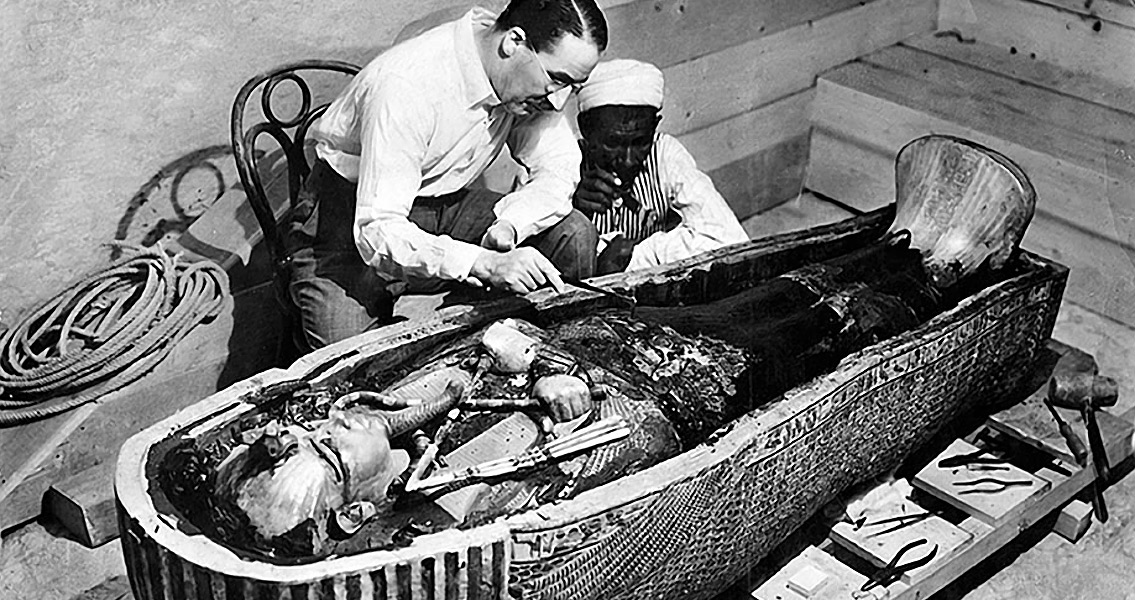
here. Controversy Surrounding King Tut’s Tomb One of the most bizarre stories of the year took place over a few months of the spring, and concerned the constantly fascinating tomb of Tutankhamun. In March, Egypt’s Antiquities Minister, Mamdouh Eldamaty, announced at a press conference that cutting edge radar scans had revealed the presence of hidden chambers in King Tutankhamun’s burial chamber. It was a revelation which sparked intrigue across the globe, as anyone with even the slightest interest in Egyptology began to speculate about what could still be hidden in the tomb of Ancient Egypt’s most famous Pharaoh. A few weeks later, doubts started to appear about the Egyptian Antiquities Ministry’s claims. Radar experts unconnected to the project started to question the findings, while others called for more evidence to be released to back up the claims and allow peer review. In May, the results of another series of scans were released, commissioned by National Geographic to verify the possibility of the existence of a hidden chamber. Announced at the Second Annual Tutankhamun Grand Egyptian Museum Conference in Cairo, the results of the second investigation suggested there was in fact no hidden chamber, directly contradicting the earlier study. The Egyptian Antiquities Authority is now carrying out additional scans in the hope of finding out once and for all if there are any more secrets to King Tut’s tomb. Just How Smart Were the Neanderthals? It’s a question that has been asked many times: just how similar are we to our closest extinct evolutionary cousins, the Neanderthals? For a long time the Neanderthals were considered to be primitive and unintelligent when compared to modern humans. Findings from 2016 however, brought that idea into question like never before. A study published in September added new fire to the long running debate over whether the Neanderthals were capable of creating jewellery. Almost since the moment they were discovered in central France half a century ago, a collection of prehistoric tiny, centimeter-long necklaces created from ivory, shells and animal teeth have been a source of contention among scientists who debate if the Neanderthals could have made the items. Using new research methods relying upon ancient proteins to date and identify bone fragments found at the site, researchers concluded that Neanderthals had lived there, supporting the idea they created the jewellery. Another study published in September carried out an in depth comparison between Neanderthal and modern human ears. The results of the pioneering research challenged the idea that Neanderthals would have only spoken in primitive grunts and groans, suggesting the possibility that Neanderthals had been capable of speech like modern humans. In December, a study from the University of Southampton revealed that Neanderthals had kept returning to the same coastal site on Jersey for a period of over 140,000 years. Through analysing stone tools, the study authors concluded that Neanderthals had kept making regular journeys back to the site for generations. The study raises interesting questions, firstly about what motivated the Neanderthals to keep returning to the site, but also about the extent to which they understood the geography around them – perhaps even some early form of mapping – to keep finding their way back there. What We Know, and What We Don’t About the History of Disease 2016 witnessed a series of shocking revelations and radical theories about the history of disease. In April, a startling study suggested that humans could have played a part in the extinction of Neanderthals by passing on a host of diseases, such as tapeworm, tuberculosis, stomach ulcers and types of herpes. The authors of the study argue that as humans left Africa, they exposed the Neanderthals to new diseases which their immune systems had not built any resistance to. Weakening the hunter-gatherer species, it would have made it harder for them to collect food, in turn causing communities to collapse. A study published in December made the shocking claim that smallpox is nowhere ear as ancient as often thought. Previously, it was believed that smallpox could be traced at least as far back as Ancient Egypt. However, a team of geneticists reconstructed the smallpox genome, based on DNA taken from the remains of victims in a crypt in Lithuania. They found that all strains of the disease had an ancestor from no further back than 1580. If true, the findings would cause a dramatic rewriting of history. Smallpox has been used by historians to explain millions of deaths and tragedies through the centuries, yet if it’s not as ancient as typically thought, such ideas will have to be rethought. Most significantly, the date of 1580 precludes the idea that the European colonisation of the Americas in the fifteenth century saw the devastating introduction of smallpox to the continent; resulting in millions of deaths for the indigenous populations. It was only in 2013 that scientists unequivocally proved that the bacteria Y.pestis played a role in both plague pandemics of the Middle Ages – the Plague of Justinian between the sixth and eighth centuries, and the second pandemic between the fourteenth and seventeenth centuries that peaked with the Black Death. A study published in January 2016 revealed that a single genotype of Y.pestis had persisted in Europe from the fourteenth to the seventeenth centuries. The findings suggest that the plague survived in Europe for three hundred years in as yet unidentified reservoir. In September, a new study reconstructed the bacterial genome responsible for the Plague of Justinian. The study found that the strain of Y.pestis responsible was far more diverse than previously thought, and also infected people far beyond the region historically documented. With plague reemerging in certain parts of the world, such studies have relevance beyond history. The greater our understanding of historical plague outbreaks, the better chance we have of combating it in the present. ]]>

Categories
Breaking News

Howard Carter's First Glimpse Into Tutankhamun's Tomb

Categories
Breaking News

Taken to the Grave – King Tut’s Secret Chamber Confirmed

last year that he was “90 percent positive” that another chamber was behind the north wall of the existing burial chamber. This recent announcement is based on the final report which Watanabe delivered earlier this year. The findings have since been reviewed by other experts in the field. More tests are planned, but practically anything discovered behind the walls will require specialists to view the reign of King Tut through new eyes. One of Reeves’ most explosive theories was that the tomb of Nefertiti, widely believed to be Tut’s stepmother, is behind the north wall. Reeves has also suggested that Tutankhamun’s widely identified funerary mask was made for Nefertiti originally. No hard evidence exists for this theory although several prominent Egyptologists agree with Reeves’ suggestion. There are also signs pointing to the fact that many of the grave goods associated with Tut were in fact made for someone else. Like so many, we’ll have to wait and see. ]]>

Categories
Breaking News

The Mystery Behind the Doors in Tutankhamun's Tomb

Categories
Breaking News

Tutankhamun’s Mask May Have Been Nefertiti’s Initially

two secret doors leading to what could be other burial chambers. He then explained that it was possible one of these chambers belonged to Nefertiti, wife of religious reformer Akhenaten and very likely ruler of Egypt after his death. In support of his hypothesis, Reeves noted the treasures found in the boy-king’s burial chamber – treasure that was too rich compared to the scarcity of artefacts in the rest of the tomb. This led the University of Arizona researcher to suggest that Tutankhamun had died suddenly, leaving no time to prepare a proper tomb and furnishings, so the priests had to improvise by adding another chamber in Nefertiti’s tomb. Reeves backed his hypothesis by pointing out that other egyptologists have established that a lot of the artefacts in Tutankhamun’s chamber were meant for the co-regent of his father – this co-regent is widely believed to have been Nefertiti. At the moment, the Egyptian antiquities authorities are conducting further scans in Tutankhamun’s tomb using thermal and radar imaging methods. According to Antiquities Minister Mamdouh Eldamati, as quoted by Ahram, even if the scans reveal hidden burial chambers it will be a while before their occupant or occupants are identified, adding that before any digging starts for these hidden chambers, measures must be taken to preserve Tutankhamun’s chamber. The minister seems to be much more cautious with speculation as to who might be in those hidden chambers, telling media that although the discovery of Nefertiti’s body would be a sensation, he doubts it is her that is buried in Tutankhamun’s tomb. Image courtesy of Wikimedia Commons user: Ibrahim.ID]]>

Categories
Breaking News

Researcher Claims He’s Found Nefertiti’s Tomb

“The Burial of Nefertiti?” ]]>

Categories
Breaking News

The Strange Facts of King Tut