
www.academicjournals.org Image courtesy of Wikimedia Commons user: AnonMoos]]>


www.jstor.org Image courtesy of Wikimedia Commons user: Magnus Manske]]>
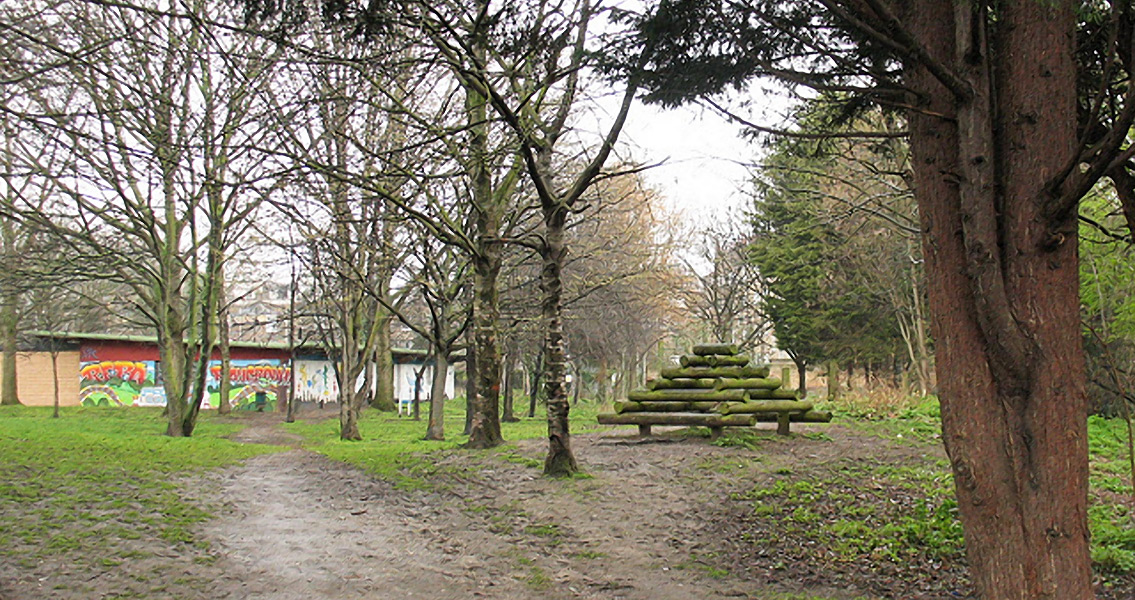

Homo genus was not the first species to discover how to do this. Lead researcher Sonia Harmand, an archaeologist at Stony Brook University, said the team found the site, near lake Turkana in northern Kenya, by accident four years ago after taking a wrong turn. They noticed several stone tools on the surface of the earth, and got digging. Their work yielded 20 more artefacts that were underground, and as many as 130 on the surface. These included cores – chunks of rock from which pieces are chipped to make tools, anvils and flakes (small pieces of stone used as tools). According to Harmand, the pieces bore marks of deliberate manipulation, so they could not have been the result of accidental fracture. The artefacts were well preserved in the sediment, so the researchers were able to date them quite accurately. One of the pieces was so well preserved that it could be fitted back to the core from which it had been chipped with the help of an anvil. As for the genus which made and used these tools, Harmand said she believed it had been either the Kenyathropus or the Australopithecus. The former was a species discovered in the same area, near lake Turkana, in 1999. The fossil was dated to between 3.2 and 3.5 million years ago, and is considered to be evidence of the diversity of pre-Homo species. The Australopithecus’ most famous representative is Lucy, the incomplete female skeleton discovered in the 1970s in Ethiopia, which supplied science with a lot of information about our early ancestors. One other interesting implication of this discovery is related to an earlier study, from 2010, when archaeologists working in Ethiopia unearthed a 3.4-million-year-old hominin child fossil, along with animal bones bearing what the authors of the study claimed were deliberate markings. The study was received sceptically, given the gap in time between what was until then considered the oldest known human tools, but now, thanks to Harmand’s team, its credibility could rise. According to the authors of the earlier study, the Australopitheci used stone tools to deflesh their prey and break the bones to get to the marrow. Both finds are evidence that technology played a major role in hominin evolution even at these early stages and, says anthropologist Alison Brooks from George Washington University, was a driver for the emergence of the Homo genus. Harmand’s team has now proposed a special term for these tools: Lomekwian technology, after the name of the excavations site, Lomekwi 3. Image courtesy of Wikimedia Commons user: John Atherton]]>
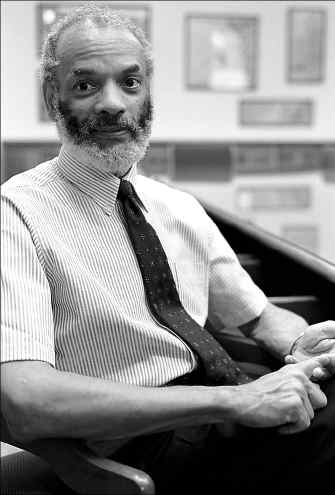

history of US ‘meddling’ in Latin America, it was necessary to refer to the work of Galeano, revealing just how crucial his studies were for understanding the political economy of Latin America. One might disagree with the arguments made in his groundbreaking work “Open Veins of Latin America”, but it set out an interpretation of history that simply has to be considered when analysing the past and present of the region. Written in 1971, ‘Open Veins of Latin America’ argued that the wealth of Europe and the United States depended on the poverty of Latin America. Using centuries of history as evidence, he described what he called “the human poverty by murder of the continent”. The book was inevitably controversial, in the 1990s three supporters of free-market economics, Colombian writer and diplomat Plinio Apuleyo Mendoza, the exiled Cuban author Carlos Alberto Montaner and the Peruvian journalist and author Álvaro Vargas Llosa, wrote a scathing polemic in response to Galeano entitled ‘Guide to the Perfect Latin American Idiot’. Their vicious response proved just how vital Galeano’s work was. He himself admitted just last year that the work had faults, but of course, no work of history can be perfect and none can be universally agreeable. The significance of ‘Open Veins..’ lies in the debates it has opened up. Appraisals of Galeano’s work tend to focus heavily on ‘Open Veins…’, but his importance as a historian was not limited to his work from the 1970s. In a Guardian interview in 2013, he explained his philosophy of history, that the past was always connected and relevant to the present “History never really says goodbye. History says, see you later.” He went on to reveal his great fear, that “we are all suffering from amnesia.” For Galeano, remembering the past was vital for society. As a result, his later works were much broader in geography and chronology, and took on a host of innovative approaches in the way they described history. ‘Mirrors: Stories of Almost Everyone” provides a unique overview of history from mankind’s beginnings on earth up until the present. As innovative as Galeano’s outlook, is the form of the book itself. ‘Mirrors’ is structured like an epic poem, with historical events being summarised into small sections that form part of a large, coherent narrative. Like the rest of his historical works, ‘Mirrors’ focuses on rarely discussed events as well as fresh interpretations of well known moments in the past. Galeano combined brave, progressive and controversial views of the past with a unique approach to the form a work of history could take. ‘Open Veins’ is a conventionally presented work vital for the unique interpretations it makes. Later works, such as ‘Mirrors’, or his final publication ‘Children of the Days’, used imaginative, unconventional ways to further the discussion of history, challenging traditional ideas on the forms and nature of historical publications. He will likely be remembered more for his activism and campaigning than as a historian, but the vitality of the connection between past and present defined much of Galeano’s work.]]>

Federal History, raises some intriguing points about how governments have used, and misused, information over the decades. During the Second World War, the US was taken completely by surprise by the Japanese attack on Pearl Harbour on December 7, 1941. As a result of the damage inflicted by this attack, the capacity of the state to fight a war and deal with threats was unclear. “Americans generally supported strong measures to keep the nation safe,” Anderson explains. Anderson argues that the evacuation and incarceration of the West Coast Japanese ancestry population, misleadingly termed the ‘Japanese internment’, reveals that the US government used available data to harm citizens. “[This] example merits historical investigation to understand both what happened at the time and what lessons we can draw for big data issues today,” Anderson writes. History, in this instance, can provide an important message for today’s governments. During the Second World War, the US had numerous instruments of surveillance and record-keeping. Foremost amongst all the records, however, was the census. Collected every ten years since 1790, Congress had forbid using the census to ‘harm’ citizens. The 1940 census data, however, was used to round up the Japanese ancestry population living on the West Coast in 1942. Over 100,000 people were held in concentration camps for most of the war. Interestingly, this use of the 1940 census data was well known at the time. It is clear that census officials and Congress realised the risks of individual-level data and put in place federal statutes to prevent disclosure. Between 1939 and 1941, these concerns and protections were not strong enough to withstand the rising tide of ‘national security’ threats. Further uses of big data were unsuccessful. The census was not a perfect record of every person in the United States and a proposal for a more thorough national population register failed. “When national proposals reemerged in the 1960s for a “federal data center,” they were quickly rejected by Congress and the public as Orwellian violations of privacy,” Anderson notes. In this modern age, however, with such huge reservoirs of data being created by our online activity, this debate is even more prevalent. Anderson hopes that the period of US history following the Pearl Harbour attacks, “can usefully inform debates about data stewardship within professional organizations, provide information for training modules for staff, and facilitate discussion among policy makers about how to build 21st-century data infrastructure that serves the public good.” For more information: www.shfg.org Image courtesy of Wikimedia Commons user: Kayaker]]>