Categories
The Christiana Riot

an earlier study, it played a major role in the evolution of the human brain. What’s more, in those times of hunter-gathering societies, heated and ground oats were easier to carry when the communities moved around as they did. Those Palaeolithic inhabitants of what is now Apulia weren’t alone in their realisation of the benefits that starch could bring them, Mariotti Lippi told Vox. Earlier studies have shown that people living at the time in central Italy ate bulrush, and in the Middle East, starch was supplied by wild wheat. There is also evidence of starch consumption from Moravia, in the eastern Czech Republic, and Russia, although what sources it was derived from for now remains unclear. One such study, conducted again by Italian researchers, looked at plant remains on grinding stones from around 30,000 years ago and found that Stone Age inhabitants of Italy, Russia, and the Czech Republic ground fern roots to make them easier to cook and digest. The lead researcher in that study, Anna Revedin from the Italian Institute of Prehistory and Early History, told New Scientist that grinding technology may have played an important part in improving Stone Age people’s survival chances in the colder seasons. Commenting on the research to New Scientist, Matt Pote, an archaeologist from University College London, said that plant-based diets had numerous benefits, which could easily be seen in the direct link between the consumption of processed grains over the last twenty millennia and the advancements of human society. According to him, the link between diet, plant food processing experiments and cultural sophistication is an area worth studying in greater depth. Another academic, Erik Trinkaus from Washington University, told the website that the discovery made by Mariotti Lippi’s team adds to evidence about the advances made by the Gravettian culture, which inhabited these parts of Europe during the Upper Palaeolithic. In fact, he says it is possible people processed and ate grains even earlier than 32,000 years ago because even older grinding stones have been found. In any case, evidence is mounting that what modern dieters call the Palaeo diet is probably far from what people actually subsisted on in that period. Image courtesy of Wikimedia Commons user: Keypunch ]]>

A. afarensis and A. sediba. The latter species are thought to be two of the best current candidates for being a direct ancestor, based on the study. The strongest model, according to Young, demonstrated “perfect immediate forms” between modern humans and African apes, suggesting that humanity shifted quite gradually from arboreal (tree dwelling creatures) into tool-using land-dwellers. These conclusions support the hypothesis that there was a final, African ape like common ancestor of humans and chimpanzees. For more information: www.pnas.org Image courtesy of Wikimedia Commons user: Delphine Bruyere]]>
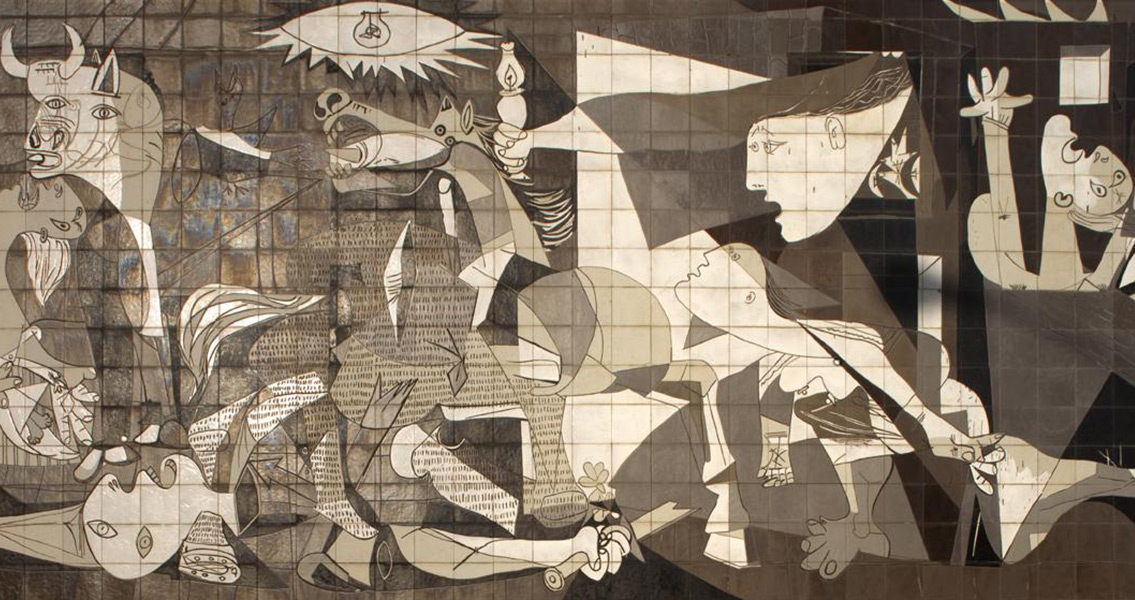
Guernica arrived in Spain for the first time on 10th September, 1981. A powerful depiction of the horror of war and the evil people could inflict on others with the aid of modern technology, Picasso had given the artwork to the New York Museum of Modern Art in 1939, following its initial exhibition in Paris. He insisted that it should not be exhibited in his native Spain, then under the control of General Francisco Franco, until democratic liberties had been restored to the country. Born in Málaga, Spain, in 1881, Pablo Picasso became one of the most influential visual artists of the twentieth century. Throughout his career considered one of the most adventurous artists of his generation, Picasso’s typically radical approach to sculpture, ceramics, painting, printing and stage design was inspired by the radical and anarchist intellectuals he met at the El Quatre Cats Cafe in Barcelona during his late teens. Picasso moved to Paris in 1904, then the centre of European art, and opened his own art studio in the city. Returning to Spain sporadically over the next decades, he set foot in the country for the final time in 1934. Guernica was commissioned as part of the 1937 Paris Exposition, whose official theme was a celebration of modern technology. Its organisers hoped that the Exposition would become a symbol of the triumph of human ingenuity in the face of the Great Depression which had devastated the 1930s. For Picasso, 1937 was a time of despair, caused by both frustrations in his personal life and shock at events in his homeland. Spain was ravaged by Civil War, as the nationalist forces of General Franco fought to overthrow the democratically elected Republican government. Initially struggling to find an idea for his mural, events of April 1937 provided a somber inspiration for Picasso, an artist who had previously avoided explicit political or social commentary. An ancient Basque town, allied with the Republican forces but situated well beyond the frontline of the fighting, Guernica was completely destroyed by an air raid on 26th April, 1937. Despite attempts by the Nationalists to blame the town’s destruction on their enemies, the destruction wrought in Guernica was clearly the work of the German and Italian airforces – allies of the Nationalists. Hours of constant bombing incinerated the town, and led to casualties of anywhere between 200 and 1000 people. Reading a description of the brutal attack, written by George Steer in the Times newspaper, Picasso headed to his studio and began preparing sketches for what would become one of his most famous works, just three weeks before it was due to be unveiled at the Spanish Pavilion. Although sticking to the surrealist style of Picasso’s work from this period, the painting used simple black and white to depict the human pain and suffering in war. Among the triumphant celebration of technology of the Paris Exposition, it proved a sobering reminder of the tragedy modernity could inflict. Picasso died in 1973, with Franco’s regime still ruling Spain. It was only in 1981, six years after Franco himself had died, that the heirs to Picasso’s estate authorised the work to be sent to Spain. Even now, it remains a source of controversy. Housed in a museum in Madrid, Basque nationalists argue that the work should be housed in the Basque region – the site of the events which inspired its creation. Image courtesy of Wikimedia Commons user: Papamanila ]]>
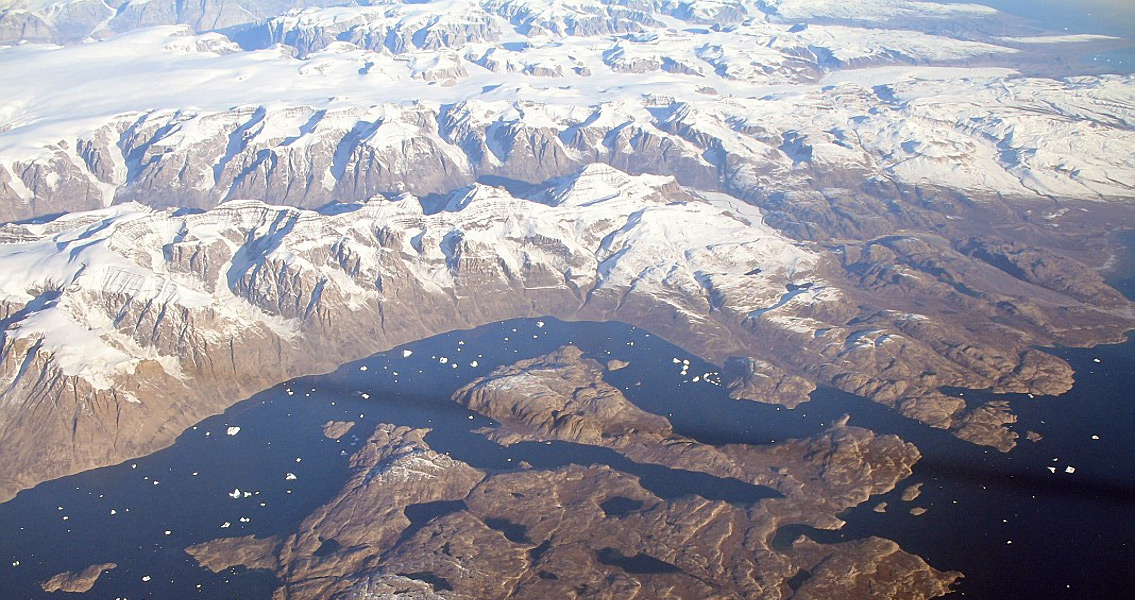
Was it for walrus? Viking Age settlement and medieval walrus ivory trade in Iceland and Greenland. Image courtesy of Wikimedia Commons user: Turelio ]]>
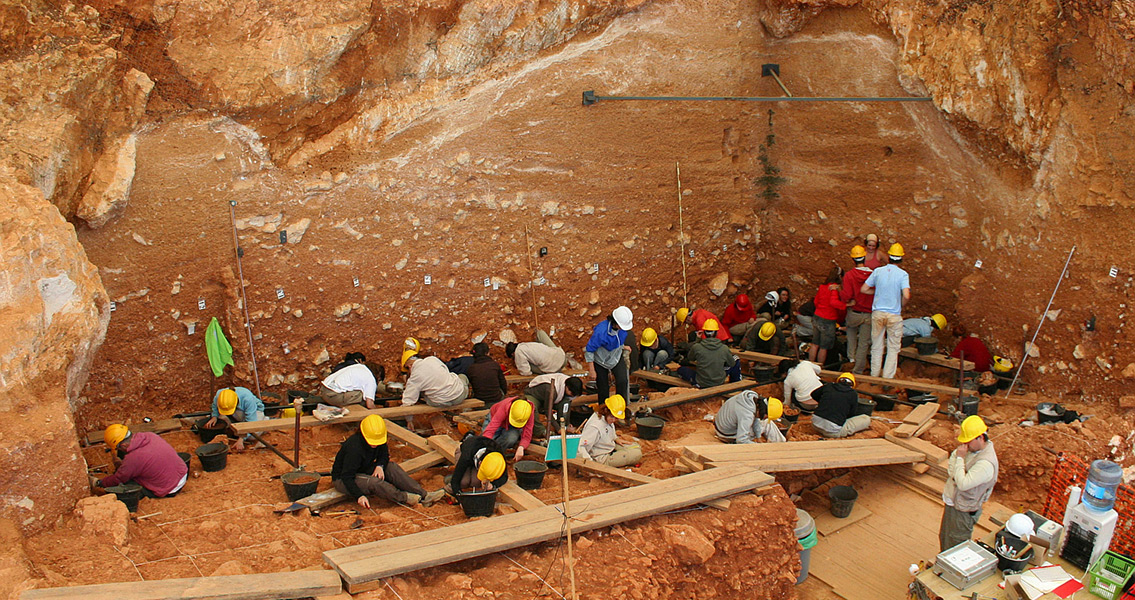
www.pnas.org Image courtesy of Wikimedia Commons user: Mario Modesto Mata]]>
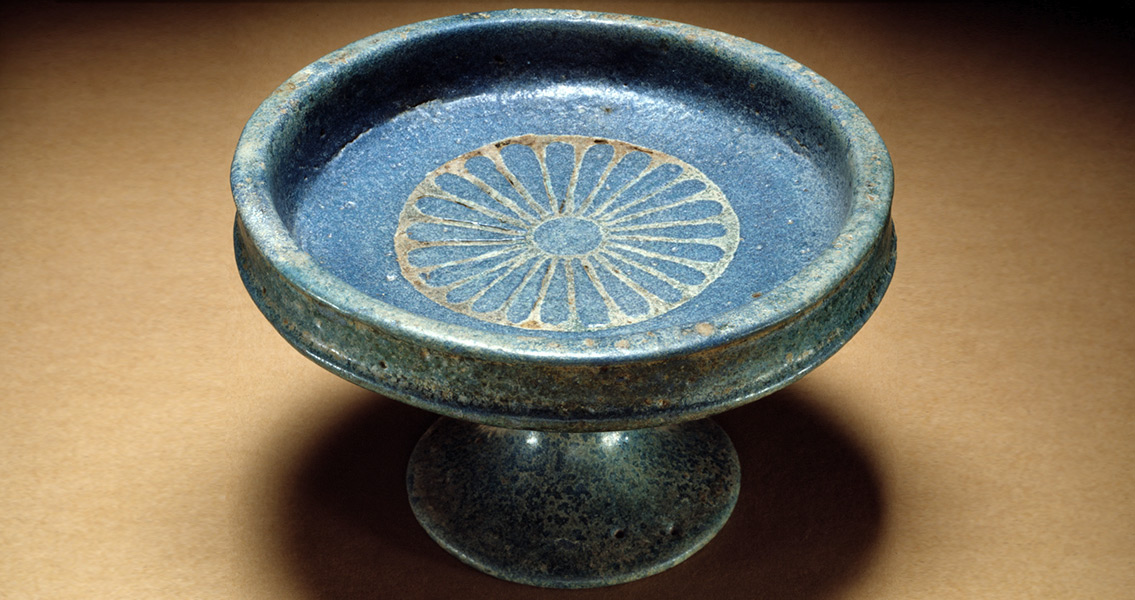
article in the Journal of Art in Society. The colour occurs naturally in a mineral called cuprorivaite but this mineral was rare in Egypt, so, in demonstration of their fine grasp of chemistry, the ancient Egyptians made the pigment manually. They heated to around 950 degrees Celsius a mixture of calcium carbonate or another calcium compound, a compound containing copper, and silica sand, as well as potash or soda, which acted as a flux. Because of this complex procedure scientists believed that the pigment was used for prominent works of art only, and as a main colour. When the era of Greek rule began the new rulers brought with them their own preferred colours, which dominated art at the time. The Romans, who believed the Greeks were the masters of art, followed their preferences closely, using the same palette for works of art. Still, Egyptian blue did not sink into oblivion until the end of the Roman era, when its use sharply declined. Commenting on the Northwestern study, co-author Jane L. Williams from the Hearst Museum, said in the university’s statement the findings suggest researchers should always expect the unexpected when examining works of art. Speaking of the unexpected, earlier research from the British Museum, led by Giovanni Verri, a conservationist who is also an expert in infrared and photo-induced imaging, found a way to reveal the colours of statues and other artefacts that have become invisible to the naked eye. The technology relies precisely on Egyptian blue, which emits infrared radiation when red light is directed to it. The presence of Egyptian blue not only shows which parts of a statue were painted with the pigment but also hints at what other pigments were used in the colouring of an ancient artefact. For more information: Investigating the use of Egyptian blue in Roman Egyptian portraits and panels from Tebtunis, Egypt ]]>