”The globalization of naval provisioning: ancient DNA and stable isotope analyses of stored cod from the wreck of the Mary Rose, AD 1545 ” Image courtesy of Wikimedia Commons user: Leslie James Chatfield]]>

”The globalization of naval provisioning: ancient DNA and stable isotope analyses of stored cod from the wreck of the Mary Rose, AD 1545 ” Image courtesy of Wikimedia Commons user: Leslie James Chatfield]]>

www.maneyonline.com]]>
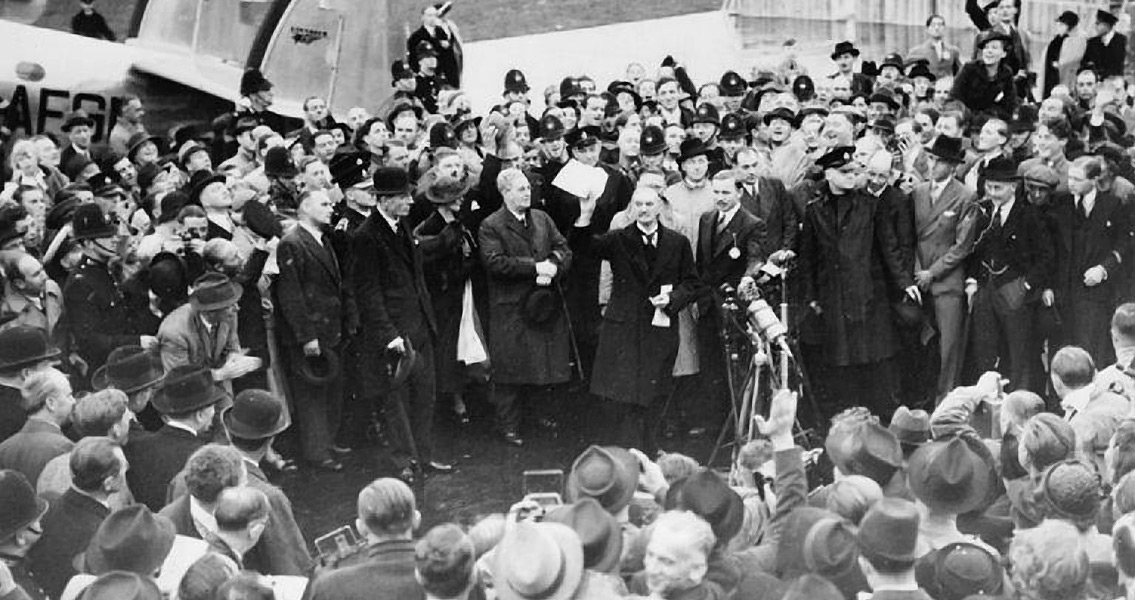


research that shows the relationship between religion, science and morality is in fact much more complicated than traditionally thought. The earlier study found that priming either religious or science related words in test subjects led to them demonstrating increased prosocial behaviour. As such, the results suggested that, “at least in modern societies, secular institutions have overtaken religious institutions in their capacity to promote prosociality and living harmoniously as a moral society.” Yilmaz and Bahçekapili aimed to test the causes of this connection between scientific reasoning and morality. Three different tests were carried out on Turkish University students, which involved priming scientific, religious or ‘neutral’ words through language games before having the test subjects respond to a moral scenario. The results of the first test showed that the priming had no effect on the response to the crime described, although the psychologists suggest that this may be because the scenario was so extreme (a date rape case) that it created a ‘ceiling effect’. The next test followed the same process, but for less extreme, more morally ambiguous scenarios -one involving two people late to a meeting who accidentally run over a cat and choose not to stay and help it, and another involving a person who finds a friend’s winning lottery ticket and collects the winnings for himself (the friend is unaware the ticket is a winning ticket). The results showed that in the first scenario, both science priming and religious priming affected the moral sensitivity of the participants. The suggestion being that thinking about scientific themes can be just as influential on our morality as thinking about religious ones. Finally, Yilmaz and Bahçekapil sought to determine “whether science exerts its moral sensitivity boosting effect by activating analytic thinking or the idea of secular authority.” For this test, the preliminary section was designed to prime words in the test subjects associated with either secular authority (e.g. court, police) or analytical thinking ( e.g. logic, reason). The results provided a clear pattern, with the subjects in the secular authority group demonstrating the greatest moral sensitivity. “These results suggest that science priming exerts its boosting effect on moral sensitivity not by activating analytic thinking but by activating the idea of secular authority.” The study’s results are of great interest to the study of history, anthropology and psychology, showing that secular authority is now capable of bolstering moral sensitivity as much as religion. One of the key transitions of the modern era, particularly in the West, has been the decline of religiosity, in both political institutions and individuals. Yilmaz and Bahçekapil’s study provides a framework to explain how the rise of science and the decline of religion did not coincide with a dramatic decrease in morality. For more information: www.journals.plos.org Image courtesy of Wikimedia Commons user: kenhodge13 ]]>

”Ritual drinks in the pre-Hispanic US Southwest and Mexican Northwest” Image courtesy of Wikimedia Commons user: Alejandro Linares Garcia]]>

www.journals.cambridge.org Image courtesy of Wikimedia Commons user: Wellcome Images ]]>

Homo naledi, was among our earliest ancestors and probably lived around three million years ago. The earliest human ancestors to date are believed to have been Ardipithecus ramidus, which, the BBC writes, probably lived around 4.4 million years ago, and based on the fossil record could both walk up right and climb trees. This H. naledi, the researchers explain, was ape-like in many ways but also had some features in common with modern humans. The skeleton found in the Rising Star cave resembled in size that of a modern human child, especially the skull, teeth and feet. It belonged, however, to an elderly female. The shoulders and pelvis were ape-like, and its brain size was likely similar to that of a gorilla. The reason it was classed as a hominin was the more advanced shape of the skull, the longer legs, the smaller teeth and the modern-like feet. The chamber in which this first skeleton was found was difficult to access because it was in the deepest recesses of the cave and one had to be quite slim to be able to pass through a constriction on the way. Yet once a team was gathered, work started and the researchers discovered something even more exciting: the chamber contained not just one remarkably well preserved skeleton but as many as fifteen, of all ages and sizes. The total number of specimens collected after three weeks of excavation reached 1,550. The scientists that analysed the fossils and tried to place them along the line of human lineage had a tough job. Some of the bones, like the tiny skulls, suggested these were apes, but others were too human-like to ignore. The conclusion was that this species lived some time between Australopithecines and Homo, Berger told the National Geographic, although he added that for him personally, these creatures belonged closer to Homo than Australopithecus. Then there is the much more fascinating question of how all these people ended up in that remote chamber of the Rising Star cave (the name of the species, by the way comes from the Sotho word for “star”). There was no fauna, tools or any other artefacts around them to suggest it was a dwelling, and there were no tooth marks on the bones, which would have been the case had they been dragged here by carnivores. One possible explanation is that they wandered into the cave and got trapped in the remote chamber but the position of the skeletons didn’t corroborate that hypothesis. The other could cause a rethinking of the fundamental link between brain size and evolution: it is the suggestion that this chamber was a burial ground, where bodies were deposited over a period of centuries. In other words, that this early species, despite its small head, was capable of allocating a special place to bury its dead, a tradition so far only found in much later hominins and up until now considered too complex behaviour to be found in such earlier species. Commenting on the news, anthropologist Isabelle Winder from the University of York, who wasn’t involved in the study, said: “Look at the hind limb of H.naledi and you will see a collection of features associated with upright stance. The forelimb, however shows ape-like characters. This may suggest that the Savannah Hypothesis, which emphasises life in Savannah mosaics, may be an incomplete explanation of human locomotion. H.naledi was a scrambler, living in complex landscapes.” Nick Winder from Newcastle University told New Historian that “If you compare the naledi material with the Dmanisi skeletons (a site in Georgia where a number of different early hominin fossils were found a few years ago) you make two striking observations. The first is that the naledi assemblage is described as morphologically homogenous — all the specimens look similar. At Dmanisi, however, there is a lot of morphological variation. Second, the mosaics of attributes in the two collections are very different. This suggests much more variability than one might have expected. There were clearly lots more ways of being a successful hominin than we imagined.” For more information: Homo naledi, a new species of the genus Homofrom the Dinaledi Chamber, South Africa]]>

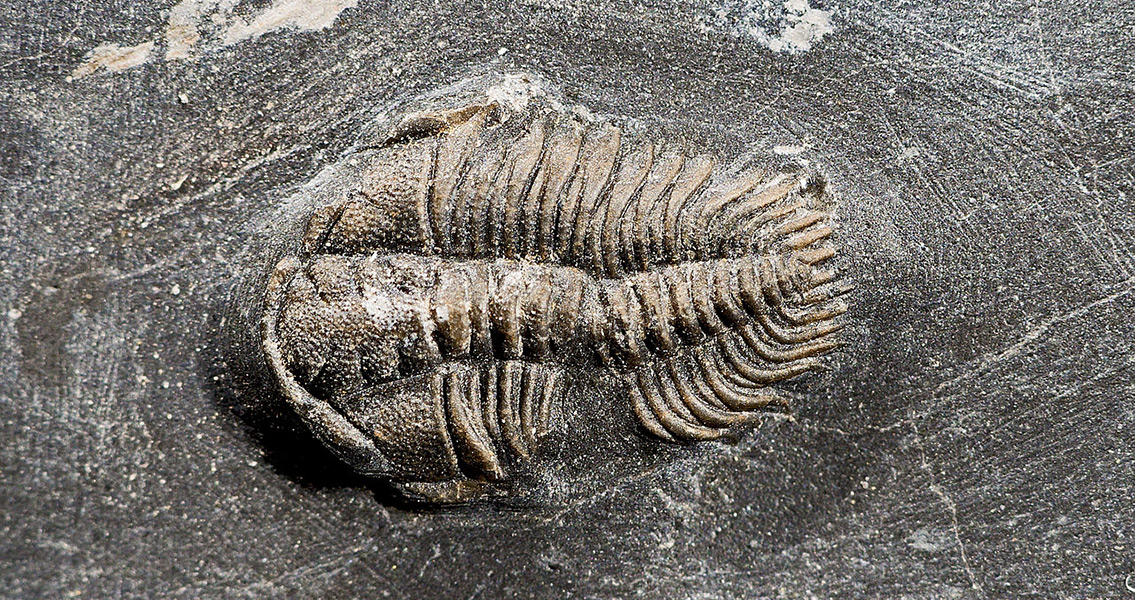
High-resolution OSL dating of a late Quaternary sequence from Xingkai Lake (NE Asia): Chronological challenge of the “MIS 3a Mega-paleolake” hypothesis in China ]]>