www.onlinelibrary.wiley.com Image courtesy of Wikimedia Commons user: Martin Kraft ]]>

www.onlinelibrary.wiley.com Image courtesy of Wikimedia Commons user: Martin Kraft ]]>
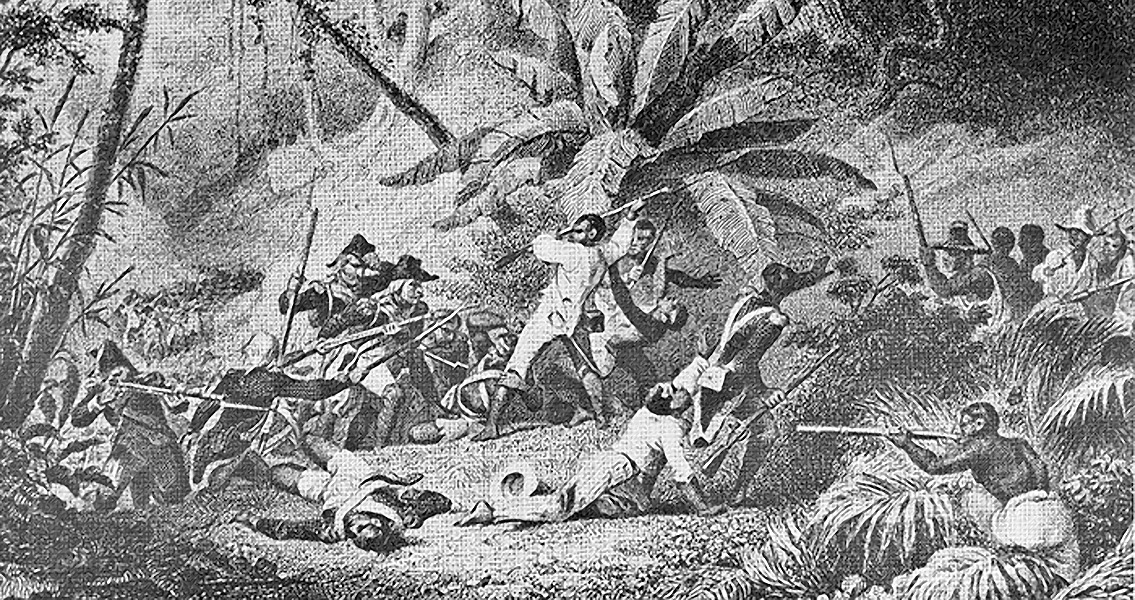
History Compass. The post-Revolution crash, Taber argues, does not necessarily reflect the policies of an independent Haiti. The expansion of Haiti’s plantation economy in the mid-eighteenth century and the importation of hundreds of thousands of slaves explains the colony’s economic productivity explosion. “It is probable that soil exhaustion and deforestation would have diminished Saint- Domingue’s economic role even without the revolution,” Taber writes. Taber argues that most slaves, who initially had little property, probably saw their living standards increase following the Haitian Revolution. Later scholarship, Taber writes, influenced by “Algerian independence from France, the USA civil rights movement, and general de-colonization coupled with the emergence of social history generated new interest around the Atlantic in the Haitian experience and its significance for understanding decolonization, black liberation, and structural racism.” There is still heated debate around the political ideas of Haitian slaves and the possible influence of Enlightenment ideas on their thinking. Taber notes that historians such as Laurent Dubois have argued that slaves further radicalised Enlightenment ideas as they adopted them. “In contrast, Geggus, Thornton, and Ogle show that most slaves followed a type of royalism that allowed an appeal to an authority higher than the planters,” Taber wrote. Most of the Haitian Revolution does not fit into easy narratives of racial solidarity or universal liberation. Numerous historians have argued over what caused the Revolution, with little concession. It is tempting, Taber writes, “to describe Saint-Domingue simply as the abyss of 18th-century slavery and colonialism and the Haitian Revolution as the universal triumph of human rights, but such easy narratives do a disservice to the women and men involved and mask Haiti’s complexity.” His conclusion is that further work needs to be done. Taber’s summary of Haitian history is impressive in scope and offers a wonderful synopsis for anyone wanting to understand Haiti’s complicated and nuanced past. For more information: www.onlinelibrary.wiley.com ]]>
www.onlinelibrary.wiley.com Image courtesy of Wikimedia Commons user: Flickr upload bot]]>
www.anthonybeevor.com]]>

www.onlinelibrary.wiley.com Image courtesy of Wikimedia Commons user: Archdiamond]]>

Current Biology. “The only other explanation is that there was a major divergence between two wolf populations at that time, and one of these populations subsequently gave rise to all modern wolves.” The team argue that dogs were domesticated prior to the diversification of present-day gray wolf populations. Dalén believes the possible divergence between two wolf populations is a less likely explanation as it would have required a second, separate wolf population subsequently becoming extinct in the wild. The number of coincidences is too high, in Dalén’s opinion. The DNA evidence obtained from the bone reveals that modern-day Siberian Huskies and Greenland sled dogs share an unusually high number of genes with the ancient Taimyr wolf. Skoglund notes that the DNA evidence provides direct proof of this link dating back 35,000 years. Putting that into perspective, the Taimyr wolf lived only a few thousand years after the Neanderthals disappeared from Europe and modern humans began to spread throughout the Eurasian supercontinent. It is important to note that the split between ancient wolves and dogs did not immediately lead to domestication. “The initial divergence between the ancestors of dogs and gray wolves would not necessarily have had to coincide with domestication in the sense of selective breeding, since this human-mediated process could have occurred later or over an extended period of time,” the team wrote. “It is [still] possible that a population of wolves remained relatively untamed but tracked human groups to a large degree, for a long time,” added Skoglund. Skoglund and his team have shone much-needed light on the history of our closest animal companions. By revealing just how long ago dogs and humans began contact, a big step has been made in gaining a fuller understanding of this shared history. For more information: www.cell.com Image courtesy of Wikimedia Commons user: Inugami-bargho]]>

The Anatomical Record. Thule graves are always built of stones, with many different types and shapes of stone being used. Burials are also found in natural caves and crevasses. Thanks to the harsh, cold climate of Greenland, the Thule mummies Lynnerup describes are in an excellent state of preservation. The mummies were sheltered in their tombs from the harshest elements, but the cold arctic winds naturally mummified the bodies. “The soft tissues of mummies, including internal organs, were very well preserved, not least due to the mummification process, which was essentially freeze-drying,” he noted. Because the soft tissue is so well preserved in Thule mummy finds, there is a real chance to reveal many invaluable observations concerning bodily ornaments and the paleopathology of internal organs. Interestingly, all of the mummies were of women or children. Facial tattooing was also found on all of the women mummies. These tattoos had been made using various methods; puncture or dot techniques as well as a sewing one. The latter technique, Lynnerup notes, consisted of pulling a needle with a sinew, which had been dipped in soot, underneath the skin. Until these mummies were found, puncture tattooing had not been shown to exist in Greenland. Tattooing amongst the Thule is interpreted as a means of indicating tribal and kinship relations. It is also thought that tattooing was done at puberty and marriage because one of the young female mummies did not have tattoos, perhaps indicating she had not gone through the requisite experiences. By conducting isotopic analysis of faecal matter retrieved from one of the mummy’s colons, clues about the Thule diet were revealed. Remnants of mosses and other plants were found, indicating that the predominantly meat-based diet of the Thule could have been supplemented with other foodstuffs. “Isotopic analyses showed that more than 75% of the meat was of marine origin (marine mammals, fish), while the rest probably derived from game, such as reindeer,” Lynnerup explains. The Thule mummies found in Greenland reveal a huge amount about this lost culture. Harsh conditions are revealed in their diets and we can only guess at the hardships they had faced. At the same time, Lynnerup notes, the painstaking wrapping in soft skins of the dead and the meticulous grave construction reveal a loving and caring human conduct. For more information: www.onlinelibrary.wiley.com Image courtesy of Wikimedia Commons user: Fæ ]]>
www.ahr.oxfordjournals.org Image courtesy of Wikimedia Commons user: Jan kask~commonswiki]]>
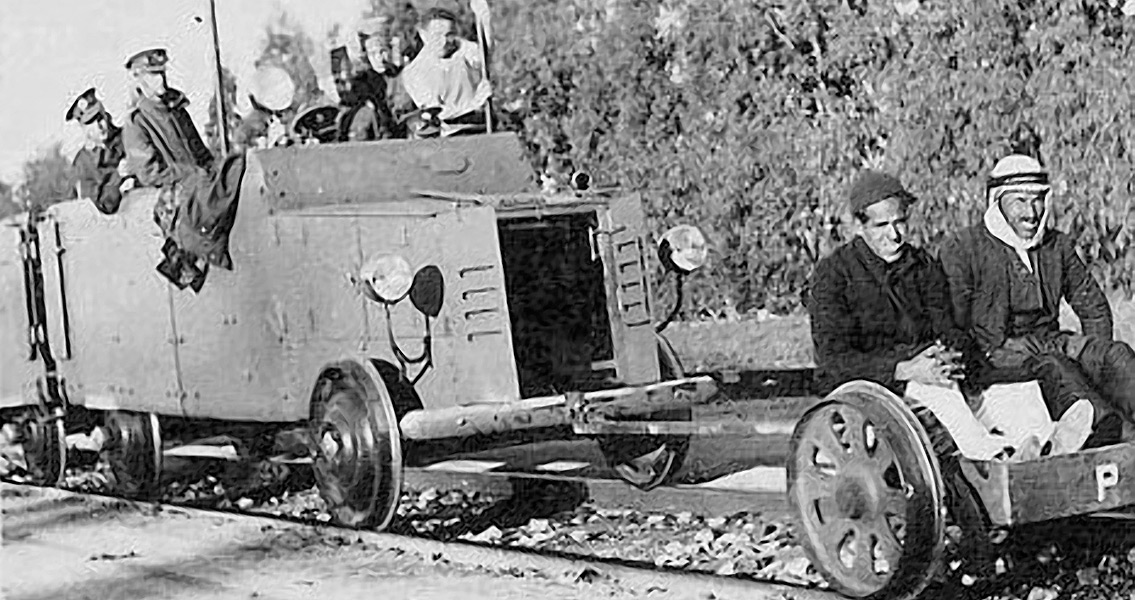
www.jch.sagepub.com Image courtesy of Wikimedia Commons user: Hohum]]>
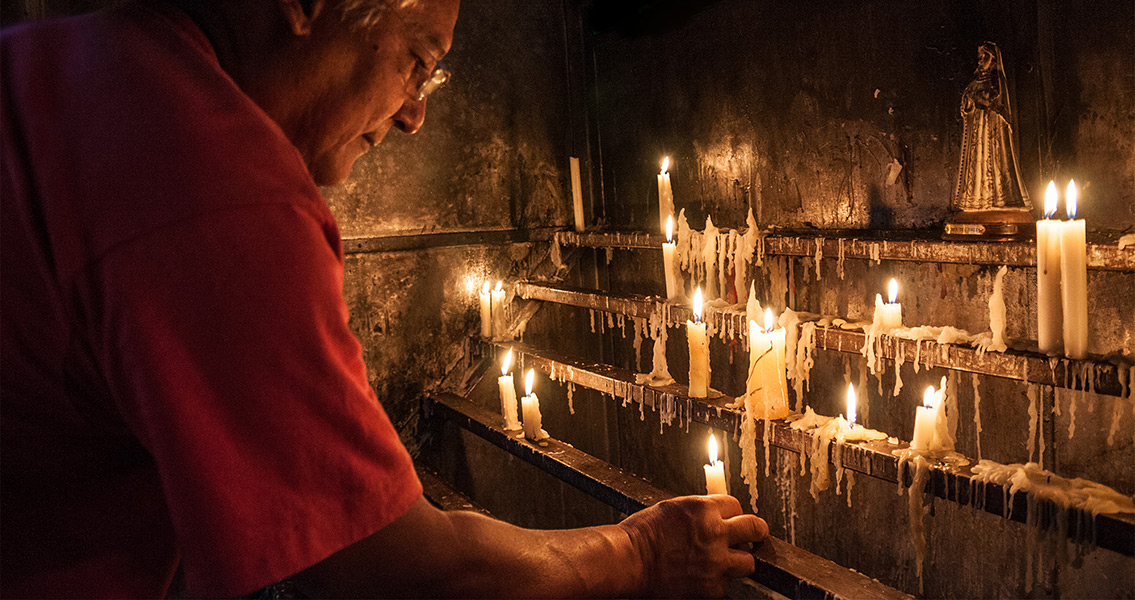
Contemporary European History. “[This] inadequately accounts for the dynamic role of religion before and after the 1960s, [religion’s] complex relationship to modes of social organisation and the ways in which transformation of these modes come about.” Van Dam and van Trigt have analysed views underpinning what they call ‘religious regimes.’ A religious regime, van Dam and van Trigt explain, is “an institutionalised arrangement regulating the social position of religion in a society… Crucially, in our view, religious regimes rarely result from a single vision of the role of religion but represent a compromise between several competing views.” By using this conceptualisation of religious regimes, the pair has revealed new ways in which religion still has a societal role. In the late nineteenth century, competing religious groups rose to prominence in the Netherlands. The three major groups – Orthodox Protestants, Catholics, and Christian social-democratic movements – claimed to represent the moral heart of the nation, challenging the dominance of Protestantism. Interestingly, all of the major religious groups were equally represented in politics and the media. Van Dam and van Trigt argue that this equal representation reveals a ‘segmented pluralism’ in Dutch society. To compromise, each group was granted its own space in the framework of the nation. Each group, however, contested the overall moral outlook of the religious regime, meaning that none could be comprehensively implemented. Inclusivity gradually came to dominate discussion within the religious regime, van Dam and van Trigt argue. This shows that religious regimes are able to evolve and change with the times. During discussions about workers’ union rights in the mid-twentieth century, all major groups put aside their doctrinal differences to advocate a joint union which would ‘act in accordance with the demands of the Word of God in all its activities.’ For van Dam and van Trigt, this shows that unity became the most important issue for the Dutch religious regime. Van Dam and van Trigt argue that in modern times the role of religion is constantly redefined and transformed. Their conceptualisation of ‘religious regimes’ allows us to move away from traditional arguments which focus on religious decline and decay; this can reveal that religion still plays an important part in national moral identity. Van Dam and van Trigt conclude that “the gradual rise of a new religious regime of national unity, which replaced the regime of segmented pluralism, shows how religious traditions could maintain their societal presence under different arrangements.” For more information: www.journals.cambridge.org Image courtesy of Wikimedia Commons user: The Photographer]]>