Categories
Breaking News

Partial Human Skull Holds Clues to Human History

Homo sapiens and Homo neanderthalensis could have coexisted in the area. Precisely dating the skull immediately presented a number of difficulties. The skull fragment had originally been found by spelunkers exploring the newly-opened cave, who unfortunately removed it from its context. “Because it was already removed from the layer where it was presumably deposited,” said Dr. Elisabetta Boaretto, head of the Weizmann Institute’s D-REAMS (DANGOOR Research Accelerator Mass Spectrometry) laboratory, “we had to look for clues to tell us where and when it belonged in the setting of the archaeological record in the cave.” Initially, by using a technique known as the uranium-thorium method, the skull was determined to be 54.7 thousand years old. The uranium-thorium method, which is a radiometric dating technique, was applied to a thin mineral deposit on the skull. Unfortunately, the method used had an error margin of plus or minus 5.5 thousand years, which presented a major problem for researchers, as a more precise date was required. To fully pin down the date of the skull, radiocarbon dating was applied. Dr. Boaretto utilised radiocarbon dating of charcoal remains in order to map the human occupation of the whole cave. The results from Dr. Boaretto’s radiocarbon dates were compared with the original uranium-thorium dating, yielding a fixed true age for the skull of around 55,000 years old. The age and shape of the Manot Cave skull has led to some interesting insights. It suggests that humans and Neanderthals may have interbred over the period when humans migrated northwards, out of Africa; this most likely occurred when H. sapiens moved through the Middle East. The Manot Cave skull provides the first piece of evidence of a human residing in the region at the same time as Neanderthals – Neanderthal remains have been found in numerous nearby sites. Archaeologists are currently excavating the cave more fully in a search for more evidence of human habitation. If humans and Neanderthals did interbreed in the area around the Manot Cave, it would imply that the skull may have belonged to the ancestors of all modern non-African humans. Clearly, therefore, the research at Manot Cave could hold vital clues to the origins of our species. For more information: www.wis-wander.weizmann.ac.il Image courtesy of Wikimedia commons user: Reuveny]]>

Categories
Breaking News

Lost City Discovered in Honduras

Categories
Breaking News

Fifth-Century Native American Pendant Found

Categories
Breaking News

Remarkable Anglo-Saxon Burial Found by Student

Categories
Breaking News

Ethiopian Lakes Hold Clues to Human Evolution

www.aber.ac.uk Image courtesy of Wikimedia commons user: Black-Velvet]]>

Categories
Breaking News

Tracking the Spread of Man's Best Friend

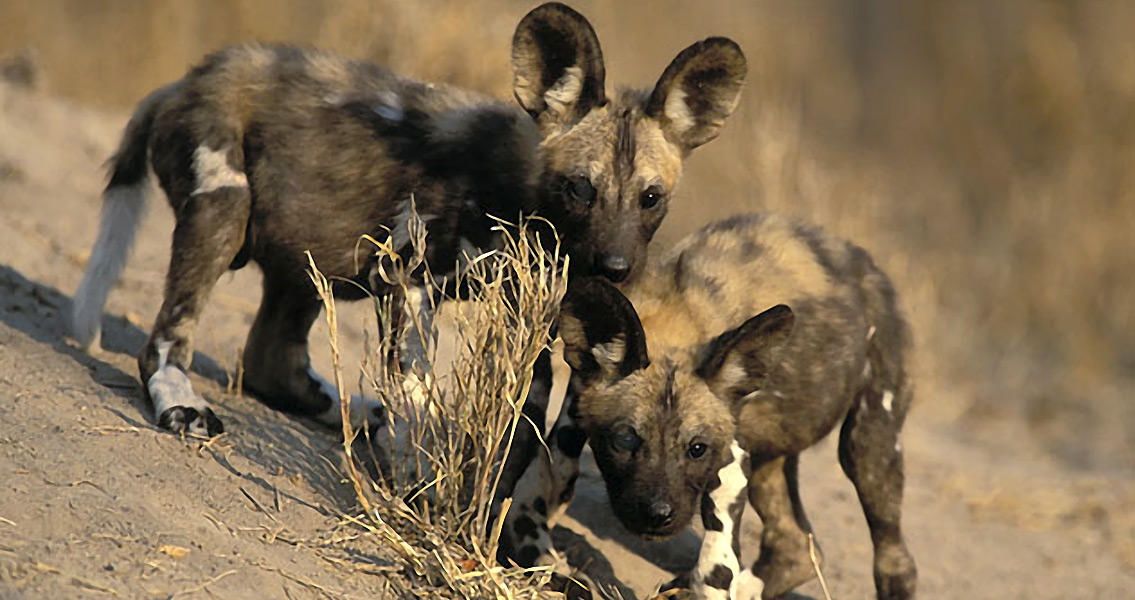
Azania. Recent DNA research has indicated that all modern dog breeds are descended from the domestication of a now-extinct wolf breed, about 11 to 16 thousand years ago. There is a lot of debate, however, surrounding where this domestication took place. Dogs were adopted by early hunter-gatherers, as they could assist in the capture of prey, or provide defence from large competing predators at kills. It is unclear however, whether their domestication took place just once, or on multiple occasions. The huge genetic diversity among dogs found in East Asia had led many scientists to conclude that domestication began there. Other research, however, has challenged this assumption, stating there is an equal likelihood of dog domestication having occurred elsewhere on the Eurasian continent. C. familiaris, it seems, is not native to the African continent, domestic dogs appear to have been introduced from the Middle East at some point after 12,000 years ago. After their initial introduction, dogs spread relatively quickly across North Africa, possibly because they were useful in the pastoral economy of animal husbandry. The expansion of dog populations south of the Sahara, however, appears to have been slow and staggered. In an effort to explain this much slower rate of expansion, Prof Mitchell has suggested that when dogs entered Sub-Saharan Africa, they encountered a series of endemic diseases. Mammalian species, including wild canids, native to Sub-Saharan Africa, acted as reservoirs for these diseases. The most virulent diseases that dogs encountered would have been the various strains of Trypanosomiasis, caused by parasitic protozoa in the bites of insects. One of the best-known diseases dogs could have been affected with is sleeping sickness, principally spread by tsetse fly bites. “[These diseases] pose a significant health risk to dogs living in Sub-Saharan Africa today, particularly to dogs not native to the region,” Prof Mitchell writes. It appears that African breeds of dog have a level of tolerance for these diseases; this resistance obviously took a long time to develop. Dogs which did not have this resistance, therefore, would not have been able to spread as quickly across Sub-Saharan Africa. “Based on the high mortality rates that European breeds introduced to sub-Saharan Africa today suffer, from the diseases discussed, such as sleeping sickness, I would think it very likely that the earliest dogs introduced to the region in prehistory would have suffered a similar challenge,” Prof. Mitchell told New Historian. Prof. Mitchell’s work provides an important addition to the little-understood history of the domestic dog.  “I hope that this work will make a contribution to understanding the general history of dogs and people as a whole,” Prof Mitchell said. “[The study] helps develop a more informed understanding of how all kinds of domestic animals were taken up.” It is important to understand the history of the dog and other animals we have domesticated, as they are inextricably linked to our own development. “[Studying domesticated animals] is a field with a lot of potential to it,” Prof Mitchell said. For more information: www.tandfonline.com Image courtesy of Wikimedia commons user: Attis1979]]>

Categories
Breaking News

Defleshed Bones Shed Light on Ancient Bolivian Culture

Antiquity. When the team began excavating the religious complex of Khonkho Wankane a decade ago, little was expected of the site. It was located a fair distance from the sunken temples of Khonkho, the original focal point of excavations. What Smith and Pérez uncovered, however, was truly remarkable. They found a circular building containing a floor strewn with a variety of exciting artefacts. Of particular interest were small blocks of a white, chalky substance. Tests revealed these blocks were quicklime, made by heating limestone. Quicklime, when mixed with water, has a particular use in that it can remove tissue and fat from bones. When exposed to air, quicklime-water mixtures turn into a white plaster. Within the mortuary, a number of body parts coated with this quicklime-water plaster were found. Nearly 1,000 teeth and small bones, mostly from feet and hands, were found along with pieces of skull. Outside the mortuary, carvings on a pillar were found which depicted a human with an exposed ribcage. The bones, when taken together with the quicklime found at the site, suggest that bodies were dismembered, stripped of flesh and cleaned in lime water. Bones were then taken away from the site, Smith and Pérez suggest. Dead family members were a prominent part of life in nearby communities. “Human remains were central to the creation of community,” Smith and Pérez state in their study. “The dead helped to anchor social identity in a collective understanding of the past and embedded lineage in the landscape.” People who stopped at Khonkho were probably no different, but they had mobile lifestyles and were unable to live near burial sites. The evidence from Khonkho Wankane suggests that these people took their dead on the road with them. “Khonkho Wankane,” Smith and Pérez wrote, “was a ritual centre to which the dead were brought for processing and then removed for final burial elsewhere.” For more information: www.journals.cambridge.org Image courtesy of Wikimedia commons user: Fæ ]]>

Categories
Breaking News

2000-Year-Old Hair Reveals Ancient Diet

www.sciencedirect.com Image courtesy of Wikimedia commons user: Fæ ]]>

Categories
Breaking News

Mummified Monk Found in Buddha Statue

Categories
Breaking News

Ancient Divination Shrines Found in Armenia

American Journal of Archaeology. Smith and Leon found examples of different types of divination. Knucklebones of bows, sheep and goats were found in Gegharot, indicating osteomancy (the practice of divination through the study of bones). “You would roll [the bones] and depending upon whether the scorched side or the marked side came up you would make a different interpretation,” Smith said. Inside a basin at one of the shrines, archaeologists found 18 small stones. “These stones appear to have been selected for their smooth, rounded shape and their colour palette, which ranged from black and dark gray to white, green and red,” Smith and Leon write. It is currently unclear exactly how these stones would have been used in divination rituals. Of particular interest was an installation used to grind flour, found in a shrine on the fortress’ east citadel. “What is conspicuous about the grinding installation in the east citadel shrine is the lack of a formal oven for bread baking,” Smith and Leon write. The basin “was clearly used for burning materials and certainly could have been used to bake small balls of dough, but it is unlikely that it would have been used to cook loaves of bread.” It seems that the grinding installation was used in aleuromancy, a practice of predicting the future using flour. The shrines were used for about a century, until the fortress at Gegharot was destroyed. During the Late Bronze Age, there was a lot of conflict in the south Caucasus, with regional warlords often fighting against each other. While divination was a vital source of power for the rulers of Gegharot, it was unable to help them in a time of need; Gegharot’s ruling elite seem to have been deposed in a clash with other regional polities. For more information: www.ajaonline.org Image courtesy of Wikimedia commons user: Pinkpasty]]>