Bulletin of the American Society of Papyrologists. For more information: www.bricejones.com Image courtesy of Wikimedia commons user: Fæ]]>
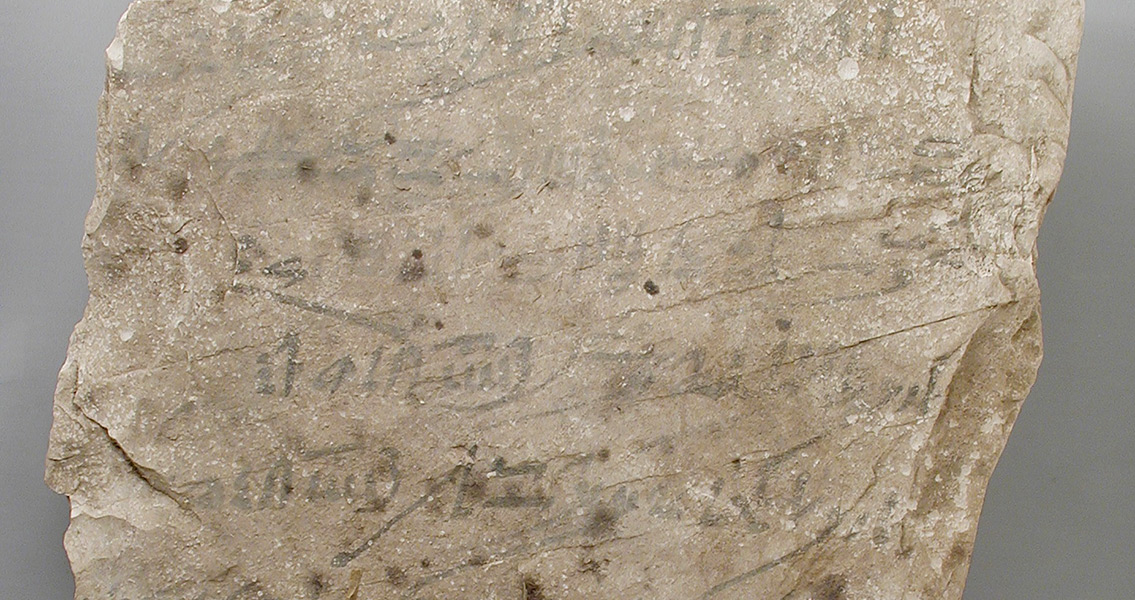
Bulletin of the American Society of Papyrologists. For more information: www.bricejones.com Image courtesy of Wikimedia commons user: Fæ]]>

Journal of Archaeological Research, attempts to examine why the pig disappeared from the human subsistence system in the Middle East. Redding’s research is important for our understanding of the historical reasons behind cultural practices which prohibit the consumption of pork. Wild pigs were indigenous to the Middle East and occurred throughout the area. “From archaeological faunal data, we now know that wild pigs were present in the Early Neolithic of Egypt in the Fayyum and the Nile Delta,” Redding writes in his report. These wild pigs spread and their domestication followed, with the first attempts to domesticate the animals in the Middle East occurring around 11,000 BCE. Earlier research had found that domestic pigs were common in the Fertile Crescent between 5,000 and 2,000 BCE. As pigs are not useful work animals and do not provide secondary resources such as wool or eggs, it is clear that pigs were being eaten in the area until at least the first millennium BCE. Why this changed has been a puzzle for researchers. One of the reasons why pigs did not continue being consumed in the Middle East could have been their water needs. Pigs are unable to cool themselves with sweat glands and require substantial amounts of drinking water, much more than cattle or goats. This constant need for water makes pigs “difficult to move in arid and semiarid environments, since they must be moved from water source to water source and only in cooler weather,” Redding notes. This would not have presented much of a problem, however, as pigs were used in a subsistence manner, rather than traded for profit. Redding proposes that pigs may have been replaced by another domestic animal: the chicken. Chickens would have presented a significant challenge to the continued farming of pigs, as they had competing food and labour needs. In this situation, humans would have had to make a decision between pigs and chickens. Chickens have several advantages over pigs. First, they are a more efficient source of protein than pigs; chickens require 3,500 litres of water to produce one kilo of meat, pigs require 6,000. Secondly, chickens produce eggs, an important secondary product which pigs do not offer. Third, chickens are much smaller and can thus be consumed within 24 hours; this eliminates the problem of preserving large quantities of meat in a hot climate. Finally, chickens could be used by nomads. While neither chickens nor pigs can be herded in the same way as cattle, chickens are small enough to be transported. “Under these circumstances, the chicken becomes a major protein resource,” Redding states. The chicken, therefore, provided Middle Eastern populations with a more efficient protein resource. Pigs became a redundant animal in the subsistence system, but they were not entirely replaced. “Indeed, contrary to expectations based on the religious prohibition of the pig, it never disappeared from the Middle East,” Redding concludes. For more information: www.springer.com Image courtesy of Wikimedia commons user: Fæ ]]>

www.sciencemag.org Image courtesy of Wikimedia commons user: Fæ ]]>

www.mbe.oxfordjournals.org Image courtesy of Wikimedia common user: Hautala]]>

International Journal of Historical Archaeology. The settlement of Mono Mills, on the border of the states of California and Nevada, provides a good case study for examining immigrant populations in the United States. Mono Mills was occupied between 1880 and 1917 and was primarily built to supply the nearby town of Bodie with lumber. Many Chinese workers moved to Mono Mills in response to the intense persecution they experienced in Bodie. By examining archaeological artefacts from Mono Mills’ Chinatown neighbourhood, Dr. Sunseri has revealed the strategies families used to cope with tensions in their new home. It seems that Chinese populations adapted their patterns of material consumption, in order to become assimilated with the Mono Mills culture. The ways in which workers consumed and disposed of items can reveal a huge amount. Food, for Dr. Sunseri, presented a perfect example of this social process of hybridisation. “The material debris in workers’ households reflect the ways… townsfolk constructed their identities and built community within the historical context of Mono Mills,” she wrote. From archaeological excavations of Mono Mills it has been revealed that pine nuts and obsidian tools were used in the Chinatown area. A Chinese Four Seasons spoon was found in the Paiute neighbourhood. Also, there are stories of a Chinese boarding house cook called ‘Tim’ being fired after it emerged he was feeding boarders squirrel stew instead of the prime cuts of beef he should have been using; Tim was stealing the beef and giving it as gifts to his Paiute friends. These archaeological remains and documentary accounts imply that Chinese-Paiute cultural interaction and cooperation took place in what Dr. Sunseri calls ‘subaltern coalitions.’ As ‘non-whites’ both Chinese and Paiute groups were socially and politically marginalised. Evidence for regional social networking suggests important coalitions between subaltern groups. It could be that these cooperative relations served as vitally important mechanisms for withstanding European American exclusionary attitudes. For more information: www.link.springer.com Image courtesy of Wikimedia commons user: Mav]]>

Proceedings of the National Academy of Sciences. Dr Schroeder and her colleagues performed genome analyses on the remains of three enslaved Africans, found buried in the Zoutsteeg area of Philipsburg on the Caribbean island of Saint Martin. It is understood from previous studies that the ‘Zoutsteeg Three,’ one adult female and two adult males, were buried in the seventeenth century and most likely came from Africa, rather than having been born in the New World. The new study enriched the poorly preserved DNA of the Zoutsteeg Three using a technique known as whole genome capture. “Those remains had essentially been lying on a Caribbean beach for hundreds of years so their preservation was really not good,” Dr Schroeder explained. “But by enriching the poorly preserved DNA in those samples we were able to obtain enough data to be able to dig deeper into the genetic origins of those three individuals we analyzed.” Dr Schroeder and her colleagues found that one of the Zoutsteeg Three had originated among Bantu-speaking groups in northern Cameroon. The other two came from a different area, most likely from non-Bantu speakers in the area which is now Nigeria and Ghana. “To our knowledge, these findings provide the first direct evidence for the ethnic origins of enslaved Africans,” writes Dr Schroeder in her study. “The data suggest that the Africans who reached Saint Martin were drawn from diverse cultures and societies.” The study has several major implications for the study of history. Most importantly, it clearly shows that it is possible to get extensive genome data from poorly-preserved archaeological remains; Dr Schroeder’s work clearly shows the value of her whole-genome capture method, which enables us to use samples which were previously thought to be too poorly degraded. This is particularly important in the Caribbean as artefacts deteriorate considerably in tropical settings. Genome-wide analyses are very useful for tracing the genetic origins of individuals, in this particular case victims of the transatlantic slave trade. Dr Schroeder’s work provides an alternative record which enhances our understanding of a long-standing historical problem, one where documentary sources can not tell us enough. For more information: www.pnas.org Image courtesy of Wikimedia commons user: Jgdc47B ]]>

International Journal of Historical Archaeology. Small merchant vessels visited the Venezuelan island of La Tortuga from the late seventeenth century until 1781. The unassuming island was unique among Caribbean salt-producing islands as it was uninhabited. Its arid and inhospitable climate meant it had never been settled, resulting in a complete lack of tenure rights or taxes. This unique set of characteristics meant that only the crews of merchant ships raked and bagged the salt on La Tortuga, leading to higher profit margins than other Caribbean islands could yield. As such, La Tortuga was used extensively. The ships that tended to frequent La Tortuga, Antczak notes, were relatively small vessels with about seven crew members, including captain and mate. “Living in close quarters, a small crew and shared common tasks, activities and dangers all contributed to the general collectivism onboard most ships sailing to La Tortuga… captains often worked together with the crew in tasks,” Antczak writes in his study. What happened when these crews reached La Tortuga, however, altered this collective social structure. Antcazk argues that captains consciously changed the social relations of work and became exclusively managers, distancing themselves from the arduous labour of salt exploitation. Captains casually oversaw the labour and had sufficient time on their hands for leisure activities. During extensive archaeological excavations of La Tortuga, over one hundred punch bowls were unearthed. The average size of the punch bowls was about half a pint, indicating that they had been for individual use. Most of the bowls were found on a raised dune, overlooking a main salt-panning area. According to Antcazk, this elevated position would “have offered its occupants the best vantage point from which to view and oversee the crews working on the saltpans and the surrounding areas and also enjoy the best sea breeze.” It is thought that captains would have supervised their crews’ work from this vantage point whilst drinking punch. Punch was an important part of late seventeenth and eighteenth century drinking practices. For the wealthy, punch could contain rare ingredients such as nutmeg, pineapples and high-quality French brandy. On La Tortuga, water would also have been a luxury as fresh drinking water could not be found on the highly-salinized island. Captains drank punch as a way of displaying their social position. The more luxurious ingredients they consumed, the more status they had; increasing their negotiating power amongst other captains. “These leisurely weeks of tropical tedium on La Tortuga would also have served as moments to create future social networks and strategic alliances, as well as build friendships that might lead to greater social mobility for particular individuals,” Antcazk concludes. Punch, therefore, served an important social function for captains. It first demarcated the captains from the crew. Secondly, it also offered a means of social posturing amongst captains negotiating future deals. For more information: www.springer.com Image courtesy of Wikimedia commons user: Hermanditt]]>

www.pubs.acs.org Image courtesy of Wikimedia commons user: Alfvanbeem]]>

www.ingentaconnect.com Image courtesy of Wikimedia commons user: OgreBot]]>

Fiteha Negest, the traditional legal code of Ethiopia, officially enshrined slavery in the structure of Ethiopian society. In the early twentieth century, Ethiopia had between two and four million slaves, out of a total population of about eleven million people. This huge proportion of the population were considered the property of their owners, and deprived of any form of property ownership. Slavery was so rife that Abba Jifar II, king of Jimma (r.1878-1932), an independent kingdom in Ethiopia with a slave-based economy, exchanged two slaves for two dogs, and paid his dentist five slaves for a treatment. One reason for this continuation of slavery, Mohammed suggests, was warfare. The southward expansion of the Ethiopian state under the military campaigns of Menilek II (ruled 1889-1913) had created numerous prisoners of war. Slavery reached its zenith in this period, as thousands of prisoners were sold in slave markets. “In other words, warfare resulted in the continuation of slavery in Ethiopia,” Mohammed writes in his study. At the beginning of the twentieth century, “many states and kingdoms were at war for slave raiding.” Constant warfare meant a constant need for weapons. Foreign traders were the only source of firearms and ammunition in Ethiopia. These traders operated through coastal chiefs who collected taxes and tribute on slaves. Many Ethiopian rulers, such as Menilek, tried to outlaw slavery, but were unwilling to interfere with anything that could disrupt the importation of firearms. There was also little pressure to stop the slave trade from the international community, Mohammed argues. He states that Britain, “the champion of the Trans-Atlantic Slave Trade” as he describes the country, had little desire to suppress slavery in eastern Africa, and therefore did not get involved. Only when Ethiopia sought to join the League of Nations in 1923, did real change occur. The League required Ethiopia to abolish slavery, in accordance with its conventions. In response to this demand, Ethiopia’s regent, Tafari Mokonnen Woldemikael, declared the trading of slaves in Ethiopia a crime punishable by death. Tafari became Emperor Haile Sellasse I, and continued his programme of abolishing slavery. With the abolition of slavery in Ethiopia, the kingdom of Jimma ceased to exist as an independent entity. As such, it became integrated with the rest of Ethiopia. Mohammed’s study effectively traces the long history of slavery in Ethiopia, and offers clear explanations of why it had such deep roots. Although much has been written about the abolition of slavery in Europe and the United States, Mohammed’s work provides a unique insight into the anomalies behind its persistence in Ethiopia. Image courtesy of Wikimedia commons user: Antoinetav For more information: www.academicjournals.org]]>