Categories
Breaking News

Volunteers Make Exciting Stover Canal Find in Devon

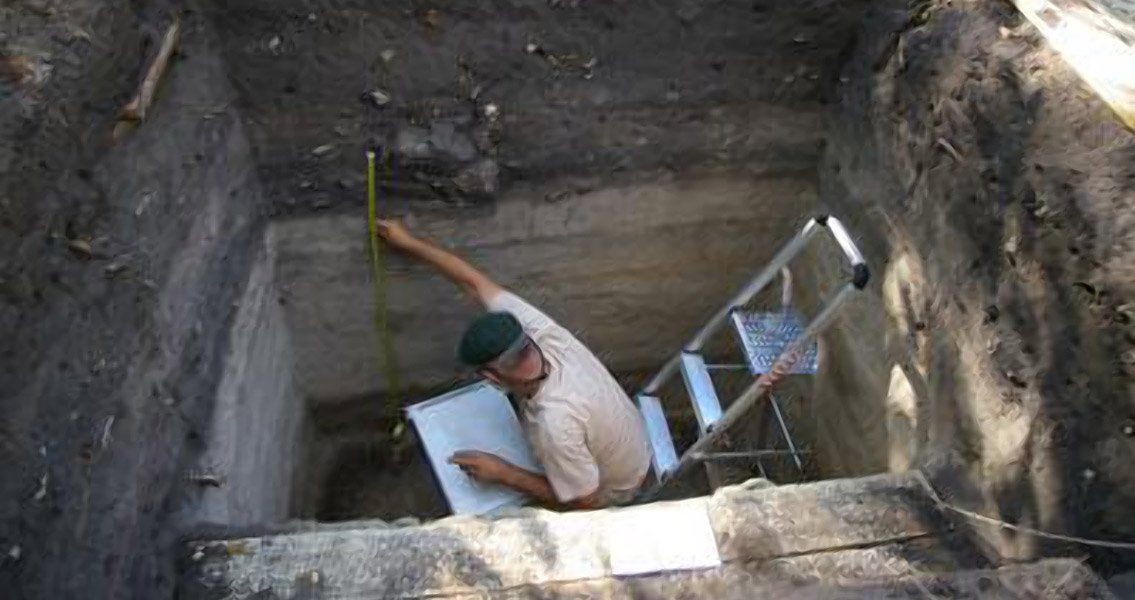
Exeter Express and Echo the revelation of the cargo barge was an exciting climax to the archaeological excavations which have occurred over the past three seasons. Additionally, the excavation sites are adjacent to the new Stover Trail bicycle path, which has resulted in a tremendous amount of interest from those using the path. The project is funded in part by the Mick Aston Archaeology Fund, awarded by the Council for British Archaeology. Image courtesy of Wikimedia Commons user Derek Harper ]]>

Categories
Breaking News

Evolution of Ants Laid Bare by New Fossil Discoveries

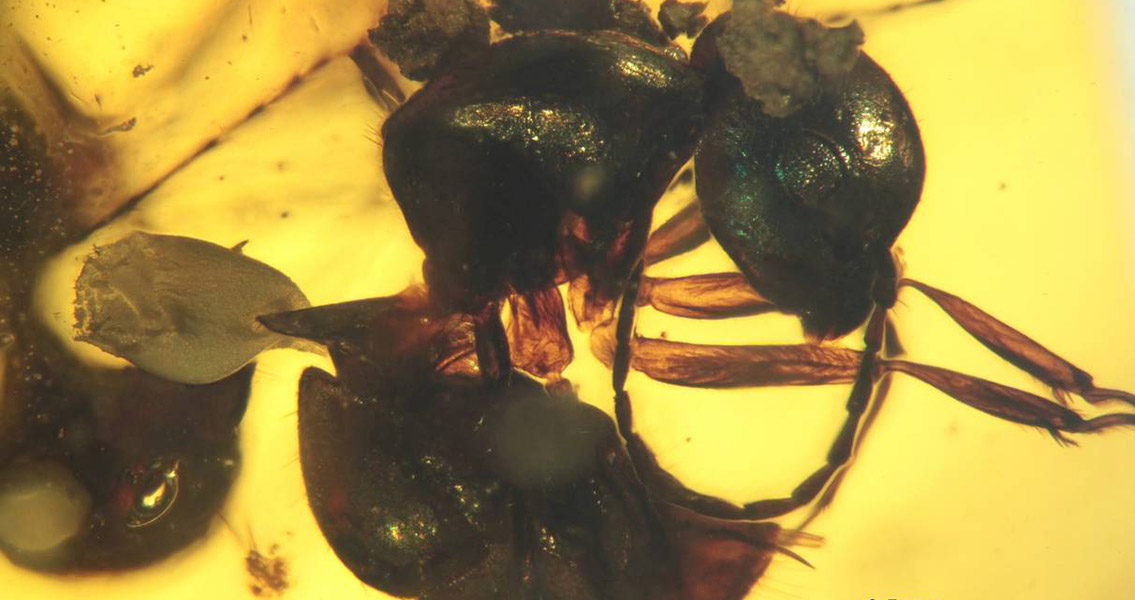
Ceratomyrmex ellenbergeri, is thought to have used its horn and mandibles to trap prey relatively large for its size. C. ellenbergeri, which belongs to the Formicidae stem-group, seems to be an exception to the idea of social evolution in Cretaceous ant species. The bladelike horizontal movement of the species’ mandibles are unique, resembling the Haidomyrmecine ants of the same time period which have long puzzled evolutionary biologists when it comes to classifying their ecology; both these species bear little in common with other large-mandible solitary hunter ant species such as modern trap-jaw ants. According to a press release from the Chinese Academy of Sciences, a new research paper spearheaded by Dr. Wang Bo from the academy’s Nanjing Institute of Geology and Paleontology found that C. ellenbergeri’s remarkable cephalic horn represents a hitherto unseen genetic modification among both ants discovered in the fossil record and the known ant species of today. This shows that the morphology of exaggerated trap-jaws such as in the Haidomymrmecines occurred early in the Formicidae stem group. The implications of the discovery include suggestions that at the very least some of the earliest Cretaceous stem-group ants differentiated themselves by being solitary socialist predators instead of eusocial insects. Additionally, the research study states that soon after ants started forming social bonds during the Early Cretaceous, there was at least one lineage in the form of Haidomyrmecini that grew to become effective at capturing prey – something that would not be seen in ant morphology again until well after the end of the Mesozoic, as evidence of these morphological specializations in the fossil record disappear for millions of years. The highly exaggerated features of the fossilized C. ellenbergeri specimen also show how early Cretaceous ants developed the ability to carry large-bodied prey, despite the fact that smaller prey would have presumably been easier to capture. In the end, the research data indicates that the earliest ants of the Cretaceous had ecological traits that were much more diversified and complex than previously thought. The research study, recently published in the journal Current Biology, can be found online here]]>

Categories
Breaking News

Clay Signet Discovered in Trove of Artifacts in India

The News Minute, the new find was made during an excavation spearheaded by the Archaeological Survey of India. A team of ASI experts say that the village is situated on the ruins of an ancient settlement that would have been on a major highway, one that played an important role in international trade. This roadway featured highly advanced engineering for the time, including a complex sewage and drainage system to collect and re-direct rain and water runoff. Composed of pipe lines created from baked clay, these sewage drains were said to be analogous with those used by the Indus Valley civilization in northwest India and modern-day Pakistan. The Indus Valley civilization is also known as the Harappan civilization – so named for Harappa, the former Punjab province dig site where evidence of the civilization was first discovered in the 1920s. The civilization itself was active during the Bronze Age, roughly between 3000 BCE and 1300 BCE; at its peak, it may have had a population of close to five million. The civilization is well-known for its sophisticated urban planning techniques. In this case, ASI experts say that the settlement in Keezhadi Pallai Sandhaipudur was a minimum of 2,500 years old, meaning it’s both in the wrong time and the wrong place to be part of the Harappan civilization. Instead, this would place it squarely in the Pandiya Dynasty, one of three Tamil dynasties that reigned in southern India from around 600 BCE. The Pandiyan Empire survived, in several different forms, until around the end of the sixteenth century CE; such a drainage system bearing a striking resemblance to ones used by a much older civilization typically found much farther north makes the case for the civil engineers of the Tamil dynasty learning much from their Indus Valley forebears. According to an ASI interview with K Amaranth Ramakrishna, the superintendent of the ASI-sanctioned dig, the fact that the drainage system was found intact is quite rare – shedding more light on this period of Tamil history. Keezhadi village bore strong signs of urban civilization, Ramakrishna added, stronger signs than were discovered in the ancient capital of Kaveri Poompattinam, located where the modern-day Tamil Nadu port city of Poompuhar exists today. There were several different styles of signets discovered during the dig. Other items uncovered by the team of ASI researchers included arrows, weapons made from both copper and iron, an assortment of rare ornaments and a so-called “scribbling nail” as well, which may have been used as a stylus or other type of instrument for making marks on a writing surface. Ramakrishna said that the signets could have been sent along by traders with their products as a way to identify the origin of the goods. The ASI began their excavations at the village on the 18th of January of this year. The dig is ongoing and plans are in place to continue investigating the site until around September of 2016. Image courtesy of Wikimedia Commons user: PlaneMad ]]>

Categories
Breaking News

Rice and Beans Solve Madagascar Mystery

Proceedings of the National Academy of Sciences. Image courtesy of Nicole Boivin]]>

Categories
Breaking News

Nazi Secret Message Machine Discovered on eBay for $14

Categories
Breaking News

Construction Workers in Boston Unearth a Ship Out of Water

WBZ–TV in Boston that this is the second shipwreck found in an area of the city that had been filled in, and the first shipwreck found in this particular part of the city. He also explained that it isn’t yet clear what exactly caused the shipwreck. Possible scenarios include the ship running aground or crashing on the mudflats during a storm, and then being burned by the crew to reduce its weight as it sank into the mud; or that it was deliberately scuttled in the mudflats after the fire had started. Other artifacts found at the site include pieces of a ceramic vessel, construction tools, two forks, two knives and burned plates. Skanska Construction, the contractor working on site, has voluntarily stopped construction and hired an independent consultant to help city staff research and examine the shipwreck. Due to the severe deterioration and age of the wood, it’s highly unlikely the ship can be removed intact, however, all appropriate measures are being taken to preserve as much of the ship as possible. The team of experts working at the site include archaeologists, nautical archaeologists and others from the Public Archaeology Laboratory, the State of Massachusetts, and the City of Boston.]]>

Categories
Breaking News

Archaeologists: Stonehenge Not So Hard to Build After All

Telegraph about his experiences, expressing surprise on how few people had actually been needed to shift the massive stone. Harris recounted that the original plan was to need at least 15 people to move the stone effectively; the fact that only 10 people were needed to do so was quite the shock. The doctoral student did acknowledge that the conditions of the test – which involved conducting it on flat ground in London’s Gordon Square – didn’t exactly match the terrain of the Preseli Mountains. There would have been some steep slopes that workers would have had to navigate, but Harris maintained that the system used during the experiment would have worked well in such situations. In fact, sledges of the kind used in the experiment are still in use today in India, where the Maram Naga, a pre-industrialized society, uses them to help construct massive stone monuments. Additionally, Harris remarked that sleighs with similar designs have been found to have been involved in moving megaliths as early as 2000 BCE in Japan, while the ancient Chinese also used sleighs. Some of the blocks used to build the Forbidden City are more than 120 tons, making those used at Stonehenge almost dismissively small in comparison. ]]>

Categories
Breaking News

Has Aristotle's Tomb Been Found?

Categories
Breaking News

Mongols Retreated From Europe Due to Bad Weather

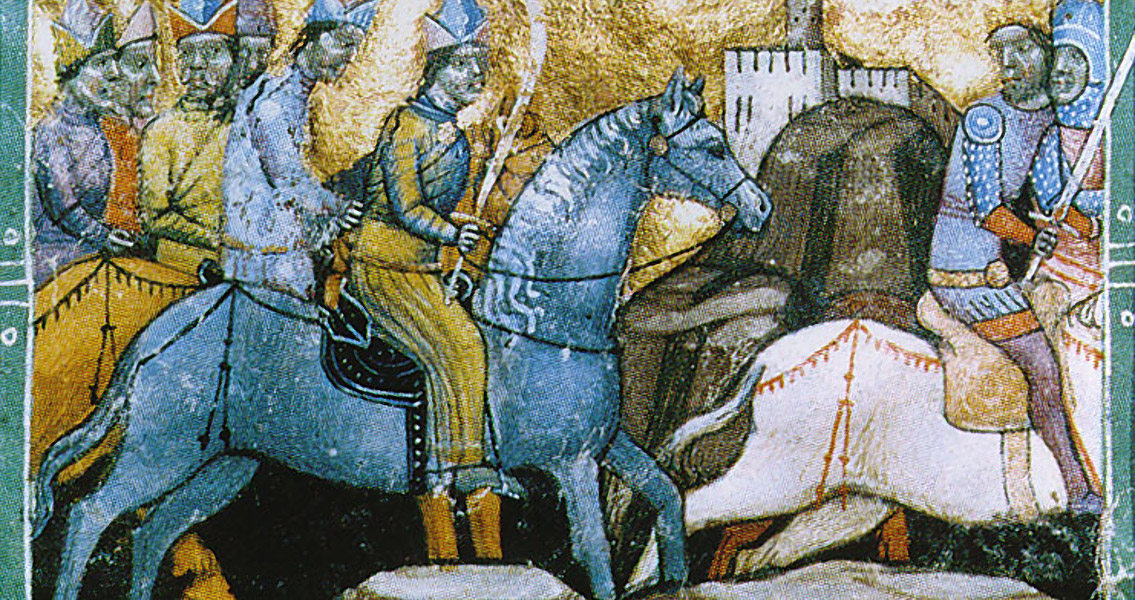
Scientific Reports, a group of scientists claim to have an explanation. The paper argues that the Mongol Conquest of Europe was halted in western Hungary by bad weather. The authors, Ulf Büntgen from the Swiss Federal Research Institute and Nicola Di Cosmo from Princeton University in the USA, believe that the Mongol army simply could not cope with the harsh Hungarian winter of 1242. Natural archives, analysis of environmental drivers and historical records were used to reach the surprising conclusion. In particular, tree ring data was utilised to gain insights into the weather in the region between 1230 and 1250 CE. “Documentary sources and tree-ring chronologies reveal warm and dry summers from 1238–1241, followed by cold and wet conditions in early-1242.” the authors write, in the abstract to their study. Put simply, in the late 1230s, when the Mongol invasion into Europe started in earnest, the warm and dry weather was ideal for the movement of the Mongol army, who were mostly traveling on horseback. The early 1240s were cold and wet, however. Initially this proved advantageous to the Mongols, freezing the Danube and allowing them to cross with ease. When Spring came on the other hand, and the ice started to thaw, the land turned to swamp and the Mongol horses simply could not move. “Small climatic fluctuations resulted in marshy terrain across the Hungarian plain, which led to reduced pastureland and decreased mobility, as well as hampering the military effectiveness of the Mongol cavalry,” the authors said in a press release. “These circumstances arguably contributed to the determination of the Mongols to abandon Hungary and return to Russia.” they explain in their study. Genghis Khan launched the Mongol Conquests in 1206, and within a few years had conquered huge swathes of land, creating the largest empire in history. Following Khan’s death in 1227, his descendants took up leadership of the Mongol armies and pushed into Europe, crossing the Danube in 1242 and killing half of Hungary’s population. Historians have offered a number of explanations as to why the invasion of Europe seemed to end so abruptly. Some have claimed the attacks on Eastern Europe were simply a warning, designed to discourage European incursions into Asia. This reasoning claims that the invasion stopped simply because it was never intended to go any further. Others claim the Mongols were ill prepared for combat in the more densely populated towns of Austria, the next country on their path, or were simply scared off by the defiant resilience of Polish and Hungarian soldiers. A particularly popular explanation is that the death of the then Mongol leader, Great Khan Ogedei, saw the European campaign brought to an end. Büntgen and Di Cosmo however, claim that the Mongol withdrawal shows the remarkable power of the environment to shape the course of history. “While overcoming deterministic and reductionist arguments, our ‘environmental hypothesis’ demonstrates the importance of minor climatic fluctuations on major historical events.” Their research study is currently available online]]>

Categories
Breaking News

New Study Finds Evidence of Human Re-Migration into Africa

Scientific Reports, can be found online here Image courtesy of E. Trinkaus and A. Soficaru]]>