Categories
Breaking News

Earliest Evidence of European Fire Building Found in Spain

Homo heidelbergensis, a direct ancestor of Neanderthal Man, Homo neanderthalensis. Like other sites that show signs of early fire building, hominids at Black Cave left behind a variety of stone tools, indicating they possessed the technical skills needed for selecting the right material for striking sparks. Paleontologist Michael Walker with the University of Murcia explained in Science News that it’s unlikely a brush fire near the cave’s entrance could have sent sparks inside to ignite fires that were found between five and seven meters in, adding that dry brush wasn’t likely to be near the cave to begin with, given that 800,000 years ago the area bordered a swamp and a river. Other researchers told Science News they suspect the Cueva Negra’s artifacts are actually not as old as the report indicates, because it’s difficult to say where the artifacts originally were in relation to several different reversals of the planets magnetic field which are preserved in the sediment layers found in the cave. A 2011 study, published in the Journal of Archaeological Science, set an age limit for the tools made by the Homo species in Europe at no more than 600,000 years ago. Even at 600,000 years old though, the findings at the cave would still be the earliest evidence of fire making in Europe. The systematic excavation of the cave was started in 1990 and until 2004 researchers considered the site to be from the late Pleistocene era, however, rodent fossils were discovered from a species that became extinct 500,000 years ago. Other animal fossils include megaceroides (giant deer), wild boar, bison, hyena, turtles and rabbits, in addition to 60 different species of birds. ]]>

Categories
Breaking News

Asian Metals Arrived in Alaska Long Before European Contact

Journal of Archaeological Science, the new findings have the potential to drastically rewrite the history of North America and trade between continents. The artifacts in question, examples of smelted alloys, were found on Alaska’s northwestern coast, at Cape Espenberg. The site, on the Seaward Peninsula, was inhabited by the Thule people, an Arctic culture which originated on the Alaskan coast in around 900 CE and spread as far as Greenland. A society whose existence was built around hunting, Thule houses were built from whale bones, skin and sod. Previous archaeological finds and oral histories have long given clues that objects from Eurasia reached prehistoric North America, but concrete proof had not been found until now. H. Kory Cooper, an associate professor of anthropology at Purdue University, led the metallurgical analysis of the artifacts. “We believe these smelted alloys were made somewhere in Eurasia and traded to Siberia and then traded across the Bering Strait to ancestral Inuits people, also known as Thule culture, in Alaska. Locally available metal in parts of the Arctic, such as native metal, copper and meteoritic and telluric iron were used by ancient Inuit people for tools and to sometimes indicate status”, he explained in a press release from the university. “Two of the Cape Espenberg items that were found – a bead and a buckle — are heavily leaded bronze artifacts. Both are from a house at the site dating to the Late Prehistoric Period, around 1100-1300 AD, which is before sustained European contact in the late 18th century.” Fieldwork for the study was led by Owen K. Mason and John F. Hoffecker, both from the Institute of Arctic and Alpine Research at the University of Colorado, Boulder. Between 2009 and 2011 they excavated a host of artifacts, including six objects made from metal. Both the belt buckle and the bead were made from leaded bronze – an alloy of copper, tin and lead. They were a lucky find, with metal artifacts rarely found at dig sites due to poor preservation. The fragmented leather belt strap was dated to between 500 and 800 years old, although the metal component could be significantly older. “The belt buckle also is considered an industrial product and is an unprecedented find for this time,” Cooper said. “It resembles a buckle used as part of a horse harness that would have been used in north-central China during the first six centuries before the Common Era.” Cooper and colleagues’ study adds to the growing body of knowledge about prehistoric North America, and the remarkably diverse and complicated cultures that lived and thrived there long before Europeans arrived and changed the continent forever. “This will cause other people to think about the Arctic differently. Some have presented the Arctic and Subarctic regions as backwater areas with no technological innovation because there was a very small population at the time.” Cooper said. “That doesn’t mean interesting things weren’t happening, and this shows that locals were not only using locally available metals but were also obtaining metals from elsewhere.” ]]>

Categories
Breaking News

Neanderthal Mutations Could Still be Affecting Humans

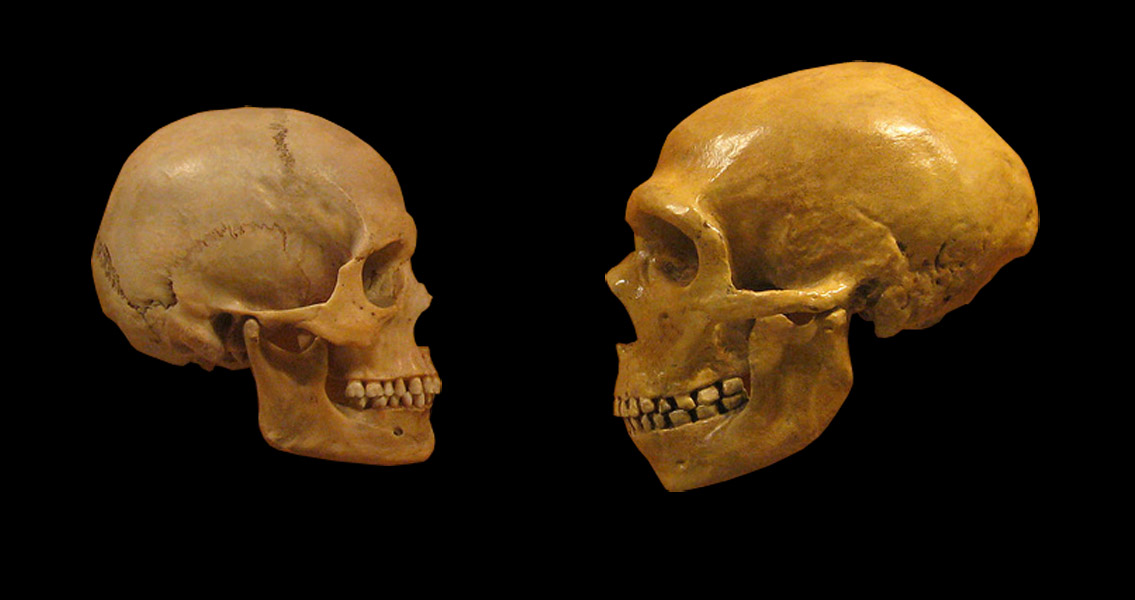
GENETICS. Harmful mutations present in the genome of Neanderthals made them up to 40% less fit reproductively than modern humans, according to the study. Although most of the effects have since been lost to time, these mutations likely passed to non-African humans when they interbred with Neanderthals. It is suggested that the mutations could still be affecting the fitness of some populations today. The study was led by Kelley Harris of Stanford University, along with her colleague Rasmus Nielse, from the University of California Berkley and Copenhagen University. “Neanderthals are fascinating to geneticists because they provide an opportunity to study what happens when two groups of humans evolve independently for a long time–and then come back together,” Harris explained. “Our results suggest that inheriting Neanderthal DNA came at a cost.” It is now widely accepted that modern humans interbred with Neanderthals, our closest extinct genetic relatives, with between 2% and 4% of genetic material in modern, non-African human populations having a Neanderthal origin. A study published earlier this year suggested that anything from the risk of depression to nicotine addiction could be connected to the mixing of human and Neanderthal genomes. Due to their smaller, more concentrated population, inbreeding was much more common among Neanderthals than modern humans, leading to their decreased genetic diversity. Harris and Nielsen were particularly fascinated by the fact that the Neanderthal genetic contribution to the modern human genome is uneven, but not random. Neanderthal sequences tend to be concentrated in certain areas, but totally absent elsewhere. “Whenever geneticists find a non-random arrangement like that, we look for the evolutionary forces that caused it,” Harris remarked. They hypothesised that the explanation could be found in natural selection. In small populations, like the Neanderthals, natural selection is less effective, allowing mutations to persist and have a larger influence. If such a mutation is introduced back into a larger population (such as modern humans) however, it’s quickly lost in the march of natural selection. To understand this process, Harris and Nielsen used computer programs to simulate mutation accumulation during Neanderthal evolution and estimate how humans were affected by the influx of Neanderthal genetic variants. They concluded that Neanderthals would have carried many mild, harmful mutations, combining to make them 40% less fit than humans in evolutionary terms. Their results also suggest that humans and Neanderthals had actually interbred much more freely and frequently than previously believed. The findings suggest that thousands of years ago, when both humans and Neanderthals inhabited the earth, closer to 10% of non-African humans’ genomes would have been Neanderthal. Shockingly, Harris and Nielsen suggest that a fraction of the harmful Neanderthal genetic mutations could still be present in modern human populations. They estimate the result could be a 1% lower reproductive fitness in modern day non-Africans. For more information: www.genetics.org]]>

Categories
Breaking News

Proof That Aboriginal Australians Were the First

Proceedings of the National Academy of Sciences, the authors of the study argue they have found conclusive evidence that Aboriginal people were the first to inhabit the continent. The findings refute a controversial study that claimed a now extinct group of modern humans had been the first to set foot on Australia. The earlier study recovered DNA lineages from the ‘oldest known Australian’, Mungo Man. It concluded that Mungo Man represented a human lineage which must have lived on the Australian continent before the arrival of Aboriginal people. By applying new DNA sequencing methods to re-analyse the same set of remains, the scientists from Griffith University’s Research Centre for Human Evolution (RCHE) claim that the original DNA study of Mungo Man drew incorrect conclusions about his lineage. Mungo Man (LM3) is one of three sets of remains discovered at the Lake Mungo site in New South Wales, Australia. First unearthed in February 1974, Mungo Man is believed to have been around fifty years old at the time of his death. It appears the early hunter-gatherer was buried with care, laid on his back with his hands crossed in his lap, and sprinkled in red ochre, in one of the earliest examples of such a ritual. His bones showed signs of severe arthritis, especially in the right elbow, suggesting he would not have been able to move his right arm in the time leading up to his death. Dated to around 42,000 years old, the remains caused a drastic rethink about the history of Australia’s population. Previously, it was assumed that the first humans had arrived on the continent around 20,000 years ago. Professor Lambert from RHCE highlighted the inconsistencies in the earlier study. “The sample from Mungo Man which we retested contained sequences from five different European people suggesting that these all represent contamination,” he said in a press release. “At the same time we re-analysed more than 20 of the other ancient people from Willandra (the reserve where Lake Mungo is located). We were successful in recovering the genomic sequence of one of the early inhabitants of Lake Mungo, a man buried very close to the location where Mungo Man was originally interred.” he went on to explain. “By going back and reanalysing the samples with more advanced technology, we have found compelling support for the argument that Aboriginal Australians were the first inhabitants of Australia.” Lambert and colleagues’ study shows that advanced technology is capable of extracting valuable data from Aboriginal Australian remains, offering potentially enlightening insights into the history of Australia’s first inhabitants. “We now know that meaningful genetic information can be recovered from ancient Aboriginal Australian remains,” he said. “This represents the first time researchers have recovered an ancient mitochondrial genome sequence from an Aboriginal person who lived before the arrival of the Europeans.” Image courtesy of Wikimedia Commons user James Maurice Bowler]]>

Categories
Breaking News

Ancient Maya Observatory Tracked More than Sun

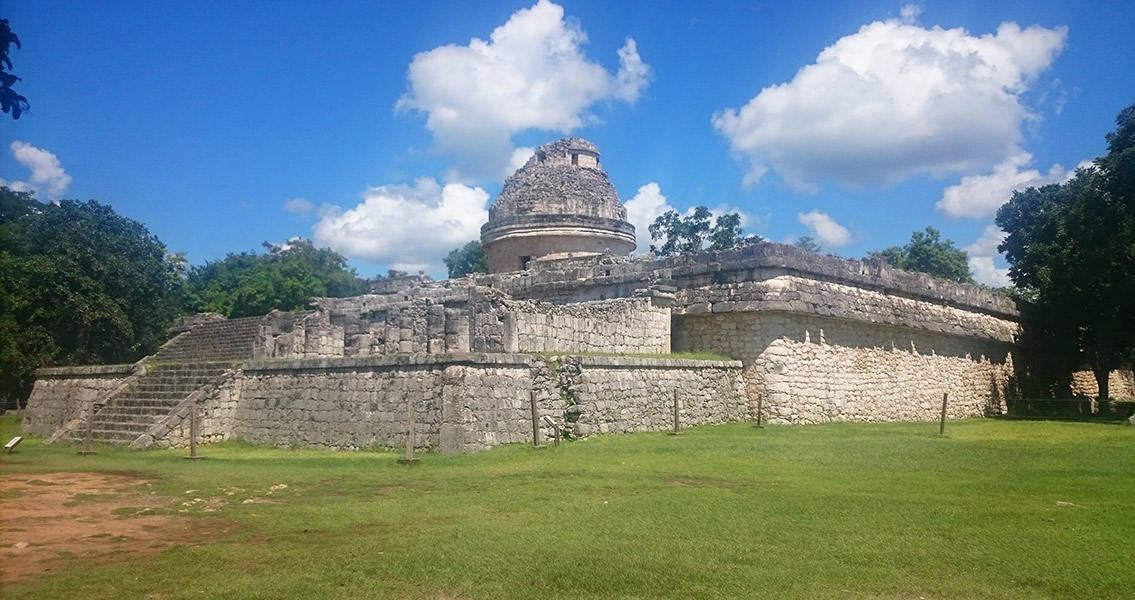
Excelsior, a Mexico City-based newspaper, Quintal Suaste remarked that the building would have seen the exclusive use of the elite of Maya civilization, most notably the community’s astronomer-priests. Like other Maya buildings that were built to match the path of the sun, this observatory has doors within it that align with both the rising and setting sun on the date of the spring and autumnal equinoxes. Additionally, when the midday sun strikes the semicircular building it casts no shadow – another intentional design element of the structure. Meanwhile, the southern edge of the observatory has been shown to align with the northernmost position that Venus reaches in the night sky. After the sun and the moon, the planet is the brightest observable object in the sky; Venus held a special place among Acanceh’s astronomer-priests. According to Quintal Suaste, the Maya had the ability to track the planet through its 584-day cycle thanks to the observatory. Direct evidence of this behavior was corroborated by the text within three codices discovered at the site. These findings were able to further support the idea that Venus was an integral cultural icon amongst the Maya, according to Orlando Casares Contreras, another researcher that also spoke to Excelsior. The Central American civilization was vast, stretching from southern Mexico to Honduras during its peak. Venus had a special place in Maya theology and in their mythological pantheon, known as Noh Ek, or “The Great Star”, among the faithful. Venus was also known as Xux Ek, “the Wasp Star”, according to some texts. There are some indications that Venus might have been known by a specific name depending on where it appeared in the sky during its cycle, as it would appear as a morning star during part of its cycle and an evening star during another part of its cycle. Image courtesy of Wikimedia Commons user: Luigiflas]]>

Categories
Breaking News

Genetic Tests Suggest Dogs Domesticated More Than Once

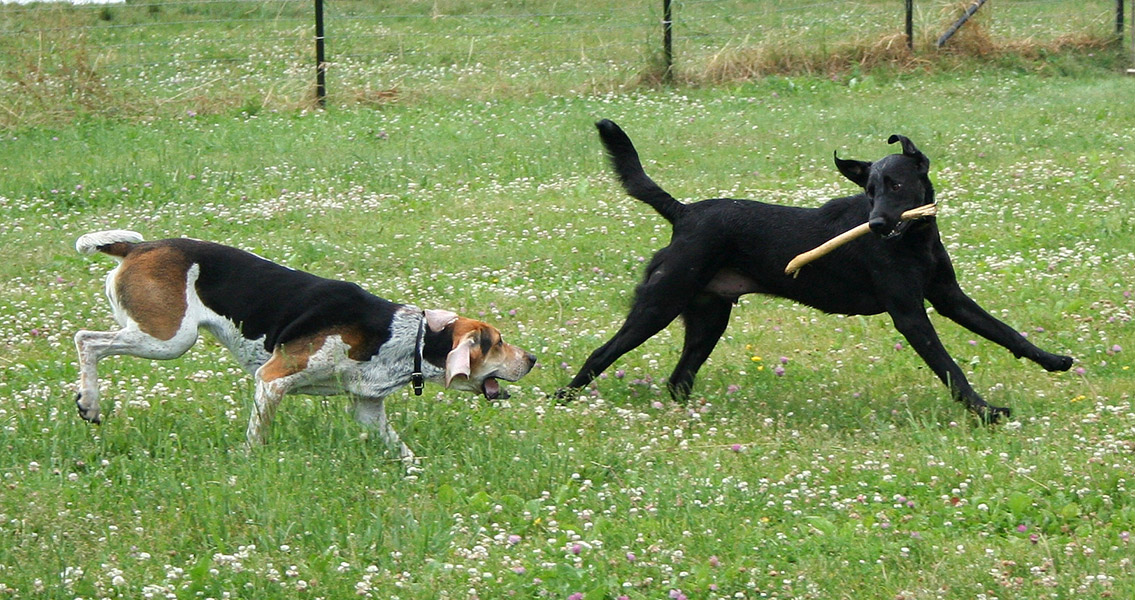
here Image courtesy of Wikimedia Commons user Peter Wadsworth]]>

Categories
Breaking News

Neighbors Helped Maya with Disaster Recovery

Categories
Breaking News

Palmyra Recaptured Only to be Re-Looted, Archeologist Claims

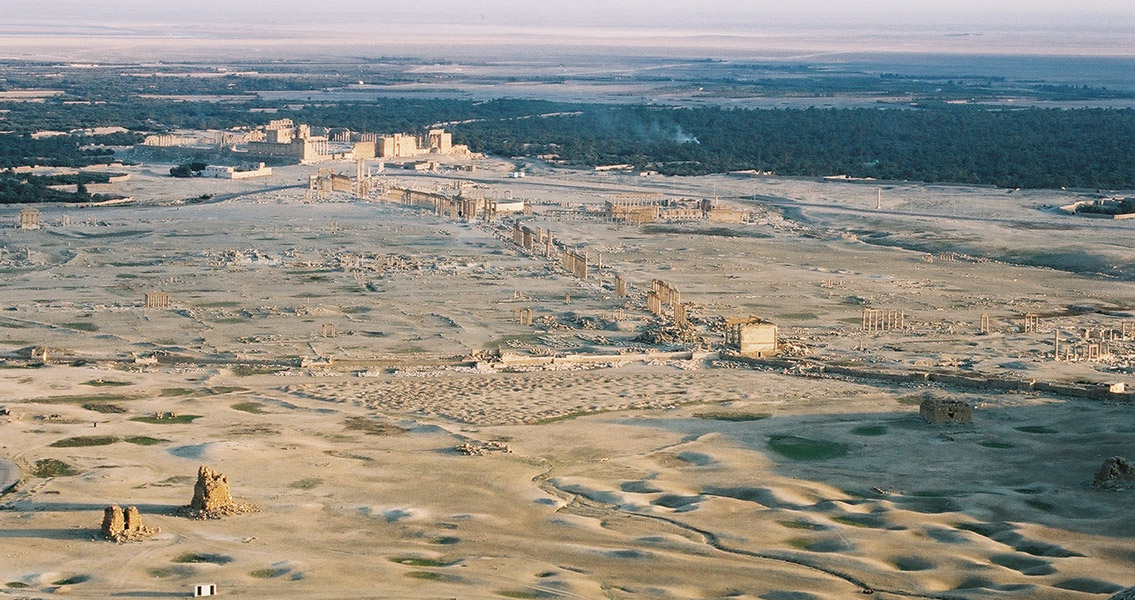
Tagesspiegel newspaper that approximately two-thirds of Aleppo’s old town had been burned and bombed and other sites had been plundered on an industrial scale. She’s branded these types of activities as ‘cultural cleansing’, and has started a campaign called Unite4Heritage to protect important sites. Palmyra was an ancient Semitic city in present-day Syria, with archaeological finds dating back to the Neolithic period. Renowned merchants, the Palmyrenes established settlements along the silk road and did business throughout the Roman Empire. Wealth from the trade caravans allowed the city to build monumental construction projects like the Temple of Bel, the Great Colonnade and the tower tombs. Heavily influenced by Greco-Roman culture, Palmyra produced distinctive architecture and art that reflected both western and eastern traditions. After the recapture of Palmyra early this year government experts discovered statues with the faces chipped off (some interpretations of Sharia law disallow the depiction of the human form) and others that had been left shattered on the floor. Although authorities had taken what they could from the museum as ISIL advanced, larger items and items that were fixed to the walls were left to the mercies of the militants. ISIL left a wide path of destruction on the inhabitants, defenders and ancient treasures of Palmyra. Captured Syrian army soldiers were reportedly executed in the Roman amphitheater, and hundreds of medical personnel, government officials, and the women and children from hated tribal groups were killed in and around the city. It was the death by beheading of the elderly Khaled al-Assaad, the head of the city’s antiquities who refused to reveal where artifacts had been hidden, which garnered the most attention around the world. ]]>

Categories
Breaking News

Earliest Roman Financial Records Discovered in London

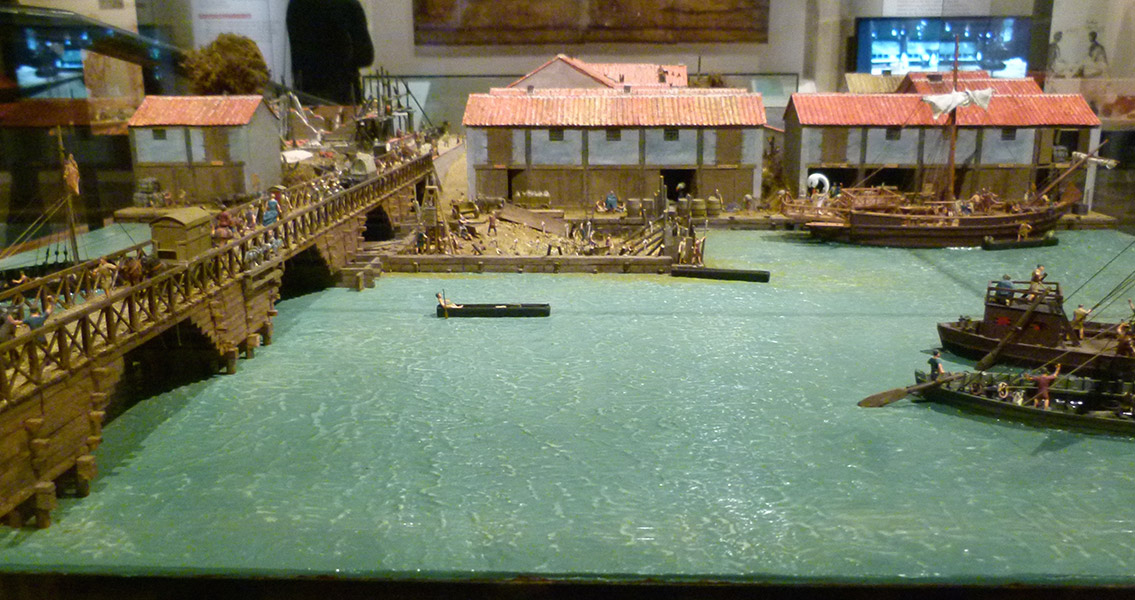
MOLA website]]>

Categories
Breaking News

Lost City Under the Sea Revealed to Be a Geological Formation

Ancient Origins in 2014. Tellingly, no other signs of life, such as surface pottery, have since been found at the site, and the mystery of the supposed architectural remains continued. Published in the Journal of Marine and Petroleum Geology, the joint research study by the University of East Anglia (UK) and the University of Athens (Greece), claims that the site was in fact created by a natural geological phenomenon in the Pliocene era, five million years ago. “We investigated the site, which is between two and five meters under water, and found that it is actually a natural geologically occurring phenomenon.” said Professor Julian Andrews, lead author of the study from UEA, in a press release. “The disk and doughnut morphology, which looked a bit like circular column bases, is typical of mineralization at hydrocarbon seeps – seen both in modern seafloor and palaeo settings.” The Ephorate of Underwater Antiquities of Greece launched the latest investigation of the site. Archaeologist Magda Athanasoula and diver Petros Tsampourakis studied the submerged remains, along with Prof Michael Stamatakis from the Department of Geology and Geoenvironment at the University of Athens. A combined research team was then composed of UEA and UoA staff, which analysed the mineral content and texture of the formation using microscopy, X-ray and stable isotope techniques. “We found that the linear distribution of these doughnut shaped concretions is likely the result of a sub-surface fault which has not fully ruptured the surface of the sea bed. The fault allowed gases, particularly methane, to escape from depth.” explained Prof. Andrews. “Microbes in the sediment use the carbon in methane as fuel. Microbe-driven oxidation of the methane then changes the chemistry of the sediment forming a kind of natural cement, known to geologists as concretion. “In this case the cement was an unusual mineral called dolomite which rarely forms in seawater, but can be quite common in microbe-rich sediments.” Andrews continued. “These concretions were then exhumed by erosion to be exposed on the seabed today.” It is rare for the phenomenon to occur in such shallow waters – the site is between just two and six meters below the surface – meaning although not the location of some mysterious lost city, the site is still remarkable. Andrews explained that the process which led to the formation is in fact similar to the effects of fracking, but significantly slower. ]]>