Categories
News

Mutiny Sets Henry Hudson Adrift
Discovery mutinied on 22nd June, 1611. The vessel’s captain, famed explorer Henry Hudson; his teenage son and seven others were all overpowered by the ship’s crew and forced into a small, uncovered boat. Set adrift with few supplies in the harsh conditions, Hudson and the others were never seen again. The only hint to their fate came almost twenty years later, in 1631, when another expedition through the region found the remains of a shelter that could have been erected by Hudson and his eight companions. Hudson, for whom Hudson Bay is named after, was embroiled in an obsessive hunt for a Northwest Passage, a sea route through the North American continent that would connect Europe to the lucrative trading opportunities in Asia. The 55-ton Discovery had set off from London on 17th April, 1610, stopping briefly in Iceland before making its way into the Hudson Bay in August. For this expedition, Hudson had his ship cruised around the southern section of the Hudson Bay, searching for an outlet into the Pacific. Scouring the region and finding nothing, Hudson nevertheless continued his search. When the wintry Arctic conditions struck however, tensions quickly rose among the crew when the ship became trapped in the ice, with its supplies dwindling. Rumours started to spread among the crew that Hudson had started to hoard food, saving it for his favoured crew members while depriving others. He demoted Robert Juet, the ship’s first mate, while also getting into a heated dispute with another officer, Henry Green. Conspiracy began to spread around the ship, with Green and Juet recruiting men to their cause. In June, while the ship prepared to commence its journey back to Europe, the mission a failure, the mutiny took place and Hudson along with his supporters were apprehended and then set adrift. At least, that was the account provided by the surviving crew members. The Discovery eventually made its way back to England, but without Juet and Green. The surviving crew members claimed that the two mutiny leaders had been killed in a battle with Native Americans at some point on the journey home. This of course adds an interesting twist to the tale of the mutiny, raising the possibility that the crew perhaps altered certain elements of the story, or lied about Juet and Green’s fate, in order to shift blame away from themselves. Some of those who made it back were eventually tried for mutiny, but all were ultimately acquitted due to a lack of evidence. Little is known about Hudson’s early life. Likely born sometime late in the sixteenth century, in England, he earned a reputation as a formidable sailor and, ultimately, one of the world’s greatest explorers. How he gained such skill as a seafarer is unknown, with precious few details about his life prior to his first expedition as a ship’s commander in 1607 available. He embarked on four major voyages in his career, including the fateful final one. All were driven by the same aim, of finding a new passage between Europe and Asia, and with countries and businesses fighting to unearth new trade routes, funding for these ambitious expeditions was seldom hard to come by. His first two trips attempted to find a Northeast Passage, the second ultimately blocked by thick ice north of Russia. Giving up on ever finding an eastern route, he soon turned his attention to the North American continent, embarking on his first voyage there in 1609. Although ultimately failing, Hudson inspired a host of later explorers to search North America for the fabled Northwest Passage. His name, meanwhile, can be found on waterways, bridges and even towns across the continent, a mark of the esteem he is held in.]]>

Categories
News

First Molly Maguires Executed

Categories
News

'Hollywood Gangster' Bugsy Siegel Gunned Down

Categories
News

Imre Nagy Executed In Hungary

Categories
News

1943 Race Riot Ignites in Beaumont, Texas

Categories
News

Conspiracy and Anti-Semitism Lead to Bialystok Pogrom

Categories
News

Alexander the Great's Mysterious Death

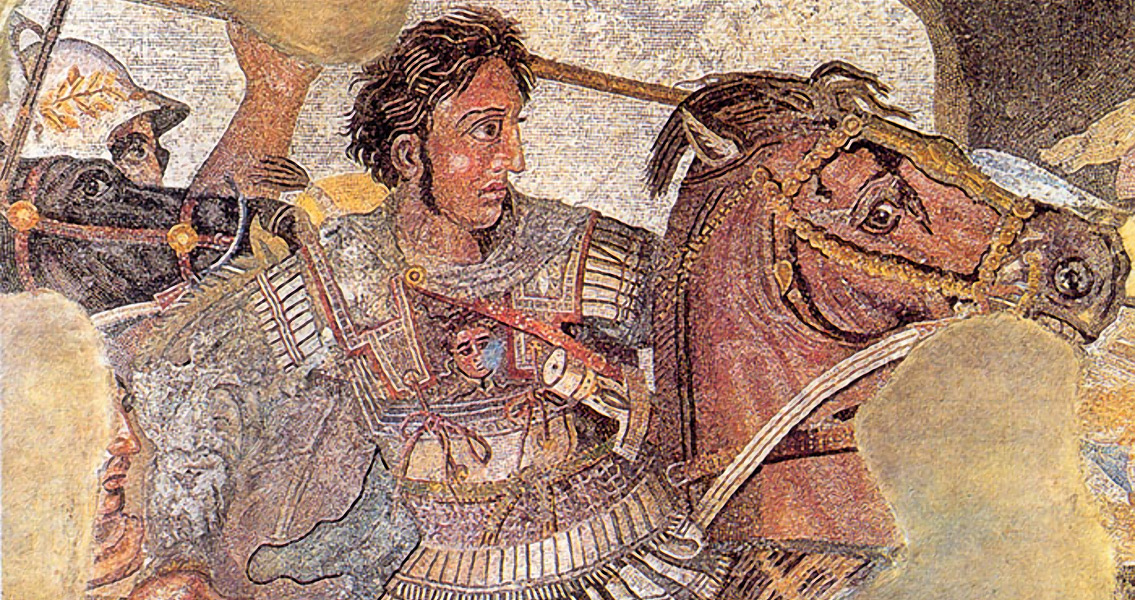
Veratrum album plant. There is evidence that some dissatisfaction had spread through Alexander’s senior officers in the last few years of his life, shown by a strike in 325 BCE when his army refused to march through India. It is possible, therefore, that Alexander was the victim of a conspiracy among his commanding officers, launched perhaps out of fear that the campaigns Alexander was planning during his stay in Babylon would be too costly. Whatever the cause, Alexander’s death over 2,000 years ago drastically altered the course of history in the Ancient World, creating a power vacuum which descended into a period of intense fighting among his former subordinates and subjects. ]]>

Categories
News

Salem Hangs its First Witch

Categories
News

Huge Earthquake Destroys Port Royal

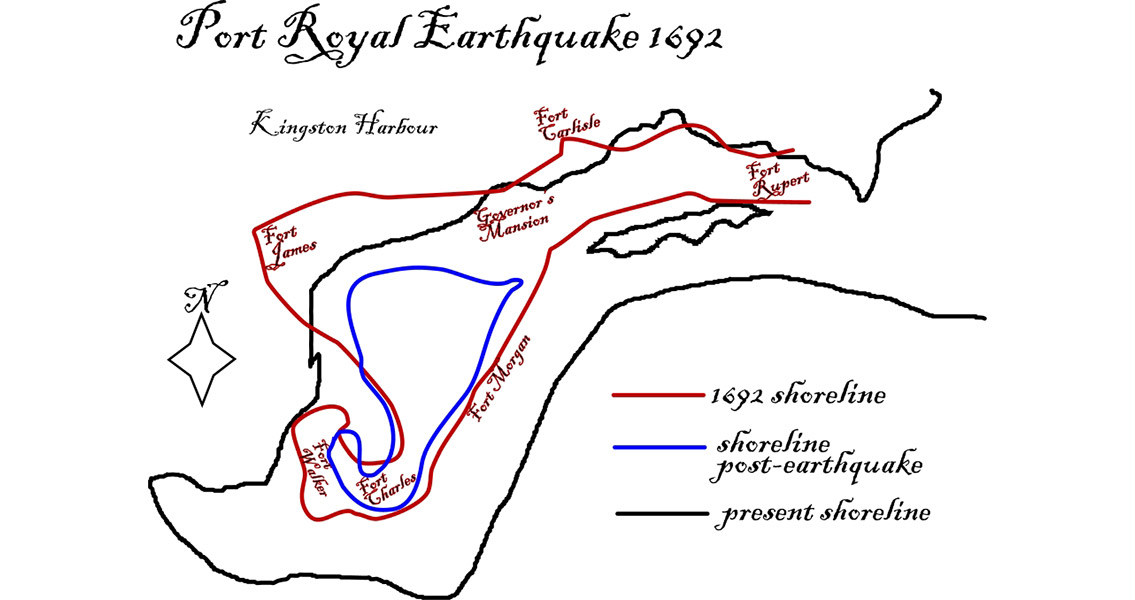
HMS Swan, out of the sea, and deposited it on a building in the city. The geology of Port Royal only added to the scale of the damage wrought by the earthquake. Much of the town had been built on tightly packed soil rather than bedrock. During the quake, this soil was shaken loose and almost turned completely liquid. Buildings sank into the ground, and many of those that had survived the initial earthquake and subsequent tsunami were nonetheless rendered uninhabitable, including two forts. One particularly morbid consequence of this loose soil saw corpses from the city’s cemetery dislodged from their graves and floating in the harbour. By the end of the event, two thirds of the city had been annihilated. Thousands of people had been killed, while aftershocks rocked the island for days after. A lively, bustling city and centre of trade in the Caribbean, Port Royal also had the dubious accolade of being referred to as the “the most wicked and sinful city in the world.” During the seventeenth century, it was considered a dangerous place, home to pirates, smugglers and debauchery. It was said at the time that a quarter of the buildings in the city were either a brothel or a bar. Located away from the Jamaican mainland, it became the perfect hiding place for the real life Pirates of the Caribbean, allowing them to prey on shipping before escaping into the bustle of the busy city. Remarkably however, the city also served as a base for the British Royal Navy in the seventeenth century. For the clergy of the seventeenth century, the shocking disaster which befell Port Royal was seen as divine retribution for the city’s vices, a biblical punishment for a city considered sinful on a biblical scale. Some historians however, suggest that the size of the cataclysm that befell Port Royal actually distorted the history of the city. The sins of the island were exaggerated after 1692, to match the narrative of the earthquake being a punishment from God. Port Royal was never again settled to the same extent it had been before the 1692 earthquake, the damage caused deterred people from returning, meaning it is now the site of a just a small fishing village. ]]>

Categories
News

Anniversary of the Indian Citizenship Act Passing into Law

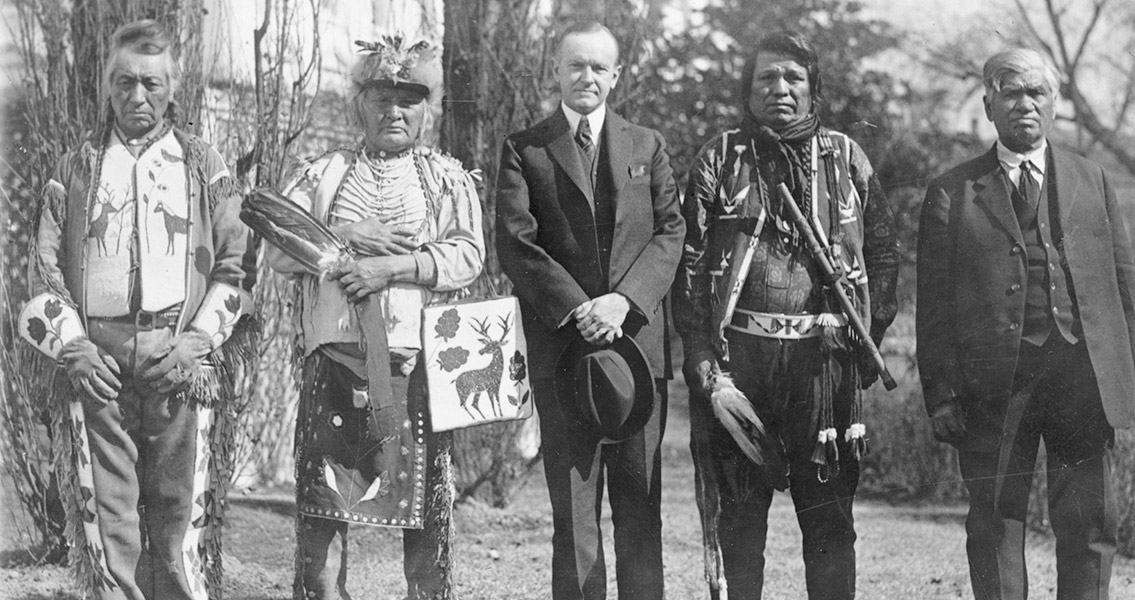
“Be it enacted by the Senate and House of Representatives of the United States of America in Congress assembled, That all noncitizen Indians born within the territorial limits of the United States be, and they are hereby, declared to be citizens of the United States: Provided, That the granting of such citizenship shall not in any manner impair or otherwise affect the right of any Indian to tribal or other property.” President Calvin Coolidge, who had signed the Act, spent much of his presidency trying to appear as a supporter of Native American rights. As the Act was publicly announced, Coolidge posed for a photo with three Osage Indians, two of which were wearing traditional ceremonial dress, outside the White House. Prior to the passing of the Act into law, the USA did not recognise Native Americans as US citizens; excluding them from the rights and guarantees given in the Fourteenth and Fifteenth Amendments. Until 1924, citizenship had only been available to those of 50% or less Native American heritage, or Native American women who had married US citizens. The 1887 Dawes Act had been the previous benchmark of US policy towards Native Americans. It dissolved all Native American tribes as legal entities and redistributed land among individual heads of family, who would become federal and state tax payers. Any remaining land was then deemed surplus and sold off, with the proceeds going towards building Native American schools. Masquerading as a reform to benefit the indigenous people, the Dawes Act’s impact was often the opposite. By 1932, the sale of unclaimed land under the Dawes Act had seen total Native American territories in the USA fall by two thirds. Meanwhile, it left the Native American families with an impossible decision: assimilate into white American culture, or preserve their heritage in poverty. It was a dilemma the Indian Citizenship Act failed to alleviate. Voting rights were not even guaranteed to all Native Americans by the Indian Citizenship Act, denying them the opportunity to meaningfully participate in the US democracy. The US Constitution allowed the states to determine their own voting laws, which meant they could place education or property ownership obligations on their electors to exclude the majority of Native Americans. It wasn’t until 1957 that all states allowed Native Americans to vote, highlighting just how arduous the battle for Native American Civil Rights has been. As has often been the case in US history, the Indian Citizenship Act laid the grounds for Native American assimilation into US life through citizenship, at least showing a difference in perception towards Native Americans. It provided little opportunity however, for Native Americans to defend their dying heritage or achieve true equality and freedom in US society.]]>