Categories
Breaking News

DNA Analysis Gives Insight into Austronesian Languages

Human Genetics, has carried out the most extensive DNA analysis of the region so far to propose a new solution as to how the language family spread across such a large and diverse population. There are two main interpretations of the prehistory of Island Southeast Asia. The first proposes a massive expansion of Neolithic Austronesian speakers out of Taiwan during the fourth millennium BCE, coming shortly after Neolithic settlers had introduced grain agriculture, pottery and domesticated animals to the island. Material evidence dating back as far back as 3500 BCE can be found in the northern Philippines of populations bearing a close cultural resemblance to those in Taiwan, and within a millennium similar material traces started to appear in Indonesia. The second interpretation, and one which authors of the new study have played a key role in forming since the 1990s, argues that rather than a massive migration out of Taiwan, climate change shaped genetic patterns in the region. Global warming at the end of the last glacial period saw massive sea level rises which isolated sections of Island South East Asia. Although explaining the diversity of the region, critics argue it fails to account for the strong evidence suggesting the Austronesian languages have their origins in Taiwan. Detailed analysis of genetic data, including 12,000 mitochondrial sequences, in the new study led by Dr. Pedro A. Soares of the University of Minho in Portugal, suggests a much more complicated series of events; one which manages to reconcile both interpretations. The results of the genetic analysis showed the mitochondrial DNA found in Pacific Islanders had been present in Island South East Asia much earlier than 4000 BCE, casting serious doubts on the ‘Out of Taiwan’ theory. Soares et al argue that landscape and sea level changes 11,500 years ago lead to a significant expansion from Indonesia 8,000 years ago. It was this expansion which led to the team’s discovery that populations throughout Southeast Asia and the Pacific Islands shared the same DNA and Y-chromosomes. Suggesting a common ancestry for Taiwan and Island South East Asia populations was established before the Neolithic period, the team’s results also point to subsequent minor waves of migration which may have lead to the Austronesian language dispersal. These subsequent migrations could be crucial in providing an explanation for the spread of the Austronesian language family within the climate change model. “We infer a primarily common ancestry for Taiwan/ISEA populations established before the Neolithic, but also detected clear signals of two minor Late Holocene migrations, probably representing Neolithic input from both Mainland Southeast Asia and South China, via Taiwan”, the team write in the study, “This latter (migration) may therefore have mediated the Austronesian language dispersal, implying small-scale migration and language shift rather than large-scale expansion.” The study suggests that the Taiwanese migrants in one of the minor migrations spread the Austronesian languages through ISEA. “Our analysis supports a scenario in which language shift played the major role, rather than large-scale population replacement”, the authors write in the study. In a recent interview with The University of Huddersfield, Professor Martin Richards, one of the study authors, suggested that the Taiwanese migrants may have constituted an elite group, perhaps associated with a new religion or philosophy, which provided a vehicle for their language to spread throughout the region. For more information: www.link.springer.com Image courtesy of Wikimedia Commons user: Stefano Coretta]]>

Categories
Breaking News

Stones in Galilee Could Mark Ancient Rabbis “Forever”

Categories
Breaking News

Ancient Babylonian Astronomers Tracked Jupiter

here]]>

Categories
News

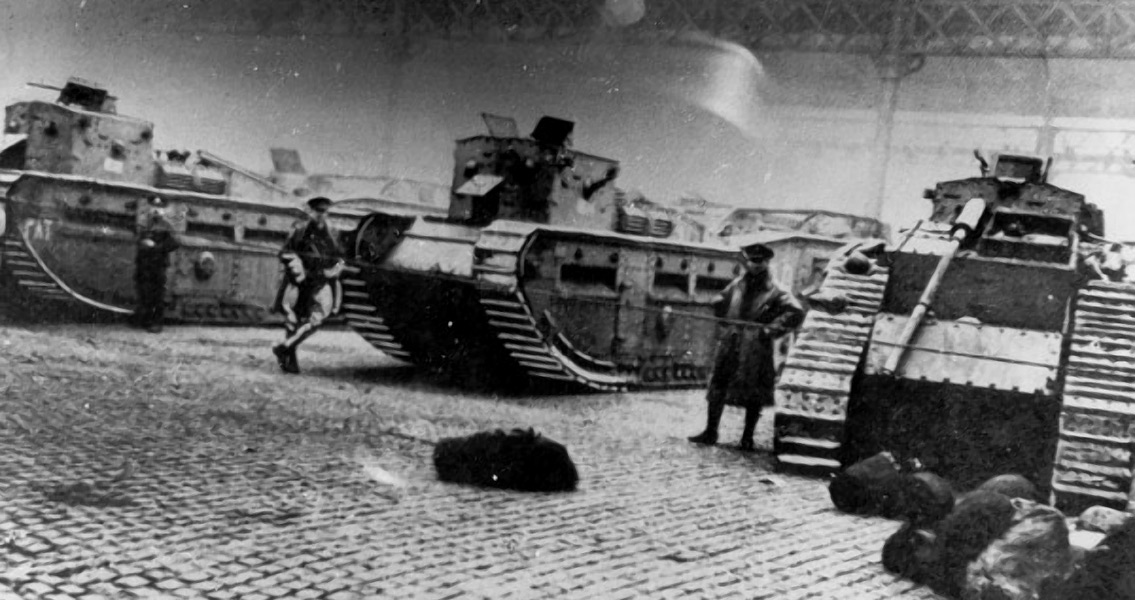
The Battle of George Square Sees Tanks in Glasgow

Categories
Breaking News

Peter Rabbit Returns for Potter’s 150th Birthday

Categories
Breaking News

Church Discovered in Turkey Features Unique Art

Categories
News

Bloody Sunday – British Troops Shoot Unarmed Protesters

The Wolfe Tones – Go On Home British Soldiers Its depiction in Irish rebel songs such as ‘Go On Home British Soldiers’ shows that for many in Ireland the massacre was just another tragedy in a centuries old conflict between British imperialism and Irish nationalism. The Bloody Sunday massacre was absorbed into the tradition of rebel music which had for centuries railed against British interference in Ireland and Northern Ireland. It took decades for the British government to accept the responsibility of its military for the massacre. A controversial report, headed by High Court Justice Lord Widgery, was published in summer 1972. It exonerated the British troops, and suggested that the protesters had been carrying explosives and other weapons. It wasn’t until 2010 that a new report into the events was published, headed by Lord Savile it laid responsibility for the massacre with the British army and cleared all of the victims of any wrong doing. Among other crucial conclusions, it claimed the soldiers opened fire without warning and subsequently attempted to cover up their actions, and that the protesters were all unarmed. In November 2015 a former British soldier was arrested for questioning in regards to the shootings, showing that 44 years on, the Bloody Sunday massacre is yet to be truly resolved. Image courtesy of Wikimedia Commons user: SeanMack ]]>

Categories
Breaking News

Remains of 800 Young Children Discovered in Lancashire

Categories
Breaking News

Cats Were Domesticated in China Prior to 3,000 BCE

Felis silvestris lybica (western wildcat). Researchers with the Chinese Academy of Sciences located in Beijing unearthed cat bones in 2001 while investigating several ancient agricultural settlements in the Shaanxi and Henan provinces of northern China. It was later determined that the bones were from around 3,500 BCE. However, knowing the age of the bones wasn’t enough evidence in and of itself to determine if a relationship between cats and humans already existed in the fourth millennium BCE, or if the cats had arrived in China from the Near East already domesticated. Enter the research team. Comprised of scientists from the French National Center for Scientific Research, the French Natural History Museum (MNHN), the University of Aberdeen, the Chinese Academy of Social Science and the Shaanxi Provincial Institute of Archaeology, the team tested mandibles from five of the Chinese cats from Shaanxi and Henan using geometric morphometric analysis, the only method capable of differentiating the bones of small cats (without using DNA) because their morphologies are so similar and the differences are frequently imperceptible with conventional methods. Even though there are at least four different types of small cats in China, evidence of the western wildcat has never been found there. The results of this analysis have conclusively determined that the bones all belonged to the Prionailurus bengalensis, (leopard cat) a distant cousin of the western wildcat. The answer: Cats were in fact domesticated in China prior to 3,000 BCE, based on the research team’s results. Still widespread in Eastern Asia today, the leopard wildcat is known for its tendency to frequent areas with a large human presence. Like the western wildcats of Egypt and the Near East, the leopard cats were likely drawn to the Chinese settlements due to the number of rodents attracted to grain stores. This is the same process that took place in Egypt and the Near East with the birth of agriculture during the eighth millennium BCE. Therefore, in at least three geographical locations on the planet, cat domestication was closely related to the start of farming culture. Still unknown: Since all modern cats are descendants of the western wildcat, when did this species replace the leopard cat in China? By way of the Silk Road? Perhaps with the Roman or Han empires? Will the world ever know? The complete report on these findings has recently been published in the journal PLOS ONE Image courtesy of Bernard DUPONT]]>

Categories
Breaking News

Cathedral Inscription Names Murderers of Russian Prince