Categories
Breaking News

Early Hominins More Like Modern Humans Than Thought

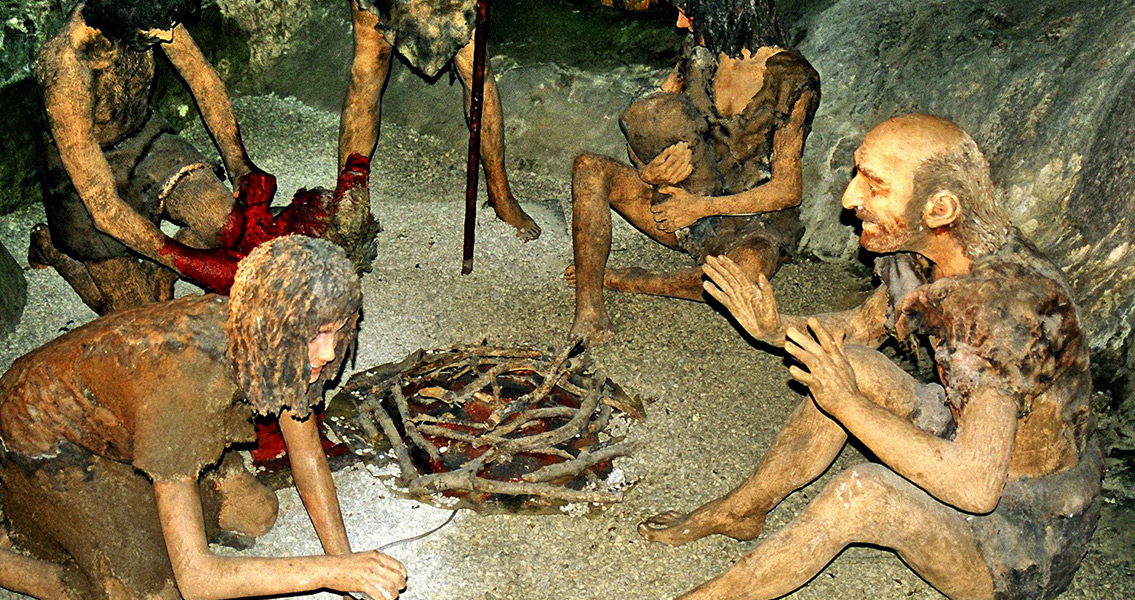
Homo hidelbergensis, the species of early hominin found in a coal mine in Schöningen, Germany, that would have been alive around 300,000 years in the past, are thought to have lived in social groups highly reminiscent of modern human cultures, according to new data gathered from the most recent forays into the mine. Other cultural traits that H. hidelbergensis seemed to possess far before their time include hunting in coordinated groups, communication concepts such as the passage of time from the past to the future, and incorporating a division of labor system as well, researchers say. Schöningen is one of the most noteworthy sites for documenting how hominins existed while the Ice Age gripped northern Europe; it’s also an indispensable resource for its highly-detailed and accessible climate change record of the Ice Age as well. The coal mine has been subjected to rigorous scientific study almost constantly since 1994. The latest research into hominin culture, which began in 2008, has been conducted by a scientific team led by Dr. Jordi Serangeli and Professor Nicholas Conard, both from the University of Tübingen, under the auspices of Lower Saxony’s Cultural Heritage Office. A wealth of discoveries have been made, such as a large collection of wooden artifacts, including spears used for hunting, many of which were found in excellent condition considering their age. Stone and bone tools were also discovered, many alongside the carcasses of Ice Age horses that were butchered for their meat. One of the most startling discoveries includes a bone hammer fashioned from the upper foreleg of a saber-toothed tiger – the first of its kind ever found. Curiously enough, the Schöningen site has not yielded any evidence that the hominins there were able to use fire in a controlled form, despite previous discoveries that seemed to indicate otherwise. The international team of scientists used advanced research methods such as thermoluminescence, Fourier-Transformation infrared spectrometry, and micromorphology in order to provide evidence for their claims. If they’re correct, it would mean that early hominins were able to survive the Ice Age in the region without having the ability to create and maintain the fires that would have been needed for warmth and cooking in a reliable manner. The entirety of the research findings, which consist of several scientific papers, have been gathered online in a special issue of the Journal of Human Evolution, which is available here Image courtesy of Thieme, 2007a ]]>

Categories
Breaking News

New Study Reveals Poison Arrow Use in African Hunters

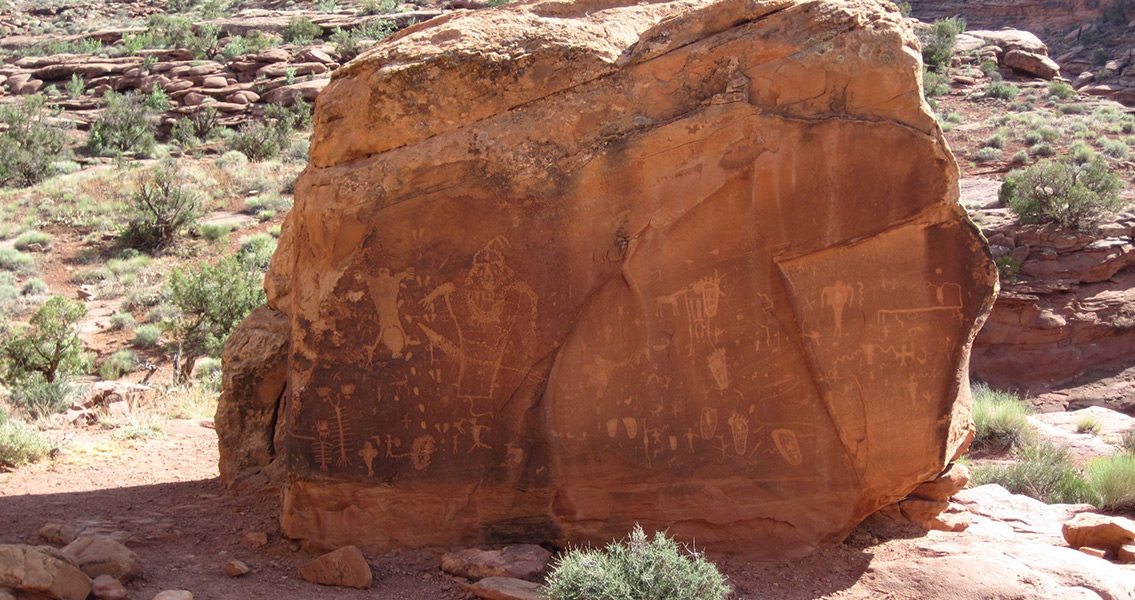
here. Image courtesy of KU News Service | University of Kansas]]>

Categories
News

The Meeting that Made the Confederate States of America

Categories
Breaking News

Survival of the Fittest: Neanderthals Unable to Compete

here. ]]>

Categories
Breaking News

Predictive Modeling Unearths 12,000 Year Old Stone Tools

Categories
Breaking News

Early Humans Had a Taste for Tortoises

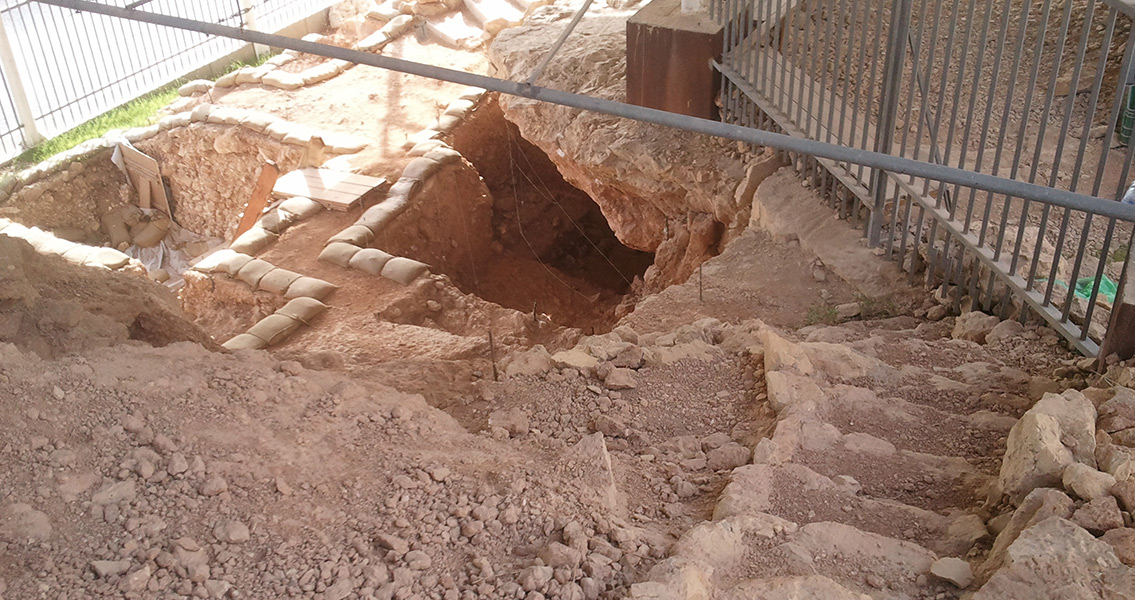
Quaternary Science Reviews. The discovery, made at the Qesem Cave near Tel Aviv, Israel, has the potential to dramatically change our assumptions about the diet of Lower Paleolithic early humans. Turtles and tortoises are rarely consumed today, with many species of the animals endangered as a result of extensive hunting by humans, and their low breeding rates which make it hard for their populations to recover following the loss of males at breeding age. Nevertheless, the meat is still consumed in some parts of the world, particularly in the countries of South East Asia, where turtle soup is regarded as a delicacy. Qesem Cave is located 12km east of Tel Aviv, in a region of hilly limestone terrain roughly 90 m above sea level. A major part of the cave’s stratigraphic sequence was revealed in the year 2000, after road construction works destroyed the cave’s ceiling. It is believed that human occupation of the cave began sometime before 382,000 years ago, and continued until around 200,000 years ago. Researchers from Tel Aviv University, in collaboration with scholars from universities in Germany and Spain, have discovered evidence of tortoise remains at the site, suggesting early humans took to eating tortoises alongside the large game and vegetable material considered to have made up most of their diet. Led by Dr. Ruth Blasco of the Centro Nacional de Investigacion Sobre la Evolucion Humana (CENIEH), Spain, and Tel Aviv University’s Institute of Archaeology, together with Prof. Ran Barkai and Prof. Avi Gopher of TAU’s Department of Archaeology and Ancient Near Eastern Civilizations; the study provides insights into the surprisingly broad diet of early humans, and their mastery of the tools necessary to prepare tortoise. “Until now, it was believed that Paleolithic humans hunted and ate mostly large game and vegetal material”, said Prof. Barkai in a press release. “Our discovery adds a really rich human dimension — a culinary and therefore cultural depth to what we already know about these people.” The tortoise specimens are particularly interesting as they open a window onto the surprisingly modern methods these Paleolithic humans used to prepare their food. “According to the marks (on the specimens), most of the turtles were roasted in the shell,” Prof. Barkai explained. “In other cases, their shells were broken and then butchered using flint tools. The humans clearly used fire to roast the turtles. Of course they were focused on larger game, but they also used supplementary sources of food — tortoises — which were in the vicinity.” Significantly, the tortoises were found at different levels throughout the cave, suggesting that they had been a part of the inhabitants’ diet for the entirety of the 200,000 or so years the cave was inhabited. How early human diets developed is an issue currently under reexamination. Until recently, it was believed that they had a diet made up mostly of large game such as deer, horse and cattle: fatty meats which gave these early hunter-gatherers the calories they needed to survive. The diversification into a diet which included vegetables and smaller animals was believed to have been a development in later Homo sapiens, but the evidence found at Qesem cave suggests that the early human diet was in fact much more diverse than previously thought. “We know by the dental evidence we discovered earlier that the Qesem inhabitants ate vegetal food,” said Prof. Barkai. “Now we can say they also ate tortoises, which were collected, butchered and roasted, even though they don’t provide as many calories as fallow deer, for example.” Why these early humans elected to eat tortoises, an animal which offers significantly fewer calories, remains a mystery, but the team have some theories, as Dr Blasco explained in the press release. “In some cases in history, we know that slow-moving animals like tortoises were used as a ‘preserved’ or ‘canned’ food. Maybe the inhabitants of Qesem were simply maximizing their local resources. In any case, this discovery adds an important new dimension to the knowhow, capabilities and perhaps taste preferences of these people.” For more information: www.sciencedirect.com Image courtesy of Wikimedia Commons user: 66AVI]]>

Categories
Breaking News

Secrets of Ancient Japanese Burial Mound Revealed

Asahi Shimbun with Taichiro Shiraishi, Osaka Prefecture’s head of the Chikatsu Asuka Museum, the likelihood seems high that, during the burial, people would have stood on both sides of the bridge as the body, encased in a temporary casket, was laid to rest. Shiraishi pointed to the evidence, consisting of five newly-discovered bore holes that would have been ideal for the piers of a bridge; these holes, which were discovered during excavation efforts in the autumn of 2015, are in addition to the 26 bore holes ringing the burial mound discovered in a 2013 dig. An additional four holes were found progressing across the moat in 2013 as well. Archaeologists studying the placement of all the discovered bore holes have determined that the bridge, when it was in existence, was no less than 45 meters long, 12 meters wide, and anywhere from 5 meters to 5.6 meters tall as measured from the moat bed. City government officials and experts say that the bridge was intended to be temporary, as the evidence shows the walkway was either removed shortly after the burial mound was completed or during the final days of its construction. Shiraishi said that similar structures were likely used to transport high-profile individuals to their final resting place in other burial mounds throughout Japan as well. He expressed the hopes that other researchers will investigate tombs of similar size in the future to see if evidence of the construction of temporary walkways like the one discovered at Nisanzai Kofun can be gathered elsewhere. Other walkways found to have been used that date from the Kofun period are far and away much smaller than the Nisanzai bridge. In Ishikawa Prefecture, at Komatsu’s Sendai-Nomi ruins, the bridge used is understood to have been just over 16 meters long and less than 3 meters wide. The two largest Kofun mounds in Japan, the tombs for Emperor Ojin and Emperor Nintoku, have yet to be investigated for any evidence of these ceremonial bridges. Image courtesy of Wikimedia Commons user Saigen Jiro]]>

Categories
Breaking News

Nazi Adolf Eichmann’s Letter Pleads Innocence

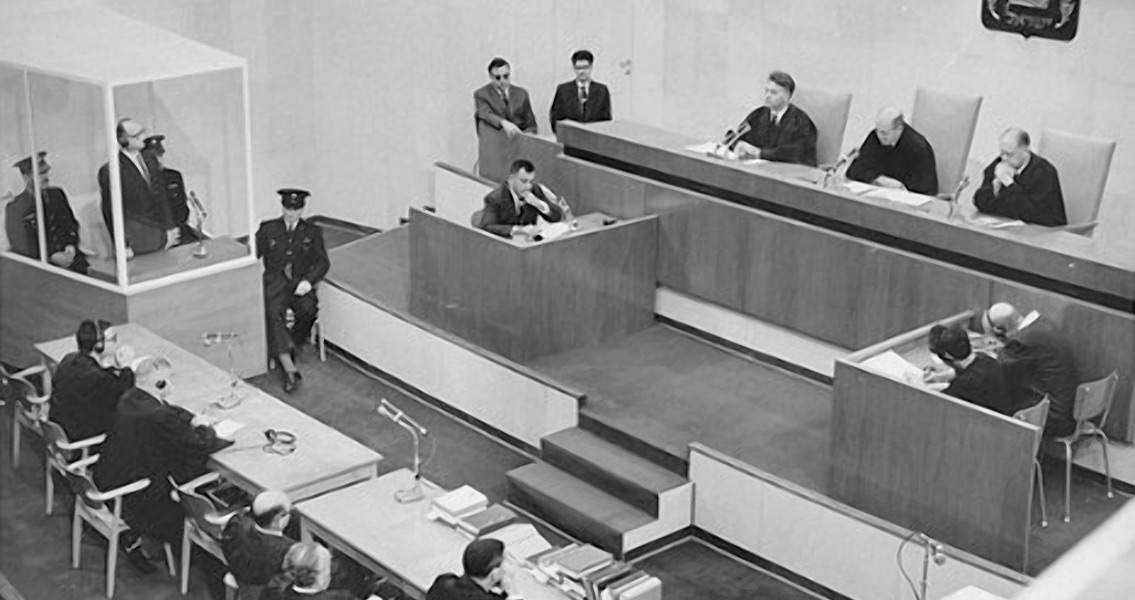
trial in Israel. After leaving school, Eichmann briefly worked in the mining company owned by his father in Austria, where the family had lived since leaving Germany in 1914. Starting in 1927 he sold oil as a travelling salesman. He joined the Nazi Party in 1932, and the Security Service (Sicherheitsdienst) after returning to Germany in 1933. He was appointed to lead the department that was responsible for all Jewish affairs, namely emigration, which was often encouraged by the Nazis using economic pressure and violence. After the start of WWII (September, 1939) Eichmann, along with his staff, planned and organized the moving of Jews into the ghetto areas within major cities, expecting to transport them either farther east or overseas. Eichmann prepared plans for two Jewish reservations, in Poland and Madagascar, which were never carried out. International Holocaust Remembrance Day (January, 27th) was declared an international day of remembrance by the United Nations General Assembly on November, 1, 2005, to commemorate the genocide by the Nazi’s which resulted in the death of over 6 million Jewish people, 250,000 physically and mentally disabled people, 2 million Romani people, and 9,000 homosexual males.]]>

Categories
Breaking News

Researchers Find Error in African Genome Study

Science, revolves around the 4,500 year old remains of an Ethiopian man found in Mota Cave who supposedly bore genetic markers of Eurasian descent. The scientists had thought this discovery lent additional credence to the hypothesis, put forward in a 2013 study, that a “reverse migration” back to Africa occurred approximately 3,000 years in the past. While the general hypothesis has not been disproved, evidence of it was recorded incorrectly in the Mota Cave remains due to a computer error. The error, as explained by University of Cambridge geneticist and study co-leader Andrea Manica, was a result of software incompatibility between two programs used to reference human genetic material. Portions of the Ethiopian man’s genetics that he shared with Europeans were left out of the analysis, which made him seem to be more distantly related to Europeans than he was in actuality, while at the same time giving the impression that contemporary populations of Africans have a closer connection to Europeans through their DNA than they do. A software script designed to smooth out any errors generated by the two incompatible pieces of programming was not run, leading to the discrepancy. In the end, this led the team to surmise that the so-called “genetic backflow” into Africa was more widespread than the evidence supports. East African backflow is widely considered to have occurred, but the data error showed false evidence of the reverse migration reaching into West and Central Africa as well. In an interview with Scientific American, Harvard Medical School population geneticist Pontus Skoglund; part of the research team that checked the work of the original study, was heavy with praise for the initial paper. Remarking that “the genome itself is just fantastic”, he also applauded the willingness of the original scientists to not only share their data but to also respond to the revelation quickly in order to publish the error. Skoglund continued, remarking that the re-migration into East Africa is widely considered fact, and that the scientific community almost unilaterally agrees that Eurasian genetics did indeed flow back into East Africa, at the very least. So far, Science has yet to announce if it will be publishing the update on the research. However, Manica did comment that if her team had caught the error before it had gone into print, the scientific findings would have been different on a fundamental level. The initial article in its unaltered form, prior to discovering the error, can be found online here Image courtesy of Wikimedia Commons user Russ London]]>

Categories
News

Brutal Battle of Stalingrad Comes to an End