Categories
Breaking News

Could this 2,800 year old sculpture show us the face of a biblical king?

Credit: Gabi Laron[/caption]

A tiny representation of a momentous past

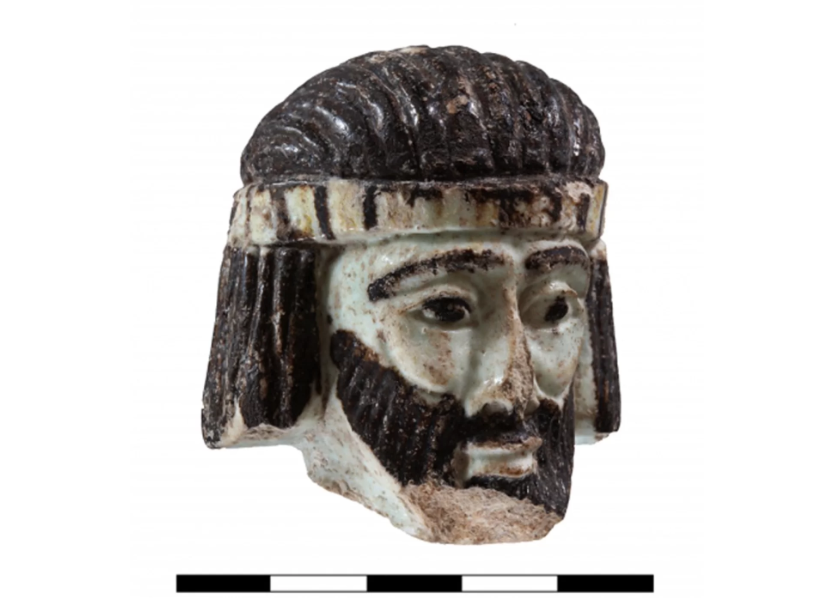
The glazed ceramic sculpture is of a man with long, black hair and a beard. He is wearing a yellow and black headband, which pulls the hair away from his dark, almond-shaped eyes. At only 5.1 cm x 5.6 cm, this tiny head is thought to have been part of a small statuette, according to archaeologists. At full size, the statuette would have been around 20 cm x 25 cm. Professor Robert Mullins from Azusa Pacific University’s Department of Biblical and Religious Studies is also co-director of excavations in the ancient city. He said: “Despite the head’s small and innocuous appearance, it provides us with a unique opportunity to gaze into the eyes of a famous person from the past — a past enshrined in the Book of Ages [the Hebrew Bible].”  

Whom does the sculpture depict?

Given that it was found inside what is thought to be an administrative building at the city’s peak, it is likely that the sculpture is of an elite person. The first assumptions have been that it was a biblical king; though Mullins and his team have yet to undertake the necessary research to prove or disprove this theory. So if it is indeed a king, whom would it have been? [caption id="attachment_8706" align="aligncenter" width="500"] Credit: Gabi Laron[/caption]  

Power struggles in Abel Beth Maacah

In the early stages of research, the team performed radiocarbon dating on the organic materials that were found in the same room as the sculpture. According to the findings, the object would have been constructed some time between 902 BC and 806 BC. The control of Abel Beth Maacah fluctuated greatly during this period. This is down to the fact that it sat at the border of 3 separate kingdoms: Israel, Tyre and Aram-Damascus. Borders were changing continually, leaving Abel Beth Maacah to be under the jurisdiction of different nations. Taking likelihood into account, Mullins thinks the sculpture could depict one of 3 possibilities: King Ahab of Israel, King Hazael of Aram-Damascus, and King Ethbaal of Tyre. However, there are many other candidates, he has said.  

Future research to confirm identity

The sculpture will be displayed at the Israel Museum in Jerusalem, while the scientists are publishing a paper on the discovery for the journal Near Eastern Archaeology. Excavations at Abel Beth Maacah are undertaken by Azusa Pacific University and the Hebrew University of Jerusalem. Joining Professor Mullins are Naama Yahalom-Mack and Nava Panitz-Cohen, both from the Hebrew University of Jerusalem. They will continue to arrange excavations of the large building into summer 2018. Archaeologists are hopeful that new information will arise to determine the identity of this miniature sculpture.]]>

Categories
Breaking News

Historian lifts the veil on cross-dressing in the English Civil War

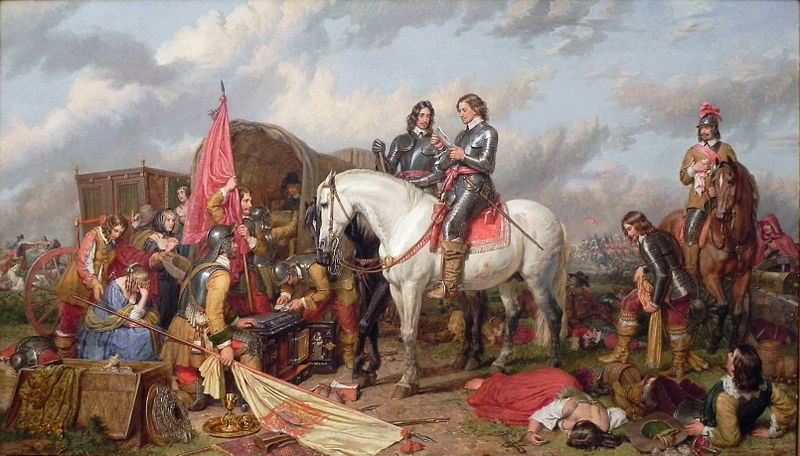
Battle of Naseby, by an unknown artist. The victory of the Parliamentarian New Model Army, under Sir Thomas Fairfax and Oliver Cromwell, over the Royalist army, commanded by Prince Rupert, at the Battle of Naseby (June 14, 1645) marked the decisive turning point in the English Civil War. Credit: Encyclopaedia Britannica Online[/caption]

Clothes maketh the man

After exploring hundreds of original manuscripts and printed works, a handful of fascinating cases were revealed. Wives, unmarried partners, would-be female soldiers and even prostitutes were present. Some women were motivated by a desire to fight; others wanted to remain close to their husbands. For example, the mistress of captured royalist Lord Henry Percy is documented to have been dressed in men’s clothing to hide her identity. To ridicule her, Oliver Cromwell got the woman to sing, so as to confirm his suspicions of the would-be man as a ‘damsel’.

A prince intervenes

One anonymous letter from 1642 describes a woman named Nan Ball, who was “taken in mans cloathes, waiting upon her beloved Lieutenant” while he served in the king’s army near York. It was later published in a pro-royalist news pamphlet, sparking an investigation. The Lieutenant was sacked, and there were suggestions that Nan Ball ought to be shamed by either public whipping or pillory. However, after an intriguing letter from the king’s son, which saw him beg for her reprieve, she was simply expelled from the camp. Exactly why her punishment was lifted is unclear; but it is possible that the initial threats were simply a warning.

“The severest punishment”

The following year, a draft proclamation set out the required standards of behaviour for the army of King Charles I. In the margin, the king hand-wrote: “lett no woman presume to counterfeit her sex by wearing mans apparall under payne of the severest punishment”. Professor Stoyle was fascinated by this statement: “These words suggest the king believed female cross-dressing was quite widespread in his army and show a willingness on his part to take a much firmer line on the practice – particularly in relation to prostitutes. Curiously though, when the proclamation was finally published it contained no reference to cross-dressing.” [caption id="attachment_8701" align="aligncenter" width="500"] Cromwell in the Battle of Naseby in 1645 by Charles Landseer. Credit: Wikimedia Commons[/caption]

Dressed to kill: female bravery during the English Civil War

A pamphlet published in 1645 details the account of a young soldier who spent a year in the parliamentary garrison of Gloucester. Eventually, she was discovered to be a woman after visiting a tailor to order a petticoat and waistcoat ‘for my sister’. The suspicious tailor raised the alert with the military authorities. In their investigation, they found that the solider had bravely disguised herself in order to first escape the royalists, and then fight against them. These pioneering women represent just one example of how female bravery was forced into disguise as they navigated a society rocked by war. Stoyle finishes: “Above all, though, the subject of female cross‐dressing during the Civil War is surely worthy of detailed study in its own right because it helps to illuminate one small corner of a much larger story: that of how ‘the crisis in English affairs’ during the 1640s made space for some bold women fleetingly to test the boundaries of patriarchy.” Read the full paper here.]]>

Categories
Breaking News

Only 15 people required to lift 12-ton hats onto Easter Island statues, research shows

Credit: Wikimedia Commons[/caption]

Early transportation technologies on Easter Island

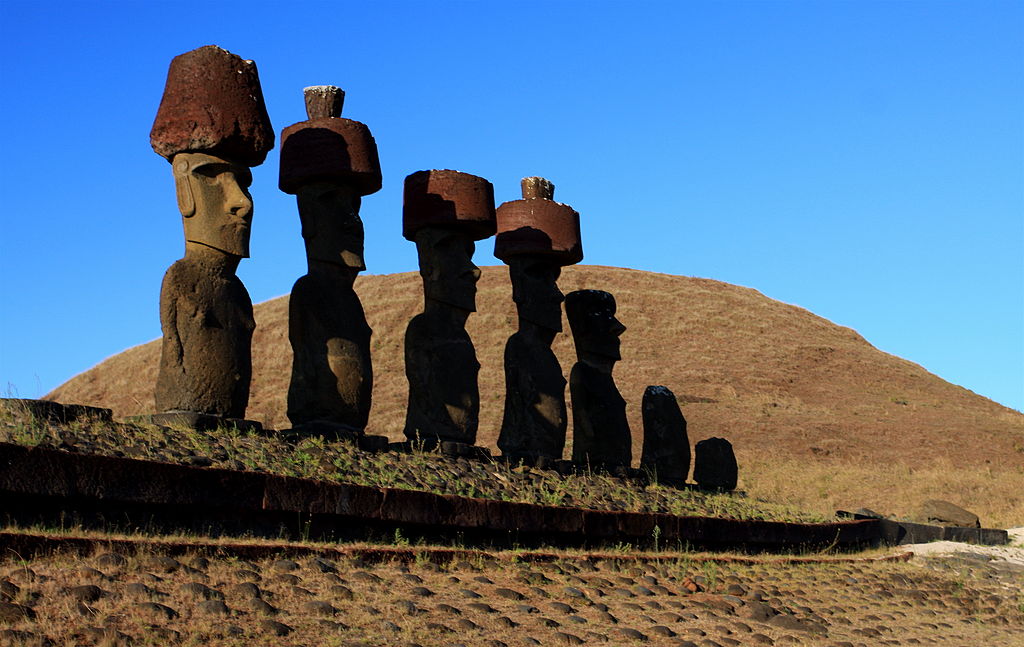
Easter Island sits in the Southern Pacific Ocean and is more than 2,000 miles from Chile in South America. It is about 15 miles long and 7.6 miles wide, with an area of roughly 63 square miles. The famous statues, the moai, were carved from volcanic tuff; while the hats were made of red scoria. Each part came from a different quarry on the island, sparking numerous studies about the technologies used by ancient peoples to transport such heavy goods across many miles. The moai statues, which can be up to 33 feet tall and weigh around 81 tons, are considered to have been moved into place along well-prepared roads using a walking or rocking motion, quite like the way we might move a refrigerator. “We’ve learned they moved the statues in a walking fashion using simple, physics-based processes, in a way that was elegant and remarkably effective,” said Carl Lipo, Professor of Anthropology at Binghamton University. As might be expected, not all of the statues made it to their final locations. Fallen and broken parts of statues show that the statues were originally carved so they leaned forward, for ease of transportation. They were then levelled off once they had reached their destination and were ready for the pukao to be lifted onto them. [caption id="attachment_8696" align="aligncenter" width="500"] Credit: Bjørn Christian Tørrissen via Wikimedia Commons[/caption]

Lifting the pukao of Easter Island: A perplexing concept

Often weighing up to 12 metric tons, pukao are huge cylinders made of red scoria. Despite having relatively few people and a limitation of resources, these heavy carvings were moved across the island. Once they had arrived at the site of the moai, however, they still had to be lifted onto the statues’ heads. It is likely that the islanders then carved the hats, as chips of red scoria are found in the platform of some of the statues. Sean Hixon, lead author of the project and graduate student at Penn State University, says: “Examples of past ideas for pukao transport include sliding the pukao up a wooden ramp or gradually building a pile of stones beneath the pukao. The challenge is to move beyond merely possible transport methods and to identify a transport scenario that is consistent with variation in the archaeological record.”  

Photogrammetry research

Lipo continues: “Our latest study now tackles the issue of the hats, or pukao. These multi-ton stone objects were carved at a separate quarry, transported across the island and somehow raised to the top of the heads of the statues.” Previous researchers have suggested that the statues and hats would have been united before being lifted into place. However, the remnants of broken or abandoned statues indicates that the hats were more likely to have been raised to the top of the already-standing statues. By photographing various pukao and generating 3D models, the research team were able to identify the most likely method of transport for these great statues. “We assumed they were all transported and placed in the same way,” said Hixon. “So we looked for features that were the same on all the hats and all the statues.”  

Parbuckling: highly effective work methods for small groups

The project showed that it is likely for the pukao to have been rolled from the quarry to the site of the moai. The Rapa Nui would have rolled them up large ramps, employing a parbuckling technique. Often used to right ships that have capsized, parbuckling is a simple and efficient technique for rolling objects. The centre of a long rope is fixed to the top of a ramp, and the two ends are wrapped around the cylinder that needs to be moved: in this case, the pukao. “In parbuckling, a line would have been wrapped around the pukao cylinder, and then people would have pulled the rope from the top of the platform,” said Lipo. “This approach minimises the effort needed to roll the statue up the ramp. Like the way in which the statues were transported, parbuckling was a simple and elegant solution that required minimum resources and effort.” As well as reducing the force required to move the hats, this technique also makes it easier to stabilise the hat on its journey up, because typically, it will not roll back down the slope. In fact, the researchers report that 15 or fewer workers could move even the largest of the Easter Island pukao.  

The ingenuity of the ancient people of Easter Island

The research shows the innovative thought processes displayed by the Rapa Nui, helping to challenge some pre-formed ideas about the people. “Easter Island is often treated as a place where prehistoric people acted irrationally, and that this behaviour led to a catastrophic ecological collapse,” said Lipo. “The archaeological evidence, however, shows us that this picture is deeply flawed and badly misrepresents what people did on the island, and how they were able to succeed on a tiny and remote place for over 500 years.” “The answer, like that of our findings with the moai, show that Rapa Nui people were remarkably ingenious and found solutions that required the fewest resources and smallest effort to achieve their goals.” “While the social systems of Rapa Nui do not look much like the way our contemporary society functions, these were quite sophisticated people who were well-tuned to the requirements of living on this island and used their resources wisely to maximize their achievements and provide long-term stability.” Lipo’s team will continue researching the Rapa Nui people and their relationship with their environment and community.]]>
Categories
Breaking News

Iceland genealogy study to cure rare diseases

Image credit: Amy Smith[/caption]

A unique genetic history

Iceland’s first settlers arrived from Norway, Britain and Ireland between 870 and 930 AD. In just over 1,000 years, its population has grown modestly to 330,000. Opportunities to directly study the founding of a human population and its subsequent evolutionary history are rare. With such a small, isolated population with some inbreeding, it is often considered a particularly interesting subject for genetic studies. CSIC researcher Carles Lalueza-Fox from the Institute of Evolutionary Biology explains: “This work takes an in-depth look at the process which makes small, isolated populations go through random changes in their genetic variability over time. Present-day Icelanders have been affected by 1,100 years of profound genetic drift. This means they are more similar to each other, yet different to modern populations of continental Europe.”

Gender bias in Iceland

deCODE Genetics, a Reykjavik biotechnology firm, contributed seven centuries’ worth of genelogical records to the study. The information confirms a gender bias in the population of Iceland. “The settlers of Celtic origin had fewer offspring compared with those of Norwegian origin. This is probably because there were more men of Scandinavian origin compared to more women – who would probably have come to the country as slaves and servants – from Scotland and the rest of Britain,” explains Lalueza-Fox. Sunna Ebeneserdóttir, a researcher from deCODE Genetics, continues: “We have always known that Icelanders descended from Norwegians and Celts, and the analysis of the ancient genomes from the first colonists allows us to see what they were like, both before mixing started, as well as throughout the whole process.” [caption id="attachment_8691" align="aligncenter" width="500"] Image credit: Amy Smith[/caption]
A medically-significant study

In providing a detailed impression of the origin of Iceland’s human population, the scientists have found a key to making advances in medical treatment. Finding ways to diagnose, treat and even prevent diseases is now within the realms of possibility. For instance, as the study includes the discovery of an ancient person with Klinefelter syndrome, there can now be deeper research into the disease. “Iceland is big enough for the diseases that affect Europeans to be represented, yet small enough to easily carry out genetic studies which lead to discovering the roots of these complex pathologies. In the not too distant future, we will be able to study the actual individuals who had a certain mutation 1,000 years ago and make a comparison with current patients,” finishes Lalueza-Fox.]]>

Categories
Breaking News

New research: How did the first people come to the Americas?

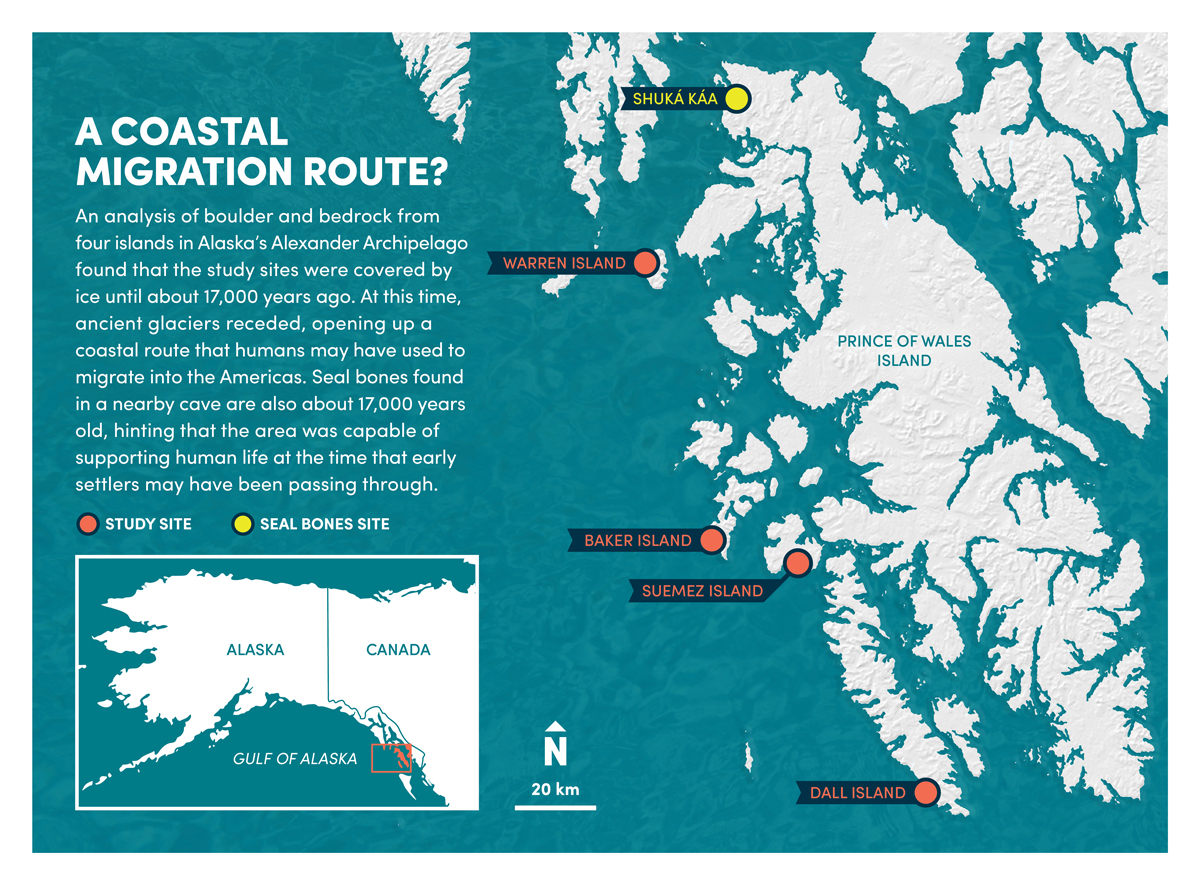
part of a coastal migration route appeared in Alaska around 17,000 years ago. At the same time, ancient glaciers began to recede, which exposed southern Alaskan islands to the potential for human migration. Supporting the hypothesis, recent genetic and archaeological findings show that settlers are likely to have begun travelling further into the Americas around 16,000 years ago; just 1,000 years after the coastal gateway became accessible. While the findings aren’t definitive proof that early settlers traversed Alaska’s southern coast, it is thought that it may spark off deeper research into the hypothesis, with further sections of the coastline being analysed in the future. [caption id="attachment_8683" align="aligncenter" width="500"] Credit: Buffalo University research team[/caption]

Updating American ancestry

Jason Briner, PhD, professor of geology in University of Buffalo’s College of Arts and Sciences, says: “Our research contributes to the debate about how humans came to the Americas. It’s potentially adding to what we know about our ancestry and how we colonized our planet.” Prior to this research, the bones of an ancient seal were discovered in a nearby cave. As part of the new study, these bones are shown to be about 17,000 years old. The presence of this ringed seal indicates that after the depletion of the glaciers, resources including food were becoming available to humans. In short, the area had the capacity to support human life at the time when settlers may have been following this route into the Americas. “Our study provides some of the first geologic evidence that a coastal migration route was available for early humans as they colonized the New World. There was a coastal route available and the appearance of this newly ice-free terrain may have spurred early humans to migrate southward,” adds UB geology PhD candidate, Alia Lesnek. “Where we looked at it, the coastal route was not only open — it opened at just the right time,” says Charlotte Lindqvist, PhD, an associate professor of biological sciences at UB and a visiting associate professor at Nanyang Technological University. “The timing coincides almost exactly with the time in human history that the migration into the Americas is thought to have occurred.” [caption id="attachment_8686" align="aligncenter" width="500"] The investigation was in challenging terrain. Photo: Jason Briner[/caption]

A possible new narrative

This evidence could further debunk the theory that humans populated North America via Canada. In order to have done this, they would have needed to walk through a path that opened up around 14,000 years ago. However, the route did not have the biological diversity to support human life until about 13,000 years ago. As humans were already living in Chile 15,000 years ago, and in Florida 14,500 years ago, there must have been another route in. This coastal migration theory could well start to fill in the blanks of what we now know about the American migration story.]]>

Categories
Breaking News

Found at last: the $17 billion ‘holy grail of shipwrecks’

Action off Cartagena, 28 May 1708. Oil by Samuel Scott.[/caption] With the help of an underwater autonomous vehicle, the Woods Hole Oceanographic Institution was able to locate and observe the shipwreck for the first time in 2015. The project has been kept secret, says Rob Munier, WHOI’s vice president for marine facilities and operations: “We’ve been holding this under wraps out of respect for the Colombian government.” New details about the discovery have recently been released with permission from the agencies involved in the search, including the Colombian government. [caption id="attachment_8677" align="aligncenter" width="500"] The wreck was partially sediment-covered, but with the camera images from the lower altitude REMUS missions, the crew was able to see new details, such as ceramics and other artefacts. REMUS image, Woods Hole Oceanographic Institution[/caption]  

Origins of the San Jose mystery

During a trip from South America to Spain, the galleon sunk on June 8th, 1708 during a battle with British ships in the War of Spanish Succession. 600 people were on board the San Jose, as well as a great collection of gold, silver and emeralds from Potosi in Peru. By modern day standards, the contents of the ship are worth about $17 billion.  

Deep water exploration

Due to its reputation in the field of deep water exploration, Massachusetts-based WHOI was invited to join the search. It brought with it an autonomous underwater vehicle, known as the REMUS 6000. The vehicle had played a pivotal role in finding the wreckage of Air France 447 in 2011, which crashed hundreds of miles off the Brazilian coast in 2009. In November 2015, REMUS 6000 took side sonar images, showing the San Jose in more than 600 metres of water. Positioned just 9 metres above the wreck, the vehicle was able to take several photos. Some showed the distinctive dolphin engravings on the San Jose’s cannons. “The wreck was partially sediment-covered, but with the camera images from the lower altitude missions, we were able to see new details in the wreckage and the resolution was good enough to make out the decorative carving on the cannons,” says expedition leader Mike Purcell. Munier describes the phone call from Purcell as a ‘great moment’: “It was a pretty strong feeling of gratification to finally find it.”  

What about the San Jose treasure?

As the San Jose holds such a significant haul of gold, silver and rare jewels, it has been the subject of legal battles between several nations. Private companies, too, have weighed in on the legal conversation. This isn’t the first time that researchers have thought they have found the ship. In 1981, US-based Sea Search Armada announced that it had located the San Jose, which sparked off a long, fraught legal battle over the treasure. In 2011, it was decided that Sea Search Armada and Colombia could split the cargo equally, after the Columbian government had recovered its cultural patrimony. However, the 2015 discovery is based on a wealth of information from many more sources and in recent weeks, UNESCO has called on Colombia not to make commercial gains from the wreck. Decisions regarding the future of this momentous discovery are set to unfold over the coming years.]]>

Categories
Breaking News

Archaeologists discover 1,000 year old Ychsma mummy in Peru

th Century. It was there that the team came across a startling discovery: a mummy from centuries before Inca settlement.

A surprise discovery

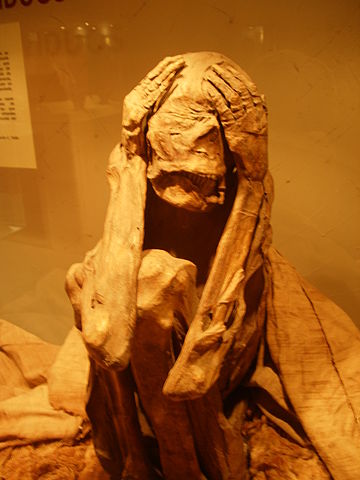
Pre-dating the Inca rule, the mummy was made by the Ychsma people, who were native in the region from the 10th Century, until they were conquered by the Incas five centuries later. In his statement on behalf of the team, Professor Peter Eeckhout said: “The deceased is still wrapped in the enormous funeral bundle that served as a coffin.” “Discoveries like this one are exceptionally scarce, and this mummy is incredibly well preserved. Samples were collected for carbon-14 dating, but the area in which it was discovered, and the type of tomb, suggest this individual was buried between 1000 and 1200.”

An untouched chamber

This was just one of thousands of mummies discovered at the site. So far, 300 have been excavated by the team working on the Ychsma Project. However, most of them had suffered from various disturbances, such as looting. Prior to the arrival of the Inca at Pachacamac the site was looted by Spanish conquistadors. Much of it was left in complete disarray, but one funeral chamber was left intact. When Professor Eeckhout’s team discovered the mummy, it was in such good condition that it could be studied without the need to unwrap it.

Pilgrimage in the Inca Empire

After the arrival of the Incas, the site underwent a period of dramatic change. It was established as a large pilgrimage centre on Peru’s Pacific coast, where the worship of certain deities contributed to an empire-wide collective identity. It is assumed that worshippers were responsible for leaving a number of other objects found at the site, including Spondylus shells, which symbolise fertility. The research team also found an Inca monument for rituals, as well as a chapel for foreign pilgrims. Inside, they found offerings such as vases, and even some animals. A 17th Century description of the site from Spanish monk Antonio de la Calancha matches up with the findings. The results of the project confirm the role of Pachacamac as a site of pre-Columbian pilgrimage under the Inca Empire: ‘Deities and their worship played a major part in the life of Pre-Colombian societies,’ says Professor Eeckhout. ‘The Inca understood this very well, and integrated it into how they wielded their power. By promoting empire-wide worship, they contributed to creating a common sense of identity among the many different peoples that made up the empire. Pachacamac is one of the most striking examples of this.’

Future plans for the Ychsma mummy

Professor Eeckhout and his team now plan to use medical imaging techniques, including x-ray scans, axial tomography and 3D reconstruction, to contextualise and explore their discovery. They will be working in collaboration with Christophe Moulherat from the Musée du Quai Branly, Paris. By working out the position of the person inside, testing whether they had any diseases and analysing any offerings that may be buried with them, the team will be able to paint a more detailed picture of life for the Ychsma people.   Title image by Thomas Quine]]>

Categories
News

Mass-anxiety in Strasbourg: what was the dancing plague of 1518?

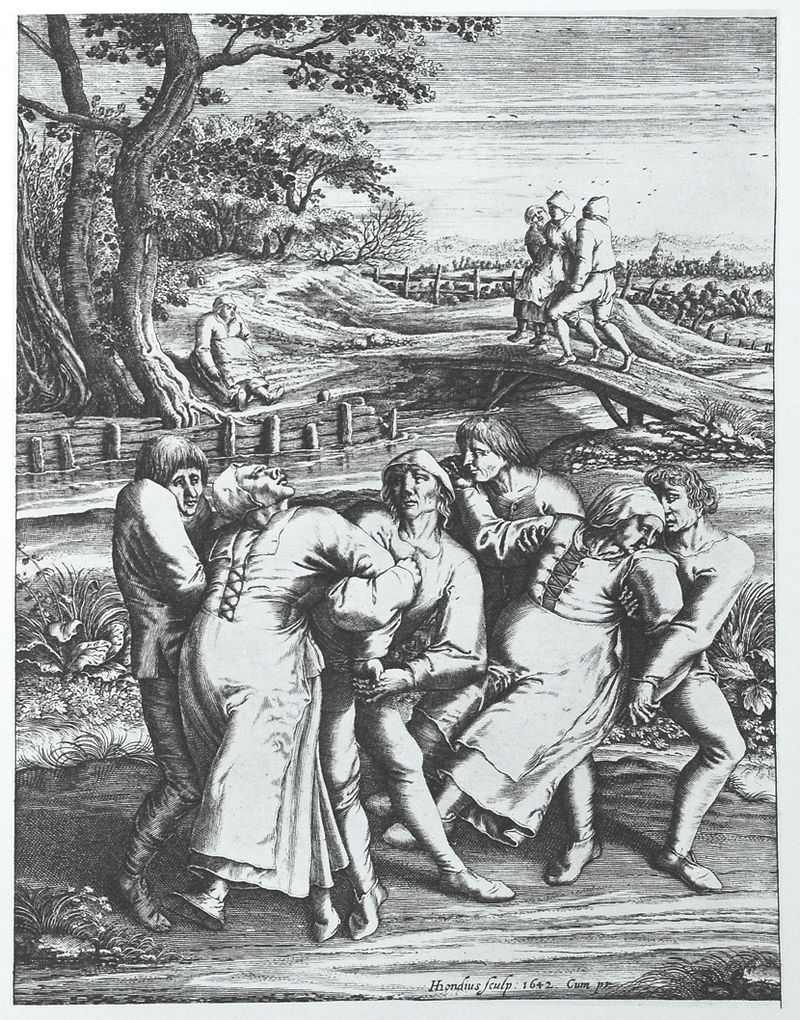
th July 1518, a townswoman named Frau Troffea began to dance in the streets of Strasbourg. For hours she swayed, gathering a small crowd of bemused onlookers. Eventually, she collapsed from exhaustion. When she came to, she recommenced her jig; this time with frenzied abandon, dancing until her feet were bruised and bloody. Rumours flew about the town. Supernatural in their beliefs, the people soon decided that she had succumbed to a dancing curse bequeathed by St. Vitus. To calm divine rage, they carted her off to a shrine in the Vosges Mountains. But Frau Troffea was not alone in this curse. As the days turned into weeks, between 200 and 400 people fell victim to St. Vitus’ Dance. An outbreak of frantic delirium had the city of Strasbourg in its grip. What caused it? What cured it? And what relevance does it have today? As the dancing plague, or choreomania, was a psychological affliction, we must first understand the psychology of the townsfolk. Like much of medieval Europe, Strasbourg was steeped in supernaturalism. Their Christianity functioned on a foundation of saint-worship, and the clergy was responsible for the immortal path of every individual. The local reputation of the Strasbourg clergy had been declining for decades. Repeated accounts of moral indiscretions (the usual: sex, alcohol and excess) were further substantiated when, during times of famine, the Church was unwilling to provide aid to starving townsfolk. In private, ale-fuelled discussions questioned the opulence of the Church, and bitterly remarked on the contrast with Christ, for all his sublime poverty. Famines continued during the years leading up to 1518. The chilling uncertainty of a world in which disease could suddenly sweep away family and friends left people with a constant, bubbling anguish. With death constantly looming, it was essential for one’s soul to be in the hands of a responsible clergy. For the superstitious and anxious residents of Strasbourg, the afterlife was an increasingly alarming concept.   The cult of St. Vitus Psychologically, there’s an argument to say that the victims were expecting demons to commandeer their souls. Legends of dancing plagues, culturally connected to St. Vitus, had passed down generations. Day to day, insults like “God give you St. Vitus” were thrown about, weaving the cult of St. Vitus into common parlance. Perpetuating their worry, the people of Strasbourg believed their own baptisms to be phony, as their priests associated with prostitutes. This pessimism mixed with mysticism to make the people paranoid of the touch of a raging St. Vitus. [caption id="attachment_8660" align="aligncenter" width="640"] Modern Strasbourg. Photo by R Roletschek.[/caption] Finding a cure The city’s council was tasked with finding a cure for the curse. Frau Troffea may have been taken off into the mountains, but the remaining afflicted were subject to panicked ideas of treatment. At first, it was thought that the plague came from ‘hot blood,’ and as such, only continued dancing could sweat it out. The council erected a stage, hired musicians and dancers and made sure that the afflicted continued to dance at a fast pace. Matters worsened. Many of those hired fell subject to the curse, as did petrified onlookers. Within a few days, the council’s theory of forcing the dance to extinguish ‘hot blood’ had been discredited. For the dancers, medical attentions were irrelevant. They needed the mercy of St. Vitus and support from a neglectful Church. Luckily, the flattering attentions of priests were about to be bestowed upon them. They were given sacred red shoes and started a pilgrimage to Saverne. It involved a gruelling climb to a remote monastery, which was thick with incense and candle smoke. This extravagant ritual awoke something in their deep-rooted piety. Between holy relics and religious imagery, they had reason to believe the curse would be raised. and the curse was lifted.   Why did the pilgrimage lift the curse? Dr. John Waller, author of A Time To Dance, A Time To Die, hypothesises that ‘the large number of people who recovered through the power of religious suggestion reveals that even when self-awareness is impaired, our minds can still receive, process and respond to appropriate external stimuli.’ These were a people calling out for attention from the Church. They’d been neglected for years, but in the recent weeks, civic and religious leaders had changed their attitudes toward their flock. Just as neglect has immense psychological potential, so too does religious attention.   Cultural conventions and pathological anxiety In the decades that followed, Martin Luther’s attractively egalitarian ideals diverted the Christian psyche away from supernaturalism. Outbreaks of choreomania disappeared; but the phenomenon provides a fundamental commentary on group psychosis. Biologically speaking, 500 years is not a long time. When under pressure, the human brain still causes relatively expected behaviour. A person may appear to have lost control completely, but they still reflect some kind of cultural prescription. Whether supernatural or not, cultural conventions play a key role in the expression of pathological anxiety. Set in the context of a people who feared St. Vitus, the dancing plague of Strasbourg offers us a fascinating insight into the ways pathological anxiety can play out.]]>

Categories
Breaking News

Who do you think you are?

The DNA test uses some of the most advanced autosomal testing technology. Science combines with the store of information now available on line to map ethnicity going back through multiple generations. This is all achieved through a simple saliva test. The test looks at a person’s entire genome and covers both the maternal and paternal sides of the family tree. However, some pundits maintain that ethnic testing is not reliable. The methods used for ancestral DNA testing are not the same as DNA testing for other purposes. The autosomal testing base is considered to be one the less reliable forms of DNA testing. Further, the results are partly based on responses from a pool of other people who have had similar testing, what are described as a reference population. So the results could come across as a little skewed. Arguably until many more people have put themselves forward for ethnicity testing, there will remain naturally limiting factors. Some ethnicities are easier to identify than others, for example, Jewish results seem to be highly accurate. But if you look at the evolution of the European landmass, war followed by shifting borders followed by more war and so on, most Europeans are actually an ethnic mix. In the same way, the inhabitants of the British Isles are a mix of invaders and the resident population who were themselves probably also invaders at an earlier point in time. Living ancestry is becoming a real thing and there are people who create heritage tours. These are based on documented evidence of past family members and genetic testing. The idea is to make it possible for you to stand on the same soil as your ancestors. But ethnicity testing has a long way to go if it is going to catch up and compete with hard historical evidence when it comes to clear and factual accuracy.    ]]>

Categories
Breaking News

A totally new perspective on being an egghead

st century, the phrase ‘egghead’ remains in use and is the name of a popular television quiz show still supporting the concept that a big egg-shaped head holds a large and intelligent brain. As medical science developed, phrenology was largely discredited in the late nineteenth century but it experienced something of a revival amongst criminologists in the twentieth century. Phrenology sits within the field of Anthropological Criminology which supports the theory that the crime is somehow linked to the physical characteristics of the perpetrator.   The idea behind Phrenology was that different parts of the brain were attributed with distinct mental abilities or capacity. As the brain developed, so did the shape of the skull. A particular shape to the skull would therefore indicate either an over or under development of a certain part of the brain. An over development was viewed as a lump or bump and an under development as a dip or depression.  This is something akin to the line that the Collauga were working along. Phrenology always had its critics and dissenters even when there was little alternative knowledge offered by way of medical science. Phrenologists spent much time in the dissection room, analysing the brains of convicted criminals in relation to the shape of their skulls. Discredited now, it is easy to look back with all the advances in medical science and think of it as nonsense but at the time, with little to counter it, Phrenology held sway amongst a hardened group of believers.]]>