Categories
Editorial

The Irish Fright of 1688: racism, rumours and the reign of fake news

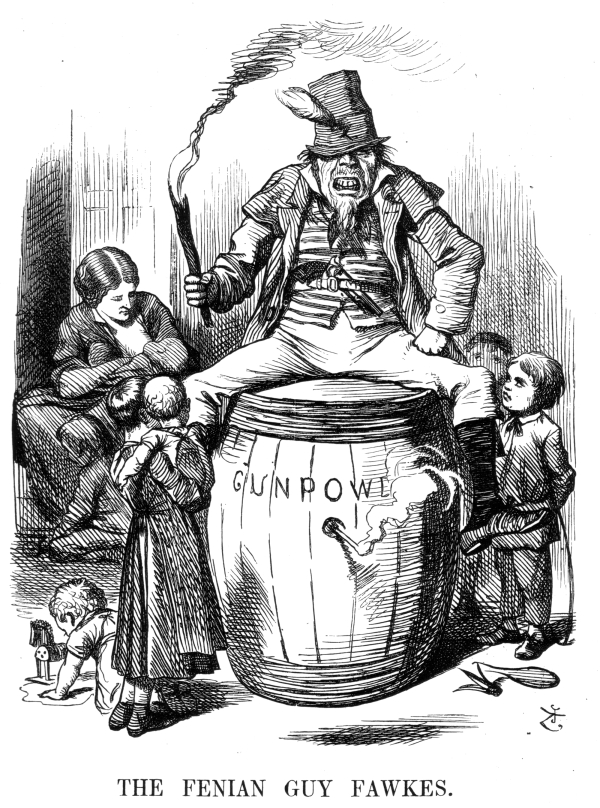
here). Often, outbreaks occur in small, tight-knit groups, due to the intensity of collective thinking. But if common thought is scaled up, hysteria can still occur. The Irish Fright of 1688 is a solemn reminder that when a prejudiced ideal is held by an entire country, fear can hypnotise the human mind into insanity. All it needs is a catalyst: political instability. [caption id="attachment_8768" align="aligncenter" width="600"] Anti-Irish propaganda continued for centuries: this cartoon is from ”Punch” magazine, published in December 1867. Credit: Wikimedia Commons[/caption]

The 17th Century Englishman’s understanding of the Irish

The trope of the ‘wild Irishman’ had been a firm narrative of the British Empire for centuries. Negative stereotypes appear as far back as 1190, with the Norman chronicler Giraldus Cambrensis justifying the Norman invasion of Ireland. He penned Topographia Hibernica, or Topography of Ireland, which played a lasting role in shaping English colonial attitudes towards the Irish. More than just poor and uncultured, the Irish were painted as unholy. In The Anglo-Irish Experience, 1680-1730: Religion, Identity and Patriotism, historian DW Hayton says: “the native Irish were called ‘a brutal race that Israel’s God ne’er knew’”. Conditioned by a racist misconception of the Irishman, the English people had a well-established fear. With political instability nibbling at their heels, they were primed for acts of mob mentality.

Political instability rocks England

When King James II took the throne after the death of the ‘Merry Monarch’ Charles II, his policies of religious tolerance were met with opposition from the political powers. Troubled by the new King’s Catholicism and his close ties with France, they were increasingly outspoken about the king’s unsuitability for the throne. Prior to the birth of James II’s son on 10th June 1688, the heir presumptive had been his 26-year-old daughter Mary, a Protestant married to William of Orange.  This change in the line of succession meant that the establishment of a Roman Catholic dynasty seemed ever more likely. In private, Tories and Whigs worked together to bring William of Orange to England to perhaps quell any danger of rising Catholic influence.

Irish soldiers come to Portsmouth

On his ascension to the throne, James had inherited an army in Ireland. It was made up of 8,238 men; majority Protestant. Over the next three years, the army would welcome some Catholic soldiers and grow to have almost 9,000 men. Due to the looming threat of an expected invasion by William of Orange, the English Army needed support from Irish troops. When 2,820 men were sent to Portsmouth in September 1688, the townspeople were suspicious. Fear began to spread. A few weeks after the Irish soldiers arrived, a newspaper reported that people were making “great complaints of the rude Irish who have caused many families to leave that place, having committed many robberies.” Rather than robberies, the true fear of the local people was that Irish or Catholic forces were in a fine position to launch an anti-Protestant uprising. In fact, just a few years earlier, the House of Lords had announced that there was a “horrid and treasonable Plot and Conspiracy, contrived and carried on by those of the Popish Religion in [Ireland], for massacring the English, and subverting the Protestant Religion, and the ancient established Government of that Kingdom.” As the Glorious Revolution to overthrow James II took hold, the Irish troops were ordered to go north to fight in the Battle of Reading on 9th December 1688. After a sorry defeat, some Irish troops were sent back to Portsmouth; some to Uxbridge, just west of London.

The Irish Fright grips England

One account from 1746 quotes Bishop Gilbert Burnet: “Country Fellows, arriving about Midnight at Westminster caused a sudden Uproar by Reporting that the Irish, in desperate Rage, were advancing to London, and putting all before them to Fire and Sword.” Other news writers passed similar comment, immediately igniting enough panic for 100,000 men to mobilise. Contemporary accounts tell us that men were discharging firearms and beating drums rapidly. Women were able to contribute more significantly to the din by beating pots and pans. False reports flew about the country. Allegedly, Uxbridge had been ransacked by the Irish. The House of Lords even had an emergency meeting at 3am in Whitehall to dissect the situation. Rather than subsiding due to lack of evidence, the Irish Fright snowballed. The following day, hysterical reports that the Irish were attacking Kent and Norfolk caused people to mobilise. People living in Kingston-upon-Thames started to cut down trees to barricade themselves against the ‘wild Irishman’. Madness swept northwards. By 15th December, Yorkshire succumbed to the Fright; believing that both the Lancastrians and the Irish were coming to burn their towns to the ground. Three days later, the Fright reached remote parts of England and Wales. On 18th December, a local mob shot and killed a supposed Irishman. As it turned out, he was an exciseman; someone they might have been happy to see the back of anyway. Significantly, the reports feeding from one town to the next talked about “8 or 9,000 Bloody Irish,” despite only 2,820 men having been stationed in Portsmouth originally. Hayton comments: “This panic was the climax to a decade of Whig propaganda, seeking to terrify the English public with the traditional nightmare of bloodthirsty Irish papists. That the programme worked so well proved the persistence in England of the popular reputation of the Irishman as a cruel savage, though it did require a political crisis to realise its full potential.”

The fallout of the Fright

Contemporary accounts tell us that at least 19 counties were swept up into the Irish Fright. All displayed a similar narrative: an onslaught of bloodthirsty Irishmen were said to have massacred the inhabitants of towns only around a day’s journey away. The panic burned brightly for a day or two before subsiding. Although the exciseman was the only casualty, innocent Catholics were targeted. A diarist noted: “[Protestant mobs] made most miserable of all the papists’ [Catholics’] houses they came near; for, under pretence of seeking for arms, they did many thousands of pounds worth of hurt, cutting down rich hangings, breaking through walls, pulling in pieces of excellent ceilings … then they secured all the papists they could get, intending to carry them all away to prison.” [caption id="attachment_8769" align="aligncenter" width="600"] Anti-Irish propaganda from ”Punch” magazine, published in May 1882. Credit: Wikimedia Commons[/caption] For all of its insanity, the Irish Fright was not a standalone, freak occurrence. Historians agree that it bore a striking resemblance to the French Great Fear of 1789, which followed the fall of the Bastille. In both uprisings, false rumours of massacres caused men and women to take up arms. Concerns about a collapsing regime, coupled with the cold realisation that no central authority could protect the people, resulted in a volatile civilian situation. With its echoes throughout history pointing towards a continuing relevance, the Irish Fright is a startling reminder of the power of a racist narrative in times of political instability.]]>
Categories
Breaking News

Sweden has been brewing beer since the Iron Age

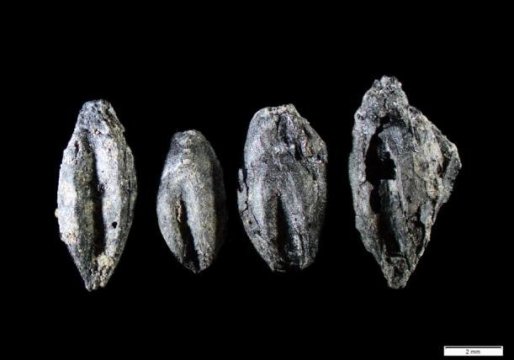
Carbonized germinated grains found at Uppåkra, Sweden.
Credit: Mikael Larsson[/caption] “We found carbonised malt in an area with low-temperature ovens located in a separate part of the settlement. The findings are from the 400-600s, making them one of the earliest evidence of beer brewing in Sweden,” says Mikael Larsson, a specialist in archaeobotany, the archaeology of human-plant interactions.

Beer: a hazy history

The brewing, consumption and distribution of beer was an important aspect of many ancient societies across the world. By way of example, beer was produced in Mesopotamia as far back as 4000 BCE. There have been suggestions that Mesopotamians could have been drinking beer in 10,000 BCE, but there is little evidence to back this up. We do know, though, that beer was drunk in Northern China 9,000 years ago. [caption id="attachment_8765" align="aligncenter" width="640"] Beer has played an important role in society for at least 10,000 years. Credit: Pixabay[/caption] But for the Nordic countries, evidence of early beer consumption is scarce, as there are no written sources from before the Middle Ages in this region. Knowledge of beer production has been, so far, dependent on botanical evidence. Existing findings are limited, though early traces of malt for beer brewing have been discovered in two other places in the Nordics. One is in Denmark from 100 CE and one is in Eketorp on Öland from around 500 CE. “We often find cereal grains on archaeological sites, but very rarely from contexts that testify as to how they were processed. These germinated grains found around a low-temperature oven indicate that they were used to become malt for brewing beer,” says Larsson.

A centre of political & religious power

Uppåkra, where the grains were discovered, is the largest known Iron Age settlement in southern Scandinavia. It served as a densely populated political and religious centre of power for more than 1000 years, from the 100s BCE to the 1 000s CE. Many imported and luxury items have been discovered at Uppåkra. Jewellery and glass bowls found on the sites indicate that the location was a rich, bustling trading centre – one that would likely play host to Scandinavia’s oldest brewery.

Scandinavia’s oldest brewery

Making beer is a two-stage process. Before the actual brewing, the malting process must be executed. Grains are soaked in water, which will allow the grain to germinate. While that’s happening, enzymatic activities convert both proteins and starches of the train into fermentable sugars. When enough sugar has been formed, the germinated grain is dried in an oven with hot air. It was this oven that was discovered and studied in Uppåkra, Sweden. Larsson explains: “Because the investigated oven and carbonised grain was situated in an area on the site with several similar ovens, but absent of remains to indicate a living quarter, it is likely that large-scale production of malt was allocated to a specific area on the settlement, intended for feasting and/or trading.”]]>

Categories
Breaking News

‘King Arthur’ inscriptions prove multiculturalism of 7th Century Cornwall

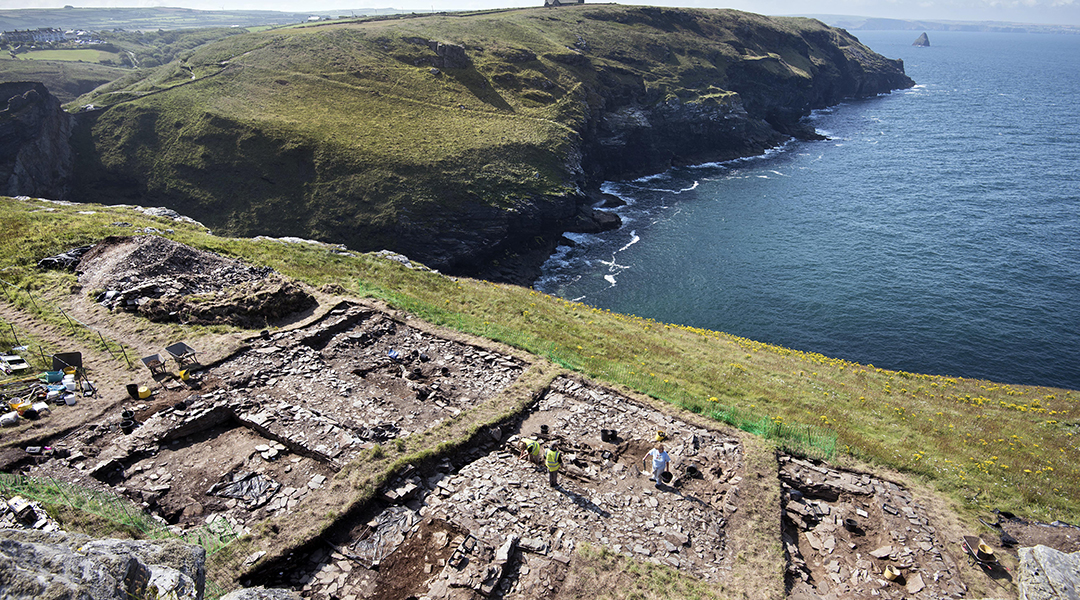
A court on the coast? The craggy Cornish coastline might not seem like an obvious choice for the location of a royal court. Nonetheless, English Heritage, which manages Tintagel Castle, says the find “lends further weight to the theory that Tintagel was a royal site with a literate Christian culture, and a network of connections stretching from Atlantic Europe to the eastern Mediterranean.” [caption id="attachment_8761" align="aligncenter" width="500"] Ancient writing inscribed in slate was discovered during an ambitious excavation at Tintagel Castle last summer. English Heritage has revealed the find ahead of it going on display at the Cornish castle. Credit: English Heritage / Emily Whitfield-Wicks[/caption]

Multiculturalism inspires early literacy

Measuring two feet long, the slate windowsill displays Latin and Greek inscriptions alongside Christian symbols. Roman and Celtic names ‘Tito’ and ‘Budic’ are legible, hinting at a thriving multicultural community in this part of Cornwall. The Latin words ‘fili’ (son) and ‘viri duo’ (two men) are also written. [caption id="attachment_8760" align="aligncenter" width="500"] Specialist digital imaging was created by Dr Tom Goskar to show the detail of the inscription. English Heritage has worked with a panel of experts to decipher the cryptic message from the past. Credit: English Heritage /Tom Goskar[/caption] It is believed that the scribe was practicing their handwriting while gazing out to sea. The decorative script can be likened to the illuminated Gospel manuscripts of the age, meaning that whoever wrote this would have been familiar with those texts. English Heritage Curator Win Scutt comments: “It’s incredible to think that 1300 years ago, on this dramatic Cornish cliff-top, someone was practising their writing, using Latin phrases and Christian symbols. We can’t know for sure who made these marks or why, but what we can say is that 7th Century Tintagel had professional scribes who were familiar with the techniques of writing manuscripts –– and that in itself is very exciting.” Writing from the early Middle Ages is rarely legible, but these words and symbols are clear enough to indicate that the person was familiar with both informal and formal scripts. Scutt continues: “Our ongoing research has already revealed the extent of Tintagel’s buildings and the richness of the lifestyle enjoyed here. This latest find goes one step further to show that we have a literate, Christian community, with strong connections from Atlantic Europe to the Mediterranean. Writing was a privileged pursuit, undertaken by specialist scribes attached to the Church or wealthy households. The discovery of this stone supports the idea that Tintagel was an important, thriving trade port, and a high-status settlement which could have been the seat of Cornish kings.” University of London’s Michelle Brown will decipher the inscription with the assistance of textual expert Oliver Padel. She considers the style of the writing to be as significant as the chosen words: “The survival of writing from this period is rare and this is a very important find, especially in terms of the continuity of a literate Christian tradition in post-Roman Cornwall. The lettering style and language used, as well as Christian symbols exhibiting Mediterranean influence and contacts, all reveal precious clues to the culture of those who lived at Tintagel in the 7th century.”

Deep research planned

The windowsill is not the first example of medieval writing to be unearthed at Tintagel Castle. In 1998, research revealed a stone inscribed with several words, including the Celtic name ‘Artognou’. Like the Artognou stone before it, this new windowsill is scheduled to undergo deep analysis. High resolution scanning is planned, which is likely to reveal just how the marks were engraved.

“We can’t ignore legends”

The legend of King Arthur was first brought to attention in the 12th Century by Geoffrey of Monmouth’s The History of the Kings of Britain. The debate over King Arthur’s existence continues; though Scutt considers the legend itself to have profound importance. “We can’t ignore legends,” he says. “This castle was built by Richard, Earl of Cornwall purely because of the Arthurian legend. There was no other reason for the castle to be here. These excavations will enable us to learn more about the older site, and we hope in turn they will encourage people to visit it.” For now, the stone will go on display at Tintagel Castle in Cornwall, UK.]]>

Categories
Editorial

“The strangest leader west of North Korea”: the personality cult of Turkmenbashi

Turkmenbashi rises to power Turkmenistan had operated under Russian control for more than a quarter of a century when it became part of the Soviet Union in 1924; so when Communism fell, the country found itself independent for the first time in 100 years. When it came to appointing a new leader, Saparmurat Niyazov was the obvious choice. Having operated as the Communist Party’s puppet governor since 1985, he was already considered by many to be the country’s ruler. Still, an election took place. On 21st June 1992, the Turkmenistani presidential election saw Niyazov chosen as the country’s first elected president. He was the sole candidate.

A post-Soviet cultural vacuum

One of his first acts was to declare himself Türkmenbaşy, or Turkmenbashi. Shortly afterwards, a plebiscite extended his term to 2002. Allegedly, it was to enable him to oversee a decade-long development plan. The proposal achieved a 99.9% approval rate in the vote. However, before the term was complete, Parliament declared him ‘President for Life’. It was no coincidence that parliamentary elections had been held just a few weeks earlier, in which the president had chosen all the candidates.

Extreme mismanagement of the economy

The gas-rich state allowed Turkmenbashi to indulge himself at the expense of a downtrodden population. His National Democratic Party managed the economy disastrously; meaning that 35% of the population lived below the poverty line. The average income, in fact, was less than £30 a month. Housing and fuel were cheap; but healthcare and education were sparse. This didn’t stop him from commissioning Central Asia’s largest mosque, the Spirit of Turkmenbashi, at a reported cost of £60m. On top of the hardships of widespread poverty, the ubiquitous image of the leader became inescapable. And yet, criticising the money lavished on this and other presidential projects – such as eccentric horse race tracks – would be committing the offence of ‘parricide’. In the national criminal code, this was defined as ‘questioning the policy of the president’.

Bizarre policies

Daily life in Turkmenistan became increasingly eccentric. He declared July 10th a public holiday to honour melons. April 27th was Horse Day. As time went on, allegedly drug-fuelled paranoia came to define the President-for-Life’s policies. The arts fell victim to Turkmenbashi’s whims: ballet, circuses and opera were all banned.

An ego goes berserk

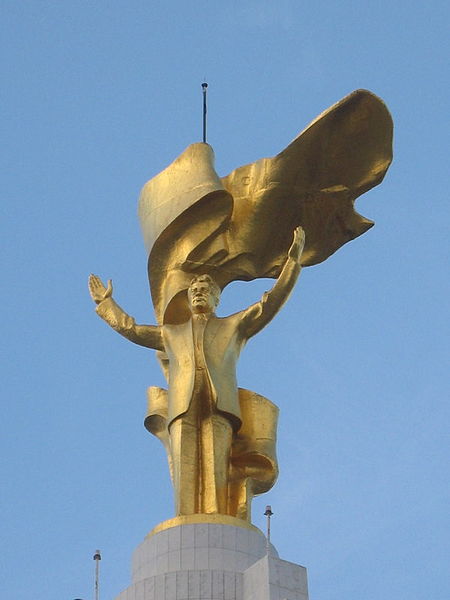
Many of Turkmenistan’s new laws reflected an uncontrollable ego. When he gave up smoking in 1997, so too did his populace (in public places, at least). Doctors took an oath not to Hippocrates, but to Turkmenbashi. The month of January was renamed Turkmenbashi; and a 250 ft gold statue of Turkmenbashi constantly rotated to face the sun. Streets, cities schools, and even the airport were all renamed Turkmenbashi, making the country increasingly difficult to navigate. When a meteorite landed in Turkmenistan in 1998, its given name surprised no one. [caption id="attachment_8752" align="aligncenter" width="450"] Credit: Martijn Munneke via Wikimedia Commons[/caption]

Turkmenbashi, the author

And yet, for all of his self-aggrandising moves, there are few that compete with his book. Like Chairman Mao and Colonel Gaddafi before him, Turkmenbashi penned a philosophical treatise known as Ruhnama, which is Persian for ‘Book of the Soul’. To celebrate finishing it in September 2001, he renamed the month ‘Ruhnama’. A combination of poetry, moral guidelines and revisionist history, it became compulsory reading in all schools. Indeed, an entire day of the schoolchild’s week was spent on Ruhnama. Memorisation was required to graduate, get a state job or receive a driver’s license. Its effect was not limited to the mortal lives of the people. The book lay next to the Quran in mosques, and it was to be kissed by all worshippers on entering the building. Shortly before his death, Turkmenbashi even suggested that reading the Ruhnama was a requirement for entry into heaven. Without much competition (all Soviet-era books were banned), Turkmenbashi awarded himself the Magtymguly International Prize, an accolade honouring the best pro-Turkmen poetry.

Repressing opposition politics

The edict of Ruhnama was so strictly enforced that when former chief mullah Nasurallah Ibadullah resisted, he was punished with a 23-year prison sentence. But of course, extreme punishments became characteristic of Turkmenbashi’s rule. Some were welcomed by certain pockets of society: he would execute Turkmen gangsters and display their dead bodies on national television. Other punishments were more political. In 2002, the country’s former foreign minister, Boris Shikmuradov, wrote an open letter accusing Turkmenbashi of staging an attack on his car so that he could enforce harsh laws. He wrote: “I intend to hand myself in to the National Security Ministry in the hope my arrest will stop the massive arrests and torture of innocent people… I write this while I am free. I can only assume what will happen to me in the near future… We have several times witnessed how people were physically and psychologically tortured.” Shikmuradov was arrested in December that year, confessed to his crimes on national television and was jailed for life. After that, the number of political prisoners in the country rocketed to an estimated 20,000. Many were forced to watch as their relatives were beaten. [caption id="attachment_8753" align="aligncenter" width="334"] Turkmenbashi walks with Vladimir Putin in 2000. Credit: kremlin.ru via Wikimedia Commons[/caption]

The strangest leader west of Pyongyang?

On 21 December 2006, Turkmenbashi died of a heart attack. Since then, his successor has been busy dismantling a personality cult that permeated every aspect of Turkmenistan’s society. As political author Daniel Kalder writes, “Soon Niyazov will be reduced to a footnote of history, a joke to all except the unfortunate five million Turkmens obliged to live under his rule.”]]>

Categories
Editorial

Colour symbolism in Viking culture: what we know so far

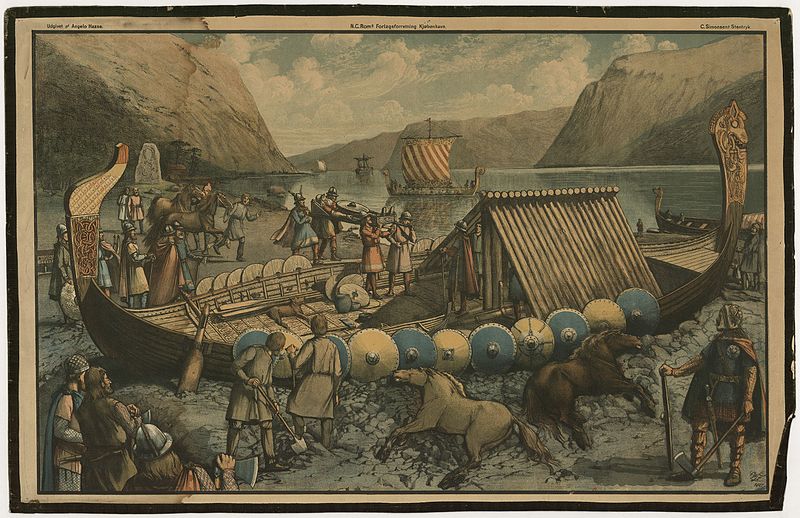
The pigments of pillage Regarding the Vikings, research has been relatively sparse. We know they used bold colours to be seen from a distance, and they would produce these colour pigments from numerous sources, including ochre and charcoal. These would have been blended together along with a binding agent (such as milk products, egg, or linseed oil), to allow the colour to adhere to the material. Now, after the publication of a new chemical analysis on Viking objects, we know more about the Viking use of colour than ever before. [caption id="attachment_8744" align="aligncenter" width="500"] En vikingehøvdings højsætning (“The burial of a Viking jarl”), Carl Schmidt, 1888. Credit: Wikimedia Commons[/caption]

No sailing under false colours

With the help of specialist teams of chemists, archaeologists have been able to study colour used in the Viking Age. Chemical analyses of pigments from objects have allowed them to stipulate what could have been the Vikings’ symbolic colour palette. Co-author of the paper and conservator from the National Museum of Denmark, Line Bregnhøi, says that the Viking Age was probably more visually vibrant that we may have first assumed. She says: “When we’ve previously excavated finds from the Viking Age among others, we weren’t so interested in colours. Partly because we didn’t have the techniques to study pigments, but also because we assumed that the colours appeared more or less as they were found.” [caption id="attachment_8743" align="aligncenter" width="440"] The study includes a selection of colours that are likely to have been used by the Vikings. Credit: National Museum of Denmark / Roberto Fortuna[/caption]

Authenticity first

However, she has now worked with colleague Lars Holten, director of the Centre for Historical and Archaeological Research and Communication, to create the colour palette used in the reconstructed version of The Royal Hall, Denmark’s largest Viking building. In the reconstruction, which sits at the Centre for Historical and Archaeological Research and Communication in Denmark, the team has worked with the same type of paint that would have been used by those in the upper echelons of Viking society. The Royal Hall has been decorated with linseed oil paint, as it would have been the most durable binding agent available to Viking painters. For authenticity’s sake, the hall has not been entirely covered in paint, as sheer expense means that this would have been unlikely.  

A study in scarlet

As has been true throughout the history of paint, some colours were rarer and thus more expensive than others. Imbued with symbolism, they indicated a separate social standing. Lars Holten comments: “We know that the symbolism of colour is enormously important in all cultures. Red, white, and black are some of the most common and have similar symbolism among numerous cultures.” Henriette Syrach Lyngstrøm, an archaeologist from the University of Copenhagen’s Saxo Institute, says: “it’s an important study because it presents the chemical analyses that form the basis for the very subjective ideas that archaeologist have on Viking Age colour.” Although not involved in the new study herself, she says it’s one of the most essential reports we have on the Viking’s use of colour. She continues: “On the rare occasion that we excavate a piece of painted wood, the colour looks nothing like the original. Here, chemists and conservators analyse the pigments and help us to further our interpretations.”]]>

Categories
Breaking News

3,000 year old funeral rituals show earliest evidence of human hair dye

Early funeral rituals: mysteries revealed A collaborative excavation from the University of Granada in Spain, the University of Tübingen in Germany and the University of Cambridge in the United Kingdom has uncovered around one hundred bodies; many of which have been affected by hitherto undiscovered funeral rituals, including hair that has been dyed red. The bodies were uncovered in a Biniadris Cave, which would have been frequented by different societies over a period of between 3,300 and 2,600 years ago.   [caption id="attachment_8737" align="aligncenter" width="500"] View of the entrance to Biniadris Cave in Menorca. Credit: University of Granada[/caption]

Hair dye and its symbolic value

Two archaeological researchers from the University of Granada, Dr. Eva Alarcón García and Dr. Auxilio Moreno Onorato, have written: “Evidently, the red tufts of hair must have had symbolic value for these social groups. They were perfectly cut and deposited in containers of varying sizes that were made of different materials (metal, leather and even wood), which were then hidden in specific parts of the cave.” [caption id="attachment_8738" align="aligncenter" width="500"] Remains discovered in Biniadris Cave, Menorca. Credit: University of Granada[/caption]

A unique combination of funeral rituals

As well as colouring the deceased’s hair red, members of this society practiced a collection of funeral rituals that reflect their local religion and its symbolism. For example, the researchers found that the bodies were usually placed in the centre of the cave, where they were surrounded by ceramic fragments. Trepanation, a symbolic act in which a hole is drilled into the skull of the deceased, was also practiced on many of the bodies. Dr. Eva Alarcón García notes: “There are no precedents for these kinds of social practices in the Iberian Peninsula and they are unique to the Balearic Islands. The buried were placed in the middle of the cave and a variety of elements were used during the rituals, such as plant materials (branches and trunks), ceramic vessels that must have played an important role given the degree of fragmentation they exhibit, iron oxide ores (‘ochre’), etc.”  

Ritualistic attire for Menorca’s deceased

The team of archaeologists also found that many of the bodies were dressed up in ritualistic attire. Needles, fabric and ancient V-perforated buttons made from bones and wild boar tusks were discovered in the cave, close to the bodies. The remains of the hairs and fabric are currently being studied through carbon-14 dating at the University of Cambridge. “Undoubtedly, the findings at the Biniadris Cave will raise many questions and pave the way for new lines of research, not only from archaeological perspectives but also from anthropological ones. For now, the main objective of the research is to solve the enigmas presented by these mysterious funeral rituals performed long ago in the Biniadris Cave,” they conclude.]]>

Categories
Breaking News

Revealed: the secrets of pre-Viking whaling

Credit: Wikimedia Commons[/caption]
Toys and games as evidence for early whaling

A visit to a typical Swedish museum will expose visitors to extensive collections of Iron Age board game pieces. Thousands of pieces have been found, helping to paint a picture of early Scandinavian culture and communication. But new studies from the University of York and Uppsala University have analysed the raw materials, showing that these toys were commonly made out of whale bone from the mid 6th Century. Suggesting an advanced method of production, they were created in large volumes and had standardised forms. As a result, researchers believe that a steady access to whale bone would have been necessary; and since it is unlikely that the carcasses of beached whales would have been in rich supply, we’re able to interpret this as evidence for early whaling. Adding to the theory, gaming pieces and toys made from whale bone appear at around the same time as larger boathouses, as well as production features for blubber, were becoming more common in Norway. It’s likely that the toys were made in this region, before being transported southwards and ultimately being used as playthings and burial gifts in Sweden.  

Whaling in folklore

Despite northern Europe’s large-scale whaling being discussed frequently, its origins have long been shrouded in mystery. Alleged sources have been controversial: 9th Century sagas about the Norwegian merchant Ohthere or Ottar, who was a guest and informant at the court of King Alfred the Great, mention his penchant for hunting large whales. Similarly, there are written sources that detect large-scale whaling during the Viking Age in Scandinavia. Neither source is unanimously regarded as true.  

Determining the species

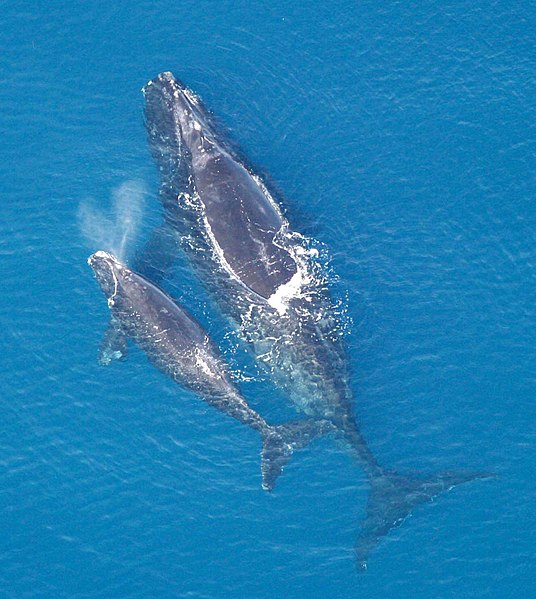
The team was able to determine the materials for a number of game pieces using Zooarchaeology by Mass Spectrometer, or ZooMS. The method revealed that all of the analysed pieces came from the North Atlantic right whale, the Eubalaena glacialis: a huge whale that typically weighs around 50 to 80 tonnes. The animal got its name because it was the ‘right whale’ to hunt. It was known for swimming slowly and close to the shore, and it contained so much blubber that it would float after being killed. With only 300 in known existence, the North Atlantic right whale is one of the world’s most endangered large whales. By shedding a light on the history of its hunt, this research could certainly affect calculations on the development of its population. [caption id="attachment_8733" align="aligncenter" width="500"] Atlantic Northern Right Whale mother and calf. Credit: Wikimedia Commons[/caption]

Pre-urban, pre-Viking trading networks

As well as shedding light on early whaling, the archaeologists believe these findings are an important component for researching extensive early trading networks. Alongside other goods such as bear furs, birds of prey, and an increased iron and tar production, whale bone products indicate that Scandinavia had developed strong, pre-urban trading routes – 200 years before the Viking Period. To complement the research, an in-depth supplementary study will analyse human influence on the marine ecosystems in relation to the population of whales in European waters, since the story of whaling goes back much further than we previously thought.]]>

Categories
Breaking News

Elongated skulls reveal female-biased immigration to Early Medieval Germany

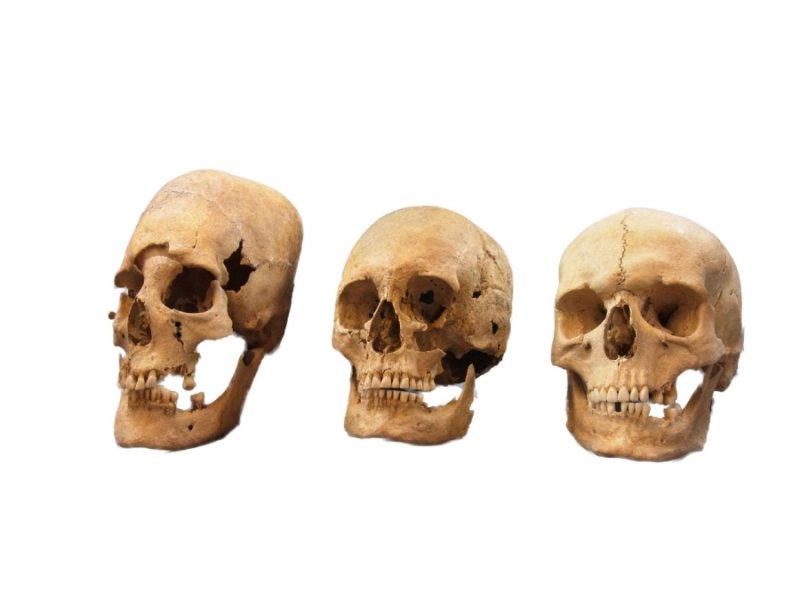
These are strong, intermediate, and non-deformed skulls (from left to right) from the Early Medieval sites Altenerding and Straubing in Bavaria, Germany.
Credit: State Collection for Anthropology and Palaeoanatomy Munich[/caption] In recent years, an international and interdisciplinary team of anthropologists and population geneticists has congregated to explore this transition. The team has now published a palaeogenomic study, which investigates early medieval migration in southern Germany and the peculiar phenomenon of artificial skull deformation. They performed the first genomic analysis of populations that occupied German Bavaria around 500 AD; shedding light on the complex population dynamics of the Völkerwanderung, or Migration Period. Dr Michaela Harbeck from the Bavarian State Collection for Anthropology and Palaeoanatomy (SAPM) teamed up with population geneticist Professor Joachim Burger of Johannes Gutenberg University Mainz (JGU). Working with them were Dr. Krishna Veeramah from US Stony Brook University and colleagues from the UK and Switzerland.  

A curious genetic profile

The study, which analysed 40 different inhabitants, revealed that most ancient Bavarians had a genetic similarity to Central and Northern Europeans. But one group had a particularly diverse genetic profile: the female skulls had been artificially deformed into a tower shape. [caption id="attachment_8728" align="aligncenter" width="500"] Credit: State Collection for Anthropology and Palaeoanatomy Munich. Artificially deformed female skull from Altenerding, an Early Medieval site in Bavaria[/caption] “Parents wrapped their children’s heads with bandages for a few months after birth in order to achieve the desired head shape,” says Dr. Michaela Harbeck. “It is difficult to answer why they carried out this elaborate process, but it was probably used to emulate a certain ideal of beauty or perhaps to indicate a group affiliation.”  

Elongated skulls: A long history

Elongated skulls are found in civilisations across history. The earliest written record refers to the Macrocephali, or Long-heads, and dates to 400 BC; though studies have determined its prevalence in cultures for many thousands of years earlier. Dr. Krishna Veeramah, first author of the study, says: “The presence of these elongated skulls in parts of eastern Europe is most commonly attributed to the nomadic Huns, led by Atilla, during their invasion of the Roman Empire from Asia, but the appearance of these skulls in western Europe is more mysterious, as this was very much the fringes of their territory.”  

Migrating from east to west

DNA analyses of these skulls revealed that the women migrated to early Bavarian settlements from areas across eastern Europe. As well as their deformed skulls, the women tended to have darker colouring in comparison to the other Bavarians they were living with, who generally had fair hair and blue eyes. “Although there is evidence that there was some genetic contribution from Central Asia, the genomic analysis points to the fact that women with deformed skulls in this region are genetically most similar to today’s south eastern Europeans, and that the Huns likely played only a minor role in directly transmitting this tradition to Bavaria,” Burger says. Those with deformed skulls were not the only women migrating to Bavaria. Two women closely resembling modern Greeks and Turks can also be identified. “Most of these foreign women are found with grave goods that look unremarkable compared to the rest of the buried population,” adds Veeramah. “These cases of female migration would have been invisible from the material culture alone.”  

Strategic alliances during political upheaval

“This is an example of long-range female mobility that bridges larger cultural spaces and may have been a way for distant groups to form new strategic alliances during this time of great political upheaval in the absence of a previous Roman hegemony,” notes Burger. “We must expect that many more unprecedented population-dynamic phenomena have contributed to the genesis of our early cities and villages.” “Interestingly, though our results are preliminary, there are no major traces of genetic ancestry in these early inhabitants of Bavaria that might have come from soldiers of the Roman army,” says Harbeck. “We need to keep investigating on an even broader basis how much Celtic and Roman ancestry is in these early Bavarians.”]]>

Categories
Editorial

Nazi Germany and its curious treatment of lesbians

Memorial “to the gay and lesbian victims of National Socialism” in Cologne: The inscription on the left side of the monument (to the viewer’s right from the angle depicted) reads “Totgeschlagen – Totgeschwiegen” (“Struck Dead – Hushed Up”). Credit: Jörg Lenk via Wikimedia Commons[/caption]

Female oppression as a cause for the tolerance of lesbians?

Some have argued that lesbians weren’t as harshly persecuted as gay men, simply because female sexuality wasn’t taken seriously. Others have said that the regime’s policy of pronatalism, which encouraged reproduction and the nuclear family, didn’t face as much of a threat from lesbians as it did gay men. Further still, the Nazis believed women were inferior to men and thus dependent on them. Under this theory, a lesbian would still rely on the men in her community, and is hardly a threat to male dominance. The Nazis also dismissed lesbianism as they believed lesbians could still occupy a German woman’s primary role: to mother as many German babies as possible. Sexuality, they believed, did not interfere with a woman serving the Nazi state as a wife and mother. There is another prominent narrative, which has gained attention over the past year. Samuel Clowes Huneke from Stanford University posits that Nazi officials didn’t see lesbians as a strong political threat, due to the fact that women were barred from politics and public life. “In light of both the fearsome persecution of homosexual men and scholarship that places it in the context of National Socialist pronatalism, the regime’s seeming lack of interest in female homosexuality is startling, for in other respects the government placed considerable burdens on women,” says Huneke.  

Four couples betrayed

Specialising in homosexuality in the Third Reich, Huneke has examined 4 cases of investigation by the Kriminalpolizei, or the German criminal police. Discovered at the Landesarchiv Berlin in 2015, the files shed light on the investigation of 8 women. They show us signed statements from witnesses and the women themselves. In all 4 of the cases, the women were accused by a person they knew and trusted: whether that was a neighbour, co-worker or even a parent. “That these eight women were denounced to the Berlin criminal police in the early 1940s is striking on its own, given the archival silence when it comes to female homosexuality,” Huneke says. Astonishingly, there is no evidence that any of the 8 women were punished as a result. All 4 cases tell us that the women could not be prosecuted for same-sex relations under the criminal code, in the way that gay men would have been. Huneke was fascinated: “To scholars accustomed to seeing in the Nazi state a jungle of overlapping jurisdictions, personal initiative and law based solely on the Führer’s wish, this is a curious portrait of the Nazi justice system, one marked by an unexpected concern for the strict interpretation of statute.” One case stands out as particularly peculiar. Margot Liu née Holzmann was a Jewish lesbian living in Berlin. In 1941, she married a male Chinese waiter and received Chinese citizenship, which protected her from being deported to a concentration camp. However, when her husband discovered she was in a lesbian relationship, he filed for divorce and reported her to the police. Curiously, the police did not intervene. Moreover, they insisted, in multiple documents, that she was protected because of her Chinese citizenship – despite being a German Jewish lesbian. At this point, it is worth noting that in all 4 of these cases, including Margot Holzmann, we are looking at the judgment of one single officer. That particular officer may have just been less inclined to pursue homophobic policy than other officers. However, the rules were very closely followed, which has led some historians to consider this to be an indication of relative tolerance for lesbians.  

“Open – but not enviable – lives”

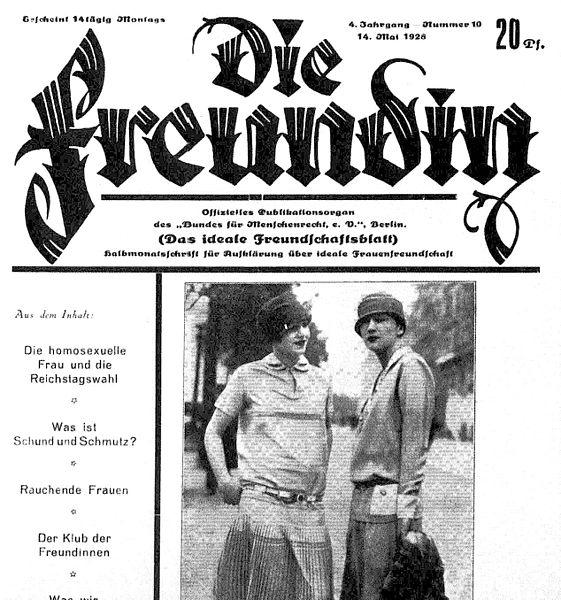
The files show that the 8 women had led relatively open – though certainly not enviable – lives as lesbians before being denounced to the authorities. Ordinary German citizens would have been aware of their female friends, co-workers and acquaintances in same-sex relationships, but were less likely to report them to the police. A patronising understanding of female sexuality comes into play: “Gender is perhaps why lesbians weren’t persecuted in the same ways… [but] these files throw into sharper relief the duplicity of tolerance that has characterised societies’ views of female sexuality for centuries,” says Huneke. By no means was life as a lesbian in Nazi Germany easy, though. In 1928, for example, the police banned popular lesbian journals such as Die Freundin (Girlfriend) based on the Protection of Youth from Obscene Publications Act.   [caption id="attachment_8709" align="aligncenter" width="561"] Credit: Bund für Menschenrecht/Wikimedia Commons[/caption] Many conservatives are documented as demanding the enactment of criminal statutes against lesbian sexual acts. Pamphlets with messages against homosexuals, feminists, Republicans and Jews were everywhere, usually bringing with them the ideas of a conspiracy from marginalised peoples to destroy Germany. These pamphlets denounced the movement for women’s rights, saying that feminism was nothing more than a seduction into lesbianism. Culturally, it seems there was a war against lesbians; and yet there appears to be at least some level of tolerance when it came to prosecution.  

Tolerance and the nature of dictatorships

The case of lesbian life in Nazi Germany is considered to demonstrate that dictatorships often rely not purely on overt oppression; but on limited tolerance of certain groups. Huneke calls it the ‘divide-and-conquer approach’. “One of the most important takeaways from this research, to my mind, is to break the popular idea that authoritarian governments maintain their power only through repression.” Moreover, Huneke says: “the experiences of lesbians in Nazi Germany can help shed light not only on how gender operates in multivalent ways, but also the complex negotiation of both repression and toleration on which authoritarian regimes depend.”]]>

Categories
Breaking News

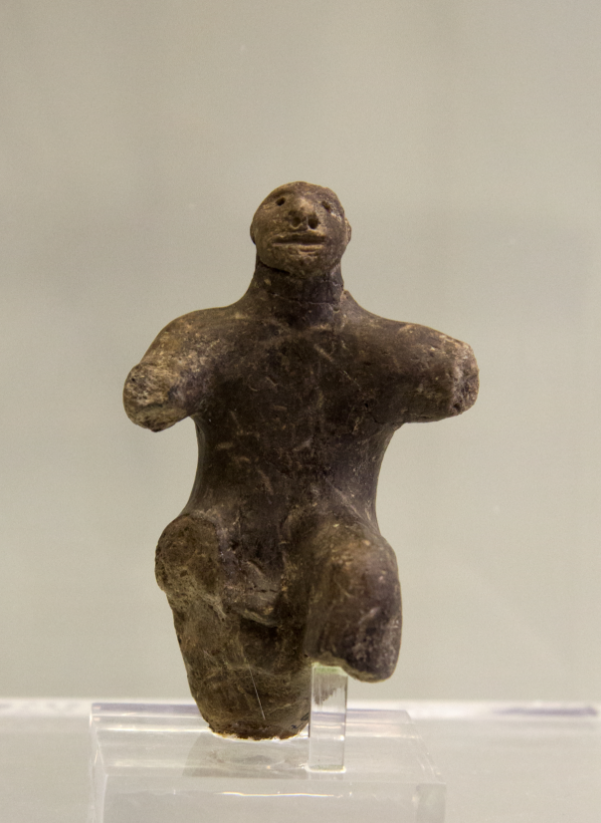
Why does science say there was only 1 man for every 17 women in 3000 BC?

Male figurine, pottery. Neolithic, 5000 – 3000 BC. Credit: Archaeological Museum of Heraklion.[/caption]

The Y Chromosome Bottleneck

Known as the Y chromosome bottleneck, this research was first proposed in 2015 by Monika Karmin, a population geneticist at the University of Tartu in Estonia. Since then, academics have been trying to understand how this could have happened. Some research has told us that the drop-off in the male population was the result of ecological factors mainly affecting male babies. Stanford University students Alan Aw and Tian Cheng Zeng thought there must be another explanation. They took their theories to Marcus Feldman, a population geneticist at the University, who said that the imbalance “struck us as being very extreme.”  

A new explanation?

On 25th May 2018, the team published a new paper in the journal Nature Communications. It posits that humans who were living in patrilineal clans, which consisted of males from the same lineage, could have entered a particularly violent age; with inter-clan wars happening particularly frequently. If true, this had the potential to wipe out entire lines of male descent at a time. In his research, Feldman suggests that rather than the male population taking an apparent nosedive, the diversity of the Y chromosome decreased due to the ways people were living and fighting with one another. Or, to put it another way, there weren’t actually fewer males. There was just far, far less diversity.  

A quick recap of our chromosomes

As humans, most of our genes are carried in 23 pairs of chromosomes. The 23rd pair determines our sex: females have two X chromosomes, whereas males have one X and one Y chromosome. A baby’s sex is determined by the chromosomes it inherits from its parents. This allows genes to get shuffled around, which increases the overall diversity in the species. But the Y chromosome, which has no female counterpart, stays almost the same from grandfather to father to son, and so on. Of course, mutations occur, which explains why the Y chromosome does in fact differ among males.  

How were people living at the time?

After the advent of farming around 12,000 years ago, societies were increasingly organising themselves around extended kinship groups, ultimately manifesting as patrilineal clans. As we know from this study, this was a cultural fact with poignant biological consequences. Women may have married into a clan, but the men in the clan were all related through male ancestors. “From the point of view of those chromosomes at least, it’s almost as if everyone in a clan has the same father,” says Nathan Collins from Stanford University. This study, which looks at genetic occurrences between 5,000 and 7,000 years ago, considers people living in a transitional period. Soon after, people moved into larger societies and built towns. At that point, humans because less intent on maintaining the Y chromosome lineage and perhaps unsurprisingly, the diversity of the Y chromosome bounced back. [caption id="attachment_8716" align="aligncenter" width="500"] Marcus Feldman with fellow researchers Tian Cheng Zeng and Alan Aw. Credit: Marcus Feldman, Stanford University[/caption]

Simulating the possibilities

Feldman, Zeng and Aw conducted 18 different simulations, each representing different scenarios that could explain the bottleneck. This included situations reflecting Y chromosome mutations; competition between different tribes, and natural death. Crucially, the bottleneck did not occur in the simulation in which patrilineal clans did not exist. We can then assume that the most likely reason for the bottleneck was patrilineal clans going to war. If one clan was wiped out, so was its shared Y chromosome. Monika Karmin, lead author of the original study, weighs in: “fighting clans are indeed likely to cause a drastic drop in male genetic diversity… However, we do have to keep in mind that there is very little information on the actual societal organisation from that time.”  

No XX bottleneck

Incidentally, there was no such bottleneck in females. Feldman was able to deduce this by analysing mitochondrial DNA, which is only passed down from the mother. “In that same group, the women could have come from anywhere,” Feldman says. “They would’ve been brought into the group from either the victories that they had over other groups, or they could’ve been females who were residing in that area before.” He added that colonisation tends to see the men killed, and the women kept alive.  

A cultural influence on genetic variation

Academic research often focuses on behaviours that have a genetic basis; but not necessarily on behaviours that influence genes. The new research is, in Feldman’s words: “an example of what a cultural preference can do in changing the level of genetic variation.”]]>