Categories
Breaking News

Wasn’t the ark…well, just ark shaped?

The Middle East department at the museum has a huge collection of clay tablets with cuneiform inscriptions. Dr Finkel’s department researches and decodes the inscriptions, linking the tablets together where possible to provide a linear story. This is where the true revelation about Noah’s Ark came from. Cuneiform is an ancient system of writing used in the Middle East. The word, Cuneiform, means wedge-shaped and indeed the script comprises wedge-shaped marks on clay tablets. A clay tablet of some 4,000 years old in the British Museum has revealed that the famed vessel was, in fact, round and not as has been thought and portrayed, rectangular. Not only has the tablet revealed this piece of information but it has also detailed the materials used to build the ark and the precise measurements. The discovery was a chance find made by deciphering the Cuneiform and linking it to other tablets to compile the ancient Babylonian story, the Story of the Flood. The ark was constructed out of wooden ribs and palm fibre rope with hot bitumen used after construction to render the vessel waterproof. The instructions were given by a Mesopotamian god and the dimensions are translated to be 3,600 square metres, with walls to a height of six metres. This equates to an area around two thirds the size of a modern football field. The sixty lines on the tablet also include the order that the animals must enter, ‘two by two’. The odds surrounding this discovery were revealed to be even greater when the story of how the tablet came into the possession of the Museum was recounted by Dr. Finkel. A man called Douglas Simmonds came into the museum with a clay tablet which he wanted identified, a normal day at the office for Dr. Finkel. The tablet was a family piece given to the owner by his father as a reward for passing his exams. The tablet had been acquired by Mr Simmonds’ father, Leonard, along with a few other less interesting bits and pieces in the late 1940s after serving with the RAF in the Middle East. This unique tablet recounts the story of the ark and is far older than the known biblical accounts. Finkel has described the discovery of the tablet as one of the most important human records ever found but in a shocking paradox, is absolute in his belief that the ark never actually existed. The tablet remains on display at the British Museum where it has been since 2014 on loan from Mr Simmonds.]]>

Categories
Breaking News

Thieves' Coins

th century birch bark manuscript. Russian pickpocketry takes on a different form now in this modern age, and with arguably a far greater reach than merely arms’ length. Russia has a fearsome reputation as home to some of the most deadly and serious cyberhacking groups such as Anonymous International and the Koobface Gang. They are to modern cyber crime what their villainous ancestors were to the pockets and valuables of eighteenth century Russia.   Sometimes hackers are motivated by political ideology and a cause to believe in but Russian hackers simply seem intent on emptying other peoples’ bank accounts, and not a thieves’ coin in sight.          ]]>

Categories
Breaking News

RAF Centenary

st April 1918 just prior to the end of the Great War as the Royal Flying Corps with planes made from canvas and wood, the service rapidly developed and changed to meet the needs of more modern warfare a short 21 years after its formation.   The defence of the British Isles by Spitfires and Hurricanes was pivotal in preventing Nazi invasion and the inclusion of heavy bombers later on the war, whilst controversial, secured victory in Europe for the Allies. The bombing raids across Europe resulted in a casualty rate higher than that incurred by the other two services during the Second World War.   Other iconic aircraft have followed as scientific and global developments have demanded. The Typhoon Jet has a speed of 1,550 miles per hour; compare that to the very first plane, the BE2, which had a maximum speed of just 70mph.   What is interesting about the RAF is its meritocracy; even from its infancy, men of all social classes rubbed shoulders together, not the case at all in either the Army or the Navy which reflected the UK’s class-ridden society. Women were also included in the force during the Second World War, not as main crew but within the Air Transport Auxiliary which delivered aircraft to their destinations from the factories.   The female contingent had to wait until 1994 to see the first female RAF jet pilot, Jo Salter, flying a Tornado and until 2009 to see the first all female jet crew who were deployed to Afghanistan.   The motto for the service, ‘per ardua ad astra’ was chosen by a junior officer and is translated as, ‘through adversity to the stars’. The man to whom this choice is accredited, Lieutenant J.S. Yule, is believed to have taken the phrase from a novel by Sir Henry Rider Haggard entitled, ‘The People of the Mist’ and it is thought Rider Haggard himself borrowed it from the Irish Mulvany family who have had this as their family motto for centuries. Red Arrows Still so relevant today in modern conflicts in the Arab state, the RAF is held in great affection by the British people. The UK is awash with a year of events and celebrations to mark the first one hundred years of the RAF.   With an eye watering budget of £8 million, concerts, flypast and tattoos are all planned. A commemorative £2 coin has been struck by the Royal Mint featuring five different designs.   The Ministry of Defence has released an iconic set of pictures to tell the story of the RAF through the decades. Some of the pictures have been colourised by an expert which is a relatively modern technique designed to breathe life into old pictures. The colourised versions convey a depth of feeling and atmosphere that is not present in the black and white originals.]]>

Categories
Book Reviews

The Last Slave

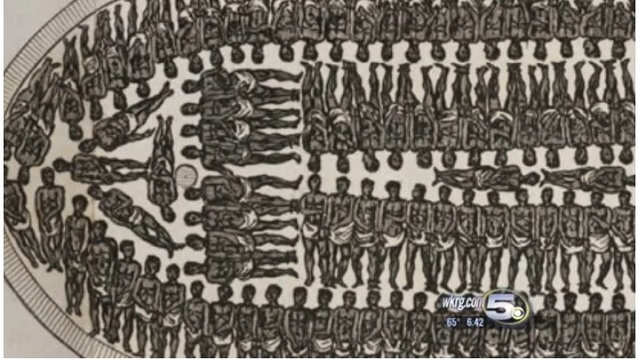
Barracoon: The Story of the Last ‘Black Cargo’ by Zora Neale Hurston was refused publication and then languished unseen for the next 87 years in a dusty archive. That is, until now.   ‘Barracoon: The Story of the Last ‘Black Cargo’ is the tale of Cudjo Lewis born in 1840 and kidnapped in 1859 from his West African village.   He was transported along with one hundred others to Alabama in the US, despite the fact that African slavery had been abolished in America in 1807.   The word ‘Barracoon’ is the term used to describe the barracks where the slaves were housed before their buyers collected them. Lewis is widely held to be the last black African to be sold into slavery and arrived on the last slave ship.   Hurston interviewed Lewis, whose African name was Kossola, when he was approaching 90 years of age. The interviews formed the basis of Hurston’s book which ended up in the archives at Howard University after the books’ failure to publish and Hurston’s death in 1960. Harper Collins have agreed to publish the manuscript in its original form; Kossola’s African dialect appears intact, the main basis for rejection of the manuscript all those years ago.   Kossola was freed in 1865 after working for six years for a shipping business on the Alabama River. The man behind the slave transport, Timothy Meaher, escaped prosecution for breaking the law. The ship on which they were all transported, the Clotilda, was burned by the ship’s Captain, William Foster upon arrival in the US.   [caption id="attachment_8617" align="aligncenter" width="950"]Clotilda discovered in Alabama Remains of the Clotilda[/caption]   All of the slaves were either sold or kept for personal use by Meaher and Foster. After the Civil War in 1865 when he became free, Kossola along with other former slaves founded Africatown in Alabama, where they remained and where Hurston came to interview him in the late twenties.   The author spent a lot of time living in Africatown with Kossola, where the men spoke their own language and kept up their traditional, African customs. She walked alongside Kossola as he cleaned the church and accompanied him on his crabbing trips to the bay. Some of their time was spent in silence, itself speaking volumes about Kossola’s loss of his people and homeland even after so many years.   Her time spent with Kossola moved Zora Hurston hugely and she was profoundly affected by his story. During one of her last visits to his home, she asked to photograph him. Kossola appeared in his best suit but without any shoes. He told Hurston that he wanted to look like he would if he were in Africa as this is where he really wanted to be.   This work was one of her earliest projects following the end of her studies; Hurston studied Anthropology at Barnard College and then Howard University. Hurston was part of the Harlem Renaissance which was an intellectual and social movement within Harlem during the 1920s also sometimes known as, ‘the New Negro Movement’.   Her Biography, ‘Wrapped in Rainbows: The Life of Zora Neale Hurston’ by Valerie Boyd portrays the effect that the interviews with Kossola had on Hurston quite vividly. Hurston’s work is truly unique because it is the first hand testimony of a man who was there, a living record from a truly shameful period of history.]]>

Categories
Breaking News

Who First Domesticated Horses? The History News of the Week

Answered: Who First Domesticated Horses? A new study claims that horses were first domesticated by descendants of hunter-gatherer groups in Kazakhstan. Exactly when, where and who first domesticated horses is shrouded in mystery. A popular theory is that it was the Yamnaya culture (3300 BC–2600 BCE), yet the new research is dispelling this idea. “The successful spread of the Indo-European languages across Eurasia has puzzled researchers for a century. It was thought that speakers of this language family played a key role in the domestication of the horse, and that this, in combination with the development of wheeled vehicles, allowed them to spread across Eurasia from the Yamnaya culture,” explained Dr. Guus Kroonen, historical linguist at University of Copenhagen, in a press release. In the new study, published in the journal Science, it is shown that in fact horses were already being used by the Botai people 5,500 years ago, and much further east in Central Asia, completely independent of the Yamnaya pastoralists. An inter-disciplinary team analysed ancient and modern DNA samples from humans and compared the results – the 74 ancient whole-genome sequences studied by the group were up to 11,000 years old and were from Inner Asia and Turkey. The results found no genetic link between the Yamnaya and Botai. Intriguingly, the Botai were eventually pushed out of the central steppe region by migrations from the west. The Botai horses were also replaced, suggesting domestication of horses had already occurred elsewhere. “We now know that the people who first domesticated the horse in Central Asia were the descendants of ice age hunters, who went on to become the earliest pastoralists in the region,” stated Professor Alan Outram from the Department of Archaeology at the University of Exeter “Despite their local innovations, these peoples were overrun and replaced by European steppe pastoralists in the middle and later Bronze Age, and their horses were replaced too.” [caption id="attachment_8613" align="alignnone" width="1440"]Leprosy Skull Skeletal remains showing evidence of leprosy from the Odense St. Jørgen cemetery in Denmark, which was established in 1270 and existed until 1560.
Credit:
Dorthe Dangvard Pedersen[/caption] Did Leprosy Originate in Europe? Leprosy may have originated in Europe, innovative new research is claiming. The study by the Max Planck Institute for the Science of Human History, the University of Tübingen, EPFL Lausanne and the University of Zurich sequenced 10 new ancient genomes from the leprosy causing bacterium Mycobacterium leprae. This included the oldest leprosy genome sequenced to date, from around 400CE in the UK. The results have shown there was much more diversity in Medieval European strains of leprosy than previously thought. 90 sets of remains with skeletal deformations characteristic of leprosy from across Europe were studied, dating from 400CE to 1400CE. Previous research on the bacterium suggested that it clusters into several strains, only two of which had been present in Medieval Europe. However, the scientists found strains from Medieval Europe that are traditionally associated with locations such as Africa, Asia and the Americas. At the same time, multiple strains were also often detected in a single cemetery, giving an insight into the diversity of the disease. “We found much more genetic diversity in ancient Europe than expected,” explains Johannes Krause, senior author of the study and a director at the Max Planck Institute for the Science of Human History. “Additionally, we found that all known strains of leprosy are present in Medieval Europe, suggesting that leprosy may already have been widespread throughout Asia and Europe in antiquity or that it might have originated western Eurasia.” Interestingly, the results add growing support to the idea that the squirrel fur trade played a role in the spread of leprosy. The oldest leprosy genome sequenced in the study, from Great Chesterford, England, is the same strain found in modern day red squirrels. “The dynamics of M. leprae transmission throughout human history are not fully resolved. Characterisation and geographic association of the most ancestral strains are crucial for deciphering leprosy’s exact origin” states lead author Verena Schuenemann of the University of Zurich. “While we have some written records of leprosy cases that predate the Common Era, none of these have yet been confirmed on a molecular level.” The research has been published in the journal PLOS Pathogens. Image credit: Pottok [GFDL (http://www.gnu.org/copyleft/fdl.html) or CC-BY-SA-3.0 (http://creativecommons.org/licenses/by-sa/3.0/)], via Wikimedia Commons ]]>

Categories
Breaking News

Old Bones Resurface At New York Massive Grave Site

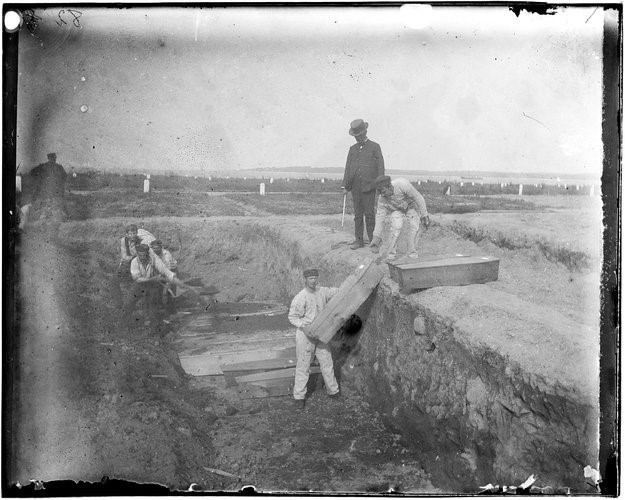
City Island and Hart Island (lower right)[/caption] Forensic anthropologists were brought in by the Department of Correction from the office of the city medical examiner some weeks ago to collect and catalog about 174 bones from the island, a repertoire which included 16 pelvic bones, 31 femurs, six jawbones and six skulls. All over the shores of the rocky island, red flags can be seen in places from where the remains were collected. Advocates for the island who have been involved in a long struggle to see the site converted into a historical site and a national park say that the bones exposed bones are reflections of the inactions on the part of the system to do nothing to improve the site. This is in fact not the first time Hart Island has been ravaged by floodwaters to reveal the grim image below the surface of the island. In 2012, hurricane sandy besieged the coast and exposed a cistern used during the civil war. Several other storms have eroded the island at various times even long before then as revealed in a 1985 report which recounted that several bones including a human skull were found on the beach. While repair work on the island which was initially billed to begin in the year 2020 has been moved up by a year due to the urgency of the situation, officials have decided that a monthly cleanup of the island will continue in order to remove exposed remains for re-burial. Melinda Hunt, one of the island advocates who has been involved in documenting the conditions on Hart island since 1991 on a recent photography trip around the island, pointed out places along the shores where the exposed bones were seen. According to her, “They came to clean this up, but it isn’t the first time and it won’t be the last”]]>

Categories
Breaking News

Saladin Mystery Solved – The History News of the Week

Mystery of Saladin’s Death solved? The mystery surrounding Saladin’s death may have finally been solved. Famed for leading armies against the Crusaders, and being Sultan of an area that stretched from what is now Iraq to North Africa, Saladin died at the age of 56, some 800 years ago. There are few details about his death, other than that he became ill in 1193, and died two weeks later. Now, Stephen J. Gluckman, MD, professor of medicine at the University of Pennsylvania School of Medicine, has come up with a diagnosis. He theorises that Saladin succumbed to typhoid fever, a disease common in the region at the time. Easily cured with antibiotics nowadays, the disease would have been far more dangerous in the Middle Ages. Gluckman has based his diagnosis on what is known about Saladin’s medical history. “Practicing medicine over the centuries required a great deal of thought and imagination,” he says. “The question of what happened to Saladin is a fascinating puzzle.” Dr. Gluckman delivered his diagnosis at the 25th annual Historical Clinicopathological Conference, held May 4 at the University of Maryland School of Medicine. The conference is devoted to the diagnosis of disorders that afflicted historical figures. No Hidden Rooms in Tutankhamun’s Tomb Radar scans have provided conclusive evidence that there are no hidden rooms in Tutankhamun’s Tomb, according to Egypt’s Ministry of Antiquities. It has long been speculated that the young Pharaoh’s spectacular tomb may contain hidden chambers yet to be seen by archaeologists. However, Mostafa Waziri, Secretary General of the Supreme Council of Antiquities, announced that an Italian team has conducted extensive studies with ground-penetrating radar, showing the tomb did not contain any hidden, man-made blocking walls. The findings have been presented to an international conference in Cairo. “Our work shows in a conclusive manner that there are no hidden chambers, no corridors adjacent to Tutankhamun’s tomb,” Dr. Porcelli said, according to news.com.au. According to the ministry, the findings should bring to a close speculation over hidden rooms in the famous tomb. “…the hypothesis concerning the existence of hidden chambers or corridors adjacent to Tutankhamun’s tomb is not supported by the GPR data,” the ministry said in a statement. New Evidence for the Kingdom of David and Solomon? [caption id="attachment_8602" align="alignnone" width="400"]This is a composite aerial photograph of the four-room residency. Image credit:
Sky View and Griffin Aerial Imaging, edited by Yair Sapir[/caption] Archaeologists in Israel claim to have discovered new evidence proving the existence of the Kingdom of David and Solomon. Significantly, the new findings also give an idea of the scope of the kingdom, suggesting it extended beyond the vicinity of Jerusalem. The existence of the biblical kingdom has long been a matter of contention. Until now, little evidence of royal construction has been found in the area where the kingdom supposedly was. The Kingdom of David and Solomon supposedly reigned in the 10th century BCE. Professor Avi Faust and Dr. Yair Sapir from Bar-Ilan University have excavated a large, four room residence which was destroyed in the 8th century BCE. The large building had at least two stories, with its ground floor extending over 225 square metres. “Surprisingly, radiocarbon dates from within the floor make-up and from within a foundation deposit that was placed below the floor indicate that the building had already been erected in the 10th century BCE, between the late 11th century and the third quarter of the 10th century BCE,” said Professor Faust in a Bar-Ilan University press release. “This date is in line with other finds related to the construction, like the foundation deposit itself.” The residence is located at Tel ‘Eton in the Shephelah (20 km. southeast of the city of Qiryat Gat). According to Faust and Sapir, the building would have been constructed in a style similar to other Israelite sites, and points to a rising ‘Israelite polity’ in the region. Their excavations reveal that the site around the building would have been expanding in the 10th century. Faust and Sapir note in their research, published in the journal Radiocarbon, that any association with King David would be based on ‘circumstantial grounds’. Nevertheless, both the timing and location of the site would sync up with when David and Solomon supposedly lived. They write in their study: “…if someone thinks that there was no king by the name of David, we should find another name to call the highland king in whose time the region was incorporated into the highland kingdom”. Featured image: Saladin à Jérusalem, courtesy of Moreau.henri, via Wikimedia Commons ]]>

Categories
Breaking News

Human Stride Older than Thought – The History News of the Week

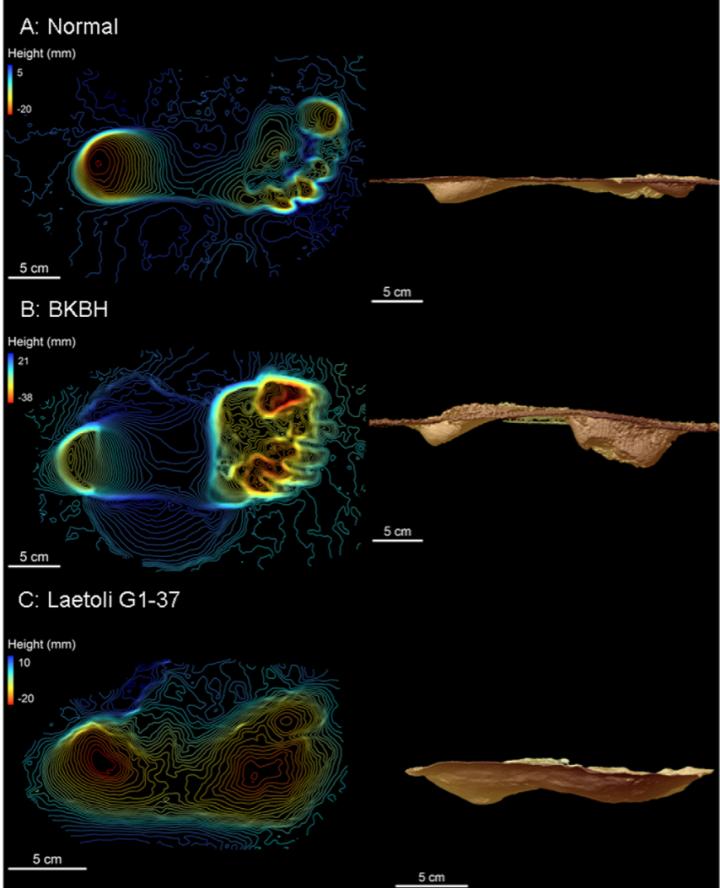
Footprints Show Human Gait Evolved Pre-Homo genus 3.6-million-year-old footprints suggest early hominins may have made the transition from ape like shuffling to upright walking much earlier than thought. “Fossil footprints are truly the only direct evidence of walking in the past,” said David Raichlen, PhD, associate professor at the University of Arizona, in a press release. Raichlen is part of a team analysing the footprints discovered in Laetoli, Tanzania. “By 3.6 million years ago, our data suggest that if you can account for differences in size, hominins were walking in a way that is very similar to living humans. While there may have been some nuanced differences, in general, these hominins probably looked like us when they walked.” It is generally considered that hominins, the name given to human ancestors prior to the homo genus, began walking on two legs around seven million years ago. However, it is also assumed that they had a crouched, bent legged posture while walking. Raichlen and colleagues used footprints and skeletons to reconstruct how these early hominins walked. These tests included comparing the Laetoli footprints with those of eight volunteers walking in an upright or ‘stooped’ (i.e. bent knees) posture. It was found that the volunteers walking upright left footprints closer to those at Laetoli. “This work suggests that, by 3.6 million years ago, climate and habitat changes likely led to the need for ancestral hominins to walk longer distances during their daily foraging bouts,” said Raichlen. “Selection may have acted at this time to improve energy economy during locomotion, generating the human-like mechanics we employ today.” Raichlen recently presented his research at the American Association of Anatomists annual meeting. Origins of the Carambolo Treasure Scientists claim to have found the source of the gold used to create the Carambolo Treasure. Currently housed in the Seville Archaeological museum, the Carambolo Treasure is a selection of gold items from 650 BCE. Discovered by chance in 1958, the Treasure comprises 16 rectangular plates, two breastpieces or pendants, a necklace and two bracelets. The items were discovered hidden inside an oval structure which also contained numerous animal bones and ceramics, leading archaeologists to conclude it was a place of ritual or worship. Ever since its discovery, archaeologists have debated the origins of the Bronze Age treasure. Now, using isotope and chemical analysis, a team of scientists from the UPV/EHU’s Geochronology and Isotopic Geochemistry Service – Ibercron, have concluded that the gold originated from a deposit 2km away from the site of the discovery, and not thousands of kilometres away has been suggested. [caption id="attachment_8598" align="alignnone" width="720"]The Carambolo Treasure Image of the Carambolo Treasure © Consejería de Cultura de la Junta de Andalucía / J. Morón[/caption] The scientists behind the study deployed an innovative method to avoid damaging the priceless artefacts. Using a form of laser ablation, they made a hole of around 0.1mm in size in the gold, in order to analyse it. This laser ablation is combined with plasma mass spectrometry, “with which we not only do isotope analyses but also elemental analyses directly on solid samples with the minimum possible impact”, according to Dr Sonia García de Madinabeitia, who worked on the study. “We base ourselves on a kind of footprint of the lead,” explained the researcher. “The isotope ratios of lead vary in terms of the function of the materials used and the age of the materials, and we determine the isotope ratio that the lead has. The fact is that there are considerable differences between some mineral deposits and others.” In addition, the scientists also carried out ‘trace and ultratrace’ analyses on the Carambolo Treasure, “because we know that mines, however much they may be gold or silver mines, never consist of pure materials, but have a series of trace and ultratrace elements that subsequently allow links between the archaeological materials and the geological materials to be established,” added García de Madinabeitia. Lessons From the World’s Oldest Peace Treaty ‘The world’s oldest peace treaty’ is challenging our image of antiquity and shedding new light on ancient conflicts. In preparation for a new exhibition at the Berlin Pergamon Museum, archaeologists have been analysing a 3,200-year-old peace treaty between Ramesses II and Ḫattušili III. They claim that contrary to the popular idea that ancient conflicts were settled through the total humiliation of the loser, complex negotiations were in fact at play. “More than 3,200 years ago, Egyptians and Hittites ensured each other mutual support in the treaty; neither of them triumphed. This must have been preceded by much negotiating, as is evidenced by extensive correspondence between the rulers”, write Director Prof. Dr Achim Lichtenberger and Curator Dr Helge Nieswandt of the University of Münster’s Archaeological Museum, in a press release. “Although the ‘victorious peace’ dominates over the ‘peace of reconciliation’ in peace images of antiquity, our research shows that the latter also existed.” In addition, the researchers claim that many ancient peace images were actually created in times of conflict. They cite the example of the Roman goddess of peace, Pax, who was present on Roman coins even at times of war. “Despite the glorification of war in antiquity, which undoubtedly existed and alienates us: images of the ideal of peace were particularly widespread during wars,” says Nieswandt. “When the order of the Roman Empire fell apart in the 3rd century AD, and when mostly short-lived soldier emperors took turns, there was an ‘inflation of peace’ on coins.” The exhibition, entitled Frieden. Von der Antike bis heute (Peace: From Antiquity to the Present Day), opened on 28th April at the Berlin Pergamon Museum. Featured Image: Footprints from (A) a modern human walking normally, (B) a modern human walking with a stooped posture known as the “bent knees, bent hip,” or BKBH, posture, and (C) 3.6 million-year-old hominin footprints found in Laetoli, Tanzania. The team’s analysis suggests ancient hominins probably walked in a way that is very similar to modern humans. Credit: David Raichlen, University of Arizona. ]]>

Categories
Breaking News

Ancient Humans Pushed Large Mammals to Extinction – The History News of the Week

Science, the authors claim that the ‘magnitude and scale’ of the size-based extinction surpassed any other in the last 66 million years. Importantly, they claim that their research also found little evidence that climate change could have been responsible for these extinctions. “If climate were causing this, we would expect to see these extinction events either sometimes (diverging from) human migration across the globe or always lining up with clear climate events in the record,” said Lyons. “And they don’t do either of those things.” [caption id="attachment_8594" align="alignnone" width="800"]Zygomaturus_BW Zygomaturus trilobus, a diprotodontid marsupial from the Pleistocene of Australia, digital. Credit: Nobu Tamura (http://spinops.blogspot.com) via Wikimedia Commons[/caption] Conflicting Evidence Multiple studies in recent years have attempted to come up with an answer as to what drove the mass extinction of the world’s megafauna. Indeed, within days of each other last January two separate studies focusing on Australia came to significantly different conclusions. An article recently published in the journal Nature Communications claimed to have evidence pointing to 85% of megafauna weighing over 100 pounds in south-west Australia going extinct within a few thousand years of humans arriving in the region. A study in Quarternary Science Journal meanwhile, claimed that humans and the large marsupial Zygomaturus trilobus coexisted with each other in Australia for at least 17,000 years. That research claims that the spectacular creatures, roughly the size of a bull, lived until the beginnings of the Last Glacial Maximum. Intriguingly, the latter study argues that the dramatic climate change caused the region’s plains to dry up, forcing the animals into closer contact with humans. This could have meant the creatures started to be hunted, a theory that links human activity and climate change in the destruction of a megafauna species. Featured image is a statue of the Columbian mammoth housed at the University of Nebraska-Lincoln. Image credit: Craig Chandler, University of Nebraska-Lincoln]]>

Categories
Breaking News

Volcanoes Linked to Roman Plague – The History News of the Week

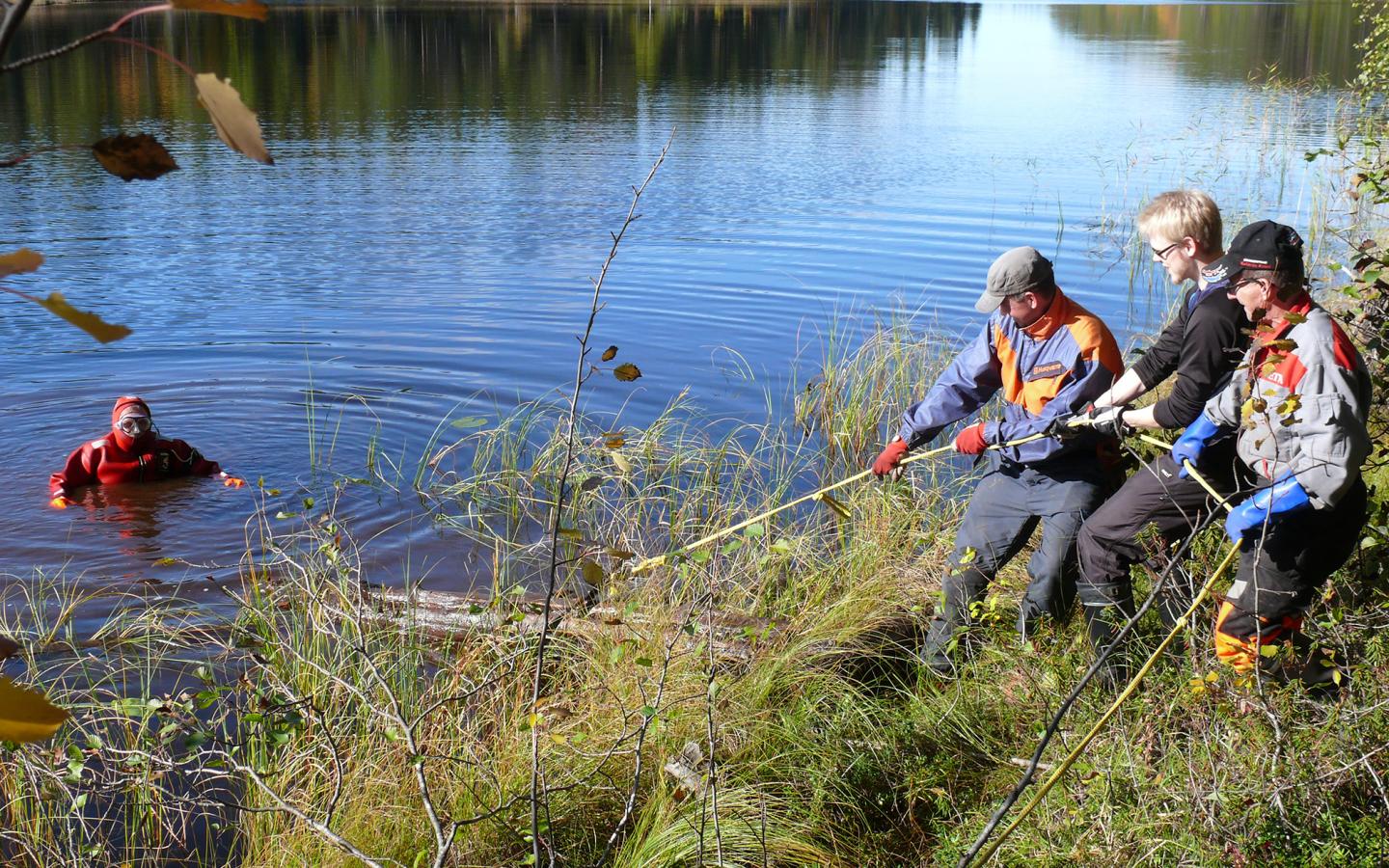
Volcanoes and a Roman Climate Crisis Volcanic eruptions in the Roman period led to climate anomalies affecting the whole northern hemisphere, according to new research. The years 536 CE and 541 – 544 CE experienced a reduction in natural light which would have made human survival much more difficult, the researchers from the Chronology Laboratory of the Finnish Museum of Natural History and Natural Resources Institute Finland (Luke) claim. Farming and animal husbandry would have been adversely affected by the reduction in sunlight, while humans would have been more prone to disease due to a lack of vitamin D. “Our research shows that the climate anomaly, which covered all of the northern hemisphere, was the compound result of several volcanic eruptions,” says Markku Oinonen, director of the Chronology Laboratory. Published in the Journal Scientific Reports, the new research is based on dendrochronology, also known as tree ring dating. The researchers analysed the variation in carbon isotopes in the annual growth rings of trees. The isotopes reflect the photosynthesis of the trees, which is largely dependent on the amount of solar radiation available in summer. “Researchers have put together an annual growth ring calendar of treeline pine spanning more than 7,600 years. Various historical events can be contrasted with the calendar. The growth ring calendar is an important indicator of global climate change,” says researcher Samuli Helama from Luke. Significantly, the years of unusually poor sunlight coincided with bubonic plague epidemic that ravished the Roman Empire. Starting in 542CE, the plague is believed to have killed around 50% of the inhabitants of the Eastern Roman Empire. From its beginnings, the devastating plague spread in western Europe and as far north as Finland, killing millions. Sulawesi Younger than Thought The unique island of Sulawesi is not as old as typically thought, new research is claiming. Located in the interface between Eurasia and Australasia, Sulawesi is home to myriad unique flora and fauna, such as the ‘deer-pig’ (Sulawesi Babirusa), ‘warty pig’ and the ‘miniature buffalo.’ Researchers from Oxford University’s Department of Archaeology and Queen Mary University of London used a combination of morphological and genetic data, alongside geological reconstructions of the island to gain a better understanding of the origins of the island’s fauna. Based on over a thousand samples, the scientists claim it is the largest ever genetic study of the island’s species. It was found that each species most likely arrived on what is now Sulawesi at different times over the past 13 million years, but all of them began to spread across the island simultaneously about 1-2 million years ago. According to the study, this coincides with geological evidence for the emergence of the arms of the island from the ocean. [caption id="attachment_8588" align="alignnone" width="512"]Location of Sulawesi Location of Sulawesi (Celebes), Indonesia, Public Domain[/caption] “Sulawesi is an amazing island, unlike any other on Earth. The key link between the three large mammals in this study is that none of them fly. Sulawesi has been an island for a long time so however they arrived, they have been evolving in isolation,” Professor Greger Larson, Director of Palaeogenomics & Bio-Archaeology Research Network at Oxford and senior author of the study. “Understanding their evolutionary history was only possible by looking not only at their genetic signatures but also the geologic history of the island. The whole region is highly tectonic and we were able to reconstruct how much of the island was under water and when. “Using a molecular clock we were then able to date the time of the expansion of all three species and by correlating those dates with the appearance of the different land masses that make up Sulawesi, we found a perfect temporal match.” Laurent Frantz, Lecturer in Molecular Genetics and Informatics at the Queen Mary University of London, said: ‘Following his famous explorations, Alfred Wallace described Sulawesi as anomalous, first noting the merging of two immensely different worlds on this island. For a long time, we thought these anomalous ecosystems slowly assembled over tens of millions of years, as continents drifted. Yet, we now know that very recent geological processes, over only the last few million years, dramatically shaped this singular tropical paradise.” Ancient Egyptian Papyrus Reveals Sexual Assault A 3,000-year-old Ancient Egyptian papyrus contains some of the oldest evidence of a man being accused of sexual assault, The Independent reports. Dubbed Papyrus Salt 124, the text lists alleged indiscretions by an artisan called Paneb, who lived in Thebes around 1200BCE. Paneb was the chief foreman of a community of artisans who built royal tombs in the ancient city, according to The Independent. The papyrus is authored by someone called Amennakht. It was sent to an official of the Pharaoh, and lists a series of complaints against Paneb. Although ambiguities in the text make some of the charges unclear, among the accusations are one of rape. Paneb is described as having taken the clothes of a woman called Yemenwaw before “he threw her on top of a wall and violated her.” The papyrus was originally translated into English in 1929, by Jaroslav Cerny. The main accusation in the text is that Paneb bribed his way to the chief foreman job, a position Amennakht was due to inherit. Light was first shed on the remarkable text by Narratively. Featured image: A subfossil tree trunk being lifted out of a lake. Image credit: Samuli Helama / Natural Resources Institute Finland ]]>