Categories
Breaking News

Major Viking Age Archaeological Find Discovered in Denmark

CPH Post Online, researchers have discovered several chamber graves in the Jutland Peninsula, the northern continental reaches of Denmark that splits the North and Baltic Seas. The new archaeological site was found in the hamlet of Hørning in eastern central Jutland, near Skanderborg. What makes this collection of grave sites stand out is that one of the chamber-graves discovered by archaeologists has been revealed to be a Viking Age treasure trove. Named the tomb of the Fregerslev Viking, the grave contains the remains of a high-status individual as well as several priceless grave goods. The quality of these items more than confirms the high standing of the individual who was interred alongside them. According to project manager Merethe Schifter Bagge, an archaeologist from the Museum of Skanderborg, the artifacts already recovered from the chamber-grave include ornate horse bridle fittings that were painstakingly gilded in gold. The researcher added that this particular type of bridle would not have been made available to just anyone; its presence indicates the Fregerslev Viking was an enormously important individual and that the bridle might have been a gift from the king after forging an important alliance. Researchers have dated the fittings to around 950 CE, which places the Fregerslev Viking during the reign of Gorm the Old, the Danish king who ruled from between circa 940 to 958. Harald, Gorm’s son and successor as king of the Danes, was known as Harald Bluetooth – for whom the modern wireless communication technology was named. The Viking interred in the chamber-grave could have been a trusted confidant of Gorm the Old, Schifter Bagge reasoned – or perhaps even a powerful rival. This new find is thought to be the most breathtaking one in the country since 1983. In fact, researchers are already comparing finding the Fregerslev Viking to that of the discoveries of Egtved Girl, the remains of a Bronze Age girl discovered in the 1920s, and Tollund Man, an incredibly well-preserved, naturally mummified corpse from the fourth century BCE discovered in the 1950s. Like the Fregerslev Viking, both these finds were discovered in Jutland as well. The chamber-graves in Hørning were initially discovered in 2012, but so far only a small area has been examined. Researchers plan to continue excavating starting in April of 2017, according to Ejvind Hertz, the Museum of Skanderborg’s director of archaeology. Hertz, who also serves as an inspector for the museum, has high hopes that the rest of the Viking’s grave goods will be discovered at that time. A selection of the discoveries made at the site will be on display at the museum for a month, starting April 7th. In the meantime, the museum will also be providing daily guided tours for local residents or tourists visiting the grave site. ]]>
Categories
Breaking News

Rare 400,000 Year Old Skull Discovered in Portuguese Cave

The Proceedings of the National Academy of Sciences, can be found here Image courtesy of Javier Trueba]]>

Categories
Breaking News

Scottish Archaeologists Find 3,000-Year-Old Spearhead

Categories
Breaking News

Earth's Magnetic Field Fluctuations Revealed in 2,800 Year Old Pottery

Proceedings of the National Academy of Sciences is available here]]>

Categories
Breaking News

Grave of “High Status” Viking Warrior Discovered in Scotland

here]]>

Categories
Breaking News

Roman Bathhouse and Theater Discovered at Hippos-Sussita

Categories
Breaking News

3,500 Stolen Artifacts Seized in Massive Sting Operation

Categories
Breaking News

Mutilated Skeletal Remains Dating to Roman Era Found in UK

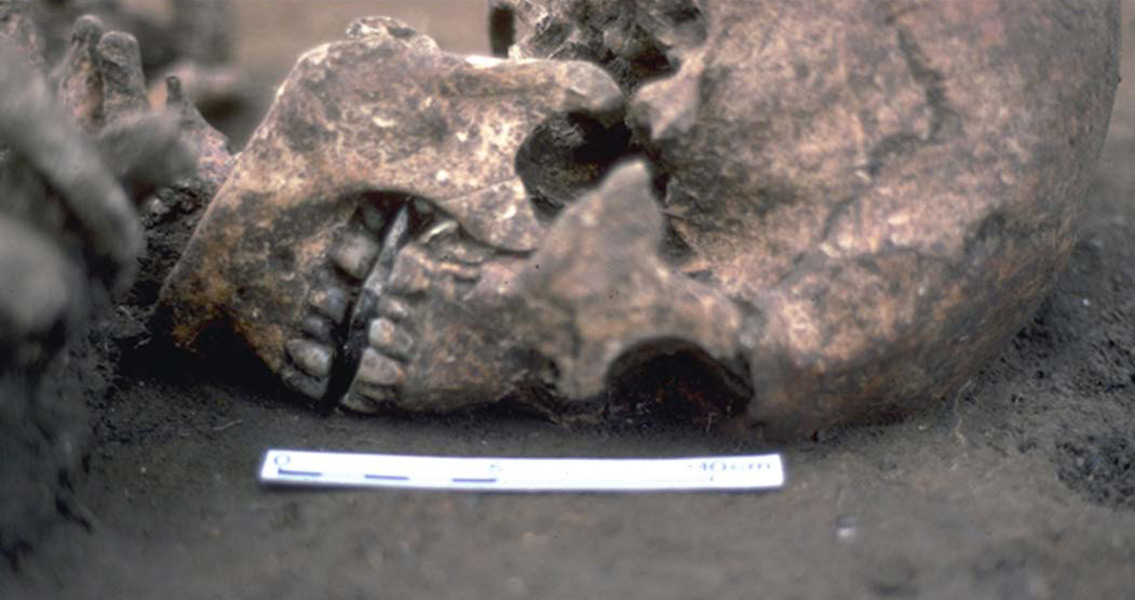
The Guardian. Archaeologists that studied the burial say that the man could have been buried in such a manner to prevent him from rising from the dead and terrorizing the living. Discovered near the river Nene at Stanwick, the original site dates to either the third or fourth century, when the region would have been dominated by small farming communities. Originally discovered in 1991, it was only recently that research methods had progressed to the point where specialist archaeologists and other experts from Historic England were able to uncover the complex mysteries of the burial. The mutilation in question is thought to have been unique among Romano-British remains, according to human skeletal biologist Simon Mays, who worked with Historic England to study the burial. Never before has such a practice been identified in the archaeological record, Mays added, remarking that the position of the body would have been consistent with an individual who was either a threat to a community – or just seen as distressingly, perhaps dangerously, odd. It’s difficult to pinpoint the age of the man when he died thanks to the lack of precision in modern methods. However, scientists feel that, based on the evidence they have gathered, the man is likely to have been at least in his thirties when he died – and that the fact that his tongue was severed could have been the result of a self-inflicted wound due to poor mental health. Another more sinister theory is that the loss of his tongue might have been meted out as punishment for some crime. There are ancient Germanic laws that prescribed the removal of the tongue as a punishment for malicious slander or bearing false witness, Mays said. There’s no known Roman laws to that effect, but researchers are looking into the possibility as the knowledge modern historians have about Romano-British practices are not nearly as complete as they could be. May said that the team latched on to the idea of the man’s tongue being amputated by looking at other Romano-British burials where missing body parts were replaced by foreign objects at appropriate anatomical locations. There’s around less than a dozen such identified instances, the majority of which are decapitations where a pot or a stone was placed in the grave in lieu of a head, the burial expert explained. With the stone found in the front part of the mouth, where the tongue would have been, the researchers felt it was a safe bet to conclude it had been placed there to take the place of a missing tongue. Corroborating evidence regarding the loss of the man’s tongue prior to his death came in the form of traces of bacterial infection in the bones of the mouth typical of the type of infection one would have received in the third or fourth century after having their tongue removed. Image courtesy of Historic England]]>

Categories
Breaking News

Timeline of Maya Collapse Pinpointed

Proceedings of the National Academy of Sciences, can be found here Image courtesy of Takeshi Inomata/University of Arizona ]]>

Categories
Breaking News

Archaeological Dig at Colosseum Yields Horse Skull

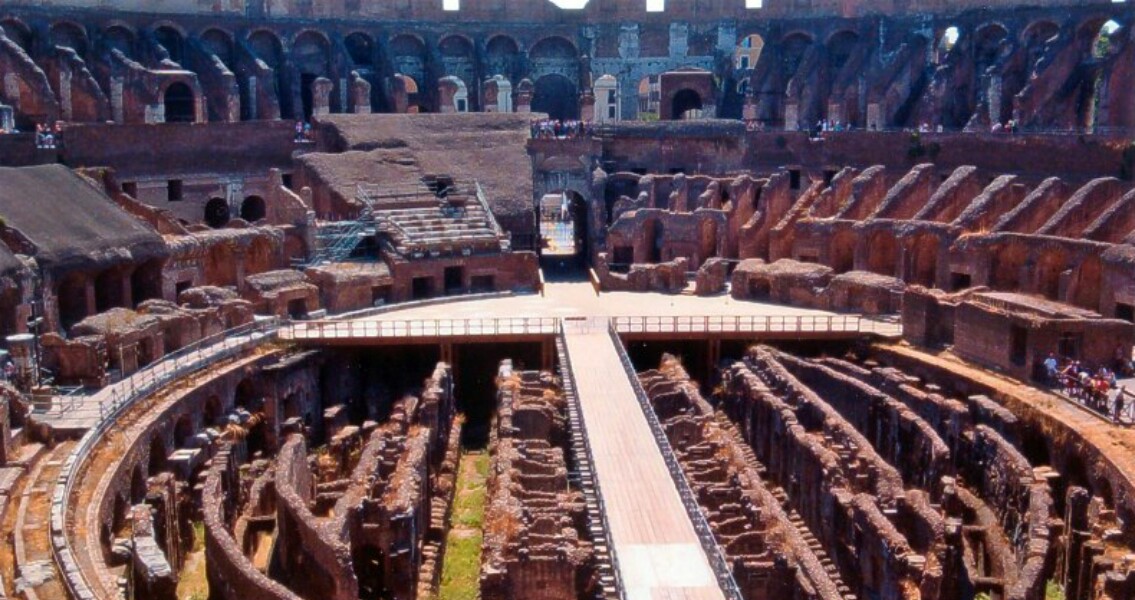
The Local. But hold your horses – this isn’t a Roman-era chariot horse the likes of which you would imagine in scenes reminiscent of Ben-Hur. Chariot races, of course, would have been held at Rome’s nearby Circus Maximus, not the Colosseum, which was primarily the home of gladiatorial combat (though this could have incorporated mounted combat at times). Instead, archaeozoologists say that the equine skull dates back to the twelfth or thirteenth century, well after the fall of the Roman Empire and placing it well out of reach of any bloodsport. In fact, the remains were discovered during routine cleaning of the steps leading down to the massive amphitheater’s basement levels, with the skull being found nearby, according to a statement made by Francesco Prosperetti, the Superintendent for Archaeology for Rome. For now, it’s unclear the age of the horse when it died, the state of health it was in, or just what it might have been doing in the neighborhood. During the twelfth century, large portions of the massive monument were rented out for commercial or residential use, which could have been why a horse would have been within the confines of the Colosseum. Meanwhile, from the late twelfth to the middle of the thirteenth century, the influential Frangipani family of Rome wrested control of the amphitheater away from other tenants, partially transforming the Colosseum into a fortress-like edifice, even going so far as to connect several family houses throughout Rome to the Colosseum by underground tunnel. If the horse skull comes from the period that the Frangipani were the lords of the Colosseum, the horse may have belonged to the family. The Frangipani would have been considered incredibly powerful during their heyday in early thirteenth century Rome. Originally known as the Onicii in the eighth century, the family changed its name to Frangipani. With the name bearing links to the Latin phrase for “breaking bread”, historians believe the family might have gained local fame for distributing food to the masses during a harsh famine. The tactic was widely used by influential families during the time period as a way to garner support among the populace. Whatever the Frangipani did seemed to have worked; the family played a pivotal role in the election of Pope Honorious II in 1124 CE. The family used a combination of bribery to pay off rival houses that supported the choice of Celestine II for the position and outright violence by literally physically attacking Celestine II during the ceremony that would have seen him become Pope officially. Whatever the case may be, the equine skull will need to undergo more thorough analysis before a clearer indication can be made. Once identified more definitively, the animal remains may join others found near the monument, which are on display at the Colosseum’s nearby museum. ]]>