Categories
Breaking News

65 Byzantine Tombs Discovered in Ancient City in Turkey

Hurryiet Daily News. Located today in the western Turkish province of Mugla, in the center of the Yatagan district, the long-ruined ancient city is thought to have been one of the largest marble cities of antiquity from its founding during the Hellenistic era. Bilal Sogut, the Pamukkale University professor in charge of the excavation, recounted how the tombs, which contained the remains of both adults and children, were just some of the recent finds, which also included artifacts from varied time periods and evidence of a settlement that would have existed 3,500 years in the past. The researcher, who referred to Stratonikeia as “a living archaeological city”, called the site unique for is various characteristics, which included a high number of ancient structures surviving to the present day. The city, which would have at one time been home to the Carians of central Anatolia before the arrival of the Greeks, also holds ties to the Leleges, a pre-Hellenistic people that were said to have been allies of Troy during the Trojan War, the archaeologist said. One of the primary finds, according to Sogut, was the nearly four-foot-long skeleton found within a Byzantine-era tomb that had been undergoing cleaning and preservation works. The remains are thought to have belonged to a young woman who lived nearly 1,300 years in the past. There are high levels of historical continuity, according to the archaeologists, especially on one of the main areas currently under excavation and study. A thoroughfare being called “Western Street”, which was a field repurposed as a graveyard after a church on the site had collapsed, was the location of the 65 Byzantine tombs. Sogut remarked that the finds are currently undergoing conservation, with work continuing into 2017 at the very least. Even when archaeological finds are too far eroded or destroyed by time to be reconstructed, tourists to Stratonikeia will still be able to glimpse what life would have been like in the ancient city; there are plans to virtually reconstruct much of the structures unearthed through the use of 3D visualization technologies. Sogut says that once the excavation, analysis, and conservation efforts are concluded, visitors will be able to see many of the ancient city center’s structures, as they have been “revived” thanks to the use of the 3D technologies. Providing visual three-dimensional physical representations of ancient structures leads to higher levels of impact on visitors, the archaeologist stated, adding that it provides better opportunities for understanding. The 3D rendering, combined with gravure drawings, will be prepared in time to show visitors by the next season, Sogut said. Hopes are high that Stratonikeia, which has been classified as a “Tentative” UNESCO World Heritage Site, will soon be transitioned to full status. Archeological finds such as these, and those uncovered by research teams in the past, can help to expedite this process. ]]>

Categories
Breaking News

Neanderthals Liked Picking Up Pretty Rocks Too

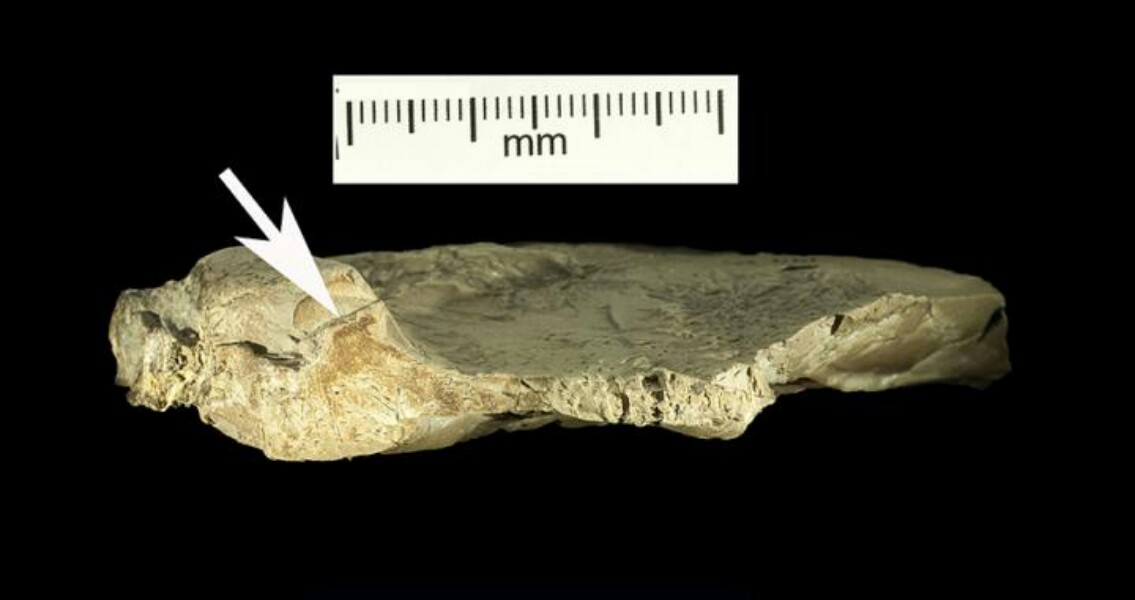
here Image courtesy of David Frayer, University of Kansas]]>

Categories
Breaking News

8,500-year-old Silk Found in Chinese Tombs, Oldest Evidence Ever

Live Science. Jiahu had previously been the location of other remarkable archaeological finds; the site has yielded evidence of the earliest known examples of playable musical instruments in the form of bone flutes. Additionally, evidence of what may be the earliest instances of Chinese as a written language was also found on the site. Legend has it that the wife of the Yellow Emperor was surprised when a silkworm cocoon fell into her teacup one day, yielding nearly a kilometer of thread after it was unraveled. While this is of course legend, as far as silk weaving and breeding silkworms for that goal goes, ancient tales seemed to radiate out from Jiahu and the surrounding area, according to archaeologist Decai Gong, the study’s co-author and a scientist from the University of Science and Technology of China at Heifei. Additionally, older research on Jiahu found that mulberry trees thrive in the warm and humid climate of the region; with mulberry leaves being the singular food of silkworms. Researchers collected soil samples from a trio of tombs located at Jiahu. After chemical analysis, two of these three tombs were found to have had silk proteins in their samples. One of these two tombs has been dated to 8,500 years old, making the discovery the earliest evidence of the use of silk in ancient China according to Gong – extending back much further than the previous 5,000-year date. There are difficulties in understanding how silk would have been used at Jiahu, researchers say. However, the scientists made the suggestion that those interred in the tomb might have been wrapped in silk garments. The discovery of weaving tools and bone needles at the site seems to support that idea, as it suggests that the residents of Jiahu possessed the basic sewing and weaving skills needed. In fact, Gong said that it would not have been impossible for those living in Jiahu at the time to have created fabric from silk. The researchers say that they will continue to look for evidence of silk at the Jiahu tombs in the future. Gong added that other nearby sites will also be examined for trace evidence as well. The research study, published recently in the journal PLOS ONE, is available online here]]>

Categories
Breaking News

Excavation of Crusader-Era Castile in Galilee Reveals Much

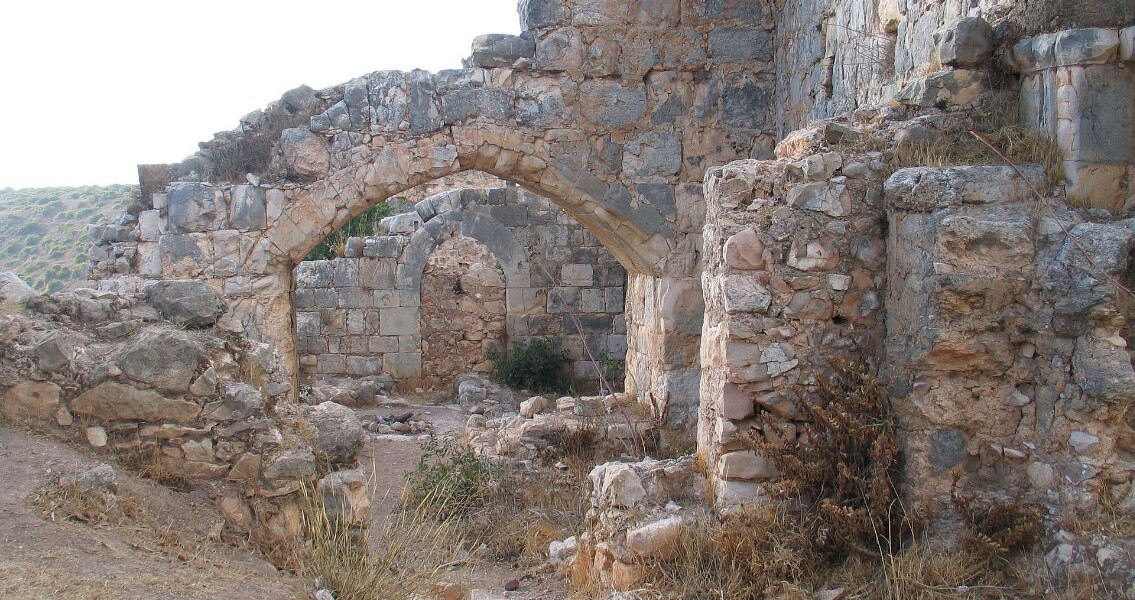
Haaretz, archaeological studies conducted by a team from the University of Haifa have revealed how life would have been like in the Crusader castle, which famously fell to the Mamluks after a 15-day siege in 1271. New finds, collected during the 2016 excavation season, include fragments of armor such as chain mail and scale mail, old arrowheads and iron slag from one of the fortress’ forges. A large cache of glassware and several coins from the thirteenth century were also recovered, according to university professor Adrian J. Boas. Despite the monastic nature of those living there – the military monks of the Teutonic Order – there would have been plenty in the way of creature comforts, archaeologists found. Leisure time activities such as playing Nine Man’s Morris, a common board game during the era, would have been available, judging from the board and game pieces found at the site. A workshop for creating objects from bone like buttons and crossbow nuts was also found, and the diet of the Teutonic knights that lived at Montfort Castle included cattle, sheep, deer, turtles, and hogs imported from Europe, according to the remains discovered at the site. Additional finds at the site include round tunic buttons and belt buttons, providing indications as to how Crusaders dressed and what their grooming habits would have been during the thirteenth century. The castle’s stables were also discovered during the latest excavations, revealing a roof that had been held aloft by beams and a flagged floor. Strewn within the debris were bells, saddling buckles, horseshoes and nails, and axes and shovels as well. The layout of the stables was found to be similar to other Crusader-built ones elsewhere in the Middle East, especially those found at Atlit’s Templar castle – despite the bitter enmity that grew between the Teutonic knights, the Templars, and other Crusader orders such as the Hospitalers. In fact, the location of Montfort Castle may have been partly chosen for its relative isolation. Nestled between several hills, it would have not drawn attention to itself in the way a traditional fortress overlooking farmland, roads or settlements would have. The Teutonic Order likely used it as an administrative center and archives, far from the reach of the Hospitalers and Templars who were vying for control and dominion over Christian holdings in the Middle East. These archives are thought to have survived the siege, even after Mamluk forces captured the fortress. The garrison was spared by Mamluk leader Sultan Baibars, escorting the knights safely back to Crusader-held Acre, along with their records. The sultan destroyed the castle after it was vacated, in accordance with the “scorched earth” policy he had been employing against European invaders as the Mamluks drove them from the Middle East. ]]>

Categories
Breaking News

Archaeologist’s 15 Year Fight to Recognize Lost City Pays Off

Categories
Breaking News

Possible Remains of 17th-Century Fortress Found in Osaka

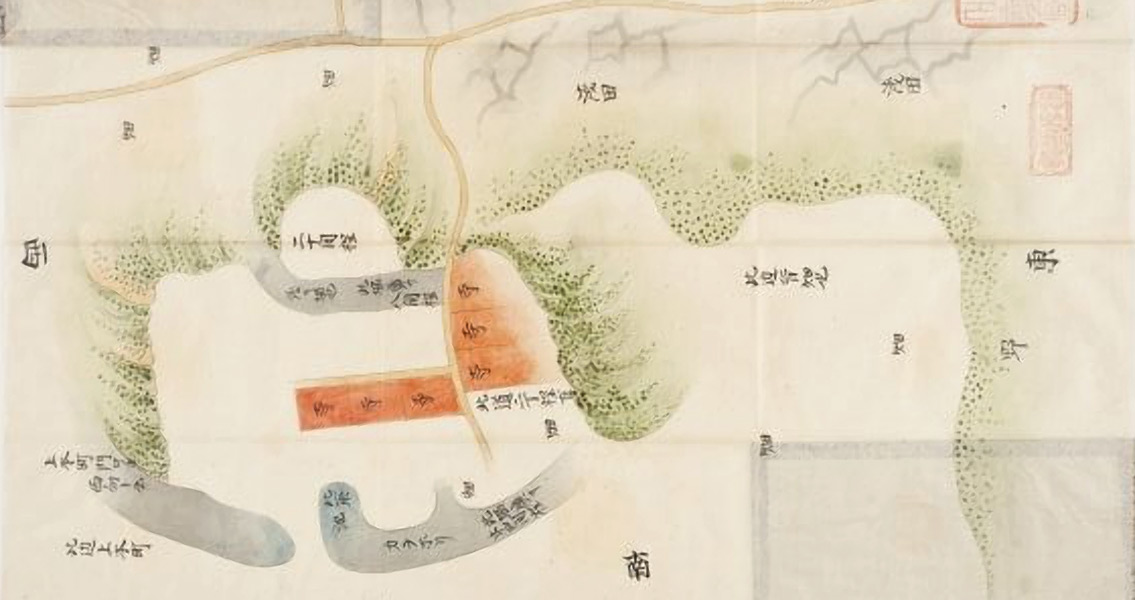
Asahi Shimbun, the Sanada Maru Excavation Promotion Council has announced the discovery in the Tennoji Ward of Osaka’s Esahi-machi district. The private organization recounted how they had found a layer of artificially filled soil at the site, lending weight to their hypothesis that the rectilinear fortress would have been larger than was previously thought. Sanada Maru was a branch of Osaka Castle that would have projected from the south side of the castle’s general frame moat, or Sogamae. The moat would have otherwise defined the furthest border of the castle, built and maintained by the Toyotomi clan. Sanada Nobushige, who also went by the name Sanada Yukimura, was an ally of the Toyotomi during the winter campaign of 1614 at the Siege of Osaka, defending the fortress from the forces of Shogun Tokugawa through 1615 until a peace accord was reached. For many years, the shape of the fortress was thought to have been a semicircle, based on historical drawings. However, Nara University archaeology professor Yohihiro Senda, the leader of the research group, says that he and his colleagues have determined that Sanada Maru could have been square. Senda remarked that the impetus behind this new theory is from not just other drawings but also historical topographic charts as well as aerial photos and additional evidence. The layer of artificial fill was discovered during an excavation across 70 square meters of area near the northern end of the plot, close to what resembled the remains of a moat on an ancient map. A moat-like depression also remains on the southern area, providing indications that there may have been earthworks surrounding the ancient fortress – and researchers feel that the filled-in layer may be evidence of these earthworks. The terrain surrounding Sanada Maru was likely not changed significantly during its demolition, Senda remarked, pointing out that the fill layer was found above natural ground. The professor added that this makes it possible to make estimations as to the size and shape of the fortress by drawing from present-day topographical features. While the site in large part comprises the grounds of the Osaka Meisei Gakuen secondary school, there’s enough leftover evidence to reconstruct Sanada Maru in a rectangular shape, Senda commented. The walls would have run around 300 meters east-to-west and 350 meters from north-to-south, which would have included the breadth of the moat, according to the professor. Senda and his team plan on presenting the entirety of their findings by either February or March of 2017 in a session that will be open to the public. The findings are timely, as the NHK’s annual televised historical drama for 2016 was based on the Siege of Osaka and was in fact called Sanada Maru. Nobushige is of course a central character in the series, portrayed by Japanese television and film actor Masato Sakai. ]]>

Categories
Breaking News

Archaeologist May Get to Return to 30-Year-Old Hawaiian Dig Site

Categories
Breaking News

Solutions to Climate Change Found in Archaeology

Proceedings of the National Academy of Sciences. All of the authors are from Washington State University, and all of them have taken advantage of computational modelling in their archaeological and anthropological studies. A pioneer in the field of model based archaeology, Kohler developed computer based simulations known as agent-based models, of the interactions between peoples in the American Southwest and their environment. He used these to simulate how virtual Pueblo Indian families, living on computer-generated and geographically accurate landscapes, probably would have responded to changes in specific variables like precipitation, population size and resource depletion. Comparing the results of such agent-based models with real archaeological evidence allows anthropologists to identify the conditions and situations that challenged our ancestors, and how successfully they responded to those challenges. Agent-based modelling can also be used to assess the impacts humans had on their environment during periods of climate change. One study mentioned in the PNAS article described how drought, hunting and competition for habitats led to the extinction of many large mammals in Egypt in 3,000 BCE. Meanwhile, d’Alpoim Guedes and Bocinsky are studying the effects of settlement patterns in Tibet on erosion. “Agent-based modeling is like a video game in the sense that you program certain parameters and rules into your simulation and then let your virtual agents play things out to the logical conclusion,” said Crabtree, who completed her Ph.D earlier this year. “It enables us to not only predict the effectiveness of growing different crops and other adaptations but also how human societies can evolve and impact their environment.” Crop niche modelling is perhaps the most significant application of the fusion of computer simulations with traditional archaeological methods, allowing researchers to predict which plants managed to grow in defiance of drought in the past. Bocinsky and d’Alpoim Guedes are using the technique to find forgotten crops from history which could be useful in areas where the food supply is currently affected by disease or drought. They’ve already discovered a strain of drought-tolerant corn the Hopi Indians of Arizona adapted over the centuries to prosper in poor soil. “Our models showed Hopi corn could grow well in the Ethiopian highlands where one of their staple foods, the Ethiopian banana, has been afflicted by emerging pests, disease and blasts of intense heat,” Bocinsky said. “Cultivating Hopi corn and other traditional, drought-resistant crops could become crucial for human survival in other places impacted by climate change.” The WSU researchers have also identified a crop which could be used as an alternative food source on the Tibetan Plateau – a region blighted by rising temperatures which make it difficult for inhabitants to grow their traditional cold weather crops, and breed yaks. In a 2015 paper, Bocinsky and d’Alpoim Guedes found that foxtail and proso millet, which stopped being cultivated on the Plateau 4,000 years ago as the climate cooled, could once again become viable food sources. “These millets are on the verge of becoming forgotten crops,” d’Alpoim Guedes said. “But due to their heat tolerance and high nutritional value, and very low rainfall requirements, they may once again be useful resources for a warmer future.” With so much anthropological data from around the world yet to be digitised, scientists are only just scratching the surface of the insights that could be gleaned from our ancestors, using archaeology based modelling. “The (archaeology) field is in the midst of a renaissance toward more computational approaches,” Kohler said. “Our hope is that combining traditional archaeology fieldwork with data-driven modeling techniques will help us more knowledgeably manage our numbers, our ecosystem interactions and avoid past errors regarding climate change.” ]]>

Categories
Breaking News

Newgrange Sun Trap May Be Only 50 Years Old, Scientist Says

The Irish Times, is that Newgrange would have been a significant “Hiberno-Roman cult site” during the Iron Age. These findings are supported by “underplayed” discoveries made at the location by O’Kelly, Gibbons states. This overlooked or underplayed material includes valuable Roman coins, a gold ring, a bracelet, pendants, and torcs. Additional evidence of horses and dogs was likewise found, as well as signs of elks or stags, dating to the late seventeenth century and later. Scientists have commented on Gibbons’ new research with mixed remarks, on the one hand agreeing that O’Kelley had downplayed the evidence at the site of activity during the Iron Age; on the other finding the idea that the roof box was a modern construct hard to swallow. Dr. Richard Hensey, the author of a recently published study on Newgrange, says that several studies have indicated the extreme age of the roof box, placing it at 5,000 years old.]]>

Categories
Breaking News

Iranian Researcher Finds Some of the Oldest Rock Etchings In Existence

The Independent. The problem is that he can’t know for sure just how old these rock carvings are. A major hurdle – one that can’t be easily overcome – is the fact that sanctions are imposed on Iran by the United States, posing difficulties in data access and analysis tools. Despite these disadvantages, Dr. Naserifard has spent more than a decade in his journeys across the length and breadth of Iran, claiming to have found 50,000 ancient engravings and paintings. Despite the lack of help from the United States, archaeologists from other countries around the world have occasionally pitched in to help Dr. Naserifard. Such an instance occurred in 2008 when Dutch researchers accompanied the Iranian on a visit to the area, evaluating a series of drawings that had been made with the use of cups and determining that they could have been made as much as 40,000 years in the past. Meanwhile, one of the most noteworthy finds is that of the engraved figure of an ibex, a type of deer with long, curled horns. The piece is thought to be 4,000 years old and but one of several similar pieces of prehistoric art that adorn the trail. These discoveries are slowly but surely building evidence for a hypothesis that modern humans began to develop common art traditions well before any diaspora from the Middle East, Dr. Naserifard remarked. He described his excitement in finding these ancient works of art as comparable to “finding treasure.” However, US sanctions have deprived Dr. Naerifard and colleagues of access to much-needed technology used in analyzing and dating samples. The archaeologist has high hopes that such technology can be brought into Iran in order to provide better, more accurate data concerning these engravings. With the US ban on fissionable materials being sent to Iran, scientists within the country lack analysis tools that rely on uranium to conduct much of their research. The technology is being used in other regions of the world as an alternative to radiocarbon dating, as it provides accurate estimations as to the date an object was created. Despite the many limitations his research has faced as a result of the ban, the archaeology professor says he has plans to continue his work, involving other archaeological institutions from around the globe in order to help document his many finds. Hopes are that such international attention may provide avenues for a more accurate date analysis of the ancient art. ]]>