


here ]]>


The Times of Israel, dig leader Gilad Itach remarked that the figurine was discovered on the very final day of excavations, just prior to modern construction efforts commencing at the site. The pot itself is relatively characteristic of the period, Itach stated, but the statue that was added after it had been created is unique, as there have never been any discoveries of such a figurine in previous digs. Archaeologists say that the sculpture features an incredible attention to detail for its age. The arms and legs, as well as the face, seem to have been added on to the neck of the jug which was used as the base for the formation of the upper torso of the figure. Along with the figure, which measures seven inches in height, a large number of other items were found as well. Sheep and donkey bones were discovered at the dig site, in addition to an ax head, arrowheads and daggers. The items were likely used as burial goods, Itach explained, probably for the grave of one of the Canaanites who inhabited the region during the Middle Bronze Age. It would have been customary to provide a large number of funeral goods for prominent members of the community, the researcher remarked, as beliefs were that the objects individuals were interred with would have traveled with them to the next world. To Itach’s knowledge, this is the first burial to feature such a wide assortment of objects, especially the remarkable pottery find. The resemblance to “The Thinker” is quite uncanny. The face of the figure rests on one of its hands as it sits on the pot, looking as if it is lost in thought. There’s no way of telling whether the potter who created the jug added the figure or if a second craftsman did so, Itach added. The Yehud dig site yielded more than just the unique set of burial goods. Several other artifacts were discovered that date even older than the Middle Bronze Age, including a shattered earthenware butter churn and the remains of what might have been an ancient well dating to the Chalcolithic period, around 6,000 years in the past. Meanwhile, an earlier archaeological dig in Yehud in close proximity to the location of the statue revealed a massive necropolis dating to the Bronze Age containing nearly 100 pit graves. The remains of men, women and children were found within, complete with grave goods that included jewelry, animal bones, scarabs, pins, daggers and pots. Researchers say that the location saw continued use as a cemetery for several centuries afterwards as well. Images of the newly discovered artifact can be found here: here ]]>

Live Science, researchers from the Norwegian Institute for Cultural Heritage Research (NIKU) say that they have found the remains of the church where the Norwegian king’s body was taken in 1031, when he was raised to sainthood and became known as Saint Olaf. The former Viking raider was baptized into the Roman Catholic faith in 1013, shortly before embarking on a quest to unite the disparate kingdoms of Norway under a single ruler – a task he accomplished in 1016. Olaf ruled as king until 1028, when he was deposed and forced to flee to Russia. In 1030 he attempted to retake the throne, only to be killed in battle at Trondheim, where he was buried. The following year, after rumors had spread how the dead king had been associated with the performance of many local miracles, his body was exhumed. Upon discovering that Olaf was in a state that satisfied the church’s requirements for miraculous preservation, the English Bishop Grimkell declared Olaf a saint, having him reinterred in St. Clement’s Church. While the earthly remains of St. Olaf no longer reside on the site – they were relocated to the site of Trondheim’s Nidaros Cathedral at a later date – NIKU researchers now believe they have found the stone foundation of the original St. Clement’s Church. Additionally, a small rectangular stone platform was uncovered at the east end of the building, which archaeologists surmise as the base of the altar of the church – the very same alter that would have been constructed over the grave of Saint Olaf. Anna Petersén, the site’s excavation director, remarked that the church has a unique place in the intersection of Norwegian politics, culture, and religion. Put in a historical perspective, a large proportion of the Norwegian national identity has its roots in the canonization of Olaf Haraldsson, and the recently discovered church is literally the place where that process began. In life, King Olaf was arguably Christian in name only, as while he had been baptized to the Catholic faith his rule is categorized historically as harsh enough to warrant him becoming deposed in 1028. A former Viking raider, Haraldsson spent time in England, where he pledged his sword to King Ethelred to fight against the Danes, a common enemy – King Canute of the Danes was instrumental in providing support to the Norwegian nobles that overthrew their heavy-handed monarch a little over a decade into his reign. While Bishop Grimkell declared the dead king a saint in 1031, he was not officially recognized as such by the Roman Catholic Church until 1164, when he was canonized by Pope Alexander III. Despite his problematic reign, Saint Olaf is seen as a figure of Norwegian independence. The Norwegian coat of arms features a representation of Saint Olaf in the form of the ax held by a crowned rampant lion on a red field. ]]>

the Telegraph, the seven-year-long excavation of the remaining corner of the Circus Maximus yielded massive archaeological finds. Items such as fragmented golden bracelets and necklaces, a gilded glass goblet with the image of a horse, and over 1,000 bronze coins dating to the third century CE were found within the ruins. Additional finds include the remains of a triumphal arch, constructed of Tuscan white marble, erected in honor of Emperor Titus’ quashing of the Jewish Rebellion in 70 CE. The arch itself would have been the largest of its kind at the time it was constructed, according to Marialetizia Buonfiglio, the archaeologist who spearheaded the excavation efforts. Its position drew the eyes of everyone within the arena, and was used as the spot where Roman emperors would enter the Circus Maximus, often to the roars of hundreds of thousands of patricians and plebeians alike. It is thought that the Circus Maximus was used for sporting events as far back as around 800 BCE, as Romulus, the mythical founder of Rome, is said to have hosted horse races on the central track. The Imperial Roman-era version of the complex was largely destroyed in 64 CE in a fire; subsequent emperors attempted to rebuild it, and the final touches were put on the reconstruction efforts – at great expense – by Emperor Trajan in 104 CE. Games continued to be held there until the sixth century CE. There is still plenty to discover by archaeologists when it comes to the Circus Maximus. The original chariot track, for example, is still buried beneath approximately 30 feet of accumulated soil and rubble, a result of the disused sports complex being repurposed as farming fields and even industrial factories by the nineteenth century. During the early to mid-twentieth century, the Circus Maximus was repurposed once again, most notably by Mussolini, as a parade ground for displays of fascist propaganda. ]]>

Discovery News. The well, measuring 6.5 feet square, was built with locally sourced sandstone blocks. It consists of the square basin with two steps. After going down the steps, pilgrims would submerge themselves in the pool, which was around 4 feet deep. Water seeped in from below the floor. “The fabric of the well is consistent with a Medieval date,” Quartermaine says in Seeker. “This well was probably a late Medieval foundation as the cult of St. Anne did not become widespread in England until after the end of the 14th century.” The dating is crucial according to Alexandra Walsham, with Cambridge’s Trinity College, who told Seeker that “a Medieval past for many healing wells was assumed or even invented by later antiquaries, especially in the 19th century.” According to local legend, recorded in documents held by Historic England Heritage, St. Anne’s Well was part of an estate held by a priory of around twelve monks which was lost when Henry VIII disbanded the monasteries. The story says that St. Anne had taken a bath in the well, which was said to heal skin and eye afflictions. Attracting a number of pilgrims, a small three-room structure was built around the well, and two monks were stationed there. Local folklore tells of a sixteenth century dispute between Father Delwaney, the prior, and Hugh Darcy, the manager of the neighboring estate, over property lines and access to the well. On one occasion, as the two stood near the well, Darcy predicted that Father Delwaney wouldn’t have his position for much longer. Two days later when the King’s officials arrived at the priory and proceeded to take possession of it and the well, the prior knew Darcy was to blame. A report on local legends published in 1877 in the St. Helens Leader, describes what happened next. The prior hissed out a curse, “With teeth tightly clenched, and his face white with suppressed passion.” Delwaney announced that Darcy would be dead within one year and a day, and then he collapsed and died. Inexplicably, a series of tragedies did befall Darcy. Three months after the prior’s curse, Darcy’s only son died after a mysterious illness, he suffered financially and “plunged recklessly into dissipation”, according to the St. Helens Leader. After a night of heavy drinking at a local tavern, he disappeared. “The search began. Nothing was seen until they came to the well, in which Darcy was found lying dead, his head crushed in”. Despite the legend, the well was revered and sought out, even after the dissolution of the priory, and people submerged themselves in the well waters up until the nineteenth century. Work is now underway to preserve and protect the site. Image courtesy of Jamie Quartermaine]]>
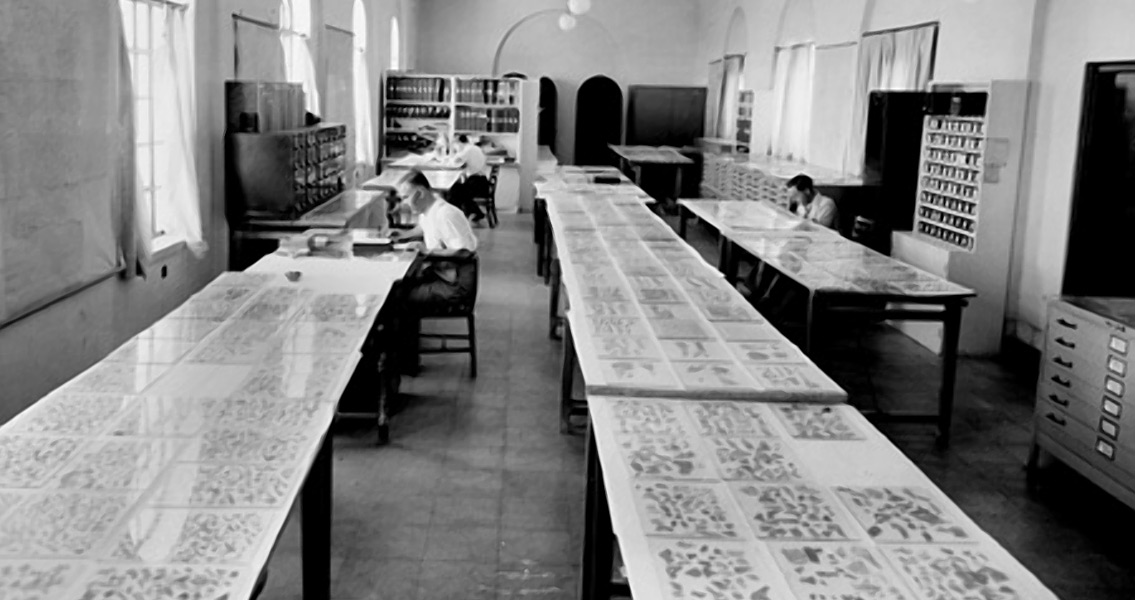
Dead Sea Scrolls has been published, providing a priceless look into the state of the Hebrew Bible nearly 2,000 years in the past. According to a recent story in Live Science, archaeologists have announced the publication of two books containing the fragments. Within these excerpts, researchers uncovered some of the promised rewards for the Hebrews that abided by the rules God put down for them so famously in the Book of Leviticus in the form of the Ten Commandments, among countless others. These fragments, discovered on the West Bank within caves at the archaeological site of Qumran, come from a wide array of books of the Torah, the Hebrew Bible – known as the Old Testament to those of the Christian faith. In addition to the books of Genesis, Exodus, and Leviticus, as many as 15 other books of the Torah are represented in these scroll fragments, including the books of Deuteronomy, Samuel, Ruth, Kings, Micah, Nehemiah, Jeremiah, Joel, Joshua, Judges, Proverbs, Numbers, Psalms, Ezekiel and Jonah. One of the two books, published by The Schøyen Collection, international collectors of landmark cultural manuscripts, includes newly-translated passages from the Book of Leviticus that delineate God’s promises of reward to the Hebrews. For observing the Sabbath and following the rest of the Ten Commandments, the fragment promises the faithful that their fields will be fertile and without drought, and that they will be blessed with peace: “I will look with favor upon you, and make you fertile and multiply you,” the fragment concludes. These scroll fragments are among the most ancient biblical manuscripts ever to be discovered by archaeologists. Originally placed within the caves of Qumran to safeguard them against vengeful Roman armies sent to quell revolution in Judea during the Second Temple period, the scrolls themselves have been radiocarbon dated to dates as ancient as 200 BCE. A combination of radiography and paleographic dating techniques has resulted in an age range of 385 BCE to 82 CE. Nearly 900 manuscripts were uncovered in Qumran during archaeological study ranging from 1947 to 1956. Who wrote the Dead Sea Scrolls is largely unknown. Many point to the Essenes as the scribes of these manuscripts, a sect of devout Jews that lived under Roman rule in Judea. Research and investigation is still underway on these fragments to ensure that they are not forgeries. Once questions of authenticity are answered fully, these fragments are likely to be incorporated into existing museum exhibits both in Israel and around the world. While the arid conditions of the Judean desert helped to preserve these scroll fragments for nearly two millennia, exposing them to handling and study has led to an increased risk of deterioration. Digital imaging techniques developed by tech giant Google have contributed to the distribution of virtual copies of these fragments around the world to aid in their study. Providing digital versions of these scrolls has enabled Israeli archaeological officials to preserve the physical fragments while still subjecting them to rigorous academic study. ]]>

ChinaDaily, Department of Culture head for Jiangji Province Chi Hong remarked that the finds will be put on display after conservation efforts have been completed, and that archaeological researchers are hard at work removing the accumulated detritus left behind by two millennia of entombment. Liu He, the individual interred within the tomb, was found buried with several jade artifacts. Sharing the coffin with the remains were an oversized jade pillow, which Liu He was laid to rest on, as well as a sword and pendant made from the same material. Other artifacts made from jade include a seal inscribed with the man’s name laid across his waist. A gilded glass mat lies beneath Liu He, itself lying upon a pile of 100 pieces of gold cakes. The amount of gold pulled from Haihunhou tomb has already broken all Chinese archeological records. 478 individual artifacts have been discovered so far throughout the tomb. Other treasures, such as jade-inlaid bronze plaques, gilded bronze boxes and beads of agate were also found within several lacquered wooden boxes within the coffin identified through X-ray imaging techniques. Ancient Chinese literary works, such as ‘The Medical Book’, ‘The Book of Rites’, ‘The Book of Changes’, and ‘The Analects of Confucious’ were also found within the tomb, all of which were written on more than 5,000 individual slips of bamboo. These slips have been subjected to infrared scanning in order to clarify the writing, long since faded to near-illegibility, and work continues to further scan, clean and solidify these texts, to be completed by the end of the year. Additional research on these bamboo texts will begin in 2017, according to Chi Hong. Liu He, who lived from 92 BCE to 59 BCE, was given the title of Marquis Haihun after his dethronement. The Western Han monarch’s reign only lasted for 27 days, the shortest of its kind. Records dating from the time period say he was deposed because his lifestyle was considered exceedingly inappropriate for the time, as he neglected to comply with many of the Han Dynasty’s cultural taboos prohibiting certain actions during the mourning period for the recently deceased Emperor Zhao, Liu’s uncle. A total of 1127 misconducts were recorded by the Dynasty and used as justification for his dethronement. ]]>