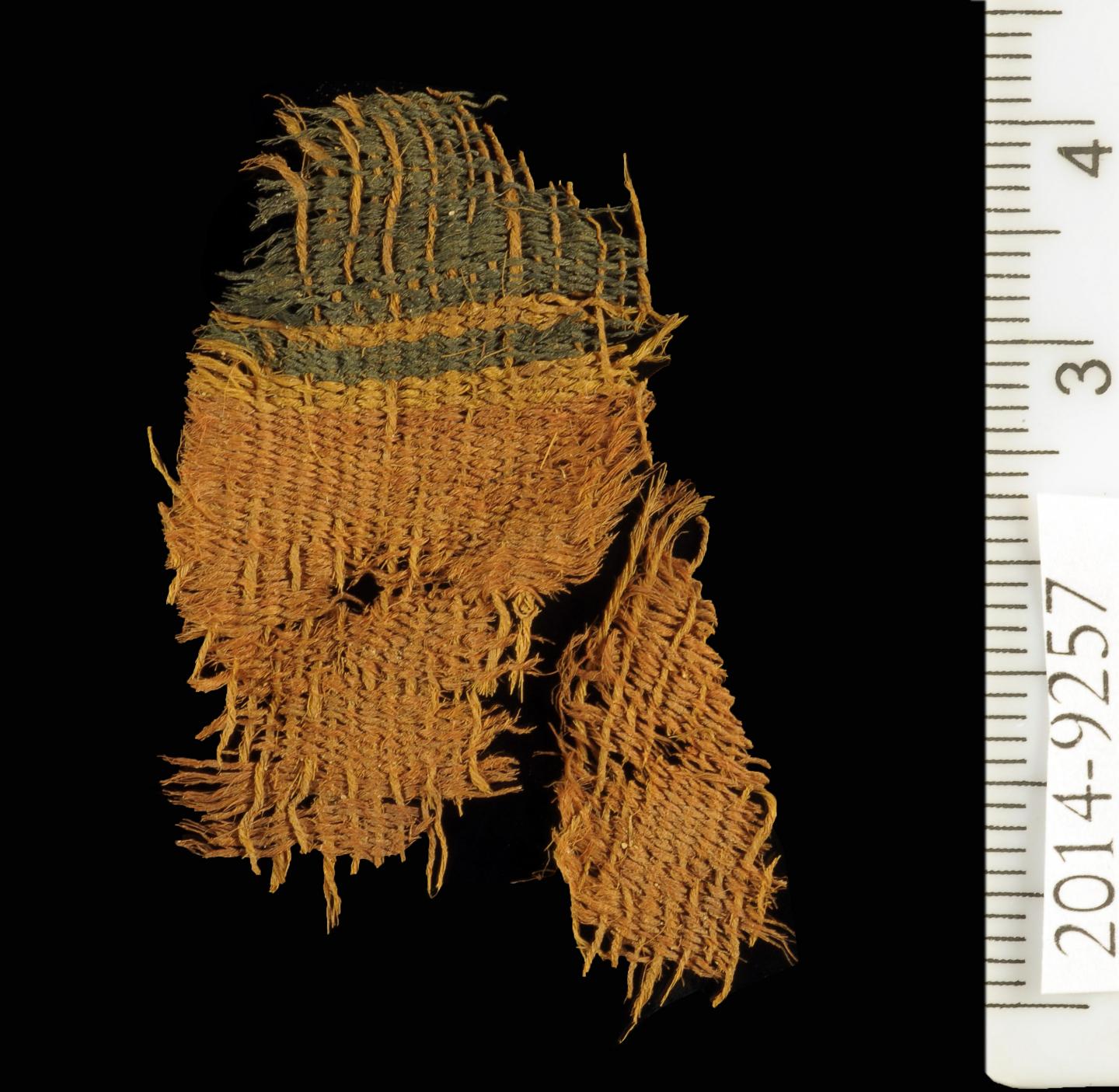
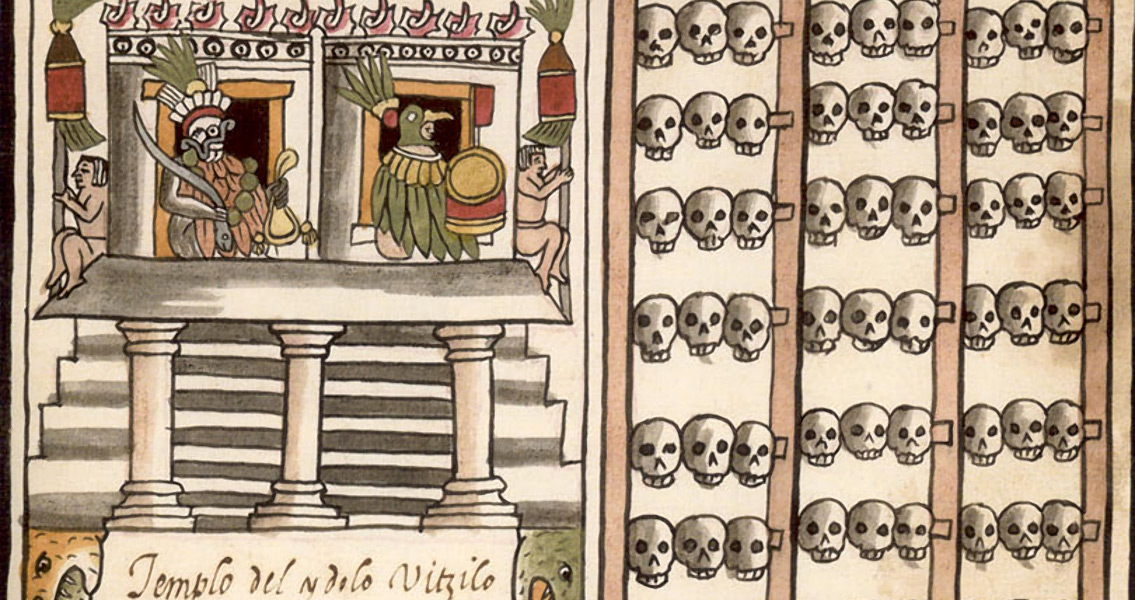
Aztec Tower of skulls discovered in Mexico A tower of human skulls discovered in Mexico could lead to a rewrite of Aztec history, according to the Independent. Following an eighteen-month investigation, archaeologists unearthed more than 675 skulls of men, women and children. It is believed the structure could be a part of the Huey Tzompantli, a legendary rack of bones described by the Conquistadors as they made their way through what is now Mexico. Traditionally, it was believed the Huey Tzompantli was made from the skulls of soldiers killed in inter-tribal conflicts before the arrival of Europeans to the New World. The discovery of female and child skulls in the tower has therefore perplexed archaeologists. “We were expecting just men, obviously young men, as warriors would be, and the thing about the women and children is that you’d think they wouldn’t be going to war,” Rodrigo Bolanos, a biological anthropologist investigating the find, told the Independent. “Something is happening that we have no record of, and this is really new, a first in the Huey Tzompantli,” he added. The structure lies close to Templo Mayor, a major Aztec temple which was used for human sacrifices. Archaeologists are continuing to investigate the site, and are still finding new remains as they try to work out the significance of the tower of skulls. The changing colour of the Statue of Liberty The Statue of Liberty is one of the most iconic symbols of New York City and the United States, but the 305-foot-tall statue hasn’t always been its distinct blue-green colour. When the copper statue, a gift to the US from the people of France, arrived in New York harbour in 1886, it was a reddish brown. The colour change through the years is largely down to a series of reactions as the Statue of Liberty’s copper skin has come into contact with chemicals in the air of New York Harbour. Now, a video from the American Chemical Society and PBS Digital shows the changes in the epic monument’s skin, from penny red through chocolate brown to its current liberty green. Available to view on Youtube, the video is part of the Reactions series, aiming to show the chemistry present in everyday life. Evidence of chemical dyeing from the time of David and Solomon 3,000-year-old cloth samples found in Israel’s Arave Desert are the earliest evidence of chemical dyeing ever found in the region, researchers say. According to a press release from American Friends of Tel Aviv University, the wool and linen pieces point to a sophisticated textile industry and reveal details about a deeply hierarchical society dependent on long-distance trade to support its infrastructure in the harsh desert. “This was clearly a formative period, with local kingdoms emerging and replacing Egyptian hegemony in Canaan,” Dr. Ben-Yosef, a co-author of a study in the journal PLOS ONE detailing the find, said. “These beautiful masterpieces of weaving and dyeing — the first evidence of industrial dyeing at the time, of wash-resistant color on textile — support the idea of a strong, hierarchical Edomite Kingdom in Timna at the time. “It is apparent that there was a dominant elite in this society that took pains to dress according to their ‘class,’ and had the means to engage in long-distance trade to transport these textiles — and other materials and resources — to the desert.” After radiocarbon dating the textile pieces and using gas chromatography to identify the cloth’s organic materials, the researchers found “red” molecules produced from the madder plant and “blue” molecules from the woad plant. “Both plants were known in antiquity as sources of organic dyes,” said Dr. Ben-Yosef. “We know that these plants were used to create elaborate costumes during the Roman period, more than a thousand years later. Now we have evidence in the region of an Edomite society wearing textiles produced the same way, versus an earlier ‘primitive’ smearing of color on fabric.” “We can make many inferences according to this discovery,” Dr. Ben-Yosef continued. “To force a large group of people to work in dangerous mines in the desert, you need a strong ruling party — an elite that probably wore exquisite clothes to further distinguish themselves. The smelters, working in furnaces, were considered ‘magicians’ or even priests, and they probably wore fine clothing too. They represented the highest level of society, managing a sensitive and complex process to produce copper from rock.” Fascinatingly, the artefacts provide evidence of long distance trade in the region. The plants used to create the dyes most likely originated in the Mediterranean area. The dyeing process itself meanwhile, required specialist crafts people, an industry that could not have subsisted in the desert. “If Jerusalem was indeed opulent in the time of King Solomon, and the Temple covered in copper, we can assume a link to that kingdom”, explained Ben-Yosef. Image by Clara Amit, courtesy of the Israeli Antiquities Authority.]]>