Categories
Breaking News

History News of the Week – An Aztec Tower of Skulls

Aztec Tower of skulls discovered in Mexico A tower of human skulls discovered in Mexico could lead to a rewrite of Aztec history, according to the Independent. Following an eighteen-month investigation, archaeologists unearthed more than 675 skulls of men, women and children. It is believed the structure could be a part of the Huey Tzompantli, a legendary rack of bones described by the Conquistadors as they made their way through what is now Mexico. Traditionally, it was believed the Huey Tzompantli was made from the skulls of soldiers killed in inter-tribal conflicts before the arrival of Europeans to the New World. The discovery of female and child skulls in the tower has therefore perplexed archaeologists. “We were expecting just men, obviously young men, as warriors would be, and the thing about the women and children is that you’d think they wouldn’t be going to war,” Rodrigo Bolanos, a biological anthropologist investigating the find, told the Independent. “Something is happening that we have no record of, and this is really new, a first in the Huey Tzompantli,” he added. The structure lies close to Templo Mayor, a major Aztec temple which was used for human sacrifices. Archaeologists are continuing to investigate the site, and are still finding new remains as they try to work out the significance of the tower of skulls. The changing colour of the Statue of Liberty The Statue of Liberty is one of the most iconic symbols of New York City and the United States, but the 305-foot-tall statue hasn’t always been its distinct blue-green colour. When the copper statue, a gift to the US from the people of France, arrived in New York harbour in 1886, it was a reddish brown. The colour change through the years is largely down to a series of reactions as the Statue of Liberty’s copper skin has come into contact with chemicals in the air of New York Harbour. Now, a video from the American Chemical Society and PBS Digital shows the changes in the epic monument’s skin, from penny red through chocolate brown to its current liberty green. Available to view on Youtube, the video is part of the Reactions series, aiming to show the chemistry present in everyday life. Evidence of chemical dyeing from the time of David and Solomon 3,000-year-old cloth samples found in Israel’s Arave Desert are the earliest evidence of chemical dyeing ever found in the region, researchers say. According to a press release from American Friends of Tel Aviv University, the wool and linen pieces point to a sophisticated textile industry and reveal details about a deeply hierarchical society dependent on long-distance trade to support its infrastructure in the harsh desert. “This was clearly a formative period, with local kingdoms emerging and replacing Egyptian hegemony in Canaan,” Dr. Ben-Yosef, a co-author of a study in the journal PLOS ONE detailing the find, said. “These beautiful masterpieces of weaving and dyeing — the first evidence of industrial dyeing at the time, of wash-resistant color on textile — support the idea of a strong, hierarchical Edomite Kingdom in Timna at the time. “It is apparent that there was a dominant elite in this society that took pains to dress according to their ‘class,’ and had the means to engage in long-distance trade to transport these textiles — and other materials and resources — to the desert.” After radiocarbon dating the textile pieces and using gas chromatography to identify the cloth’s organic materials, the researchers found “red” molecules produced from the madder plant and “blue” molecules from the woad plant. “Both plants were known in antiquity as sources of organic dyes,” said Dr. Ben-Yosef. “We know that these plants were used to create elaborate costumes during the Roman period, more than a thousand years later. Now we have evidence in the region of an Edomite society wearing textiles produced the same way, versus an earlier ‘primitive’ smearing of color on fabric.” “We can make many inferences according to this discovery,” Dr. Ben-Yosef continued. “To force a large group of people to work in dangerous mines in the desert, you need a strong ruling party — an elite that probably wore exquisite clothes to further distinguish themselves. The smelters, working in furnaces, were considered ‘magicians’ or even priests, and they probably wore fine clothing too. They represented the highest level of society, managing a sensitive and complex process to produce copper from rock.” Fascinatingly, the artefacts provide evidence of long distance trade in the region. The plants used to create the dyes most likely originated in the Mediterranean area. The dyeing process itself meanwhile, required specialist crafts people, an industry that could not have subsisted in the desert. “If Jerusalem was indeed opulent in the time of King Solomon, and the Temple covered in copper, we can assume a link to that kingdom”, explained Ben-Yosef. Image by Clara Amit, courtesy of the Israeli Antiquities Authority.]]>

Categories
Breaking News

Walking On Two Legs Changed Evolution of Human Skulls

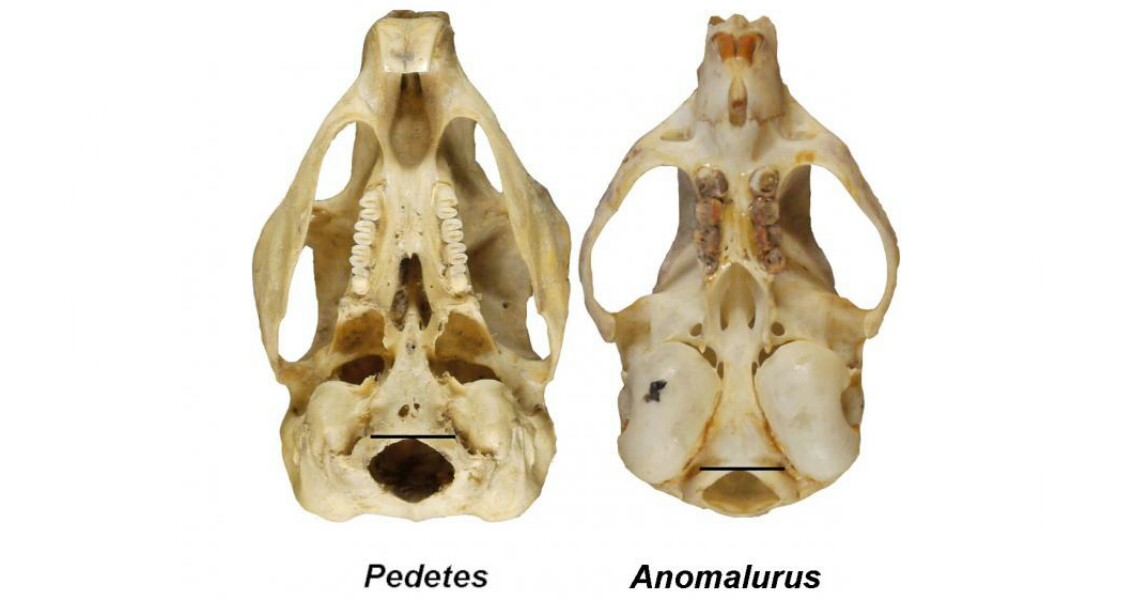
Journal of Human Evolution. This connection has long been highly controversial among biologists and archaeologists. The earliest humans climbed trees and walked on the ground, offering them flexibility of movement and the ability to evade predators. It is widely held that between 6 and 3 million years ago the gradual transition began from climbing trees to walking upright the majority of the time. This switch to exclusively walking on two legs inevitably coincided with significant physical changes, such as longer legs. Homo erectus, around 1.9 millions years ago, had leg and thigh bones very close to those of modern humans, evolved for walking on two legs over long distances. Humans differ from other primates in that the foramen magnum, the large hole at the base of the skull which the spinal cord passes through, is shifted forward. Many scientists argue that this is down to the evolution of bipedalism – the head needing to be balanced directly on top of the spine to aid walking. This connection between the foramen magnum and bipedalism is far from universally accepted, however. In 1925, Raymond Dart first questioned the connection in his description of ‘Taung child’, a 2.8 million-year-old fossil skull of the extinct South African species Australopithecus africanus. Last year, a study by Kent State University biological anthropologist Aidan Ruth further questioned the connection between walking on two legs and the forward shifted foramen magnum. Gabrielle Russo, an assistant professor at Stony Brook University, and UT Austin anthropologist Chris Kirk have provided convincing evidence in their new study that the forward shifted foramen magnum is not just a feature of humans and their fossil relatives, but bipedal mammals more generally. “This question of how bipedalism influences skull anatomy keeps coming up partly because it’s difficult to test the various hypotheses if you only focus on primates,” Kirk said in a press release. “However, when you look at the full range of diversity across mammals, the evidence is compelling that bipedalism and a forward-shifted foramen magnum go hand-in-hand.” Their groundbreaking study sampled the largest number of mammal species to date, as well as deploying new methods to measure aspects of foramen magnum anatomy. By comparing the position and location of the foramen magnum in 77 mammal species, from primates to rodents, Russo and Kirk make their case that bipedal mammals have a more forward-positioned foramen magnum than even their most closely related quadrupedal relatives. “We’ve now shown that the foramen magnum is forward-shifted across multiple bipedal mammalian clades using multiple metrics from the skull, which I think is convincing evidence that we’re capturing a real phenomenon,” Russo said. Establishing the link between bipedalism and the foramen magnum’s position is hugely significant. The connection could allow archaeologists to determine much more accurately whether extinct fossil hominids walked on two feet like modern humans, or on four like modern great apes. The specific measurements offered by the study could be applied to future research to provide a map of the evolution of bipedalism. “Other researchers should feel confident in making use of our data to interpret the human fossil record,” Russo concluded. Image shows comparison of the positioning of the foramen magnum in a bipedal springhare (left) and its closest quadrupedal relative, the scaly-tailed squirrel (right). Image credit: Russo and Kirk, Journal of Human Evolution ]]>

Categories
Breaking News

Neanderthal and Human Characteristics Shown in Two Ancient Skulls

Categories
Breaking News

Pioneering Skull Study Shows Waves of Migration to South America

Science Advances, throws into question genetic explanations of the process of migration into South America. “When you look at contemporary genomic data, the suggestion, particularly for South America, was for one wave of migration and that indigenous South American people are all descendants of that wave,” said Noreen von Cramon-Taubadel, an associate professor of anthropology at the University at Buffalo and the paper’s lead author, in a press release. “But our data is suggesting that there were at least two, if not more, waves of people entering South America.” The study authors claim that the differences in cranial morphology (skull shape) among Paleoamericans from the Lagoa Santa region of Brazil suggest multiple waves of population dispersal across the Bering Strait from Asia and down through North America into South America. It is widely accepted that the first humans entered the Americas 15,000 years ago and quickly dispersed down into South America via a Pacific coast route. The point of contention is whether there was a single dispersal or if the process happened in waves. Despite using an innovative new technique, the results reached by von Cramon-Taubadel and colleagues’ study are similar to those shown in other morphological based analyses. Key to the pioneering method used in the new study is the understanding that although all humans have a common ancestor, not all fossils necessarily contribute to the ancestry of living people. Certain ancient populations of anatomically modern humans didn’t make a significant contribution to current human populations, typically because they didn’t survive long enough. Von Cramon-Taubadel, along with colleagues Professor Mark Hubbe from Ohio State University’s Department of Anthropology and André Strauss from the University of Tübingen, looked at existing populations as descendants of many different possible branches of “a theoretical tree of relatedness”. Statistics based on skull morphology were used to determine where in the theoretical tree the team’s sample best fit. The key advantage of this method is that rather than relying on predetermined patterns of dispersal, it takes into account all possible patterns of relatedness. Previous studies have attempted to observe overall similarities between prehistoric skeletons and the morphologies of living people, failing to account for those populations who left very little mark on modern South Americans despite being represented in the fossil record. “There are other fossils, particularly in the Americas and Eurasia where at the moment we are not 100 percent sure how they fit into the human picture,” von Cramon-Taubadel explains. “We could use this method to elucidate where they sit and to what extent those populations actually play a role in the modern ancestry of people in those areas.” ]]>

Categories
Breaking News

More Dead Sea Scroll Fragments Found in the Cave of Skulls

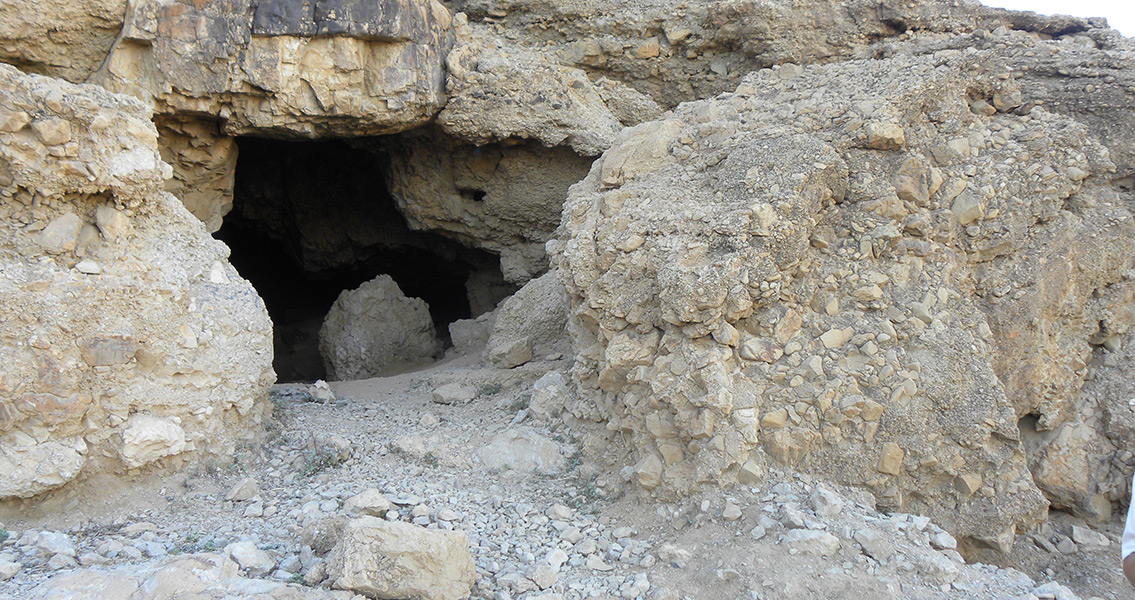
Haaretz. In 1947, a shepherd tossed a stone into a cave in Israel’s West Bank and heard the sound of earthenware cracking, leading to the the twentieth century’s biggest archaeological discovery: the Dead Sea Scrolls. Named for the seven human skulls along with other skeletal remains found there, The Cave of the Skulls was discovered in 1960 by Professor Yohanan Aharoni. Part of a series of naturally formed spaces on top of a steep cliff known as the Large Cave Complex, the Cave of Skulls is located in one of the starkest regions of the Judean Desert. The complex is also home to the Cave of the Arrows, where the extremely arid conditions helped preserve a dozen reed arrow shafts (30 inches long) for around 1,800 years. The latest discovery, two papyrus fragments each measuring approximately two centimeters squared, along with several pieces with no discernible writing, was made during a joint salvage excavation conducted by the Hebrew University of Jerusalem and the Israel Antiquities Authority. Along with the papyri artifacts, dozens of stone vessels, pottery fragments and flint items were discovered within the cave. Several different metal objects were also found, including needles, cosmetic tools, and hobnails with hollow heads which were used to make sandals. Another interesting find was a bundle, a textile wrapping around a collection of beads, which was found inside a natural crevice in the west wing of the cave. This bundle has not yet been opened, but its contents have been identified through X-rays. It joins two other bundles previously discovered by Aharoni, making up the largest bead collection ever found from the time period known as the Chalcolithic, an ancient period that predates the Copper Age. What these caves were used for in early Chalcolithic times is unknown. Suggestions vary from seasonal habitats for traders or herders, to hiding places during times of social tensions within the settlements located on that side of the Judean Desert. “These caves are very difficult to access, and they were used in their natural forms without changes or modifications that would make them more convenient for prolonged occupation,” Davidovich said in the Haaretz article. “This does not make sense when you think of ephemeral stays by shepherds or the like, but is much more plausible when you consider that they served as temporary refuge places.” ]]>

Categories
Breaking News

Stone Age Skull Shows Striking Diversity

H. sapiens of the time. Interestingly, the skull was relatively thick, possibly as a result of damage, nutritional stress, or a very active childhood. “It looks like nothing else, and so it shows that original diversity that we’ve since lost,” said study co-author Christian Tryon, archaeologist at Harvard University’s Peabody Museum. “It’s probably an extinct lineage.” There is not enough evidence, however, to suggest this fossil is a new subspecies of H. sapien, Tryon stressed. The skull fragment was originally found in the 1970s, at the Lukenya Hill site in Kenya. Tryon and his team analysed the skull which is now part of the collection at the National Museum of Kenya, in Nairobi. The findings are described in the journal ‘Proceedings of the National Academy of Sciences’. Lukenya Hill has also revealed artefacts that are more than twice the age of the skull; 46,000-year-old ostrich eggshells have been found which were probably used to make beads. The Lukenya Hill excavations could offer clues about how human culture shifted when the ancestors of modern humans left Africa, about 50,000 years ago. Relatively little is known about humans before they settled down into farming communities. Only a handful of human burials have been found which are older than 12,000-years-old, said Stanley Ambrose, an archaeologist and paleoanthropologist at the University of Illinois, who was not involved in the study. Modern-day Africans have a tremendous amount of genetic diversity when compared to other populations. The new findings suggest that during a very early period of human history, Africa may have supported even greater human diversity, Tryon said. The finds from Lukenya Hill come from a very important moment in human history. The artefacts there originate from the time that many scientists believe a ‘light switch moment’ occurred, when early humans became smarter. In the period between 20,000 and 50,000 years ago, early humans began to trade over vast distances; they also fashioned decorative beads and made lightweight stone points, not much different from arrow blades. “They’re very simple little segments of blades that are easy to make, but they’re very small and lightweight and they fit into little slots on the ends and sides of arrows,” Ambrose said. “We know that the [ancient] Egyptian ones had traces of poison on them.” The Lukenya Hill fragments provide a very important piece of evidence of human culture at a highly critical juncture. For more information: www.pnas.org Image courtesy of Wikimedia commons user: Citron]]>