Categories
Breaking News

Solutions to Climate Change Found in Archaeology

Proceedings of the National Academy of Sciences. All of the authors are from Washington State University, and all of them have taken advantage of computational modelling in their archaeological and anthropological studies. A pioneer in the field of model based archaeology, Kohler developed computer based simulations known as agent-based models, of the interactions between peoples in the American Southwest and their environment. He used these to simulate how virtual Pueblo Indian families, living on computer-generated and geographically accurate landscapes, probably would have responded to changes in specific variables like precipitation, population size and resource depletion. Comparing the results of such agent-based models with real archaeological evidence allows anthropologists to identify the conditions and situations that challenged our ancestors, and how successfully they responded to those challenges. Agent-based modelling can also be used to assess the impacts humans had on their environment during periods of climate change. One study mentioned in the PNAS article described how drought, hunting and competition for habitats led to the extinction of many large mammals in Egypt in 3,000 BCE. Meanwhile, d’Alpoim Guedes and Bocinsky are studying the effects of settlement patterns in Tibet on erosion. “Agent-based modeling is like a video game in the sense that you program certain parameters and rules into your simulation and then let your virtual agents play things out to the logical conclusion,” said Crabtree, who completed her Ph.D earlier this year. “It enables us to not only predict the effectiveness of growing different crops and other adaptations but also how human societies can evolve and impact their environment.” Crop niche modelling is perhaps the most significant application of the fusion of computer simulations with traditional archaeological methods, allowing researchers to predict which plants managed to grow in defiance of drought in the past. Bocinsky and d’Alpoim Guedes are using the technique to find forgotten crops from history which could be useful in areas where the food supply is currently affected by disease or drought. They’ve already discovered a strain of drought-tolerant corn the Hopi Indians of Arizona adapted over the centuries to prosper in poor soil. “Our models showed Hopi corn could grow well in the Ethiopian highlands where one of their staple foods, the Ethiopian banana, has been afflicted by emerging pests, disease and blasts of intense heat,” Bocinsky said. “Cultivating Hopi corn and other traditional, drought-resistant crops could become crucial for human survival in other places impacted by climate change.” The WSU researchers have also identified a crop which could be used as an alternative food source on the Tibetan Plateau – a region blighted by rising temperatures which make it difficult for inhabitants to grow their traditional cold weather crops, and breed yaks. In a 2015 paper, Bocinsky and d’Alpoim Guedes found that foxtail and proso millet, which stopped being cultivated on the Plateau 4,000 years ago as the climate cooled, could once again become viable food sources. “These millets are on the verge of becoming forgotten crops,” d’Alpoim Guedes said. “But due to their heat tolerance and high nutritional value, and very low rainfall requirements, they may once again be useful resources for a warmer future.” With so much anthropological data from around the world yet to be digitised, scientists are only just scratching the surface of the insights that could be gleaned from our ancestors, using archaeology based modelling. “The (archaeology) field is in the midst of a renaissance toward more computational approaches,” Kohler said. “Our hope is that combining traditional archaeology fieldwork with data-driven modeling techniques will help us more knowledgeably manage our numbers, our ecosystem interactions and avoid past errors regarding climate change.” ]]>

Categories
Breaking News

New Research Reveals Existence of Ancient Antarctic Beetles

ZooKeys, is available here ]]>

Categories
Breaking News

Climate Change and Middle Stone Age Innovation Not Connected

PLOS ONE. Two major, seemingly contradictory hypotheses exist for the ways climate and environment could have influenced the wave of human progress that included the development of axes and other tools with handles, and the formation of sophisticated hunting techniques. One school of thought suggests that the technological advances were spurred on in response to climate instability. The other school advocates a more indirect approach, suggesting that environmental stability in fact provided a secure setting to foster the innovations. Until now, a disconnect between paleaoenvironmental records and archaeological sites has made it difficult to test these explanations; to determine whether climatic and environmental changes were in phase with waves of early human innovation. Patrick Roberts, the lead author of the study, along with his colleagues, acquired data concerning paleaoenvironmental conditions in the Middle Stone Age by carrying out analysis of animal remains, shellfish taxa and the stable carbon and oxygen isotope measurements in ostrich eggshell. The objects were taken from two archaeological sites, Blombos Cave and Klipdrift Shelter, spanning 98,000 to 73,000 years ago and 72,000 to 59,000 years ago, respectively. The team found that the climatic and environmental variations displayed in ostrich eggshell stable isotope measurements, faunal records, and shellfish indicators may not have occurred at the same time as technological and cultural innovations at the two sites under study. Although climate change may have had an impact on subsistence strategies, the results seem to show it wasn’t the driving force. “Our results suggest that although climate and environmental changes occurred, they were not coincident with cultural innovations, including personal ornamentation, or the appearance of complex tool-types. This suggests that we have to consider that other factors drove human innovation at this stage in our species’ evolution.” said Professor Roberts, in a PLOS ONE press release. The team’s results suggest that context specific analysis is necessary, analysing sites and innovations individually, to truly understand the driving forces behind the drastic changes of the Middle Stone Age. For more information PLOS ]]>

Categories
Breaking News

Climate Change and Humans Killed Ice Age Megafauna

Science Advances has used DNA evidence to argue that the Ice Age megafauna were in fact the victims of a ‘perfect storm’ of both. The study, led by the Australian Centre for Ancient DNA (ACAD) at the University of Adelaide, argues that it was only as the climate started to warm, around 12,300 years ago and long after the first humans had arrived in the region, that the megafauna in Patagonia started to die out. Researchers from University of Colorado Boulder, University of New South Wales and University of Magallanes in Patagonia, were involved in the study. For a thousand years humans lived in Patagonia alongside the megafauna. Seemingly, while the region stayed cold, the populations of megafauna remained constant. When the climate started to warm however, the impact was startlingly quick. “Patagonia turns out to be the Rosetta Stone – it shows that human colonisation didn’t immediately result in extinctions, but only as long as it stayed cold,” said study leader Professor Alan Cooper, ACAD Director, in a press release. “Instead, more than 1000 years of human occupation passed before a rapid warming event occurred, and then the megafauna were extinct within a hundred years.” DNA analysis was at the heart of the study. Researchers traced the genetic history of megafauna populations by studying DNA extracted from radio carbon dated teeth and bones excavated from caves in Patagonia and Tierra del Fuego. The pattern of human colonisation of the Americas was rapid, and coincided with contrasting temperature trends on each continent. Using the genetic histories of populations of sabre-toothed cats, giant jaguars, the South American horse and the short faced bear, the team managed to distinguish the impacts of humans and climate change on the mega fauna populations. “The America’s are unique in that humans moved through two continents, from Alaska to Patagonia, in just 1500 years,” said Professor Chris Turney from the University of New South Wales. “As they did so, they passed through distinctly different climate states – warm in the north, and cold in the south. As a result, we can contrast human impacts under the different climatic conditions.” Not all large species in Patagonia went extinct, the guanaco and vicuna – ancestors of modern day llamas and alpacas, survived, although their numbers reduced drastically in the period. “The ancient genetic data show that only the late arrival in Patagonia of a population of guanacos from the north saved the species, all other populations became extinct,” said Dr. Jessica Metcalf from the University of Colorado Boulder, the lead author of the study. The sites used in the study have long provided insights into the demise of Ice Age megafauna. “In 1936 Fell’s cave, a small rock shelter in Patagonia, was the first site in the world to show that humans had hunted Ice Age megafauna. So it seems appropriate that we’re now using the bones from the area to reveal the key role of climate warming, and humans, in the megafaunal extinctions,” said Dr. Fabian Martin, from the University of Magallanes. ]]>

Categories
Breaking News

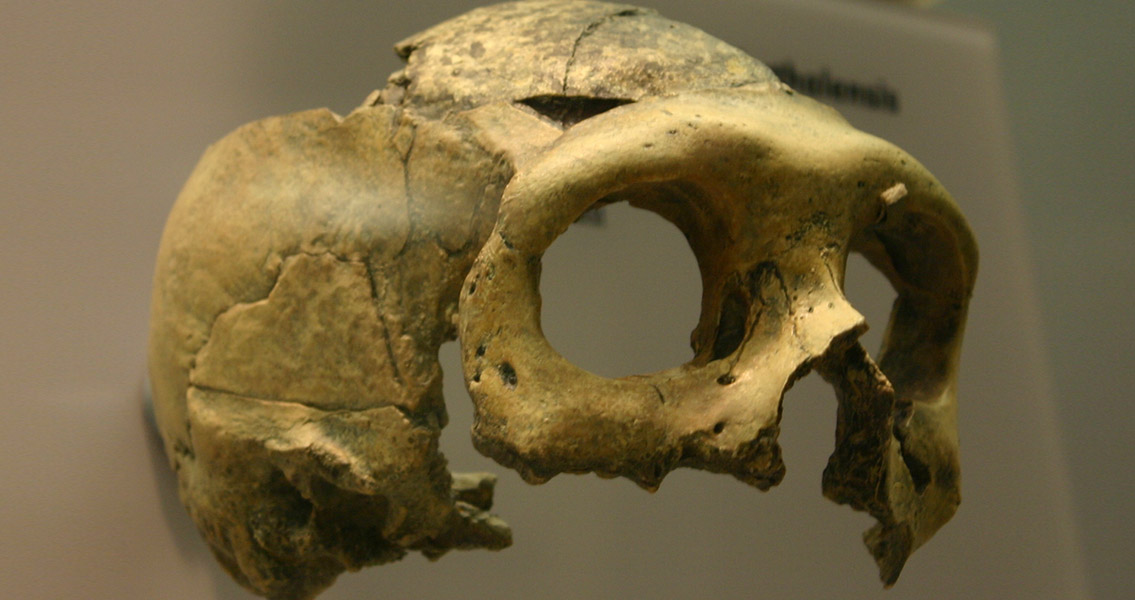
Did Climate Change Contribute to Demise of Neanderthals?

here]]>

Categories
Breaking News

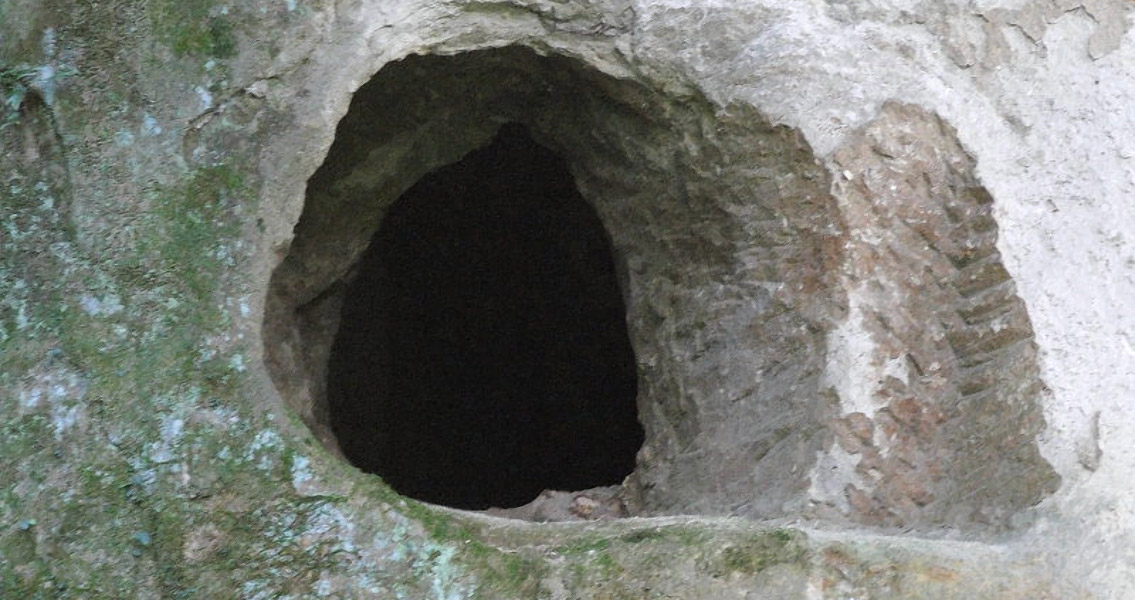
Scientists Scramble to Save Ancient Japanese Tombs

Categories
Breaking News

Volcanic Activity Connected to Climate Change

Science by the American Association for the Advancement of Science.]]>

Categories
Breaking News

Giant Sharks Weren't Driven Extinct By Climate Change

Carcharocles megalodon was the largest shark in the history of the planet, the fossil record suggesting body lengths of up to 18 metres (59 feet). By way of comparison, the giant great white shark which starred in the movie Jaws was meant to be just seven metres (25 feet) long. Although fossilised teeth of the monster sharks have been found in Africa, North America, South America, India, Australia, Japan, and Europe, little else is known about them. In particular, why these terrifying creatures went extinct has long been a mystery. In a recently published study, researchers from the University of Zurich suggest that megalodon died out because the diversity of its prey decreased, and new predators arrived on the scene as competitors. The team’s conclusion is based on an innovative study of the giant shark’s geographical distribution over time. Led by Catalina Pimiento from the Paleontological Institute and Museum of the University of Zurich, the team of researchers examined 200 megalodon records in museum collections and databases from across the globe. Their results have recently been published in the Journal of Biogeography. The data allowed Pimiento’s team to chart the range and abundance of the giant sharks. During the early Miocene, lasting until roughly 16 million years ago, megalodon were mainly found in the warm waters of the Northern Hemisphere, off the coasts of Europe and North America, as well as in the Indian Ocean. Later, they penetrated further into the seas around Australia, South America and Asia. The population of the species peaked during the middle Miocene, while they acheived their widest geographic dispersion during the late Miocene. Around five million years ago megalodon entered a state of continuous decline, seemingly coinciding with the beginnings of the Pliocene glacial period. Until now, most explanations for megalodon’s extinction have been directly connected to this period of climate change. The fossil record has led most researchers to conclude that the giant sharks lived in warm waters. As the temperature of the oceans started to decrease, its hypothesised they would have become uninhabitable for megalodon, and the species slowly died off. Another suggestion is that the freezing waters forced Megalodon’s prey to migrate, starving the giant sharks. The University of Zurich study throws serious doubt on this climate change explanation. “We were not able to ascertain any direct link between the extinction of C. megalodon and the global fluctuations in temperatures during this time.” explained Pimiento in a press release. “Changing climatic conditions do not appear to have had any influence on the population density and range of the giant sharks,” Evolutionary narratives of other species showed the greatest connection with the development of the monster sharks, according to the new study. At a time when a multitude of smaller marine mammals were disappearing, the megalodon range also decreased. Similarly, the arrival of other major predators, such as the ancestors of the killer whale and the great white shark, also coincided with a decline in the megalodon population, suggesting the new species provided too much competition for the increasingly scarce prey. Image ©Jeff Gage / Florida Museum of Natural History]]>

Categories
Breaking News

Ancient Remains Paint Picture of Grassland Climate Change

advances.sciencemag.org Image by Fishhawk, courtesy of Oregon State University]]>

Categories
Breaking News

Proliferation of Pottery Had Cultural Impetus

here ]]>