




the tomb was actually built for Nefertiti and her body is hidden in a secret chamber. In addition to the hoped for benefits to science, the “Scan Pyramids” project is expected to revive Egypt’s tourist industry, which has been severely affected by the years of political instability. Image courtesy of Wikimedia Commons user: Kamelot]]>

two secret doors leading to what could be other burial chambers. He then explained that it was possible one of these chambers belonged to Nefertiti, wife of religious reformer Akhenaten and very likely ruler of Egypt after his death. In support of his hypothesis, Reeves noted the treasures found in the boy-king’s burial chamber – treasure that was too rich compared to the scarcity of artefacts in the rest of the tomb. This led the University of Arizona researcher to suggest that Tutankhamun had died suddenly, leaving no time to prepare a proper tomb and furnishings, so the priests had to improvise by adding another chamber in Nefertiti’s tomb. Reeves backed his hypothesis by pointing out that other egyptologists have established that a lot of the artefacts in Tutankhamun’s chamber were meant for the co-regent of his father – this co-regent is widely believed to have been Nefertiti. At the moment, the Egyptian antiquities authorities are conducting further scans in Tutankhamun’s tomb using thermal and radar imaging methods. According to Antiquities Minister Mamdouh Eldamati, as quoted by Ahram, even if the scans reveal hidden burial chambers it will be a while before their occupant or occupants are identified, adding that before any digging starts for these hidden chambers, measures must be taken to preserve Tutankhamun’s chamber. The minister seems to be much more cautious with speculation as to who might be in those hidden chambers, telling media that although the discovery of Nefertiti’s body would be a sensation, he doubts it is her that is buried in Tutankhamun’s tomb. Image courtesy of Wikimedia Commons user: Ibrahim.ID]]>

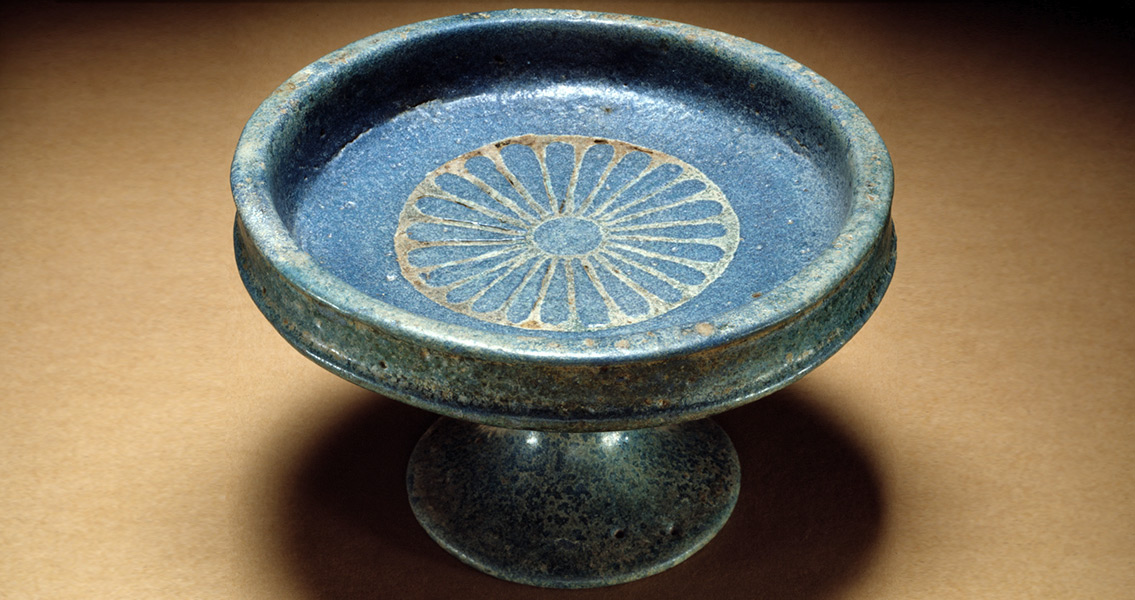
article in the Journal of Art in Society. The colour occurs naturally in a mineral called cuprorivaite but this mineral was rare in Egypt, so, in demonstration of their fine grasp of chemistry, the ancient Egyptians made the pigment manually. They heated to around 950 degrees Celsius a mixture of calcium carbonate or another calcium compound, a compound containing copper, and silica sand, as well as potash or soda, which acted as a flux. Because of this complex procedure scientists believed that the pigment was used for prominent works of art only, and as a main colour. When the era of Greek rule began the new rulers brought with them their own preferred colours, which dominated art at the time. The Romans, who believed the Greeks were the masters of art, followed their preferences closely, using the same palette for works of art. Still, Egyptian blue did not sink into oblivion until the end of the Roman era, when its use sharply declined. Commenting on the Northwestern study, co-author Jane L. Williams from the Hearst Museum, said in the university’s statement the findings suggest researchers should always expect the unexpected when examining works of art. Speaking of the unexpected, earlier research from the British Museum, led by Giovanni Verri, a conservationist who is also an expert in infrared and photo-induced imaging, found a way to reveal the colours of statues and other artefacts that have become invisible to the naked eye. The technology relies precisely on Egyptian blue, which emits infrared radiation when red light is directed to it. The presence of Egyptian blue not only shows which parts of a statue were painted with the pigment but also hints at what other pigments were used in the colouring of an ancient artefact. For more information: Investigating the use of Egyptian blue in Roman Egyptian portraits and panels from Tebtunis, Egypt ]]>