“The Burial of Nefertiti?” ]]>

“The Burial of Nefertiti?” ]]>


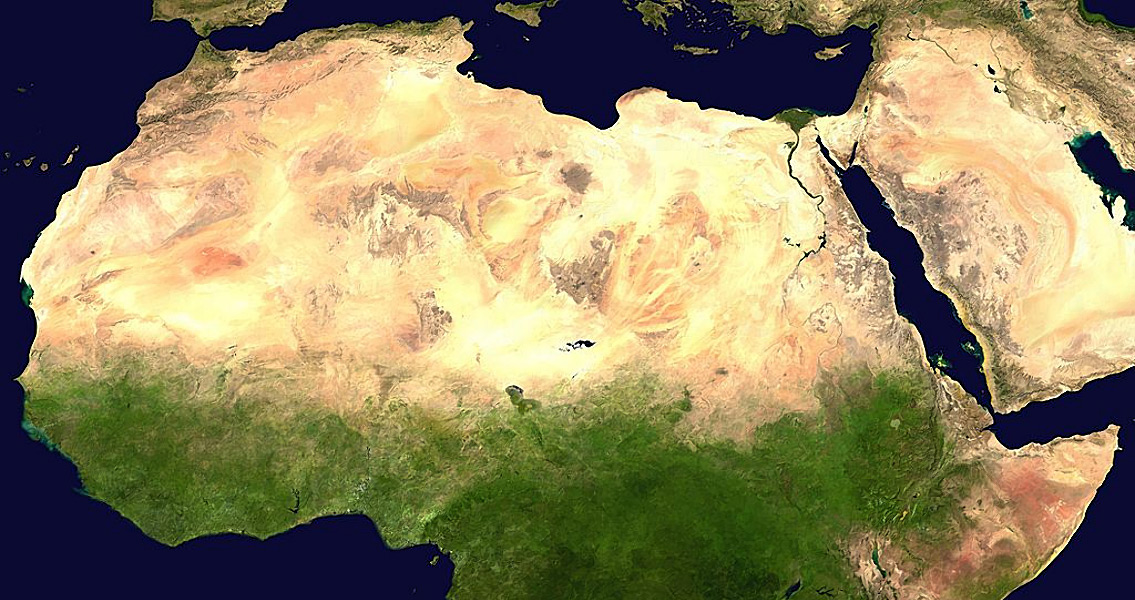
Live Science, the lead author Luca Pagani said that what is most exciting for the team is shedding light on an important stage of the evolution of all European and Asian peoples. This will deepen the understanding of billions of people of their “biological history”. Another of the authors, Toomas Kivisild from the University of Cambridge, told media that the results give a clear map of how modern humans moved out of Africa, even though they do not account for all the aspects of the process or give it any precise timing. One additional benefit of the study is that science has gained a neat genomic database of the genetic diversity present in Ethiopia and Egypt, which can be used as reference in other studies, Phys.org notes. Some questions related to this major exodus in the evolution of humans are still waiting to be answered however, says co-author Chris Tyler-Smith from the Wellcome Trust Sanger Institute. One such question is whether the route through Egypt was the only mass migration of that period, or were there other groups that left the continent without their genetic makeup surviving to the modern day? This question could be answered by the examination of ancient genomes from the areas through which such a migration would have passed. It has been established that the route through Ethiopia was indeed used, but probably by fewer people who did not go beyond the Arabian peninsula and whose genetic makeup has left no trace in the modern day, Pagani told Live Science. Image courtesy of Wikimedia Commons user: NASA]]>

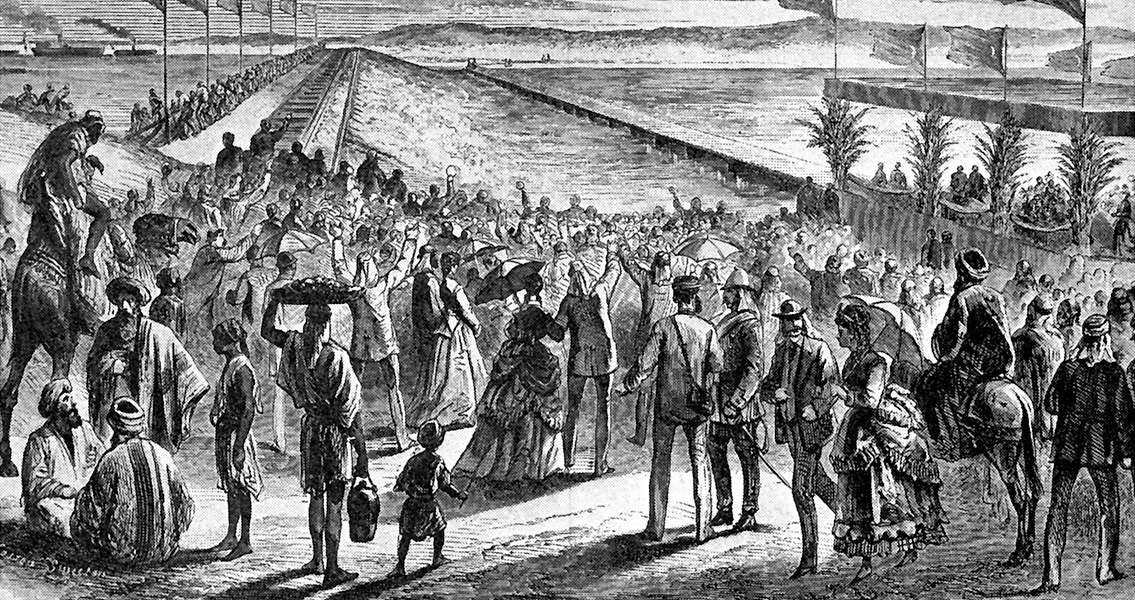
Suez Crisis of 1956. A remarkable feat of engineering, the Suez canal, whose construction started in 1859, is still responsible for 8% of the world’s shipping, with 50 ships passing through it daily. ]]>
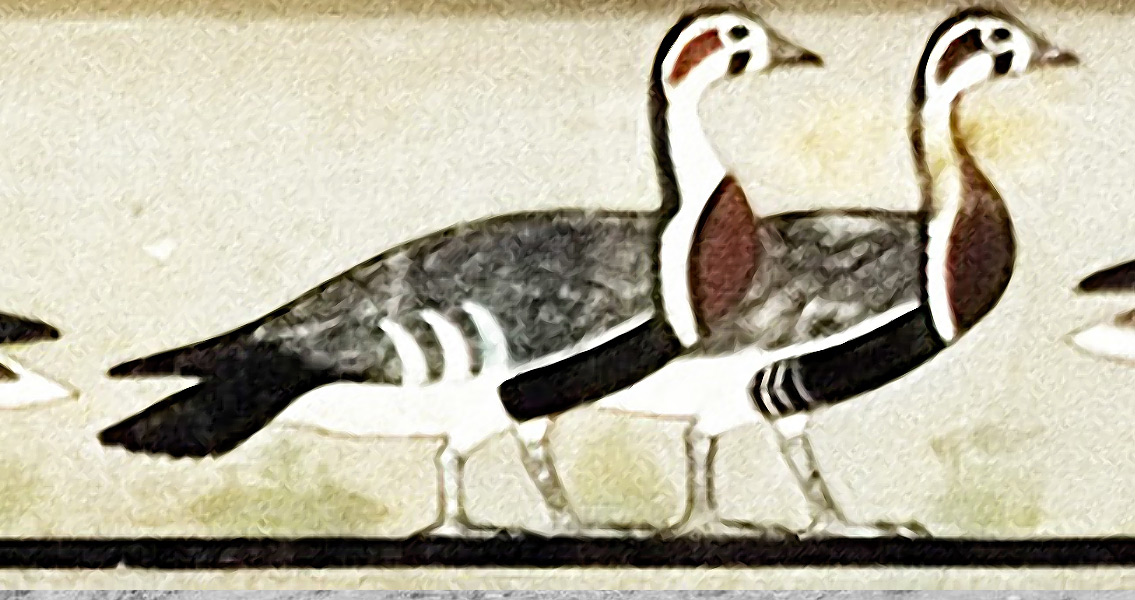
Live Science. Tiradritti’s suspicions were first aroused by the birds depicted on the Meidum Geese. Two of which were unlikely to have inhabited ancient Egypt. “The painting depicts three different couple[s] of geese, three turned to the left and three to the right,” Tiradritti wrote. Two of the geese were identified as white-fronted geese (Anser albifrons), the pair looking to the left were understood to be bean geese (Anser fabalis) and the pair facing the right were red-breasted geese (Branta ruficolis).” Bean geese breed in tundra and taiga climates, wintering as far south as northern Spain, Greece and Turkey. Red-breasted geese also breed in tundra, but rarely make it as far south as Egypt. Whilst this information regarding the species does not in itself prove the Meidum Geese to be a fake – ancient Egyptians could have known about animals which were not native to Egypt – it made Tiradritti analyse the work further. “After that, it was like to see a castle of cards collapsing,” he said. “One of the major problems with the Meidum Geese is the colours. Some of the hues (especially beige and marc) are unique in the Egyptian art. Even the shades of more common colours, like orange and red, are not even comparable with the same colors used in other fragments of painting coming from Atet’s (Nefermaat’s wife, in whose chapel the painting was supposedly discovered), chapel,” Tiradritti said. Two of the geese are leaning over, in order to make the size of all the geese balanced. This is unusual in ancient Egyptian artwork. Size often denoted importance and as such, Egyptian artists tended to deliberately draw animals or people in different sizes. Balancing size in a composition is a common feature of modern art, however. Tiradritti is due to publish his findings in the 5th April edition of Giornale dell’Arte and The Art Newspaper, in Italian and English respectively. His findings will cause the artistic world to think critically about ancient art, especially given the high prices these works can attract. For more information: www.livescience.com Image courtesy of Wikimedia Commons user: MGA73bot2 ]]>
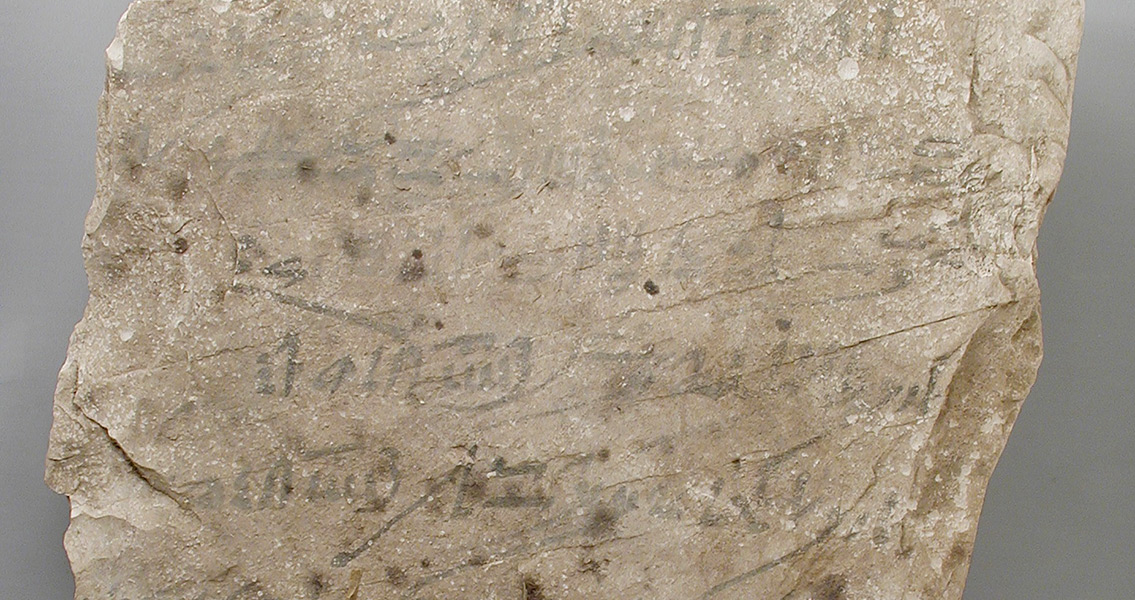
Bulletin of the American Society of Papyrologists. For more information: www.bricejones.com Image courtesy of Wikimedia commons user: Fæ]]>


Research by the University of California at Berkley (UCB) has provided an explanation for the abandonment of the Mesoamerican city of Cantona in 900 CE. The pre-Aztec city had a population of 90,000 people at its peak, but was left completely deserted. Analysis of sediments in the nearby Lake Aljojuca allowed researchers from UCB to determine that the region had undergone a period of frequent drought, lasting over 500 years from 600 CE. They were also able to glean insights into population movements in the period of drought, noting that initially Cantona’s population had increased, possibly as a result of mass immigration to the city by those searching for water, before its sudden decline. Elsewhere, researchers from the University of Arizona applied social network analytical methods to archaeological data, and gained insights into the ancient importance of community. During the 250 year period starting from 1200 CE, huge swathes of the North-American South-west became uninhabited. Through their study, the researchers determined that the communities that survived in this period tended to be those with extensive connections to other communities. Essentially, the study provided an analysis of the significance of social networks, on a regional scale. Finally, a combined study, produced by academics from the University of Colorado in Boulder and the Santa Fe Institute, compared the urban growth patterns of ancient and modern civilisations. The study, which focused on pre-contact sites along the basin of Mexico, concluded that ancient cities in the region developed in much the same way as modern ones. The research throws into question the commonly held belief that modernity and industrialisation have made modern day cities distinct from ancient. Two meditating monks Tukdam is an advanced state of meditation achieved by Buddhist monks. It is thought that remaining in this state for more than three weeks leads the body to shrink, and appear mummified. Buddhist doctors, such as Dr. Barry Kerzin, have long argued that many Buddhist mummies are not in fact dead, but in this advanced state of meditation. Two discoveries in February have brought Tukdam and Buddhist mummification into the limelight. In Mongolia, a startlingly well preserved, two hundred year old monk was discovered in the Lotus position, suggesting he had been meditating when he died. The monk’s body demonstrated very few sings of decomposition, aside from a slight grey tint to his skin and his body being slumped to one side. In Holland, researchers from the Drents Museum carried out tests on a mummified Buddhist monk encased in a statue. Although it had been known previously that the monk was in the statue, the researchers were stunned to find that organs of the monk had been removed, and pieces of paper containing ancient Chinese writing inserted into his body. The pieces of paper are currently being translated, in the hope of gaining more insight into the monk and his burial. Migration Two unrelated studies have both provided fascinating insights into the spread and migration of species. The first, by academics from Tel Aviv University in Israel, made a startling conclusion about when humans first colonised Eurasia. An almost complete, 55,000 year old skull found in the Manot cave near Galilee, has provided direct anatomical evidence of when humans first colonised the Levant corridor, the piece of land connecting Africa to Europe. The discovery has raised some fascinating questions, firstly suggesting that Homo Sapiens inhabited the Levant Corridor at the same time as other Hominins, and secondly that the first H.Sapiens in Europe were not in fact direct migrants from Africa, but descended from those that had settled in the Corridor. Another study looked at the migration of Solenopsis geminata, or Red Fire ants. University of Illinois academics analysed the genetic code of ants from 192 locations to determine a time frame for their “Global invasion”. The biologists concluded that the spread of the ants to Africa, the Americas, Australia, India, and Southeast Asia, took place because Spanish Galleons unwittingly transported them in the sixteenth century. Essentially, the biological invasion by the fire ants was directly linked to the Spanish Empire establishing the first globalised trading network. Both study’s are fascinating, as they reveal the new detail with which ancient migration and population dispersal of different species can be monitored. Ancient Egyptian Healthcare System Perhaps one of the most startling stories from February concerns Ancient Egypt. Excavations at Deir el-Medina, a village built for workers tasked with constructing tombs during the New Kingdom (1550-1070 BCE) period, has revealed that the workers received extra amenities from the state in exchange for their services. Recently discovered papyri texts from the site have suggested that grain distribution in the village had remained consistent, even at times when workers were unable to work due to sickness. This suggests that the state provided some level of sick pay to the workers it valued so highly. The discovery reveals the seemingly never ending stream of new information that can be gleaned about the incredibly complex societies of Ancient Egypt. Image courtesy of Wikimedia commons user: Tomascastelazo]]>