




th Century BC for a steward named Harwa and was used even after his death. Harwa’s successor Akhimenru’s tomb can also be found here. A group of scientists who work for the Italian Archaeological Mission to Luxor (MAIL) have finally found a major breakthrough, laying fruit to the 15 years of excavation and research work that has been performed in the region. Recent archaeological excavations have unearthed the remains of a number of victims who fell to the ancient plague that was termed as the end of the world by St. Cyprian. LiveScience reports that the remains found by archaeologists at the site were covered with a layer of lime, an ingredient that was used as a disinfectant in history. Researchers have also uncovered kilns where this lime was produced and countless human remains that have been scattered over something that resembles a monstrous bonfire. This has led theorists to believe that the plague victims were incinerated in Ancient Egypt. Researchers have also found pottery within the kiln that allows them to date the site to the 3rd Century AD, a period when the Plague of Cyprian was ravaging through the entire Roman Empire. Bishop Saint Cyprian further chronicled accounts of the suffering of those afflicted by the plague in his Latin text that has been entitled De Mortalitate. According to the saint, excessive vomiting, limbs being taken off due to contagion and bleeding from the eyes were common among all plague victims. Plague might have been termed as a form of measles or smallpox by modern day scientists, but it certainly took its toll on the Roman Empire and Ancient Egypt. Apart from claiming more than 5000 people on a daily basis in Rome, it also claimed two emperors (Hostilian and Claudius II Gothicus). Even though the plague was not the end of the world as predicted by Saint Cyprian, most historians believe that the great plague of Cyprus was one of the major reasons that weakened the Roman Empire and ultimately led to its downfall. The lack of religious rites at the funeral complexes also give rise to theories that the ancients tried to curb the spread of the disease by burying their dead in a quick and efficient manner. The burial monument also has traces of being abandoned after the plague, never to be used again. According to Francesco Tiradritti, the director of MAIL, the fact that these sites were used for burial of infected corpses doomed them for centuries until tomb raiders once again entered them in the 19th century. The discovery of this undisturbed complex also allows historians to further their insights into an era known as the Pharaonic Renaissance, a period that lasted from the 7th Century BC to the 6th Century BC. ]]>
Vandalism a crime, not art
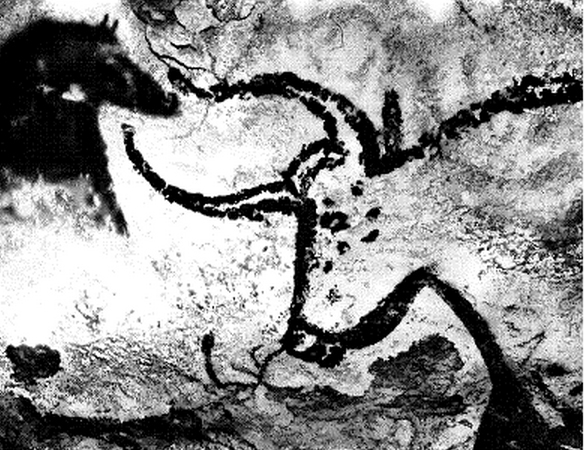
Rock art could be used for understanding ancient symbols, religions, cultural boundaries, origins, beliefs and even factors like gender relationships and should be protected from Vandalism
Rock art can be an extremely precious phenomenon especially depending on the era it belongs to, the impact of the images and the significance of historic background. They are supposed to be preserved the way they are, so archeologist and anthropologists can extract the comparative study of the human societies that existed before, their culture and development. It is a complex field as well, as one has to predict the most accurate depiction of these pieces of art and establish a link, if any.
 Thanks to the Pharaoh, Egypt is an example many of us know for rock art reflecting heritage and culture. The Egyptians had their Gods and language carved all over the ancient rocks is an evidence of how they lived, what their beliefs were, what their culture was, what psyche they followed and much more can be concluded from these precious pieces of artifacts. But not being famous for rock art does not mean that there are no such sites reflecting heritage anywhere else in the world.
Every place has a history and heritage to go with and same is the case with Australia. Australia has a number of sites that contain rock art that date back to 40,000 or even 100,000 years old. The rock art is a reflection of the culture and beliefs of these localities. These indigenous pieces of art, especially those in the Kimberly, are believed to be 60,000 years old, which is five times older than the Egyptian pyramids. These pictures of men, women and children with their tools, animals and the different actions reflect a lot about how they lived and what their beliefs were.
This rock art should be protected from a serious crime, vandalism, as no one wants to lose track or disrupt history. A recent case of vandalism was witnessed in Burrup Peninsula, where the biggest and most important collection of rock carving can be found which is dated back to the ice ages. The maximum fine for such an act is a hefty one as well of up to $20,000.
These sites have to be protected by the Government in case of vandalism. The Australian Government should also make sure that all the sites of rock art and ancient rocks are recorded and registered with all the details so we never lose track of them in the times to come. They should start a campaign about such sites and what they reflect about our heritage. In fact, one should cover the 100 most important sites across the globe and have a comparative analysis of the heritages worldwide.
With the rain, dust and reptiles crawling over these precious pieces of art, they have survived and they will survive in the future as well, only if protected from vandalism. Such rock art that reflects history is a precious symbolic sign of the past, one can relate to. These sites are a library for history, and should be registered and recorded which is a very inexpensive process.]]>

Some ancient Egyptian jewellery was actually made from material of celestial origin, research has revealed. Recent study has revealed that nine ancient Egyptian beads are actually made from iron meteorites. These beads, which are believed to be the oldest iron artefacts on the planet, were first discovered at a pre-dynasty cemetery near the village of el-Gerzeh, south of Cairo, in Lower Egypt. Their outer – space origins were suspected right from the start when they were first unearthed from a teenage boy’s tomb in 1911. That particular tomb dates back to approximately 3200 B.C.E., more than 5,000 years ago, according to researchers. Initial tests on the beads showed high concentrations of nickel. This is usually a sign of iron meteorite material, however, in the 1980s some academics argued that the high nickel content could have been the result of smelting. To lay this debate to rest the iron beads were scanned with beams of neutrons and gamma rays. High concentrations of cobalt, phosphorous and germanium were found and the result also revealed that these elements were present at levels that only occur in iron meteorites. “The really exciting outcome of this research is that we were for the first time able to demonstrate conclusively that there are typical trace elements such as cobalt and germanium present in these beads, at levels that only occur in meteoritic iron,” noted Thilo Rehren, a professor from UCL Qatar, a Western Asian outpost of the University College London’s Institute of Archaeology. Thilo Rehren is the study lead author. He added, “We had assumed this was the case for 100 years, but it’s nice to be able to put an exclamation mark on the label, rather than a question mark. “This meteoritic iron, it’s very hard material that you find in lumps, and yet here we see it in thin beads. The real question is, how were they made?” When first found inside the tomb, these tube-shaped beads were strung together into a necklace alongside other exotic materials, including gold and gemstones. From the X-ray analysis, researchers also found that the tube shape of the beads was obtained by smithing and rolling. “We are also excited to be able to see the internal structure of the beads, revealing how they were rolled and hammered into form. This is very different technology from the usual stone bead drilling, and shows quite an advanced understanding of how the metal smiths worked this rather difficult material,” Rehren commented. He also claimed that the process is a much more elaborate operation and one that they assumed was only invented and developed in the Iron Age, which started maybe 3,000 years ago — not 5,000 years ago. This operation is said to be different to the one that involves gold and copper, which are considered to be more pliable metals. The works involving solid iron need the advanced technique and craft of blacksmithing, which involves repeatedly heating metals to red-hot temperatures and meticulously hammering them into shape. In a more detailed explanation, researchers suggest the iron meteorites were probably heated and hammered into thin sheets. They were then woven around wooden sticks to create 0.8 inch (2cm) long, tube-shaped beads. “This shows that these people, at this early age, were capable of blacksmithing,” Rehren said. “It shows a pretty advanced skill with this difficult material. It might not have been on large scales, but by the time of the Iron Age, they had about 2,000 years of experience working with meteoritic iron.” In an interview with LiveScience, Rehren told them, “Even 100 years ago, [the beads] attracted attention as being something strange.” These findings smashed previous theories that ancient Egyptians crafted their beads from iron ore. In another part of the world, other researchers have also identified different artefacts that have outer-space origins. About two years ago, German scientists discovered a Buddha statue that was carved from a meteorite, between the eighth and 10th centuries.]]>