Categories
Breaking News

Over 4,000 Years Ago, the Indus Grew Rice and Used Crop Rotation

Antiquity and the Journal of Archaeological Sciences, have found evidence of domesticated rice in South Asia from up to 430 years earlier. “We found evidence for an entirely separate domestication process in ancient South Asia, likely based around the wild species Oryza nivara. This led to the local development of a mix of ‘wetland’ and ‘dryland’ agriculture of local Oryza sativa indica rice agriculture before the truly ‘wetland’ Chinese rice, Oryza sativa japonica, arrived around 2000 BC,” said study co-author Dr Jennifer Bates in a University of Cambridge press release. “While wetland rice is more productive, and took over to a large extent when introduced from China, our findings appear to show there was already a long-held and sustainable culture of rice production in India as a widespread summer addition to the winter cropping during the Indus civilisation.” The team’s results suggest that the Indus had established seasonal crop rotation before other civilisations, such as the Ancient Egyptians and Chinese. Dr Cameron Petrie, one of the authors of the study, suggests this could be because the location and climate of the region inhabited by the Indus. “Most contemporary civilisations initially utilised either winter crops, such as the Mesopotamian reliance on wheat and barley, or the summer crops of rice and millet in China – producing surplus with the aim of stockpiling,” explained Petrie. “However, the area inhabited by the Indus is at a meteorological crossroads, and we found evidence of year-long farming that predates its appearance in the other ancient river valley civilisations.” The team focused their study on Indus villages within a few kilometres of Rakhigari: a former Indus city that could have had a population of up to 40,000 people. They found evidence of a host of winter staples, such as wheat; barley; peas and vetches, and summer staples such as domesticated rice, millet and the tropical beans urad and horsegram. Radio carbon dating revealed dates for the earliest instances of Indus multi-cropping: 2890-2630 BCE for millets and winter pulses, 2580-2460 BCE for horsegram, and 2430-2140 BCE for rice. Exactly what crops were consumed in Rakhigari and the surrounding region, and which were traded with cities further afield, is yet to be determined, but the team’s research has raised some fascinating questions. “It is certainly possible that a sustainable food economy across the Indus zone was achieved through growing a diverse range of crops, with choice being influenced by local conditions.” said Dr Bates. “It is also possible that there was trade and exchange in staple crops between populations living in different regions, though this is an idea that remains to be tested.” Such a diverse system was probably well suited to mitigating risk from shifts in climate,” added Dr Petrie. “It may be that some of today’s farming monocultures could learn from the local crop diversity of the Indus people 4,000 years ago.” ]]>
Categories
News

Massacre and Brutal Retaliation: The Siege of Cawnpore

Categories
Editorial

€185 billion – the Cost of the USSR's Occupation Of Latvia

Categories
News

The Anniversary of the Amritsar Massacre

Categories
Breaking News

Discovery of Submerged Structures May Turn Myth to Fact

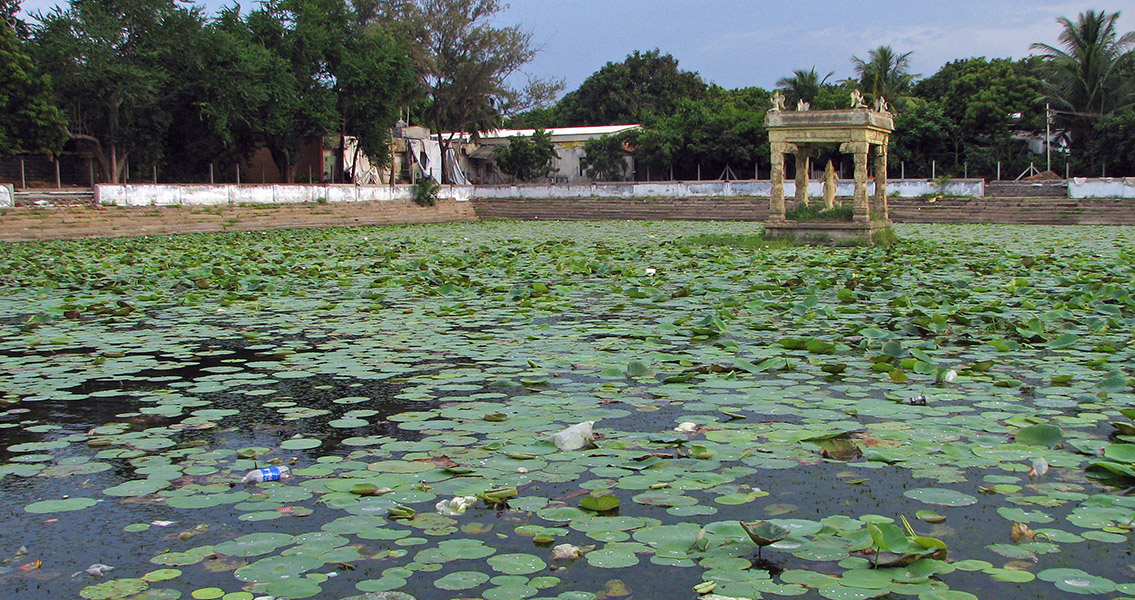
Indian Times that many of these structures were concealed with a thick layer of aquatic growth, making them difficult to identify. “Some of them are badly damaged due to strong underwater currents and swells. However, we could make out that they were part of a building complex,” Nigam is quoted as saying. Archaeologists believe that the structures may be between 1,100 and 1,500 years old. From previous experiences and as a result of studies on the historical patterns of the sea level in this region, researchers have determined the sea-level approximately 3,500 years ago was lower than it is now, but 6,000 years ago it was actually higher. Archaeologist, T. Sathyamurthy, with the Archaeological Survey of India (ASI), Chennai Circle, told the Indian Times that explorations of this type were gradually providing evidence that myths are often facts. Using sonar technology, researchers with ASI began exploring the coastline of Mahabalipuram and discovered the row of stones seen by people immediately before the tsunami on 2004 and determined they were part of a larger 70-meter-long, six-foot-high wall. They also found the remains of three additional temples; two of which were submerged, and a cave temple within 500 meters of the coast. Historians believe a majority of these structures, as well as the port, may have become submerged as a result of a past tsunami-like occurrence which took place around 952 CE. Geophysical data from previous surveys and explorations also point to a large building complex, possibly a township, being submerged in the sea. A global rise in sea levels of even 1mm to 2mm annually could easily inundate several hundred meters of shoreline over a 2,000-year time period. Another explanation for the structures being under water is tectonic movement or soil erosion.]]>

Categories
Breaking News

Thousands of Cannonballs Found at Indian Fort

Categories
News

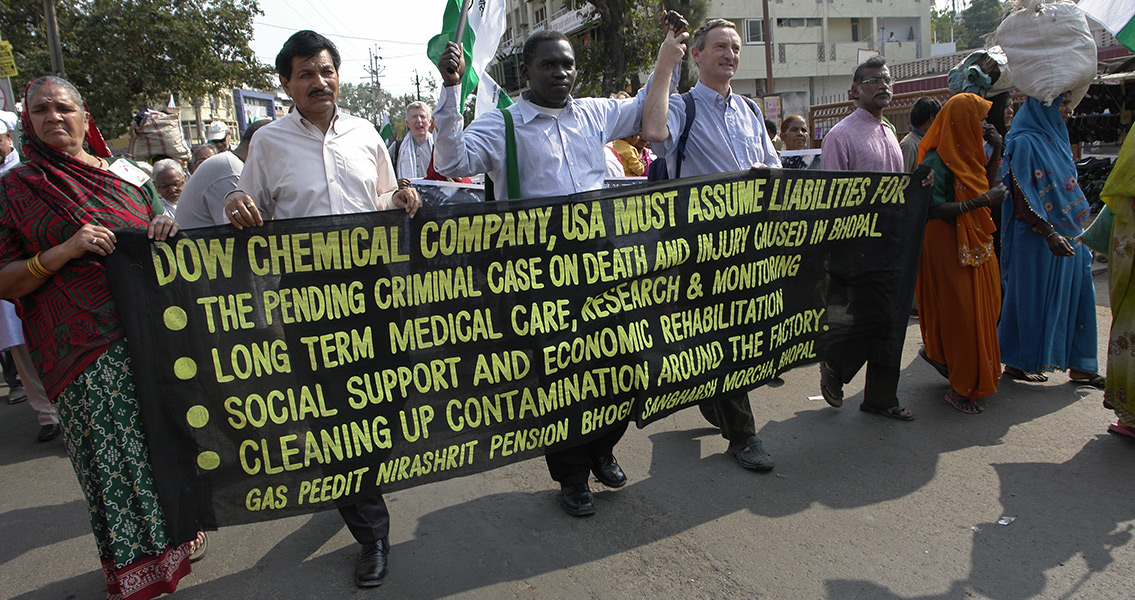
Union Carbide Refuses Bhopal Relief Payments

Categories
Breaking News

Brazil’s Lessons from Indian Independence

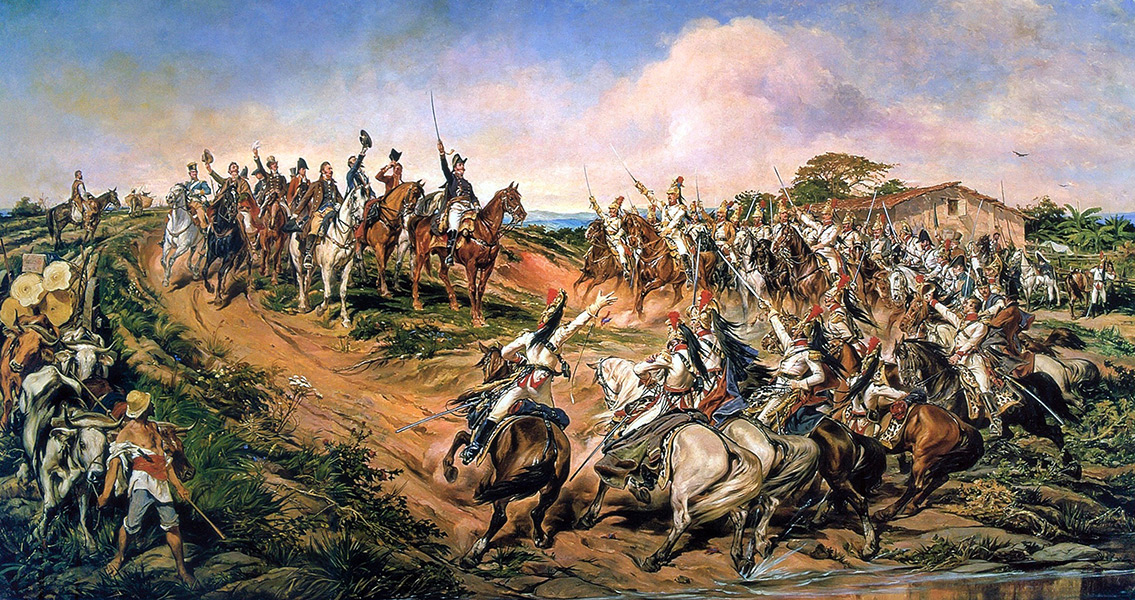
Journal of Global History. “Latin America, by virtue of its radically different history of colonialism from much of the ‘Third World’, resists many of the narratives of either Cold War historiography or postcolonial theory that have emerged from considerations of these regions.” Colonialism in Latin America happened earlier, endured longer, and became much more deeply embedded in society in comparison to other colonial countries. Latin America’s post-colonial movements did not, therefore, lead to the same anti-colonial nationalism which typifies independence movements in Africa and Asia. Brazilians were not averse to being considered ‘Western’, Chakravati argues, but they did not wish to be considered peripheral to the West. By studying several prominent Brazilian intellectuals, Chakravati has revealed that these thinkers examined Indian independence. “Despite their differences in personality, career, and ethical and political commitments, our Brazilian protagonists demonstrated,” Chakravati argues “[a] shared starting point of a self-identification with the West, including its imperial heritage, complicated by their own position as postcolonial figures from the global periphery.” By examining India’s independence, Brazil’s intellectuals saw a troubling mirror-image of their own peripheral position with regard to the West. Following independence, India was of less importance to the West as wide-ranging reforms decreased the profits foreign investors could make. By nationalising heavy industries such as steel, aviation, shipping, electricity and mining, India aligned itself very clearly as a post-colonial nation. In Brazil’s case, the newly-independent country did not oppose the colonial powers. Chakravati argues that one particular event shows this very clearly. After gaining independence in 1947, India requested Portugal cede its territories on the subcontinent to India. After more than a decade, India annexed Goa using military force in 1961. In response to this, Brazil – rather than condemning Portugal’s continued colonial policy around the world – declared the matter to be a bilateral issue between India and Portugal. Clearly, therefore, Brazil was attempting to portray itself as a pro-Western, independent nation. Chakravati has effectively shown that post-colonial countries should not be treated as entirely passive entities, wrapped up in the wider context of Cold War politics. They were independent nations which located themselves in world politics in nuanced and varied ways. Image courtesy of Wikimedia Commons user: Lmbuga For more information: www.journals.cambridge.org]]>

Categories
Book Reviews

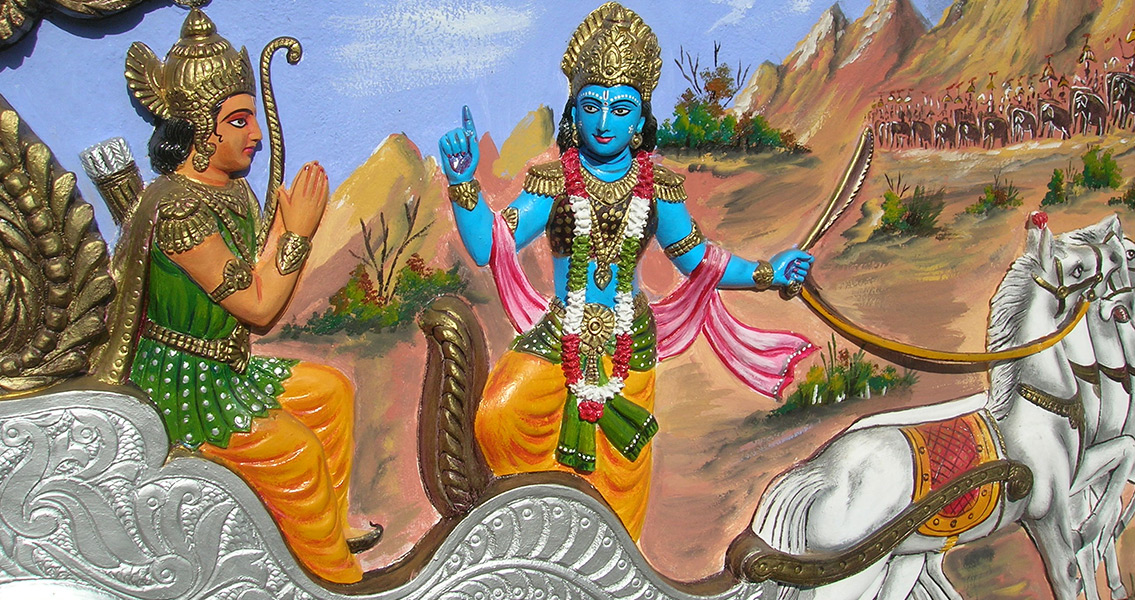
Bhagavad-Gita

Related Books


The Philosophy of the Bhagavad-Gita book

The Philosophy of the Bhagavad-Gita
by Subba Row

[gap height=”20″] ]]>

Categories
Breaking News

Indian Sword Revealed as Master-Crafted