

www.rsta.royalsocietypublishing.org Image courtesy of Wikimedia Commons user: Matt Lachniet, University of Nevada at Las Vegas ]]>

”Ritual drinks in the pre-Hispanic US Southwest and Mexican Northwest” Image courtesy of Wikimedia Commons user: Alejandro Linares Garcia]]>


Once inside, the Spanish and Tlaxcalan troops ransacked Tenochtitlan. Cortes took Montezuma hostage, and used his wife’s linguistic skills to manipulate the Aztec king into becoming a puppet Cortes could use to rule the Aztec people. The rebellion in Tenochtitlan started when Cortes led his forces out of the city to confront an army led by Velazquez, who had pursued Cortes through the centre of Mexico. Eighty soldiers were left behind in the Aztec capital, under the command of Pedro de Alvaredo. Although depictions of what happened and why vary, at some point during the Aztec festival of Tóxcatl, Alvaredo’s forces attacked the Aztec revelers. The festival descended into a horrific massacre, with some estimates claiming that up to 10,000 Aztecs were killed. Once news of the massacre had spread, Aztec warriors attacked the city and surrounded the Spanish soldiers. Alvaredo managed to get word of the crisis to Cortes, whose forces quickly returned to Tenochtitlan. Once inside, Cortes realised he had made a costly mistake. The Aztecs, substantially outnumbering the Spanish forces, swiftly surrounded the city. What’s more, the Aztecs had lost all loyalty to Montezuma, leaving Cortes with no chance of calming the angry revolt. On the night of the 30th June, with water and food running low, Cortes gathered his troops and the loot stolen from the Aztec city, and ordered a secret retreat. The plan almost worked but the escapees were discovered as they tried to cross the Mixcoatechialtitlan canal. A brutal fight ensued, with hundreds of Spanish and Tlaxcalan drowning in the canal during the panic. The tragic night is remembered in Spanish as La Noche Triste (the night of sadness). Cortes and his forces fled west and after more fighting reached the safety of Tlaxcalan, five days after the escape had begun. Legend has it that Cortes was so devastated by the loss of the city that he sat under a tree and cried following the escape. Montezuma had been killed in the chaos, and ultimately La Noche Triste turned out to be a significant turning point in the history of Spanish colonisation of Mexico. Cortes would return to Tenochtitlan in 1421, and this time capture the city with a brutal siege. The second fall of the city would ultimately prove the end of the Aztec empire. Image courtesy of Wikimedia Commons user: http://www.inehrm.gob.mx]]>


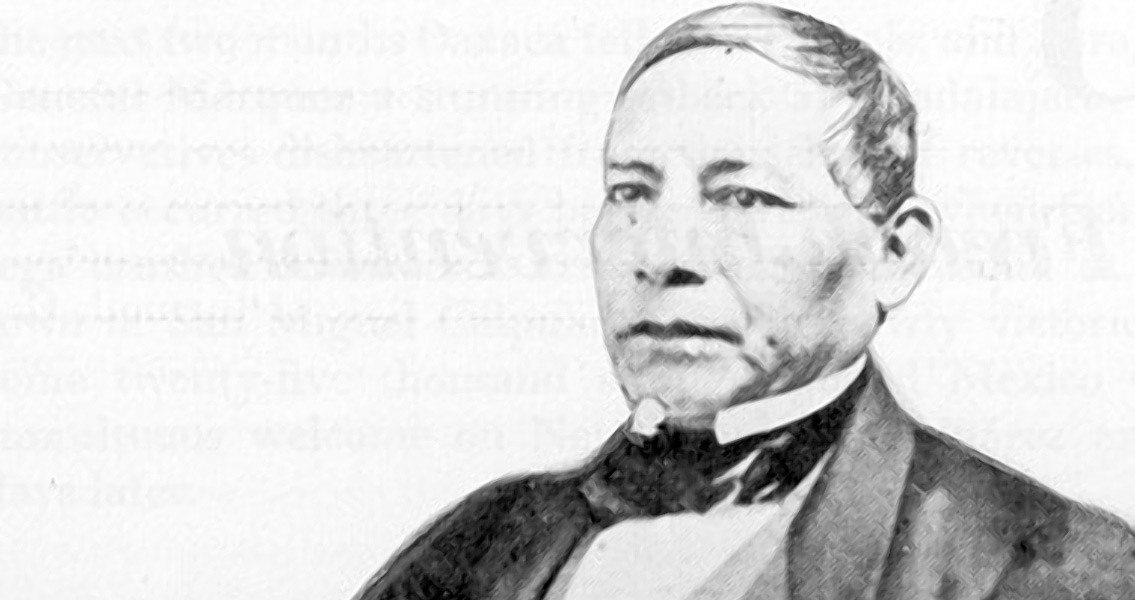
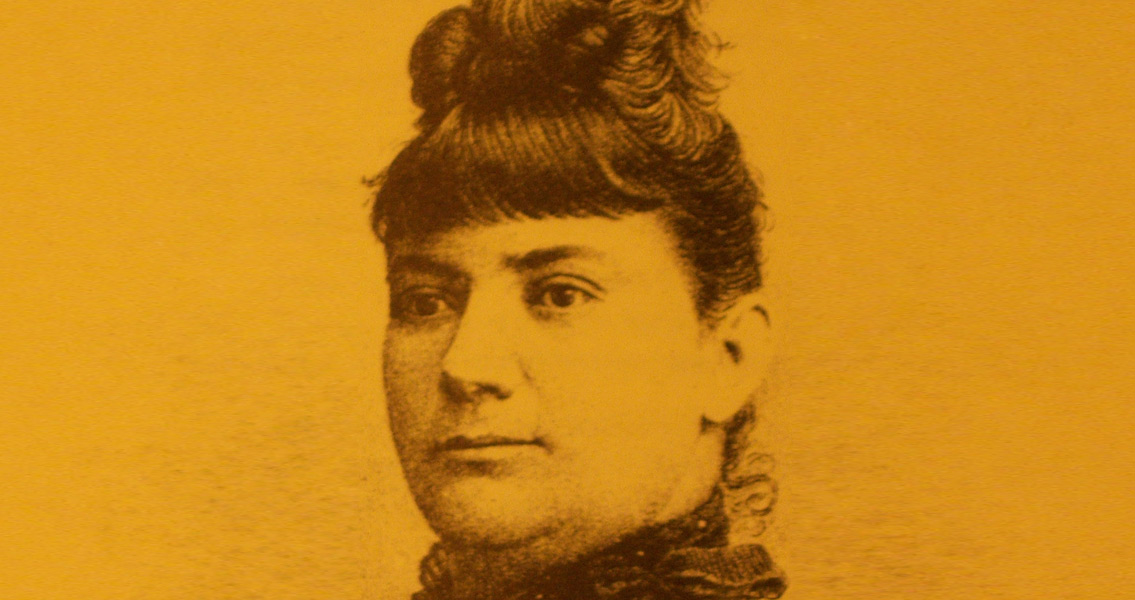
Journal of Women’s History, “that women biographers produce works of greater intensity because of our commitment to understanding a woman’s life and to redressing the under-representation of this type of biography.” Méndez was born into a Mexican society which was dominated by traditional, religious values. Catholicism shaped both public and private life in late-nineteenth-century Mexico. She witnessed a period of great change that led to a modern country marked by the separation of church and state and the beginnings of a more secular society. Bazant describes Méndez as “a protagonist of that transformation.” Méndez produced newspaper reports, essays and articles on teaching for over forty-two years. In a male-dominated world which was averse to equality for women, she faced numerous obstacles. Remarkably, Méndez supported herself and her children on a meagre teacher’s salary whilst leading the feminist cause in Mexico. Very few biographies of Mexican women exist today. As a result, there is a historiographical gap which means we have only a partial understanding of Mexico’s past. Biography, for Bazant, represents a means of revealing the existence of an individual and the context in which their life transpired. “In women’s studies in particular, biography is considered a watershed, as the history of one woman’s life gives meaning to times and places and combines theoretical and methodological aspects and historical subfields: daily life, intellectual and cultural history, emotional history, socio-economic and gender history, and the history of literature and art,” Bazant writes. From Bazant’s work emerges a portrait of an immensely courageous and talented woman. In the summer of 1891, Méndez moved to San Francisco, California. Without knowing English, without guaranteed work, and with children aged eleven and thirteen, Méndez’s bravery is admirable. “In that city, where Laura lived in anonymity, she learned about women’s liberation, referring to the idea of women having the same educational opportunities and doing the same work as men while earning comparable wages,” Bazant writes. “In addition to giving Spanish classes to well-heeled ladies for a dollar and a half an hour, an exorbitant amount by Mexican standards, she sent articles to be published in widely read Mexican newspapers: El Imparcial, El Mercurio, and her own Revista Hispanoamericana.” Her articles spoke of women’s enormous influence in San Francisco, arguing that if a truly grandiose project were to be undertaken, the best strategy was to involve women. Progress, both material and spiritual, formed the central topic of many of Mendez de Cuenca’s articles, Bazant explains. By revealing Laura Méndez de Cuenca’s remarkable life, Bazant has added significantly to our understanding of Mexico’s past. Her work allows us to glimpse the individual and societal changes taking place during a very important part of Mexico’s long history. For more information: www.muse.jhu.edu Image courtesy of Wikimedia Commons user: Ufi]]>