www.journals.cambridge.org Image courtesy of Wikimedia Commons user: Wellcome Images ]]>

www.journals.cambridge.org Image courtesy of Wikimedia Commons user: Wellcome Images ]]>

Proceedings of the National Academy of Science, Christian Meyer, Christian Lohr, Detlef Gronenborn and Kurt W. Alt argue that the mass grave is adding to the continued reappraisal of the extent of warfare and violence in Central Europe during the early Neolithic. An extensive study of the mass grave in Schöneck-Kilianstädten has shown that twenty six individuals buried there were killed by either blunt force or arrow injuries. The bodies were then thrown into a commingled mass grave. Significantly, according to the authors, the grave demonstrates “a pattern of intentional mutilation of violence victims.” There is clear evidence among the remains of the mass grave of an intentional, sytematic breaking of the victims’ lower limbs. Half of the skeletons had perimortem fractures, according to the study authors, suggesting the victims were either tortured shortly before death or mutilated afterwards. Such a pattern of violence has not been observed before at Neolithic sites. The fact that the remains were scattered around, seemingly randomly, is also unusual. In other Linear Pottery burials each person was given their own grave within a graveyard. Bodies were often carefully buried alongside grave goods such as possessions or pottery. The researchers take this as evidence that Schöneck-Kilianstädten must have been the site of a massacre where normal burial rites and customs were abandoned. Taken alongside other Neolithic massacre sites in central Europe at Talheim, Germany, and Asparn/Schletz, Austria, the team believe the mass grave at Schöneck-Kilianstädten adds to the mounting evidence of moments of extreme mass violence towards the end of the Linear Pottery Culture. “The new evidence presented here for unequivocal lethal violence on a large scale is put into perspective for the Early Neolithic of Central Europe and, in conjunction with previous results, indicates that massacres of entire communities were not isolated occurrences but rather were frequent features of the last phases of the LBK (Linear Pottery Culture).” Sometimes referred to as the New Stone Age, the Neolithic was a period defined by the development of new stone technology. It also saw farmers migrate west from Anatolia (what is now Turkey) into Europe, displacing the nomadic people and fishermen who had inhabited the continent previously. Settlements and communities sprung up across the continent as people built houses, cultivated land and started to decorate pottery. The extent to which these early settlements were blighted by conflict and violence however, has remained unclear. The end of nomadic lifestyles could have created increasing competition between different communities for access to the best land, rivalries which may have been intensified through climate conditions such as drought. The excavation of the Schöneck-Kilianstädten site has added crucial evidence to the study of large scale violence in the Linear Pottery Culture. The discovery, along with the other sites in Germany and Austria, has allowed researchers to start piecing together the nature, extent, and causes of warfare in the Central European Neolithic. For more information: www.pnas.org Image courtesy of Wikimedia Commons user: Joostik ]]>


“The excavation of the Neolithic site at Hamin Mangha in Horqin Left Middle Banner, Inner Mongolia in 2011” Image courtesy of Wikimedia Commons user: Shizhao]]>

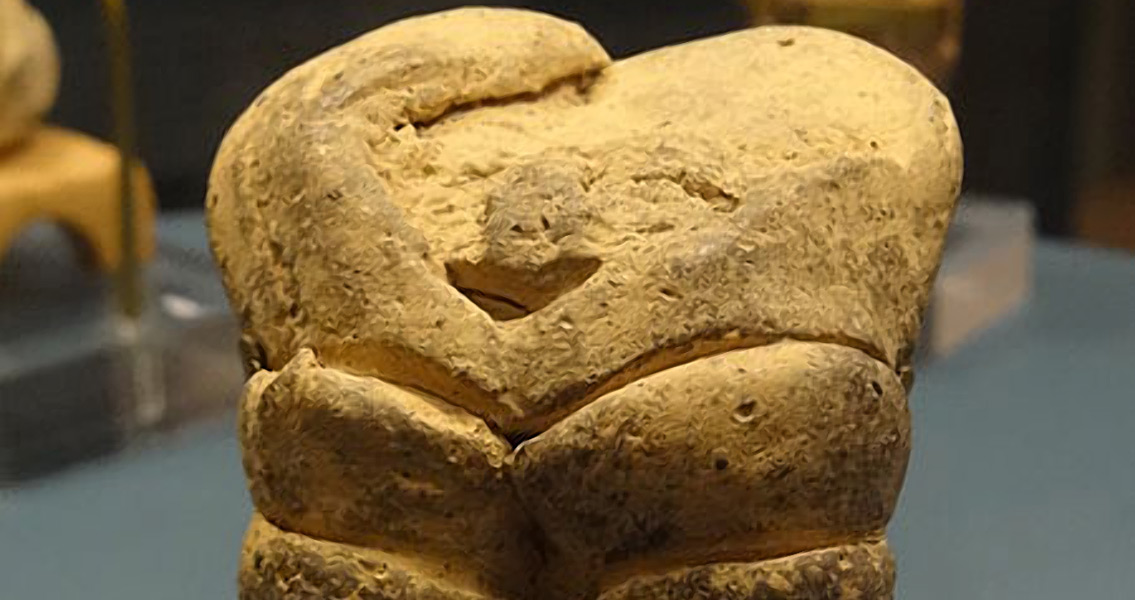
Haaretz reports, citing the archaeologists who took part in the dig. It is likely that the artefact was made by another neolithic culture, Jericho 9, which was initially thought to have emerged after the decline of the Yarmukians. Now, it is possible that the two cultures co-existed and shared a lot of their religious beliefs, even though they lived in different parts of the Levant. So far Neolithic figurines have been found at nine locations in Israel, most of them in the region of Sha’ar Hagolan, in the north of the country. The region is the main source of Yarmukian artefacts, including white clay pottery, of which many of the figurines were made. The height of the Yarmukian civilisation is believed to have been 7,500 years ago, and it is considered the first civilisation to have started baking clay in the Middle East. The most abundant source of information about this people, however, are the figurines, made both from clay and limestone, of which more than 150 have been found so far. They are characterised by a refined artistic style, something unique at the time, and are considered a major artistic achievement of Neolithic people. Although the bulk of Yarmukian figurines have been found in northern Israel, this latest find, a red-clay figurine, was made in Revadim, a kibbutz in south-central Israel, an area associated with the supposedly later Jericho 9 civilisation. According to Edwin van den Brink, the lead researcher at the dig, these two, the Yarmukians and Jericho 9, were in fact one single culture, apparently capable of different styles in pottery. They had one system of beliefs, in which the image of a fertility goddess seems to have played a central role, given the abundance of such figurines. Still, the question of whether the two types of figurines were made by one culture or two different ones remains because, as suggested by the other lead archaeologist at the site, Yitzhak Marmelstein, the red-clay one may well have been made in the north and then brought to the south of the country. Chemical tests to be performed on the new find are expected to determine whether this was the case. The ancient inhabitants of Sha’ar Hagolan were initially believed to have lived in pits dug in the ground, but later archaeological work unearthed dwellings built from stones and mudbricks, and covered with straw or mud set on wooden frames, according to information from the Israeli Ministry of Foreign Affairs. In addition to clay pottery, the Yarmukians also extensively used stone vessels and tools. Image courtesy of Wikimedia Commons user: Hanay]]>