Journal of Archaeological Science. ]]>

Journal of Archaeological Science. ]]>

IBTimes UK. “The presence of red deer canines is unique in the region, and the combination with columbella is unique too,” adding, “This burial is also important because there burial constructs containing grave goods are rare. But the materials worn by the dead here are obvious and ornaments are visible. The burial is exceptional.” The single, isolated grave was discovered and partly unearthed in the 1970s, with various artifacts from it exhibited and then stored at the Calvet Museum. The grave’s rediscovery in 2009 revealed that the deceased male had been buried in primary deposition with no preserved architectural features. Using calibrated AMS dates researchers were able to reliably date the garment to the early 5th millennium BCE, which reinforces existing evidence of long distance relationships between the Neolithic cultures in Europe. Avignon and the surrounding region have been inhabited since the Neolithic, evidenced by the discovery of a small anthropomorphic monument carved from Burdigalian sandstone in the shape of a tombstone. This stele is believed to represent the first Avignonnais and dates from the Copper Age to the Early Bronze Age, a period which is referred to as the southern Chalcolithic. The face of the stone is engraved with a stylized human figure that has no mouth, and eyes marked by small holes. At the bottom there’s a deep indentation that has eight radiating lines that form a representation of the sun, unique for this type of monument. Other findings from this time period include two polished axes made from greenstone, several Chalcolithic objects used for adornment and numerous shards of Hallstatt pottery. The study has been published in the Journal of Field Archaeology. Image courtesy of Aurélie Zemour ]]>
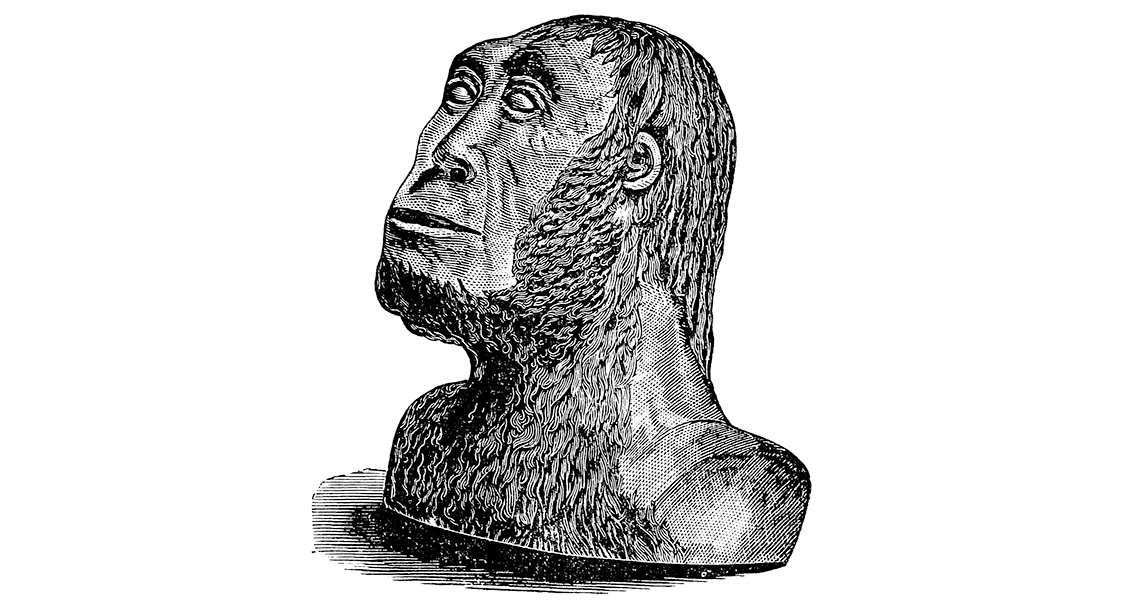
New Scientist. “The results add to increasing evidence that these effects are often the outcome of changes to the genetic switches,” said Tony Capra of Vanderbilt University in Nashville, Tennessee. His own results published last year revealed Neanderthal influences on a variety of human disorders, including depression and addiction. The control of Neanderthal DNA decreased the most in regions of the brain critical for perception and fine motor skills, the basal ganglia and the cerebellum, which further evolved in humans to enable advanced thinking, behavior and the ability to process language. NTRK2 is another Neanderthal gene with fading influence. This gene is key to neuron survival in addition to the development of brain connections and its reduced influence illustrates the sort of fine-tuning which may have permitted our ancestors to take off intellectually. Another gene in which Neanderthal DNA lost control is a testes gene that affects a sperm’s ability to penetrate and subsequently fertilize an egg. Researchers theorize that once control of this gene was relinquished, neither the Neanderthals nor the human- Neanderthal hybrids were able to mate with humans. This theory is consistent with research results showing a reduction in the health of male offspring from hybrid unions. ]]>
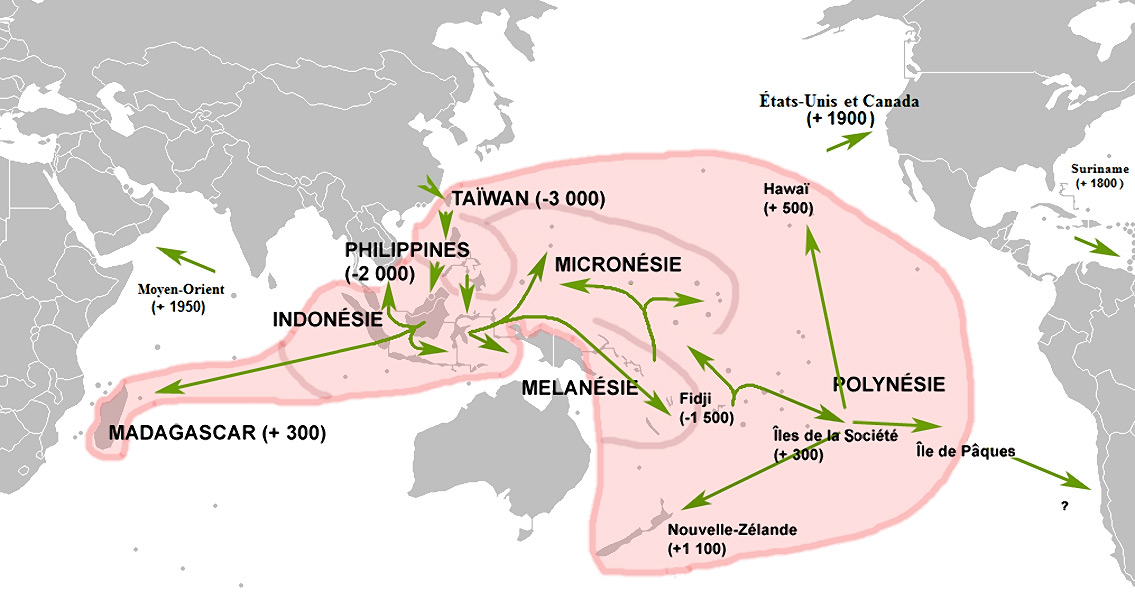
Science that the study decides a decades-long dispute, showing the East Asians skipped over islands populated by Melanesians at the time without picking up any of their genes, an example of how cultures can initially avoid mixing between groups. Known collectively as the Lapita culture, the first Polynesian Islanders left behind plenty of enticing artifacts, including unique red stamped pottery, shell ornaments and obsidian tools. These artifacts first showed up over 3,000-years-ago in New Oceania, in the Bismarck Archipelago. The Lapita culture grew yams, taro and breadfruit; brought chickens and pigs; and quickly spread to other islands such as New Caledonia and Vanuatu, and then to Tonga, Samoa, Fiji, and beyond. The two models previously considered by archaeologists included the “express train” model, which had the Lapita traveling quickly from mainland China to Taiwan, the Philippines, and then across open ocean to Vanuatu and then Samoa. Covering a total of 24,300 kilometers in around 300 years. This model is supported by linguistics models showing how Austronesian languages, which are very different from the Papuan languages of Melanesia, spread into Oceania from East Asia. The “slow boat” model was supported by the DNA of live Polynesians which showed evidence of their Lapita ancestors lingering in Melanesia, living with the locals and then spreading slowly eastward. This new study involved the extraction of DNA from the ancient skeletons of four women from the islands Tonga and Vanuatu, dating back to between 2,300 and 3,100 years ago, three of which were directly connected to the Lapita culture. The international team sequenced the DNA (up to 231,000 positions) of each skeleton and then compared their findings to the DNA of almost 800 people from 83 different populations currently living in East Asia and Oceania. The four ancient women shared all of their ancestry with the Atayal, an indigenous people from Taiwan and the Kankanaey people from the Philippines. The Lapita showed no evidence of a Papuan ancestry, meaning they took the express route all the way to Oceania without ever mixing with Melanesians. ]]>

Science Daily. Knies is a co-author of a new study that looked to the Arctic for clues as to exactly what slowed the return of life to the world´s oceans. The results of the study illustrate the potential long-term impacts to marine ecosystems of global warming. “What used to be the northwestern continental margin of the supercontinent Pangaea is now Canadian High Arctic. There we found evidence in geological records for a significant nutrient gap during this period. This means that global oceans were severely poor in nutrients such as nitrogen,” Knies says in Science Daily, adding, “The high temperatures caused deepening of the thermocline and nutricline in the ocean so that upwelling of nutrients from the bottom to the surface of ocean ceased. With that the marine algae productivity was stalled.” This nutrient gap was likely caused by the extremely high temperatures of the ocean surface following the extinction event. The planet’s oceans are not just a single layer of water. They consist of boundaries and layers defined by nutrients (nutricline) and temperature (thermocline) among other things. With no algae present, which are at the bottom of the food chain, life in the ocean couldn’t thrive. When the oceans finally began cooling between 6 and 7 million years after the event, the nutrient rich waters returned. “The boundaries that kept the nutrients from reaching the surface were weakened and the ocean waters were mixed. This caused the upwelling of nutrients, resuscitating the oceans, and leading to an explosion of life. The ecosystem voids created by the worst mass extinction in Earth history were finally filled.” Knies explains in Science Daily. The Permian-Triassic mass extinction altered the evolution of both marine and terrestrial life, and made it possible for dinosaurs to evolve. They were left to die off in yet another mass extinction event 66 million years ago. Today there are scientists that contend we’re now facing a new period of mass extinction, caused by human activities for the most part. ]]>