Categories
Breaking News

Warrior Armor Made of Reindeer Antlers Found at Sacred Site

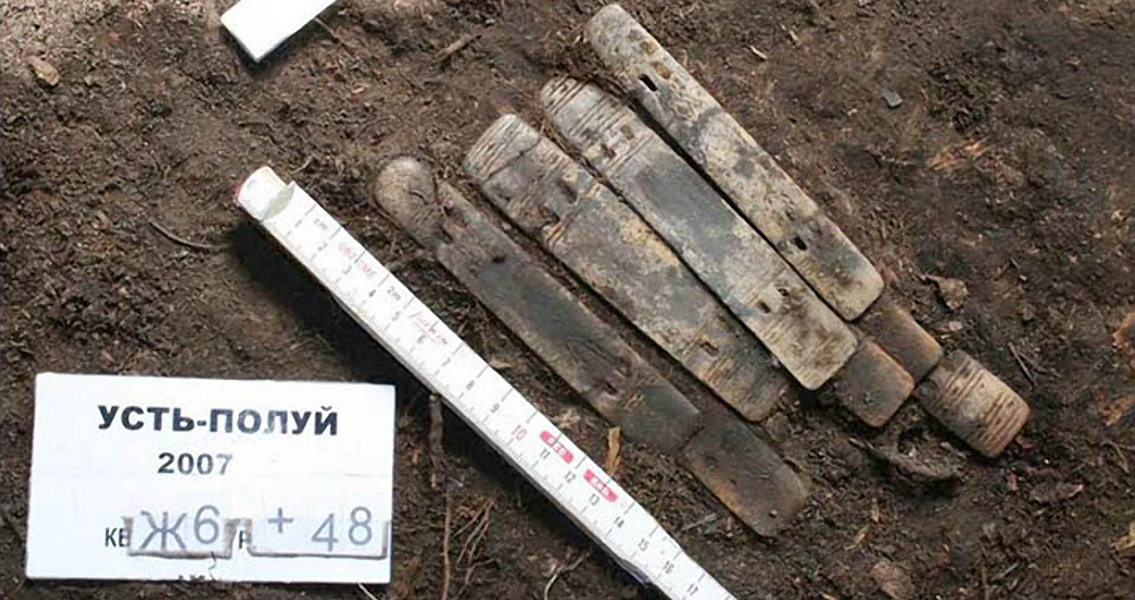
Siberian Times, adding, “The ornamentation on the plates can be individual, that is after the thorough analysis we could say how many warriors left armour here, judging by the style of decorations.’” The largest plates are between 23 and 25 centimeters long and in ancient times would have been attached to a leather surface, offering a dependable type of protection. Other plates, which are are between 12 and 14 centimeters in length, are thinner and richly ornamented. Conical shaped armor has also been seen on the plated helmets which were worn by ancient warriors in the taiga zone (also known as boreal forest) of Western Siberia. The discovery of iron helmets is extremely rare, however, bronze images from the middle of the first century CE that show people wearing headdresses that clearly resemble helmets have been found. The armor resembles the armor worn by warriors of the Kualai people, fishermen and hunters indigenous to the taiga. Previous finds at the site include a 2,000-year-old ring, believed to be evidence of a bear cult. These ancient people didn’t leave any written records. Made using high quality bronze, the ring, so tiny in diameter researchers believe it was put on a bear claw, features the image of the head and paws of a bear. Experts theorize that the ring was on the claw of a previously slain bear, an animal that was worshipped by Khanty tribes as sacred and an ancestor. After the slaying of the bear, the paws and head were adorned with rings and a handkerchief, followed by a festival honoring the animal. Image courtesy of Andrey Gusev ]]>
Categories
Breaking News

Zinc Deficiency Not Lead Exposure Killed John Franklin's Crew

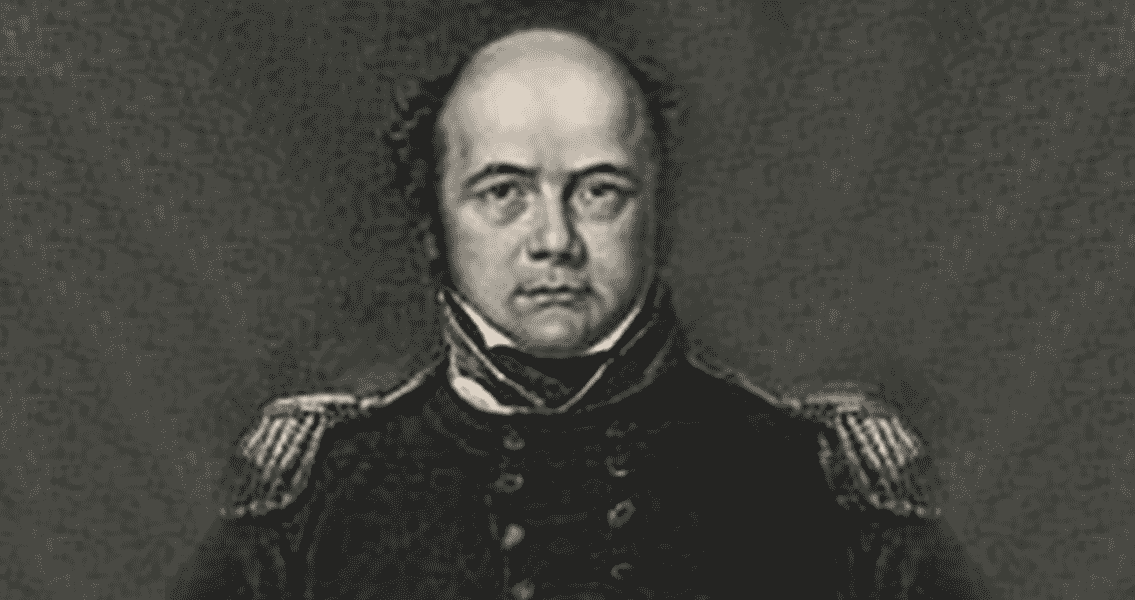
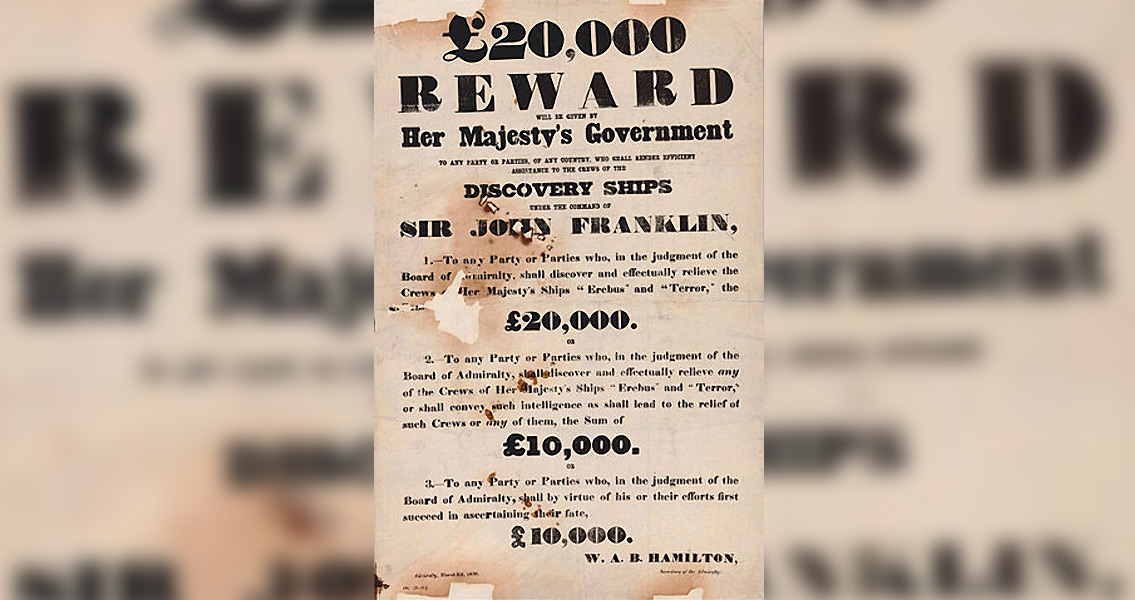
HMS Terror and HMS Erebus, led by explorer and Royal Navy officer John Franklin, left Britain to search for the last section of the Northwest Passage. When both ships became icebound, all 129 men were lost, but exactly how and why they perished has been an enduring mystery. In a new study, researchers chemically mapped the fingernail and toenail of one of the dead men and found new evidence regarding Franklin and his crew’s tragic fate. A number of researchers have theorized that lead poisoning – caused by the metal leaching from the food tins or water pipes found on the ships – had caused the men’s death. Lead exposure can bring on symptoms which include neurological problems, that could have easily doomed the explorers. But now, this latest evidence shows one of the few bodies ever found had a zinc deficiency, suggesting that it was this deficiency, not lead poisoning, that led to his death. “There’s increasing evidence that lead was not the issue,” Jennie Christensen with TrichAnalytics in North Saanich, Canada, says in an article published in Nature. Christensen and her team measured the levels of zinc, copper, and lead at different locations along at thumbnail and toenail from John Hartnell, a crew member who, along with two others, died and was buried on Beechey Island where the expedition overwintered in 1845 and 1846. After studying the accumulated growth of Hartnell’s finger and toe nails, the team was able to identify week-by-week changes as they occurred in his body. “You can actually see what the levels of lead were with John Hartnell, over the period of time he was present on the expedition. That is a pretty unique insight,” Keith Millar, with the University of Glasgow, says in Nature. Christensen’s team utilized a synchrotron particle accelerator located in Saskatoon, called the Canadian Light Source, along with other instruments to construct a picture of the metals inside of Hartnell over a period of time. They discovered the crewman suffered from a serious zinc deficiency, which would have affected his immune system, leaving him considerably more vulnerable to pneumonia and tuberculosis – the very diseases that are believed to have killed him. Hartnell had high lead levels only within his last few weeks of life, when his body, dying at this time, would have released the lead stored in his bones into his blood and ultimately his nails. “The lead theory is pretty much dismantled by this point,” Ron Martin, from the Western University in London, Canada, tells Nature. In 2013, Martin analyzed the bone fragments of several crewmembers (including Hartnell) and reached the conclusion that there was no spike of lead exposure during the expedition, but rather, the men had been exposed to lead consistently throughout the course of their lives. No samples from any of the other members of the expedition are available, so the research can’t be applied beyond Hartnell’s death. However, a zinc deficiency may help to explain why other expeditions to the Arctic suffered poor health. The findings have been published in the Journal of Archaeological Science. ]]>

Categories
Breaking News

Scientists Working Above the Arctic Circle Find 1,000-year-old Persian Cup

Siberian Times: “From the 6th and 7th centuries AD Central Asian merchants began to appear in the Upper Kama region. They exported walrus tusks, hunting birds and fur from the north. Through the Kama region they had penetrated to the Ob region in 7th and 8th centuries.” The Persian items that traders brought north with them often took on ritual meanings for the indigenous Khanty and Mansi peoples who lived in the area. They were seen as gifts to gods and spirits, stored in holy places and often used as serving dishes to carry ceremonial food given to the gods at festivals. Since the second millennium BCE, the regions between the Kama and the Irtysh rivers have been home to the indigenous Khanty and Mansi peoples. A number of researchers believe the Khanty’s ancestors were the prehistoric Andronovo culture, which are known for their ancient metalworking skills. Other researchers claim that the Khanty originated in the Ural steppe and then moved north to their present location around 500 CE. Traditionally, Khanty religion was closely connected to nature. The Crow Spring celebration is celebrated in April, while the Bear Celebration follows each successful bear hunt. The Bear Celebration can last 5 or 6 days (depending on the sex of the bear), and includes over 300 songs and presentations. With the arrival of Soviet power and the establishment of collective farming came the persecution of Khanty shamans along with the destruction of their burial grounds. Khanty children were even forcibly removed and sent to boarding schools. After an outburst of resistance, known today as the Kazym rebellion, the Khanty were brutally suppressed by the Soviet army; Khanty villages were burned along with anything else connected with their culture. Following that event, anyone who participated in the traditional bear funeral rites faced ten years in prison. In a census taken in 2010, only 30,943 people identified themselves as Khanty. The intention of the research expedition that brought the scientists to the Arctic to begin with was a project to monitor and compare the depth of the permafrost over a 30 kilometer area near Lake Parisento, on Gydan Peninsula. The scientists installed the monitoring equipment and then compared the recorded data with information that was obtained from the same location 25 years previously. Image of the artifacts can be seen here ]]>

Categories
Breaking News

Clues to The Great Dying Event Found in the Arctic

Science Daily. Knies is a co-author of a new study that looked to the Arctic for clues as to exactly what slowed the return of life to the world´s oceans. The results of the study illustrate the potential long-term impacts to marine ecosystems of global warming. “What used to be the northwestern continental margin of the supercontinent Pangaea is now Canadian High Arctic. There we found evidence in geological records for a significant nutrient gap during this period. This means that global oceans were severely poor in nutrients such as nitrogen,” Knies says in Science Daily, adding, “The high temperatures caused deepening of the thermocline and nutricline in the ocean so that upwelling of nutrients from the bottom to the surface of ocean ceased. With that the marine algae productivity was stalled.” This nutrient gap was likely caused by the extremely high temperatures of the ocean surface following the extinction event. The planet’s oceans are not just a single layer of water. They consist of boundaries and layers defined by nutrients (nutricline) and temperature (thermocline) among other things. With no algae present, which are at the bottom of the food chain, life in the ocean couldn’t thrive. When the oceans finally began cooling between 6 and 7 million years after the event, the nutrient rich waters returned. “The boundaries that kept the nutrients from reaching the surface were weakened and the ocean waters were mixed. This caused the upwelling of nutrients, resuscitating the oceans, and leading to an explosion of life. The ecosystem voids created by the worst mass extinction in Earth history were finally filled.” Knies explains in Science Daily. The Permian-Triassic mass extinction altered the evolution of both marine and terrestrial life, and made it possible for dinosaurs to evolve. They were left to die off in yet another mass extinction event 66 million years ago. Today there are scientists that contend we’re now facing a new period of mass extinction, caused by human activities for the most part. ]]>

Categories
Breaking News

Arctic Ocean Enjoyed Ice-Free Summers Six Million Years Ago

Categories
Breaking News

Shipwrecks from the Whaling Disaster of 1871 Found

Categories
News

Exploration of John Franklin's Final Voyage Enters New Phase

Categories
Breaking News

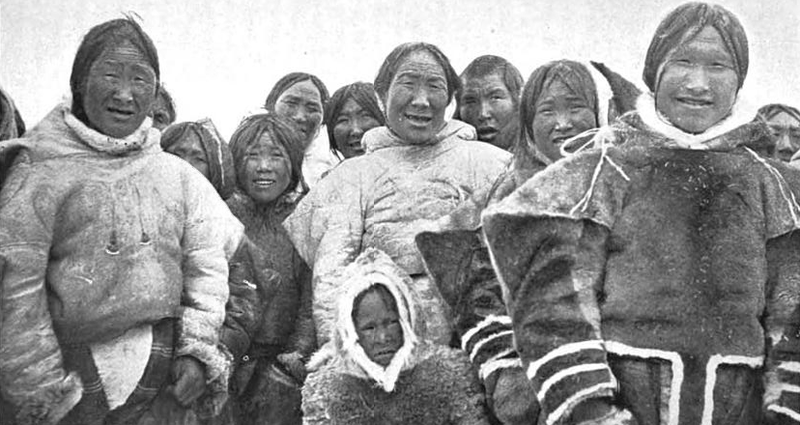
New Questions Arise About Original Arctic People