Proceedings of the National Academies of Sciences. Image courtesy of Wikimedia commons user: Justin Jerez]]>
Proceedings of the National Academies of Sciences. Image courtesy of Wikimedia commons user: Justin Jerez]]>

Proceedings of the National Academy of Sciences. Dr Schroeder and her colleagues performed genome analyses on the remains of three enslaved Africans, found buried in the Zoutsteeg area of Philipsburg on the Caribbean island of Saint Martin. It is understood from previous studies that the ‘Zoutsteeg Three,’ one adult female and two adult males, were buried in the seventeenth century and most likely came from Africa, rather than having been born in the New World. The new study enriched the poorly preserved DNA of the Zoutsteeg Three using a technique known as whole genome capture. “Those remains had essentially been lying on a Caribbean beach for hundreds of years so their preservation was really not good,” Dr Schroeder explained. “But by enriching the poorly preserved DNA in those samples we were able to obtain enough data to be able to dig deeper into the genetic origins of those three individuals we analyzed.” Dr Schroeder and her colleagues found that one of the Zoutsteeg Three had originated among Bantu-speaking groups in northern Cameroon. The other two came from a different area, most likely from non-Bantu speakers in the area which is now Nigeria and Ghana. “To our knowledge, these findings provide the first direct evidence for the ethnic origins of enslaved Africans,” writes Dr Schroeder in her study. “The data suggest that the Africans who reached Saint Martin were drawn from diverse cultures and societies.” The study has several major implications for the study of history. Most importantly, it clearly shows that it is possible to get extensive genome data from poorly-preserved archaeological remains; Dr Schroeder’s work clearly shows the value of her whole-genome capture method, which enables us to use samples which were previously thought to be too poorly degraded. This is particularly important in the Caribbean as artefacts deteriorate considerably in tropical settings. Genome-wide analyses are very useful for tracing the genetic origins of individuals, in this particular case victims of the transatlantic slave trade. Dr Schroeder’s work provides an alternative record which enhances our understanding of a long-standing historical problem, one where documentary sources can not tell us enough. For more information: www.pnas.org Image courtesy of Wikimedia commons user: Jgdc47B ]]>
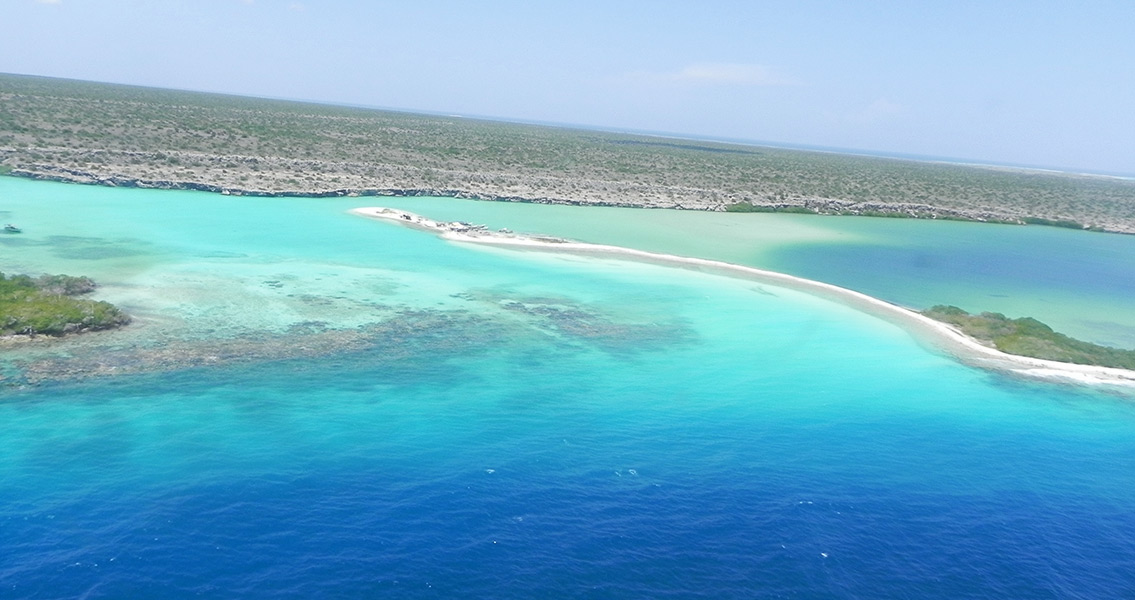
International Journal of Historical Archaeology. Small merchant vessels visited the Venezuelan island of La Tortuga from the late seventeenth century until 1781. The unassuming island was unique among Caribbean salt-producing islands as it was uninhabited. Its arid and inhospitable climate meant it had never been settled, resulting in a complete lack of tenure rights or taxes. This unique set of characteristics meant that only the crews of merchant ships raked and bagged the salt on La Tortuga, leading to higher profit margins than other Caribbean islands could yield. As such, La Tortuga was used extensively. The ships that tended to frequent La Tortuga, Antczak notes, were relatively small vessels with about seven crew members, including captain and mate. “Living in close quarters, a small crew and shared common tasks, activities and dangers all contributed to the general collectivism onboard most ships sailing to La Tortuga… captains often worked together with the crew in tasks,” Antczak writes in his study. What happened when these crews reached La Tortuga, however, altered this collective social structure. Antcazk argues that captains consciously changed the social relations of work and became exclusively managers, distancing themselves from the arduous labour of salt exploitation. Captains casually oversaw the labour and had sufficient time on their hands for leisure activities. During extensive archaeological excavations of La Tortuga, over one hundred punch bowls were unearthed. The average size of the punch bowls was about half a pint, indicating that they had been for individual use. Most of the bowls were found on a raised dune, overlooking a main salt-panning area. According to Antcazk, this elevated position would “have offered its occupants the best vantage point from which to view and oversee the crews working on the saltpans and the surrounding areas and also enjoy the best sea breeze.” It is thought that captains would have supervised their crews’ work from this vantage point whilst drinking punch. Punch was an important part of late seventeenth and eighteenth century drinking practices. For the wealthy, punch could contain rare ingredients such as nutmeg, pineapples and high-quality French brandy. On La Tortuga, water would also have been a luxury as fresh drinking water could not be found on the highly-salinized island. Captains drank punch as a way of displaying their social position. The more luxurious ingredients they consumed, the more status they had; increasing their negotiating power amongst other captains. “These leisurely weeks of tropical tedium on La Tortuga would also have served as moments to create future social networks and strategic alliances, as well as build friendships that might lead to greater social mobility for particular individuals,” Antcazk concludes. Punch, therefore, served an important social function for captains. It first demarcated the captains from the crew. Secondly, it also offered a means of social posturing amongst captains negotiating future deals. For more information: www.springer.com Image courtesy of Wikimedia commons user: Hermanditt]]>

www.pubs.acs.org Image courtesy of Wikimedia commons user: Alfvanbeem]]>