Clinical Anatomy, can be found online here Image courtesy of Ann Ross]]>
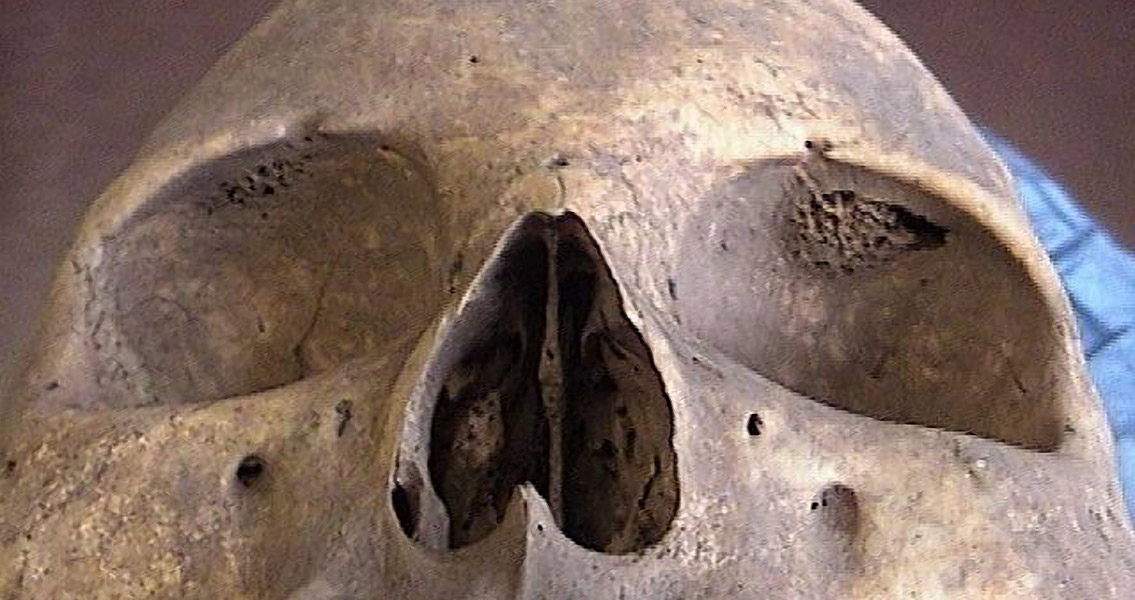
Clinical Anatomy, can be found online here Image courtesy of Ann Ross]]>

jousting accident. Exactly what caused Henry VIII’s and Anne Boleyn’s marriage to fail will likely remain unknown; ultimately Boleyn’s shocking execution was just one of a multitude of remarkable events in the life of the erratic Tudor King.]]>

An Early Roman Fort and Urban Development on Londinium’s Eastern Hill. ]]>

here]]>
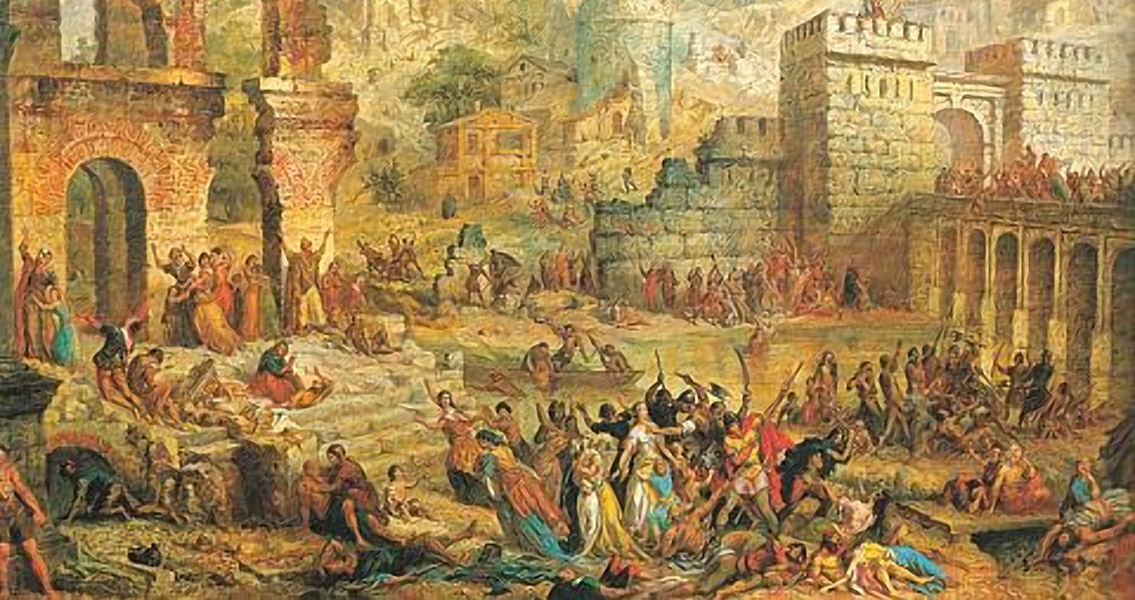


here Image courtesy of Faisal Almathen]]>

Louie, Louie by the Kingsmen were ‘unintelligible’. It marked a massive anti-climax in the middle of one of the most famous, yet surreal obscenity investigations of the twentieth century. “…the lyrics of the song on this record was not definitely determined by this Laboratory examination, it was not possible to determine whether this recording is obscene.” read the final report from the FBI laboratory. Louie, Louie, or the Kingsmen version at least, had caused a nationwide controversy, accused of containing pornographic lyrics intent on corrupting young minds. For two years the FBI investigated the song, but the report of the laboratory to investigators on 17th May 1965 gives an insight into just how bizarre the whole process was. The song itself was not a Kingsmen original but in fact written and first recorded in 1957, by Richard Berry, an R & B singer from Los Angeles. A regional hit on the US’ West Coast, the song really grew in popularity when Berry toured the Northwest Pacific region, exposing the track to a wider audience and inspiring a slew of cover versions. Berry’s original was written in an approximation of a Caribbean dialect, possibly in an attempt to take advantage of the trend for Calypso themed music which dominated the US charts in 1957. However, this thickly accented language could also explain the growing confusion toward the content of the song’s lyrics. In 1963, the Kingsmen took to a studio in their native Portland, Oregon, to record their cover of Louie, Louie. Forced to rush their session, leading to a final, shambolic performance on record; the Kingsmen’s version of the song was nevertheless released as a single in May 1963. The often chaotic, discordant performance somehow resonated with people, and the song slowly ascended the charts, peaking at number two in December. The Kingsmen seemed set to follow the trajectory of so many other one hit wonders from the early sixties as their single started to plummet down the charts following its December peak. That was until a single complaint launched the song toward nationwide notoriety. In January 1964, an anonymous letter from somebody connected to Sarasota High School in Frankfort, Indiana was sent to governor Matthew Welsh, complaining the lyrics to Louie, Louie were obscene. “The lyrics are so filthy that I can-not enclose them in this letter,” the complainant wrote. “We all know there is obscene materials available for those who seek it,” the letter, which can be found in the publicly available FBI report, continued, “but when they start sneaking in this material in the guise of the latest teen age rock & roll hit record these morons have gone too far.” Investigating obscenity claims is a responsibility of the FBI, and the law enforcement agency soon set about exploring the accusation from Indiana. Welsh, meanwhile, quickly had the song banned in the state. Scandal spread across the USA, as rumours of the song’s supposedly sordid lyrics reached more and more parents who wrote letters to local politicians claiming the song was corrupting the minds of the USA’s teenagers. For months the FBI laboratory tried to find conclusive evidence of the record’s obscenity. Copies of Louie, Louie were sped up, slowed down and reversed, while expert witness testimony was gathered to try and find out what exactly the band were singing. Ultimately however, the laboratory was unable to gather anything conclusive. On 17th May 1965, they had to admit defeat, reporting that it was simply impossible to decipher the song’s lyrics. In September 1965, the FBI investigators finally interviewed members of the Kingsmen to discuss the song’s lyrics. The band declared that the lyrics were not obscene or pornographic, and weren’t an attempt to corrupt young minds. A few months later, close to two years after the initial accusation had been made, the FBI officially closed the investigation. ]]>
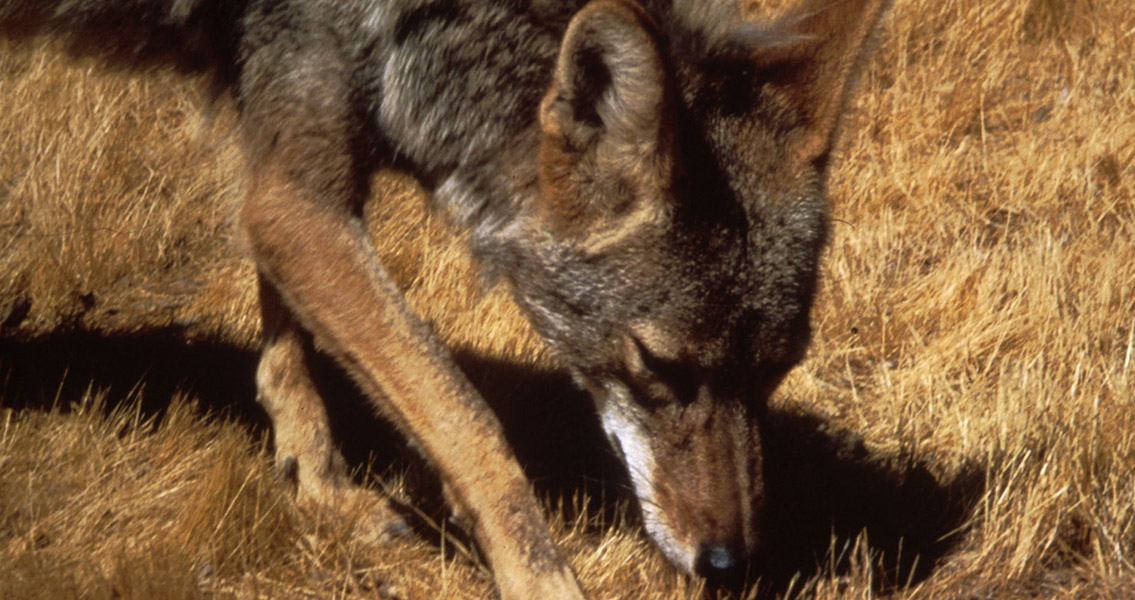
Cynarctus wangi – lived 12-million years ago and is described in a recent study in the Journal of Paleontology. The animal is described as being around the size of a modern coyote, and the specimen is a fossilized tooth, specifically an upper right second molar recovered at the Choptank Formation, part of Maryland’s Calvert Cliffs. Cynarctus wangi was part of the Borophagine canids that roamed eastern North America during the middle Miocene era. Borophagine canids are part of a line of carnivorans that includes wolves, domestic dogs, foxes, dingoes and jackals as well as a variety of other existing and extinct dog-like animals. Referred to as bone crushers, (they are known for their strong jaws and oversized teeth) the Borophagine canids lived across North America from 10 to 30 million years ago. Researchers believe the species probably went extinct because it was unable to compete with other canids. Regardless of the fierce nickname, scientists don’t believe C. wangi was wholly carnivorous. The fossil led them to the conclusion that around two-thirds of its meals were non-meat — the animal was surviving on insects and plants, more like a bear than a dog. Steven E. Jasinski, a University of Pennsylvania doctoral student and the study’s lead author, wrote in the study that what’s especially significant about the find is its location –the discovery of land animal fossils in the Choptank Formation is extremely rare and therefore can provide important information about North America as it was between 12 and 13 million years ago. The Miocene period (extending from 23 million to 5 million years ago) was the first geological epoch in the Neogene Period. The word Miocene means ‘less recent’ and the ‘Epoch’ gained its name due to having 18% fewer modern sea creatures than the epoch which followed it, the Pliocene. The planet moved through the Oligocene, then the Miocene which was followed in turn by the Pliocene, cooling as it did with a succession of ice ages. The Miocene Epoch’s time boundaries aren’t distinguished by any single global event as many time periods are, but by the regional boundaries that occurred between the warmer Oligocene Epoch and the colder Pliocene Epoch. When tasked with identifying the Choptank Formation fossil, researchers considered two different, yet distinctly possible scenarios. First, the geographic and stratigraphic provenance of the specimen could have indicated that it belonged to Cynarctus marylandica, another type of canine whose fossils have been found at the site. The second, and most plausible possibility according to experts, is that the Cynarctus wangi fossils at the site are from a younger strata than the C.marylandica specimen. Either way, this new fossil increases the scant record of the groups that lived in this region of North America and our knowledge of the terrestrial taxa that resided there. ]]>