Categories
Breaking News

Mastodon Tusk Rewrites History of Southeastern USA

Science Advances, the latest research was carried out by a team led by Florida State University’s Professor Jessi Halligan, and Texas A & M University’s Professor Michael Waters. Situated a short distance from Talahassee, the Page-Ladson site was the scene of the team’s excavations. It sits some 26 feet underwater, in a sinkhole on the Aucilla river. Its name comes from the Ladson family, owners of the porperty on which the site is located, and Buddy Page, an ex Navy Seal diver who first discovered it. Initial investigation and excavation at Page-Ladson took place over the course of ten years, starting in 1987. Archaeologists James Dunbar and David Webb reported the discovery of eight stone tools and a mastodon tusk displaying what appeared to be cut marks. Believed to be too old to be real, and dubious because they were found underwater; Dunbar and Webb’s findings were ignored by the wider archaeological community for decades. Now, however, they are considered to mark the oldest archaeological site in the southeastern United States. Helligan and Waters maintained an interest in Page-Ladson, believing it was worthy of reexamination. Between 2012 and 2014 they launched a series of dives there, excavating bones from extinct animals, and stone tools. Meanwhile, Daniel Fisher, a vertebrate paleontologist at the University of Michigan, set about reconstructing the mastodon tusk Dunbar and Webb had excavated decades earlier. Fisher discovered that the tusk showed obvious signs of cutting to remove it from the skull, including a series of deep, parallel grooves. “These grooves are clearly the result of human activity and, together with new radiocarbon dates, they indicate that humans were processing a mastodon carcass in what is now the southeastern United States much earlier than was generally accepted.” Fisher said, in a University of Michigan press release. A number of reasons could explain the decision to remove the mastodon’s tusk. Fisher suggests it could have been a means to get to the nutritious tissue in its pulp cavity, while another possible explanation is that the people living in the region used ivory in weapon construction. Whatever the explanation, Fisher’s findings add to the growing body of evidence that humans coexisted with and hunted large mammals such as mastodons and mammoths before they went extinct. “…our work provides strong evidence that early human hunters did not hunt mastodons to extinction as quickly as supporters of the so-called ‘Blitzkrieg’ hypothesis have argued”, explained Fisher. “Instead, the evidence from this site shows that humans and megafauna coexisted for at least 2,000 years.” All of the artifacts unearthed from the site have now been thoroughly examined and carbon dated, providing a surprising revelation that the southeast of North America was inhabited before the Clovis people, widely regarded as the earliest inhabitants of the area, arrived some 13,200 years ago. “The new discoveries at Page-Ladson show that people were living in the Gulf Coast area much earlier than believed,” explained Waters in the press release. “The stone tools and faunal remains at the site show that at 14,550 years ago, people knew how to find game, fresh water and material for making tools. These people were well-adapted to this environment. The site is a slam-dunk pre-Clovis site with unequivocal artifacts, clear stratigraphy and thorough dating.” Distinguished by the unique spearheads they used, the Clovis people are considered among the earliest people to have inhabited the Americas. Originating south of the Canadian ice sheets, they arrived in the New World some 15,000 years ago and slowly migrated southward. The fact that Page-Ladson was inhabited some 14,550 years ago opens up a whole new line of study for archaeologists, and further elaborates our knowledge of migration patterns across North and South America thousands of years before Europeans arrived. “Page-Ladson significantly adds to our growing knowledge that people were exploring and settling the Americas between 14,000 and 15,000 years ago,” Waters said. “Archaeological evidence from other sites dating to this time period shows us that people were also adapted to living in Texas, Washington, Oregon, Pennsylvania, Wisconsin and South America. Clearly, people were all over the Americas earlier than we thought.” Image courtesy of Wikimedia Commons user: Ebyabe ]]>

Categories
Breaking News

Humans Did Not Make Stone Age Cave Art, Research Finds

Categories
Breaking News

Did Climate Change Contribute to Demise of Neanderthals?

here]]>

Categories
Breaking News

Latest Scan of Tut’s Tomb Totally Contradicts the Previous One

Categories
Breaking News

Southern Arabia Inhabited Much Earlier Than Thought

Scientific Reports, the new study argues that in fact humans made their way to Arabia soon after the last Ice Age had receded. The researchers at the University of Huddersfield, who specialise in the analysis of human DNA, have based their conclusion on the study of a rare mitochondrial DNA lineage known as R0a. The haplogroup appears most frequently in Arabia and the Horn of Africa, but can also be found elsewhere. Genetic material from the parts of a cell responsible for converting food into usable energy, mitochondrial DNA is passed on maternally. It can provide vital insights into human migration thousands of years ago. Dr Francesca Gandini, the lead author, and her co-researchers from the University of Huddersfield have come to the conclusion that the R0a lineage is actually significantly more ancient than previously thought, with a deep presence in Arabia. Indeed, they believe it can be traced all the way back to the Pleistocene. These surprising results, according to Gandini and colleagues’ article, could be explained by the existence of an oasis or refuge in the region which allowed people to shelter from the inhospitable conditions of the Ice Age. 20,000 years ago much of the Earth was completely uninhabitable to humans as a result of plummeting temperatures in a period known as the Last Glacial Maximum. The only way they survived were in refugia where groups could cluster together and pool resources. The University of Huddersfield research argues that one such refuge could have existed somewhere in Southern Arabia, possibly close to what are now the Red Sea Plains. Earlier studies suggest the R0a haplogroup migrated to Southern Arabia from the Near East following the Ice Age, but Gandini et al’s work adds to a growing body of evidence that this was not the case. “…multiple lines of evidence suggest that the major R0a subclades had entered Arabia and begun diversifying before the Last Glacial Maximum.” they write in the study. “This is in accord with evidence from rock art in Northern Arabia that the Neolithic pastoral economy was adopted by hunter–gatherers, rather than introduced by dispersing agriculturalists from the Near East.” Significantly, there is little archaeological evidence for a human population surviving in Southern Arabia through the Lower Glacial Maximum. This, the team hypothesize, points to an as yet an unknown refuge somewhere in Arabia. Using the same mitochondrial data, the authors of the article also describe the dispersal during the post-glacial period around 11,000 years ago, of humans from Southern Arabia into East Africa. Moreover, as well as suggesting the potential migration of the R0a haplogroup through the Middle East and into Europe, the study raises the possibility that a prehistoric trading network could have existed in the region that covers modern day Pakistan, India and Iran. For more information: www.nature.com]]>

Categories
Breaking News

Norse Parliament Site Discovered on Scottish Island

The Herald Scotland, archaeologists now feel that this Viking parliamentary site was likely the seat of power for Ketill Flatnose, a powerful Viking ruler whose bloodline would go on to settle Iceland. The key to the theory of the site being a Norse “thing” was a new study of the island’s place-names. The etymology of the names suggested many archaic designations for locations around the island could have indeed incorporated the word “thing”. Follow-up field investigations in the form of excavations have yielded preserved surface samples that have been radio-carbon dated back to when Norse raiders and settlers were active in and near the Argyll coast. The analysis involved pieces of charcoal, according to archaeologist Paul Duffy, the head of Brandanii Archaeology and Heritage Consultancy. In an interview in the newspaper, Duffy recounted how the charcoal had been dated to the latter days of the kingdom of Dalriada – and the inception of Norse settlement on Bute. Eventually the date for the site was narrowed down to between the late seventh century and the late ninth century CE, which is within the window of certainty as to when Vikings were active in the region. Duffy pointed out that in the past Bute has been suggested as the possible primary site for the Gall-Gaidheil, or “Foreign Gaels.” These people, of mixed Norse and Gaelic descent, were dominant in the region of the Irish Sea and western Scotland for a portion of the Medieval Era. Many also point to possible evidence of these Gall-Gaidheil offering military support to various Irish Kings on the battlefield. Primary evidence for Bute being the possible Gall-Gaidheil headquarters appears in Martyrology of Tallaght, an Irish religious text dating to around 900 CE. The document refers to Bute being Gall-Gaidheil territory when talking about the bishop St. Blane of Kingarth. This provides hard evidence that Bute was at the very least within the territory, Duffy remarked, adding that it’s “another brick in the evidential wall” suggesting that Bute was the site of a Norse “thing.” The archaeologist also says that there’s a strong possibility that Ketill Flatnose, the leader of the Gall-Gaidheil during that era, could have had links to the site. Such a major parliamentary site would have needed someone to be in charge of meetings, making laws, dispensing justice, and so on, Duffy stated, and it is likely that a leader of power and influence headed such proceedings. The only documentary evidence concerning powerful leaders during this time points to Ketill Flatnose, the researcher added, making it highly likely that he would have been involved. ]]>

Categories
Breaking News

New Study Reveals the Reason Humans Evolved from Africa

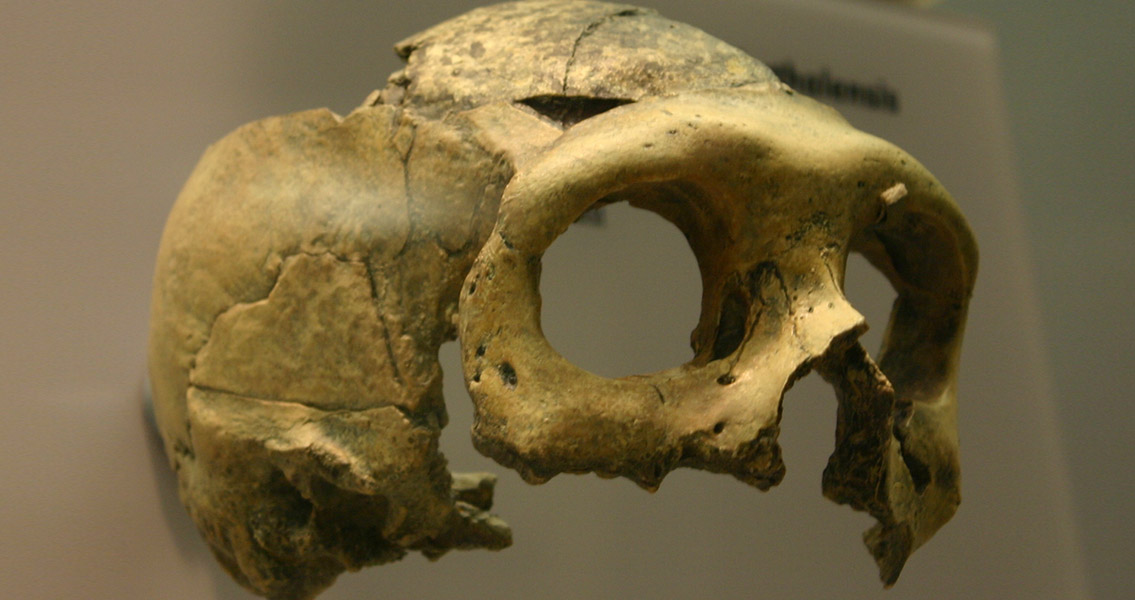
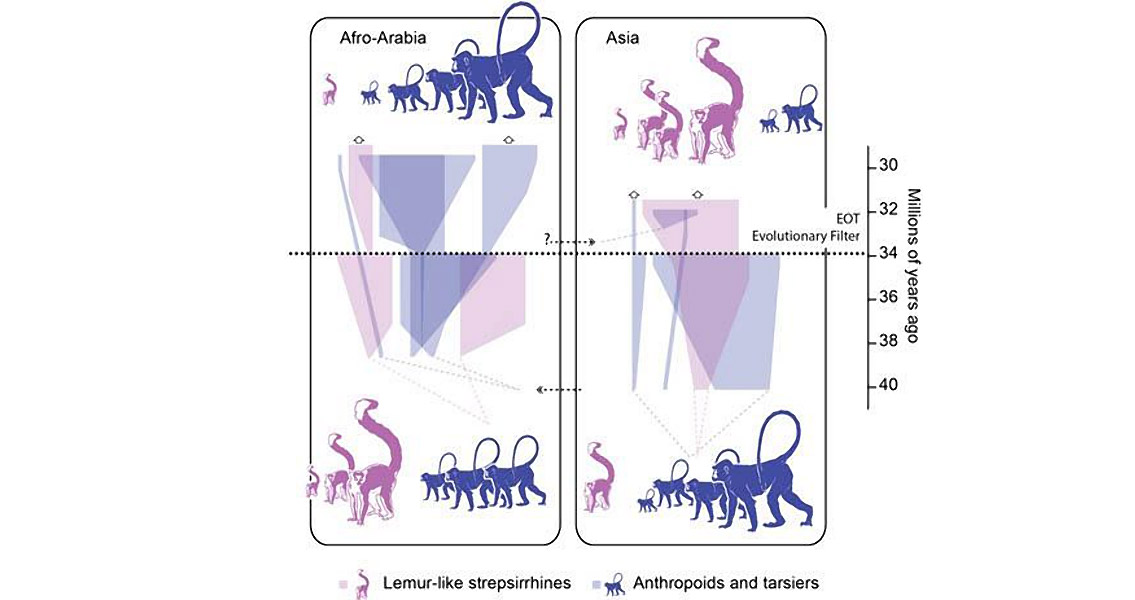
Science. Image courtesy of Ni Xijun]]>

Categories
Breaking News

World’s First Plant-Eating Marine Reptile Discovered

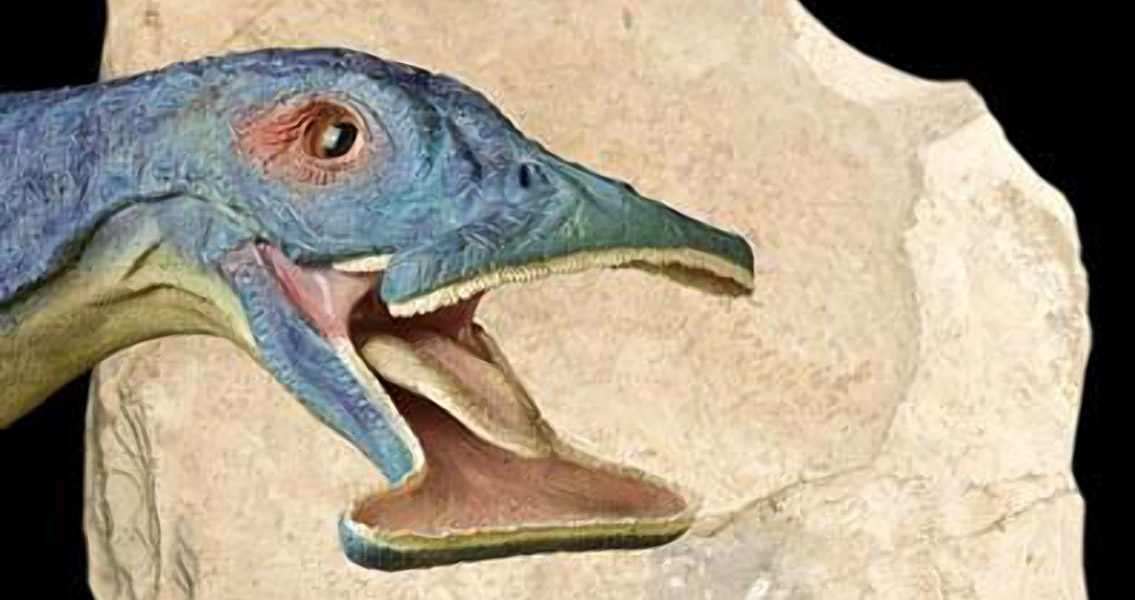
Atopodentatus unicus, a sea-dwelling reptile that was around the size of a crocodile, was originally discovered in 2014. The fossil was nearly intact except for its head, which seemed to indicate that the creature had a beak similar to a modern flamingo. However, new research into A. unicus conducted by Dr. Li Chun from the Chinese Academy of Sciences has revealed the true story of the creature’s curious so-called beak, unveiling evidence gathered from two additional specimens that A. unicus had a spade-like mouth adapted for feeding on plants on the seafloor. The two new A. unicus specimens, also discovered in southwestern China, plainly indicate that the upper and lower jaws of the creature formed a horizontal “hammerhead” shape. The marine reptile’s mouth was lined with peg-like teeth on the edge, followed with more needle-like teeth further within. According to Olivier Rieppel, co-author of the study, from the Field Museum of Natural History; the arrangement is less than ideal for catching and chewing live prey, indicating that instead A. unicus would have used its front teeth to tear algae or other underwater plants free from rocks and then filtered the contents of its mouth by forcing water through its side teeth – much in the same way baleen-whales filter feed today. Based on these findings, A. unicus is the oldest known plant-eating marine reptile. In fact, the next earliest filter-feeding marine animal that ate plants doesn’t show up in the fossil record for an additional eight million years, according to the research team. The bizarre creature with the unique feeding adaptation first appeared during the early Triassic Period, just 10 million years or so after the largest mass extinction in the history of the Earth. A. unicus’ appearance so relatively quickly after this extinction event implies that life not just returned but diversified much more swiftly than currently understood. However, the time after the extinction event around 252 million years in the past is certainly characterized by strange creatures in the sea, such as the 17-foot long reptile known as Dinocephalosaurus – which had a neck fully half the length of its body, according to fossil remains. A. unicus is such an unusual specimen that its position on the reptile family tree is hard to place, according to co-corresponding study author Dr. Nicholas Fraser of National Museums Scotland. The fossil record for the creature is largely complete, Dr. Fraser added, pointing out that this will necessitate that scientists find the fossilized remains of close relatives of A. unicus that have yet to be discovered, in order to determine these evolutionary connections. For now, the researcher said he would classify A. unicus as at least tangentially related to the plesiosaur, a marine reptile that had a similarly long neck but is believed to have been an oceanic apex predator during the era of the dinosaurs. The research study, which was recently published in the journal Science Advances, can be found online here Image courtesy of Institute of Vertebrate Paleontology and Paleoanthropology (IVPP) of the Chinese Academy of Sciences]]>

Categories
News

Hitler Sends Bombers to Aid Rashid Ali al-Gailani's Iraq

Categories
Breaking News

What Little DNA Remains of the Marquis of Haihun to Be Analyzed