Proceedings of the National Academy of Sciences. ]]>

Proceedings of the National Academy of Sciences. ]]>

Spiclypeus shipporum. This discovery brings the total known dinosaur species found in the Judith River Formation in Montana to nine. This new dinosaur was identified by bones that had been preserved in a silty slope which had once been part of an ancient floodplain, including the skull, backbone, hips and part of the legs from a single animal. What makes Spiclypeus shipporum unique among horned dinosaurs is the manner in which the bones over its eyes were oriented sideways out from the skull, and the unusual way bony spikes emanated from the edge of the frill, with some projected outward as others curled forward. “This is a spectacular new addition to the family of horned dinosaurs that roamed western North America between 85 and 66 million years ago,” Jordan Mallon, the author of the study, explained in a press release from the museum. “It provides new evidence of dinosaur diversity during the Late Cretaceous period from an area that is likely to yield even more discoveries.” After the first bone fragments were found simply lying on the ground, a team from the museum spent another two years excavating and recovering the remaining fossils. An examination of the bones suggests a life of pain for the dinosaur, with the upper section of the arm bone showing obvious signs of bone infection and arthritis. Despite this condition, further analysis involving the growth rings found inside of the bones indicates the dinosaur lived long enough to reach maturity, and was around 10 years old at the time of death. Ceratopsids were megaherbivores which arose within the Late Cretaceous period and quickly diversified in North America and Asia, becoming one of the most expansive dinosaur groups at the time. Their horned craniums and ornamental frills make them easy to recognize. The study, which was published in PLOS ONE, notes that none of the nine species found at the Judith River Formation has been unearthed in states lying to the south of Montana, which suggests the dinosaur fauna found in western North America 76 million years ago were highly localized. Some of Mallon’s earlier research shows that communities of herbivores that are considered as being species-rich may have been possible because of dietary specializations, a phenomenon referred to as niche partitioning. Recognized as historically important, the Judith River Formation (included within the Judith River Group) is a geologic, fossil-bearing formation located in Montana. It dates back to the Cretaceous period, 80 to 75 million years ago, and corresponds to the “Judithian” age of land vertebrates. The dinosaur’s name, Spiclypeus, is derived from the Latin word which means “spiked shield”, and shipporum is to honor the Shipp family. For more information, the full article is available here Image courtesy of Mike Skrepnick (c) Mike Skrepnick]]>
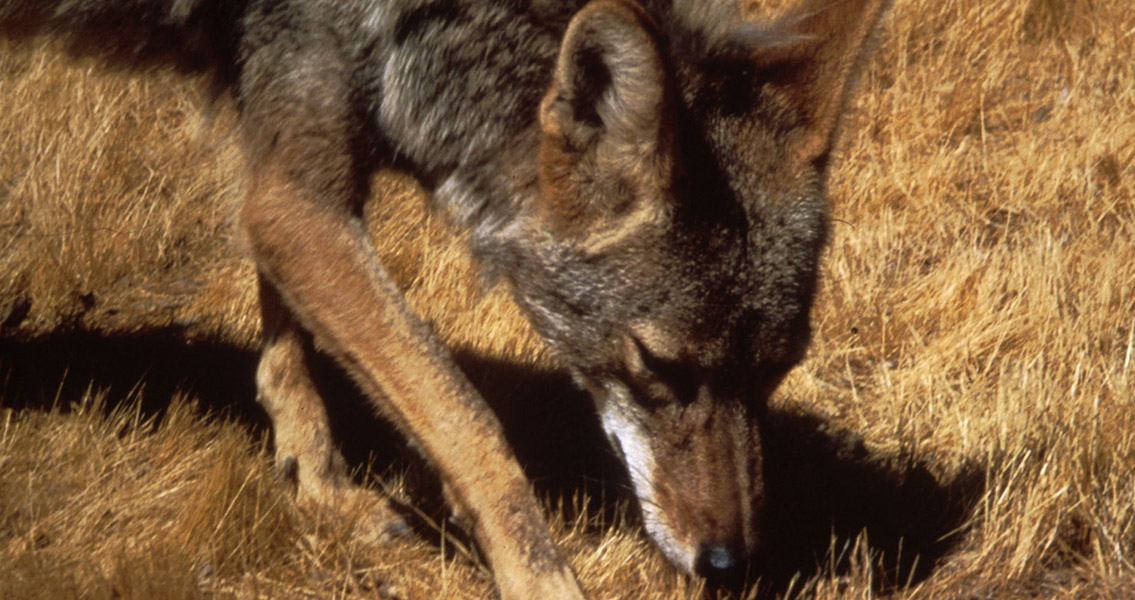
Cynarctus wangi – lived 12-million years ago and is described in a recent study in the Journal of Paleontology. The animal is described as being around the size of a modern coyote, and the specimen is a fossilized tooth, specifically an upper right second molar recovered at the Choptank Formation, part of Maryland’s Calvert Cliffs. Cynarctus wangi was part of the Borophagine canids that roamed eastern North America during the middle Miocene era. Borophagine canids are part of a line of carnivorans that includes wolves, domestic dogs, foxes, dingoes and jackals as well as a variety of other existing and extinct dog-like animals. Referred to as bone crushers, (they are known for their strong jaws and oversized teeth) the Borophagine canids lived across North America from 10 to 30 million years ago. Researchers believe the species probably went extinct because it was unable to compete with other canids. Regardless of the fierce nickname, scientists don’t believe C. wangi was wholly carnivorous. The fossil led them to the conclusion that around two-thirds of its meals were non-meat — the animal was surviving on insects and plants, more like a bear than a dog. Steven E. Jasinski, a University of Pennsylvania doctoral student and the study’s lead author, wrote in the study that what’s especially significant about the find is its location –the discovery of land animal fossils in the Choptank Formation is extremely rare and therefore can provide important information about North America as it was between 12 and 13 million years ago. The Miocene period (extending from 23 million to 5 million years ago) was the first geological epoch in the Neogene Period. The word Miocene means ‘less recent’ and the ‘Epoch’ gained its name due to having 18% fewer modern sea creatures than the epoch which followed it, the Pliocene. The planet moved through the Oligocene, then the Miocene which was followed in turn by the Pliocene, cooling as it did with a succession of ice ages. The Miocene Epoch’s time boundaries aren’t distinguished by any single global event as many time periods are, but by the regional boundaries that occurred between the warmer Oligocene Epoch and the colder Pliocene Epoch. When tasked with identifying the Choptank Formation fossil, researchers considered two different, yet distinctly possible scenarios. First, the geographic and stratigraphic provenance of the specimen could have indicated that it belonged to Cynarctus marylandica, another type of canine whose fossils have been found at the site. The second, and most plausible possibility according to experts, is that the Cynarctus wangi fossils at the site are from a younger strata than the C.marylandica specimen. Either way, this new fossil increases the scant record of the groups that lived in this region of North America and our knowledge of the terrestrial taxa that resided there. ]]>


Homo naledi, was among our earliest ancestors and probably lived around three million years ago. The earliest human ancestors to date are believed to have been Ardipithecus ramidus, which, the BBC writes, probably lived around 4.4 million years ago, and based on the fossil record could both walk up right and climb trees. This H. naledi, the researchers explain, was ape-like in many ways but also had some features in common with modern humans. The skeleton found in the Rising Star cave resembled in size that of a modern human child, especially the skull, teeth and feet. It belonged, however, to an elderly female. The shoulders and pelvis were ape-like, and its brain size was likely similar to that of a gorilla. The reason it was classed as a hominin was the more advanced shape of the skull, the longer legs, the smaller teeth and the modern-like feet. The chamber in which this first skeleton was found was difficult to access because it was in the deepest recesses of the cave and one had to be quite slim to be able to pass through a constriction on the way. Yet once a team was gathered, work started and the researchers discovered something even more exciting: the chamber contained not just one remarkably well preserved skeleton but as many as fifteen, of all ages and sizes. The total number of specimens collected after three weeks of excavation reached 1,550. The scientists that analysed the fossils and tried to place them along the line of human lineage had a tough job. Some of the bones, like the tiny skulls, suggested these were apes, but others were too human-like to ignore. The conclusion was that this species lived some time between Australopithecines and Homo, Berger told the National Geographic, although he added that for him personally, these creatures belonged closer to Homo than Australopithecus. Then there is the much more fascinating question of how all these people ended up in that remote chamber of the Rising Star cave (the name of the species, by the way comes from the Sotho word for “star”). There was no fauna, tools or any other artefacts around them to suggest it was a dwelling, and there were no tooth marks on the bones, which would have been the case had they been dragged here by carnivores. One possible explanation is that they wandered into the cave and got trapped in the remote chamber but the position of the skeletons didn’t corroborate that hypothesis. The other could cause a rethinking of the fundamental link between brain size and evolution: it is the suggestion that this chamber was a burial ground, where bodies were deposited over a period of centuries. In other words, that this early species, despite its small head, was capable of allocating a special place to bury its dead, a tradition so far only found in much later hominins and up until now considered too complex behaviour to be found in such earlier species. Commenting on the news, anthropologist Isabelle Winder from the University of York, who wasn’t involved in the study, said: “Look at the hind limb of H.naledi and you will see a collection of features associated with upright stance. The forelimb, however shows ape-like characters. This may suggest that the Savannah Hypothesis, which emphasises life in Savannah mosaics, may be an incomplete explanation of human locomotion. H.naledi was a scrambler, living in complex landscapes.” Nick Winder from Newcastle University told New Historian that “If you compare the naledi material with the Dmanisi skeletons (a site in Georgia where a number of different early hominin fossils were found a few years ago) you make two striking observations. The first is that the naledi assemblage is described as morphologically homogenous — all the specimens look similar. At Dmanisi, however, there is a lot of morphological variation. Second, the mosaics of attributes in the two collections are very different. This suggests much more variability than one might have expected. There were clearly lots more ways of being a successful hominin than we imagined.” For more information: Homo naledi, a new species of the genus Homofrom the Dinaledi Chamber, South Africa]]>

“The role of clade competition in the diversification of North American canids” Image courtesy of Wikimedia Commons user: Don Wecua ]]>

www.onlinelibrary.wiley.com Image courtesy of Wikimedia commons user: File Upload Bot (99of9)]]>