Categories
News

Money Before Children

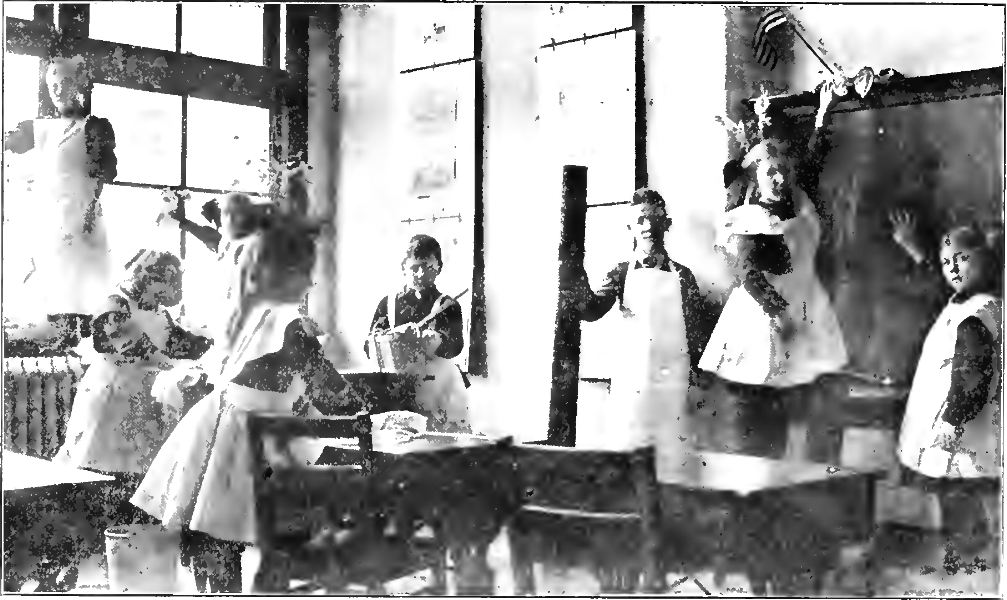
th century. The research pointed out evidence showing factory owners had deliberately falsified data in their effort to maximizing profits through child labour exploitation. The research was performed by Steven Toms and Alice Shepherd of Leeds University Business School. The duo looked at financial data presented to British parliament between 1833 and 1845 by renowned Lancashire mill owners including Holland Hoole, Robert Hyde Greg and Henry and Edmund Ashworth. Their analysis on the case is rooted in the comparison of the actual profits of the firms with the numbers they presented. From the analysis, they were able to detect some discrepancies that lead to two possibilities. The first possibility is an over-estimation of the fixed costs required by the businesses. The second possibility is an organized under-reporting of profits gained. The first possibility is the main key that added weight to arguments suggesting long working hours were needed to produce a reasonable rate of return. In an interview with BBC History Magazine, Steven Toms commented, “Even by modern standards of creative accounting, this was a pretty cynical attempt to head off regulation.” “These were among the leading businessmen of their time, and they worked to carefully co- ordinate the financial evidence presented to parliament to show that regulation would supposedly destroy their profits and ruin their trade. All were avowedly laissez-faire and opposed in principle to the factory reform movement led by labour reformer Richard Oastler, radical Tory MP Michael Sadler and Anthony Ashley-Cooper, later Lord Shaftesbury,” He added. Emma Griffin, author of Liberty’s Dawn: A People’s History of the Industrial Revolution says, “These findings are not difficult to believe. Child labour was widespread in the 1830s, and was in many people’s eyes just a normal part of life – these factory owners were certainly not the only ones who feared government regulation. She added, “The science of statistics was also in its infancy. Without well-established, widely understood accounting procedures, there was inevitably considerable scope for creative accounting of the kind that Toms and Shepherd have revealed.” Child labour was a normal part of life in 18th and 19th century. Despite being a driving force behind Britain’s industrial revolution and economic success, child labour carried with it some gruesome facts that violated human rights. Child workers were required to work in brutal conditions for a long period of time with minimal wages. Such harsh working conditions cost many children their lives or limbs. The cruel reality of child labour spurred concer ns among the masses, and debates about child labour came to light in the early 19th century. In 1833, the first version of the Ten Hours Bill was introduced.  One of the proposal suggested by the bill was that people younger than 18 should not work more than 10 hours a day. The bill also proposed that factories should be barred from employing children under the age of nine. Despite the bill’s introduction, the working time of young workers were not reduced significantly due to lobbying from industrialists. It was only in mid 19th-century that the proposal was properly implemented and children’s working time were limited to a 12-hour day. This finding solidifies the already established facts of inhuman exploitation in child labour. Hopefully, it will also raise global awareness on the issue and put an end to child labour once and for all.]]>

Categories
News

Do Photos Have the Answer to Amelia Earhart's Disappearance?

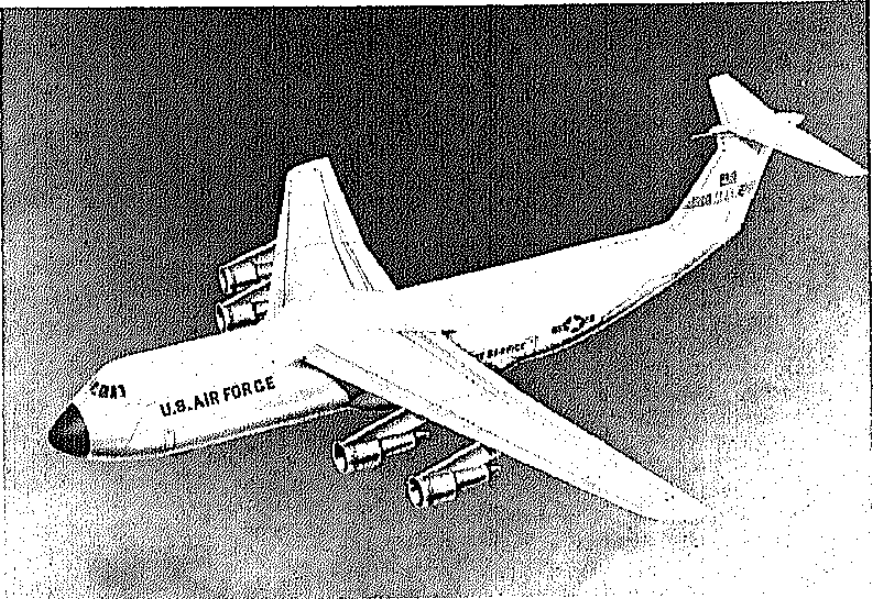
nd July 1937 when her plane vanished from over the Pacific Ocean as she attempted to fly her plane around the world at the equator. Hope of finally finding proof of Amelia’s fate emerged as a handful of pictures of the Electra, Amelia’s twin engine Lockheed grabbed attention. These photos were taken in Miami, the 4th stop in Amelia’s journey around the globe. What makes them unique is that they show a distinctive patch of metal which was installed to replace the navigational window. According to the reports of the researchers working at the International Group for Historic Aircraft Recovery (TIGHAR), the metal sheeting perfectly matches a piece of aluminium which was recovered from the island of Nikumaroro, an uninhabited island lying in the Pacific Ocean between Hawaii and Australia. Researchers state that they have been investigating the fateful flight taken by Amelia for years and a major breakthrough finally seems to have arrived. According to Ric Gillespie, the executive director at TIGHAR, if the photo enhancements manage to establish that the rivet patterns on the repair job match the piece of aluminium that was found on the Nikumaroro island, then it can be conclusively linked that the island was connected with Amelia’s disappearance in some way or the other. This discovery would finally prove that Amelia and Fred Noonan (Amelia’s navigator) had not succumbed in the Pacific Ocean because they ran out of fuel. In fact, if forensics can match the piece of aluminium to Amelia’s plane, it may be conclusive enough to state that Amelia was forced to land on the Nikumaroro island and live the rest of her life as a castaway before she finally succumbed to her death on an island located about 350 miles to the southeast of Howland Island. The researchers from TIGHAR have termed the sheet of aluminium as 2-2-V-1 and have made it the subject of extremely intense investigations ever since its discovery in Nikumaroro. This sheet is 10” wide and about 23” long. It has been made from a product that was introduced in the year 1933 by Alcoa Aluminium and was known as 24ST Alclad. However, the researchers at TIGHAR failed to fit the 2-2-V01 sheet anywhere on a Lockheed Electra even though it seems as if Amelia’s plane was skinned with this very material. Gillespie mentions that a series of researches were conducted in the month of March at the National Museum of the United States Air Force to try and match the sheet of aluminium to a Lockheed Electra. However, the researchers believed that the research and the sheet were inconclusive when it failed to fit into the original or the repaired parts of Amelia Earhart’s Electra. The investigation was said to have been renewed when Jeffery Nevile, an air mechanic and a TIGHAR researcher found that one particular part of Amelia’s aircraft wasn’t designed or built by Lockheed. In fact, it was a patch that was installed in Miami. Why this patch was used to replace the navigational window remains unknown. Another mysterious fact is that even though exhaustive evidence can be found of what Amelia Earhart did while she stayed in Miami for 80 days, not a single mention of replacing the window with a customized patch can be found anywhere.]]>

Categories
Breaking News

Archaeoastronomy Steps on the Stage

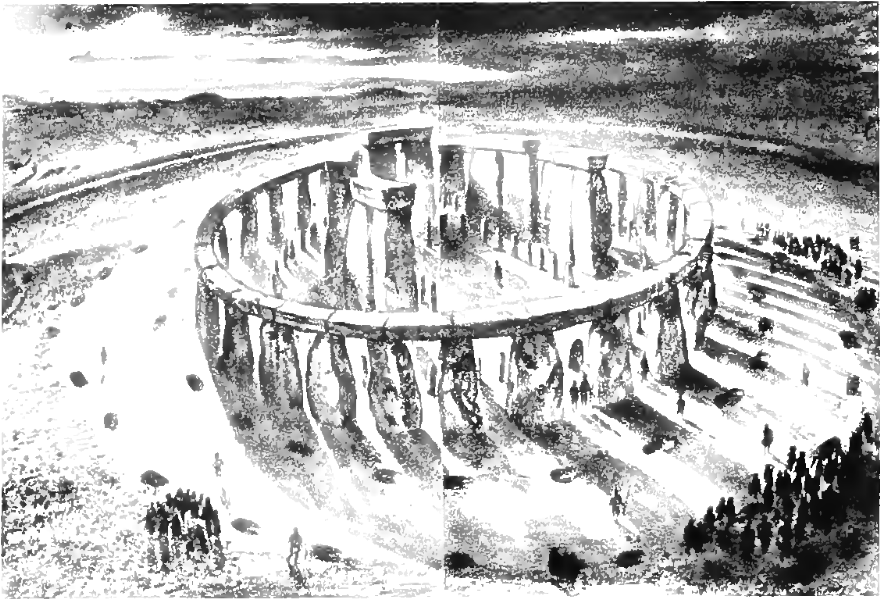
Researchers presented their works to shed a brighter light on Archaeoastronomy Recently the field of archaeoastronomy gained a new level of attention when it was presented to the scientific community at the National Astronomy Meeting 2014 in Portsmouth. This is due to the growing evidences found by archaeo-astronomers around the world that shows people from prehistoric era were actually watching the Sun, Moon and stars. The evidences also show that prehistoric human, from the Neolithic and Bronze age period, managed to establish some level of understanding about the mechanic of celestial objects. Archaeoastronomy is an interdisciplinary field that focuses on the study of ancient astronomical practices and structures. To put it in another words, it is the study that tries to relate the prehistoric and ancient societies’ understanding of celestial objects with the structures they built. Some scientists put it in much simpler terms when they described archaeoastronomy as “anthropology of astronomy”. The field began to gain attention when discoveries about Stonehenge came to light in 1960s. In the presentation of his work on 4000-year-old astronomically aligned standing stones at Gardom’s Edge, Dr. Daniel Brown of Nottingham Trent University however, stressed that archaeoastronomy encompassed more than just Stonehenge. He said “Modern archaeoastronomy encompasses many other research areas such as anthropology, ethno-astronomy and even educational research. It has stepped away from its speculative beginnings and placed itself solidly onto the foundation of statistical methods. However, this pure scientific approach has its own challenges that need to be overcome by embracing humanistic influences and putting the research into context with local cultures and landscape.” The term ‘archaeoastronomy’ owes its existence to Elizabeth Chesley Baity, the first person to use that term. As of late, some researchers believe a new term should be used considering the combination of several disciplines into it. ‘Skyscape Archaeology’ was the term proposed by some experts. Dr. Fabio Silva is among the people who agreed to that term and had even recently established the Journal of Skyscape Archaeology. “We have much to gain if the fields of astronomy and archaeology come together to a fuller and more balanced understanding of European megaliths and the societies that built them. Archaeologists will need to learn some basic observational astronomy, but archaeo-astronomers will also have to engage more with the archaeological record and ask different research questions. It is no longer enough to simply collect orientation data for a large number of monuments spread over vast regions and look for broad patterns. In addition, archaeo-astronomers cannot base their assumptions on modern concepts of precision and symmetry of axis, unless this can be independently demonstrated. To understand what alignments meant to prehistoric people and why they decided to incorporate them into their structures, we need to identify patterns and interactions between structures, landscape and skyscape,” said Dr. Silva. Experts are also in disagreement regarding the first person that launched archaeoastronomy into the fast track of scientific research. The disagreements exist because until this day, archaeoastronomy is still a loosely-defined term. According to Clive Ruggles, Heinrich Nissen who worked in the mid-nineteenth century was arguably the first archaeoastronomer. Clive Ruggles is the Emeritus Professor of Archaeoastronomy in the School of Archaeology and Ancient History at the University of Leicester, in United Kingdom. His opinion was countered by Rolf Sinclair, the author of Current Studies in Archaeoastronomy, believes Norman Lockyer, who worked in the late 19th and early 20th centuries, to be the ‘father of archaeoastronomy’. In contract to those two experts, Euan Mackie, a British anthropologist and archaeologist, put Alexander Thom who worked on the subject in Britain between the 1930s and the 1970s, to be the pioneer of archaeastronomy. Also presenting their work during the meeting were Pamela Armstrong of the University of Wales Trinity St David, Brian Sheen and Gary Cutts of the Roseland Observatory, Liz Henty of the University of Wales Trinity St David and Dr Frank Pendergast of Dublin Institute of Technology.]]>

Categories
News

Ancient Cypriot City Discovered

Categories
Breaking News

Stone Spearheads Unearthed in Northern Lapland

Categories
Editorial

Saint George Versus the Dragon

The George and the Dragon story There are several versions of this story. Usually it is set in North Africa. One story recounts how the brave knight arrived in Libya after a very long and arduous trip by land and sea. Here he met a hermit who told him about a terrifying dragon that was terrifying the people of Libya. The dragon had an unpleasant habit of devouring young maidens. The problem the country faced was that all the young maidens had been eaten with the sole exception of the king’s daughter. It was her turn to be the dragon’s lunch tomorrow. The King of Egypt was offering his daughter in marriage to any brave knight willing to rid the land of this dragon. This was exactly the kind of challenge George was searching for. He galloped off the valley where the beast lived just in time to see the princess of Egypt being led to this grisly death. He comforted her with the news that he was off to kill the dragon and she need not fear. True to his words he rode on to the cave where the dragon lived. The huge beast with a fifty foot long tail and a huge head was understandably furious at this intrusion on its territory. It came out of its cave roaring like thunder. George charged at the dragon and speared it but its scales were so thick his spear broke. George was dismounted but found refuge under a magical tree conveniently on hand for some emergencies. The tree’s magical powers shielded him against the dragon’s poison. When he had recovered from the failure of the first attack he went after the dragon again with his sword. The dragon doused him in poison and his armour fell apart. Everything was almost lost but George noticed just in time that there were no scales under the wings of the beast. He struck it under its wings with his sword and at last succeeded in dispatching the monster. Interpretations On the most basic level George and the dragon is an attractive fairy story. We learn about the triumph of good over evil in a manner that leaves no room for alternative interpretations. On a deeper level it is easy to detect in the persona of the dragon a symbolic representation of our fears of the unknown, or situations we perceive as very threatening. The dragon can be seen as almost insurmountable obstacle or approaching terror threatening our very existence. The conquest of the dragon shows that we have the abilities to overcome our most dreaded enemies with sufficient determination and courage. These ideas appeal to individuals. They also clearly held appeal for an island nation fearing invasion from its more powerful Continental neighbours. If you want to connect the dragon slaying with some episode in early history, there is no evidence that Saint George is modelled on a person whom we know lived in a certain historical period. However, it is interesting to note that many cultures have stories featuring dragons. Some scholars suggest that one explanation for this maybe the survival of dinosaurs into a much later period than we used to believe. The theory has always been that dinosaurs died out before man came on the scene. These scholars postulate that early man might have seen dinosaurs and conceivably needed to defend himself against them. If this really was the case there may have been a real prototype for Saint George – an ancient warrior who fought and killed one of these prehistoric monsters. His exploits would have been talked and sung about for generations and so this story may have a germ of truth in its origins. More prosaically the stories of dragons may have been sparked by the discovery of dinosaur skeletons, which would certainly have the power to terrify a superstitious and uneducated farmer. In truth, we will probably never know. ]]>

Categories
News

The Neanderthals Were Omnivores, According to Recent Study

PLOS ONE online journal, the paper written by a group of geologists stated that the feces of the Neanderthals contained high portions of plant sterols which show that they did indeed eat plants. They also found much higher portions of cholesterol and coprostanol which supports the idea of high meat consumption. The scientists in this study were Ainara Sistiaga, a geo-archaeologist from the University of La Laguna in Tenerife, Spain, and Roger Summons, a geobiologist from the Massachusetts Institute of Technology in Cambridge, Massachusetts, USA. They looked at different biomarkers of meat and plants in fossilized feces from five different places at El Salt. This is more indicative of an omnivorous diet than the study that found the nitrogenous compounds in the teeth of the Neanderthals, Sistiaga states, as these biomarkers were in their feces. Only humans and other primates are able to convert cholesterol to copropostanol in the form of 5B-stigmastanol, hence why they were so sure that the feces were of human origin and not another mammal. They also made sure that it wasn’t any other primate by looking for any bones belonging to other primates in the surrounding area, and found none. The researchers also looked at the parasites and coprolites in the soil, and discovered only species associated with humans. Some scientists are not convinced with this finding, however. Michael Richards, paleoanthropologist at the University of British Columbia, states that it is difficult to identify the species of coprolites, and that animals passing by that area over thousands of years could have passed by and even settled in the area Neanderthals were, which would produce feces with similar biomarkers as the Neanderthals. Amanda Henry, paleobiologist at the Max Planck Institute for Evolutionary Anthropology in Leipzig, Germany, thinks the study is very exciting and could disprove the idea that Neanderthals were only carnivores, but says the study is incomplete as the researchers would have been better off using DNA or parasites unique to humans to make the findings conclusive.]]>

Categories
News

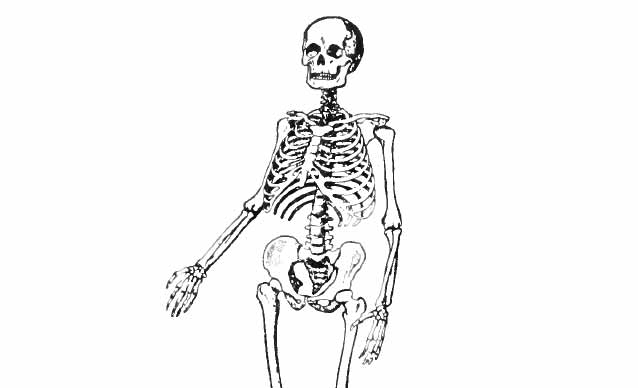
Discovery of Roman Skeleton to Rewrite British History?

th century when the Roman empire began to decline. Unlike most archaeology students, who are content with finding pieces of glass or pottery in their first dig, the undergraduate students of the Bournemouth University have actually stumbled upon a piece of history that could rewrite the entire Roman history of Britain. For the first time in history, the modern generation has managed to uncover the skeletons of a family from a Roman villa in Dorset field. According to Dr. Miles Russell, a lecturer in archaeology at the Bournemouth University, this finding is very significant because of the fact that none of the occupants of the 700 odd Roman villas in Britain were ever found before. This finding could spur the uncovering of the graves of the owners of these Roman villa all over the country and finally allow historians to understand just who used to live in these villas. This landmark discovery was uncovered by a group of 85 students in their early twenties or their late teens in a corn field next to Winterbourne Kingston, Blandford while carrying out a study. The students were expected to establish whether the ancients living in these Roman villas were British or European. They managed to map the ground with the help of a geophysical survey. To the surprise of students, as well as the faculty, they managed to uncover an enclosure of almost 300 feet of an ancient Roman villa. After excavating the site, the skeletal remains of 2 adult males and females and 1 elderly female were found. It is believed that these remains belonged to 3 generations of a family that used to live in the Roman villa about 1700 years ago. The remains are now being analyzed in order to get a better picture of exactly who used to live in these villas. This groundbreaking work is also expected to become a part of the final year dissertation for the students. According to Dr. Russell, one of the main objectives of the group is to understand who lived in these villas and what sort of changes did Britain go through during the time. They also wish to ascertain whether the people in these villas were Britons or Europeans/ Romans who had moved to exploit the land. Dr Russell also estimates that if these skeletal remains belonged to the Romans, they were most probably tax collectors, politicians or statespeople. He believes that these people represented the top 2 – 3% of the society. Hopefully, the bones should offer more insights into their age and their health. Unfortunately, world history has majorly suffered as many of the Roman villas of Britain that were uncovered in the 19th century could not be cared for properly due to the lack of knowledge and technology. As a result important details of world history were lost to time. Hopefully, these findings could spur a new era where we finally understand just what happened in Britain towards the end of the Roman era.]]>

Categories
News

The Amistad Slave Rebellion

th anniversary of the Amistad Slave Rebellion. In 1838, on the 2nd of July, about 53 Africans aboard the Amistad, a slave carrier, managed to break out of their chains, kill two crew members and disarm the rest of the crew. After seizing control of the vessel, the slaves tried to sail all the way back to their homeland, but ended up sailing North instead. These slaves travelled approximately 1400 miles from Cuba all the way to Long Island in New York, where the navy finally picked them up. This rebellion was termed as the Amistad Rebellion and despite its popularity, it was just one of the thousands of rebellions that have been recorded. About 12 million Africans were forced to become slaves as they were shipped off to the New World between the 16th – 19th centuries. It is believed that almost 1.5 million Africans perished even before reaching land, due to the horrifying conditions present on-board. At the time of the Amistad Rebellion the United States, as well as most other major slave destinations in North and South America, had abolished the process of importing slaves. However, since slavery itself was legal unlawful activities were the norm. For example, a Spanish slave trader by the name of Pedro Blanco was believed to live like an aristocrat along the coast of Sierra Leone and was said to have continued the slave trade with the help of a local leader. The 53 Africans who found themselves aboard the Amistad were rounded up at Lomboko, Blanco’s slave depot. They were then marched all the way through the interior and kept in slave barracks where diseases and beatings were common. According to the testimony of these slaves, they were also shackled around the neck, ankles and wrists and were forced to sleep in contorted positions without even being offered enough room to stand straight. Whippings and beatings on flimsy grounds were common and dead bodies were thrown into the ocean almost every single day. What made this rebellion so famous was that despite being from 9 different ethnic groups, the slaves joined hands towards a common cause – freedom. This was something that was relatively unseen in Africa. The rebellion was led by Cinque, a rice farmer before he was turned into a slave. The captain of the ship was slashed to to death and two other crew members threw themselves overboard. However, to the dismay of the slaves, they had to depend on the Spaniards to set the course since they had no idea about charting out directions on the sea. The Amistad stopped on a number of islands in the Bahamas before it finally reached the United States. It was on August 26 that a US Navy brig entered the ship and imprisoned the Africans in Connecticut, a slave state at the time. These Africans received immense media coverage and thousands of locals also paid “entry fees” to look at them. A few influential people against the slave trade helped them to set up a trial in Hartford. In what became a historic ruling, the Hartford Court ruled that since the Africans were brought in illegally, they were not slaves. Despite having lodged an appeal with the Supreme Court, the decision could not be overturned. Thus, these slaves were finally made free after spending 18 months in the US. During the journey back to Sierra Leone, the number of surviving Africans fell to 35  who at last arrived home on 26th November 1841. This is just one of the many stories of the horrors of the slave trade and the efforts of a few individuals who played a huge role in abolishing slavery and making the world a much better place to live in.]]>

Categories
News

Chapel of 11th Dynasty Egyptian Pharaoh Unearthed